
Our Short List of 3
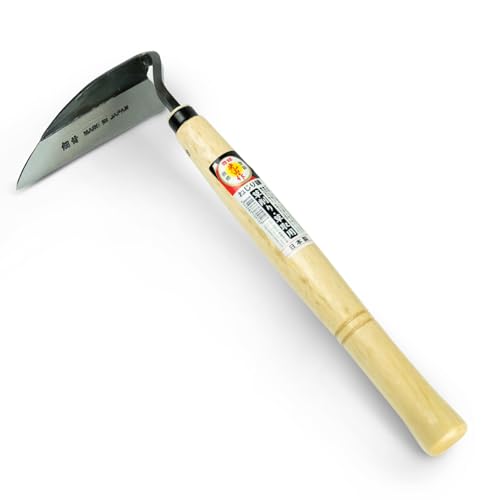
- Best for: Shaving young weeds at soil level between close plants in beds and borders.
- Model number HT-0910
- Blade length 4.72 inches
- Blade material: composite steel blade
- Twisted blade profile

- Best for: Precise weeding in tight vegetable rows, flower beds and other confined spaces.
- Blade length 4.92 inches / 125 mm
- Overall length 12.99 inches / 330 mm
- Weight 0.44 lb / 200 g
- Two-layer Japanese carbon steel blade

- Best for: Weeding and light clearing along vegetable rows, bed edges and grass borders.
- Blade material: 45# medium carbon steel
- Size 12.2 inches (T variant)
- Item weight 7.8 ounces
- Wooden handle
All 4 Picks at a Glance
| Product | Specs | Action |
|---|---|---|
| HOUNEN Japanese Weeding Sickle HT-0910 |
| Check price on Amazon |
| SUIZAN Nejiri Kama Weeding Sickle 13″ |
| Check price on Amazon |
| ZELARMAN Garden Weeding Sickle |
| Check price on Amazon |
 TOYPOPOR Japanese Weeding Sickle Hoe |
| Check price on Amazon |
Key takeaways
- Compare five dedicated weeding knives and sickles for beds, rows and tight spaces, with blade steel, handle and size specs taken from each listing.
Pulling weeds by hand works until a bed fills in, and then the real decision arrives: do you slice growth off just below the surface, scrape it away in short strokes, or chop under the crown and flick the whole plant out? Each motion suits a different blade shape, and a weeding knife bought for the wrong motion feels clumsy within minutes, however sharp its edge is.
This guide is for vegetable growers working tight rows, flower-bed keepers weeding between established plants, and anyone clearing edges where a full-size hoe cannot swing. Every pick below is a dedicated weeding knife or weeding sickle whose listing states the weeding job directly, chosen from the blade material, blade size, handle and weight its own product page gives.
Quick Picks
As an Amazon Associate we earn from qualifying purchases
| Product | Best for | Key spec |
|---|---|---|
| HOUNEN Japanese Weeding Sickle HT-0910 | Shaving young weeds at soil level between close plants | 4.72-inch composite steel twisted blade |
| SUIZAN Nejiri Kama Weeding Sickle 13″ | Precise cuts in tight vegetable rows | 4.92-inch two-layer Japanese carbon steel blade |
| Nisaku NJP100 Nejiri Gama | Scraping and chopping in crowded flower beds | 4-inch Japanese stainless steel blade |
| ZELARMAN Garden Weeding Sickle | Longer reach along rows and grass edges | 12.2-inch size, medium carbon steel blade |
| TOYPOPOR Japanese Weeding Sickle Hoe | Scraping and loosening soil in small beds | 14 inch Hand Hoe Sickle model, wood handle |
How to Choose
Blade shape and the weeding motion
Blade shape decides the stroke you will repeat hundreds of times, so match it to the weeds you actually fight. A twisted nejiri kama blade sits angled to the handle and shaves growth flat at soil level in a pulling stroke, which suits seedling carpets and young annual weeds. A straighter sickle edge slices stems and light grass along edges. An angled scraper blade, like the Nisaku pattern, chops and rakes in short pushes. If your beds hold deep taproots, none of these shapes replaces a digging tool, so buy for surface and shallow work first.
Blade steel and edge care
The listings here use three broad steel families, and each asks for different care. Carbon steel, including the two-layer Japanese carbon steel in the SUIZAN, takes a very fine edge and resharpens quickly on a small stone, but it needs wiping dry after wet soil or it will spot. Stainless steel, as in the Nisaku NJP100, resists rust and suits gardeners who rinse tools and put them straight away. Composite steel, used by the HOUNEN HT-0910, is the maker’s own blade material, so follow that listing’s care note: wipe away dirt and moisture after use.
Handle length, grip and handedness
Handle length changes both reach and control. Short handles around four and a half inches, like the lacquered beech handle on the Nisaku, keep the blade close to your fingers for work between ornamentals. Longer wooden handles near ten inches add leverage for scraping along rows but feel less precise in a crowded border. Handedness matters more than buyers expect: the HOUNEN listing states its twisted sickle is designed for right-handed users, and the maker sells a separate left-handed version, so check which hand you weed with before ordering any twisted model.
Overall size and weight
Overall length and weight decide how long a session feels easy. The lightest tools here sit near five to seven ounces, which keeps wrist strain low when you are flicking out seedlings one after another. Heavier or longer models around twelve to fourteen inches overall cover more ground per stroke along a row, at the cost of fine control near stems. Check the stated weight in the listing rather than guessing from photographs, because two sickles that look identical in a picture can differ by several ounces in the hand.
The 5 Best Options
HOUNEN Japanese Weeding Sickle HT-0910
- Best for: Shaving young weeds at soil level between close plants in beds and borders.
- Model number HT-0910
- Blade length 4.72 inches
- Blade material: composite steel blade
- Twisted blade profile
Shaving young weeds at soil level between close plants in beds and borders.
Confirm you weed right-handed before ordering, because this twisted model is handed and the left-handed version is a different listing.
This is the pick for gardeners whose main job is shaving young growth flat at soil level without disturbing the plants beside it. The twisted blade profile holds the edge at a scraping angle, so a short pulling stroke clears annual weeds and light grass along rows, borders and bed edges. Because the listing states the design is right-handed, it suits the majority of users who pull a hand tool toward themselves, and the maker points left-handed gardeners to a separate version rather than asking them to adapt their grip.
SUIZAN Nejiri Kama Weeding Sickle 13″
- Best for: Precise weeding in tight vegetable rows, flower beds and other confined spaces.
- Blade length 4.92 inches / 125 mm
- Overall length 12.99 inches / 330 mm
- Weight 0.44 lb / 200 g
- Two-layer Japanese carbon steel blade
Precise weeding in tight vegetable rows, flower beds and other confined spaces.
Carbon steel needs drying after use in wet soil, so wipe the blade before storing it rather than leaving it in a damp bucket.
Vegetable growers with tight rows get the most from this one, because the whole tool is built around precision in confined soil. The two-layer Japanese carbon steel blade is honed by artisans, and at just under five inches it fits between young plants where a wider hoe would clip stems. At 7.05 ounces it stays light through long sessions of cutting weeds cleanly at the root, and the oak or zelkova handle with reinforced joints gives a traditional grip that does not feel fragile when you lever a cut plant free.
Nisaku NJP100 Nejiri Gama
Crowded flower beds are where this smaller scraper earns its place, since the angled four-inch blade works as a chopper, scraper and puller in short strokes between established plants. The Japanese stainless steel shrugs off the rinse-and-store routine that would spot a carbon blade, and the listing describes the edge as rust and scratch resistant for season-after-season sharpness. The short black lacquered beech handle keeps your hand close to the work, which is exactly the control you want when the next stem over belongs to a plant you are keeping.
Specs
- Model number NJP100
- Japanese stainless steel blade, 4-inch blade width
- Angled blade for chopping, scraping and raking
- 4.5-inch black lacquered beech wood handle
- Product dimensions 26.67 x 10.16 x 2.54 cm
- Item weight 141 g
Best for: Scraping and chopping weeds in crowded flower beds and confined soil areas.
Watch out for: The short handle gives control rather than reach, so it is a poor match for long rows where a longer tool covers ground faster.
ASIN: B01M2CSP76
ZELARMAN Garden Weeding Sickle
- Best for: Weeding and light clearing along vegetable rows, bed edges and grass borders.
- Blade material: 45# medium carbon steel
- Size 12.2 inches (T variant)
- Item weight 7.8 ounces
- Wooden handle
Weeding and light clearing along vegetable rows, bed edges and grass borders.
Two sizes are listed under this product, so check the variant name on the listing before ordering to get the length you intended.
Choose this one when the work runs along rows and grass edges rather than inside a packed border, because its longer twelve-inch class body covers more ground with each pull. The blade is 45# medium carbon steel, described by the maker as sharp and sturdy, and the wooden handle keeps the grip simple and familiar. The listing frames the tool for weeding, digging, soil loosening and planting, so it doubles as a light clearing sickle for the grassy fringe where beds meet lawn and hand pulling tears out chunks of turf.
TOYPOPOR Japanese Weeding Sickle Hoe
- Best for: Scraping shallow weeds and loosening soil in small flower gardens and vegetable beds.
- Item model number: 14 inch Hand Hoe Sickle
- Item weight 1 pound
- Polished wood handle
- Seamless welding between metal part and handle
Scraping shallow weeds and loosening soil in small flower gardens and vegetable beds.
At one pound it weighs roughly twice as much as the lightest picks here, so expect more wrist effort during long, fine weeding sessions.
Small flower and vegetable beds suit this twisted kama design, whose fan-shaped arc blade is made to scrape weeds that sit shallow on the soil surface as you pull the handle against the ground. The polished wood handle is joined to the metal with seamless welding, which the listing presents as a smooth, strong connection with no ridge to rub your palm. At one pound it is the heaviest tool in this roundup, and that extra weight helps the edge bite when you move from surface seedlings to loosening compacted soil between rows.
Which One Fits Your Situation
Tight vegetable rows with seedlings close together
Pick the SUIZAN Nejiri Kama. Its blade is under five inches, the whole tool weighs 7.05 ounces, and the shape is made for cutting weeds cleanly at the root in confined spaces. Work it in short pulls just below the surface and you can clear between young plants without swinging anything wide enough to damage the crop row beside your hand.
Crowded flower beds full of plants you are keeping
The Nisaku NJP100 fits this work best. The angled four-inch stainless blade chops, scrapes and rakes in strokes only a few inches long, and the short lacquered beech handle keeps your fingers close to the edge. Stainless steel also suits beds that stay damp, because the blade tolerates being rinsed and stored without careful drying.
Bed edges, borders and the grassy fringe
Take the ZELARMAN for edges, or the HOUNEN HT-0910 for borders inside the bed. The ZELARMAN’s longer body and medium carbon steel blade clear grass and weeds along the line where bed meets lawn, while the HOUNEN’s twisted blade shaves young growth flat at soil level between close plants without lifting the soil around them.
Your first weeding sickle, for general bed upkeep
Start with the HOUNEN HT-0910 if you weed right-handed, since its twisted profile teaches the pulling, shaving stroke quickly and the size suits most beds. If your beds are small and the soil compacts hard, the TOYPOPOR is the alternative: its welded construction and extra weight help it scrape and loosen, though you will feel that weight on longer sessions.
Common Mistakes
- Buying a twisted sickle without checking handedness, then fighting a blade angled for the other hand all season.
- Using a surface weeding knife on deep taprooted weeds and snapping tips or bending edges against roots it was never shaped to dig out.
- Leaving a carbon steel blade wet in a tool bucket, which spots the edge and dulls the fine finish the steel was chosen for.
- Choosing by photograph instead of the stated weight and length, ending up with a tool too heavy or too long for close bed work.
- Swinging a sickle like a hoe in crowded beds, which cuts the stems of plants you meant to keep along with the weeds.
Frequently Asked Questions
Is a weeding sickle the same as a hori hori knife?
No. A hori hori is a straight, double-edged digging knife built for planting, dividing and levering, while a weeding sickle carries a short angled or twisted blade made to shave and scrape weeds at soil level. Gardeners who plant bulbs often own both, but for clearing surface weeds between plants the sickle shape is faster and more precise.
Can a weeding knife remove deep taproots like dandelion?
Only partly. A sickle blade cuts the taproot below the crown, which removes the visible plant and weakens regrowth, but a long taproot usually needs a digging tool to come out whole. Use the weeding knife for seedlings, annual weeds and shallow roots, and switch tools when the root runs deeper than the blade reaches.
How do I keep a carbon steel weeding blade sharp?
Wipe soil and moisture off after each session, then touch the edge up with a small sharpening stone once cutting starts to tear stems instead of slicing them. Store the tool dry and out of a damp bucket. Carbon steel resharpens quickly, which is its main advantage, but it rewards the wipe-dry habit every single time.
Right-handed or left-handed: does it really matter?
Yes, for twisted nejiri kama models. The blade is angled for one pulling hand, and the HOUNEN listing states plainly that its sickle is a right-handed design with a separate left-handed version. Straight or symmetric blades are more forgiving, but if you buy a twisted sickle, match it to the hand you actually weed with.
More from Amazon
Programs that pair well with the guide above. Offers and eligibility are set by Amazon and may change.
Set up recurring deliveries of everyday items on eligible products. Terms and savings are set by Amazon.
Explore Subscribe & SaveCollect the home and kitchen items you want in one registry that guests can shop from.
Create a wedding registryFree shipping on eligible items, Prime Video and more. Eligible new members can start with a free trial.
Start a Prime free trialAudiobooks and podcasts to listen to on the go. Eligible new members can start with a free trial.
Try Audible freeAs an Amazon Associate we earn from qualifying purchases.
Write Your Review
No reviews yet. Be the first to share your experience!