
Our Short List of 3

- Best for: Everyday carry when you want a blade plus a screwdriver and bottle opener in one pocket tool.
- Blade Length: 2.4 Inches
- Blade Material: 8Cr13MoV stainless steel
- Blade Shape: Drop Point
- Handle Material: Glass-filled nylon with K-Texture grip

- Best for: Camp cooking, food prep, and whittling, where a long, thin edge matters more than one-hand opening.
- Blade Length: 3.28 Inches
- Blade Material: XC90 carbon steel
- Blade Shape: Clip Point
- Handle Material: Beechwood

- Best for: The lightest everyday carry, when you want a real blade that adds almost nothing to your pocket.
- Blade Length: 2.2 Inches
- Blade Material: Stainless steel
- Lock: Frame lock
- Item Weight: 1.4 Ounces
All 5 Picks at a Glance
| Product | Specs | Action |
|---|---|---|
| Kershaw Shuffle 8700BLK |
| Check price on Amazon |
| Opinel No. 8 Carbon |
| Check price on Amazon |
| Gerber Paraframe Mini |
| Check price on Amazon |
 Kershaw Cinder 1025X |
| Check price on Amazon |
 Kershaw Shuffle II 8750TBLKBW |
| Check price on Amazon |
Key takeaways
- Five pocket knives in the under-30 tier, led by the Kershaw Shuffle, Opinel No. 8 and Gerber Paraframe Mini — compare blade steel, locks, size and carry.
A pocket knife in the under-30 tier has to earn its place the hard way. It cannot lean on exotic steel or a premium name, so the things that matter are the ones you feel every day: a blade that takes an edge without a fight, a lock that stays put when you lean into a cut, and a size you will actually carry instead of leaving in a drawer. The gap between a good budget folder and a frustrating one is usually one of those three things, not the logo on the blade.
This guide is for first-time buyers, campers, and anyone who wants a dependable folder for a toolbox, glove box, or jacket pocket. Every knife below was chosen from the name and specifications shown on its Amazon product page, and each one sits in the under-30 tier. Compare the steel, the lock, and the carry size first, then pick the shape that matches your hand and your day.
Quick Picks
As an Amazon Associate we earn from qualifying purchases
| Product | Best for | Key spec from title |
|---|---|---|
| Kershaw Shuffle 8700BLK | Everyday multitool carry | 2.4-inch stainless steel blade |
| Opinel No. 8 Carbon | Classic slicing and food prep | 3.28-inch blade, beechwood handle |
| Gerber Paraframe Mini | Lightest pocket carry | Fine edge, stainless steel |
| Kershaw Cinder 1025X | Keychain carry | 1.4-inch 3Cr13 steel blade |
| Kershaw Shuffle II 8750TBLKBW | Bigger blade and tougher tasks | 2.6-inch stainless steel blade, Blackwash finish |
How to Choose
Blade steel decides how often you sharpen
Most folders in this tier use one of three steels, and each one trades something away. 8Cr13MoV, found on both Kershaw Shuffles here, takes a keen edge with ordinary gear and holds it well enough for boxes, cord, and food prep, though it needs a touch-up sooner. 3Cr13, on the Cinder, is softer and easier to sharpen but dulls faster. XC90 carbon steel, on the Opinel, takes the finest edge and sharpens in minutes, yet it stains and rusts if you put it away wet. Plain stainless, on the Paraframe Mini, asks the least of you between uses. Match the steel to your habits: if you sharpen rarely, pick stainless; if you enjoy sharpening, carbon rewards you.
Lock and opening decide how safe it feels
A lock is what stands between a folding blade and your fingers, so treat it as a safety feature first. A liner lock, on the Shuffles and the Cinder, is a bar that snaps behind the blade; it opens fast with a thumb stud and closes one-handed, for quick jobs. A frame lock, on the Paraframe Mini, works the same way but uses the handle frame itself, so it feels sturdier for its weight. The Opinel’s Virobloc collar is different: you twist a metal ring to lock the blade open or shut, which is slow but nearly foolproof, ideal for loose pocket carry. Whatever lock you pick, open and close it a few times before you trust it.
Size and weight decide whether you carry it
The best pocket knife is the one in your pocket, so size and weight matter more than any single feature. A 1.4-inch blade on a keychain tool like the Cinder disappears until you need it, while a 2.2-inch Paraframe Mini adds almost nothing to a jeans pocket. Step up to the 2.4-inch Shuffle and you gain a full grip and a screwdriver, and the 2.6-inch Shuffle II gives the biggest handle here. The 3.28-inch Opinel cuts the most, but it is also the longest open, so it suits a jacket pocket or a pack better than tight jeans. Check the closed length as well as the blade: a knife that pokes out of a pocket gets left at home.
Handles and built-in tools decide what else it does
Some knives in this tier are pure blades, and some carry a small toolkit in the handle. The Shuffles and the Cinder build a bottle opener and a flathead screwdriver into the butt end, which covers the small jobs of a day: prying a paint lid, tightening a screw, opening a bottle at a campfire. The Opinel and the Paraframe Mini skip the extras and put everything into blade and handle instead: beechwood that warms to the hand on one, an open steel frame that keeps weight down on the other. Neither approach is better in general. If you already carry a multitool, pick the pure blade; if this knife will be your only tool, the built-ins earn their keep.
The 5 Best Options
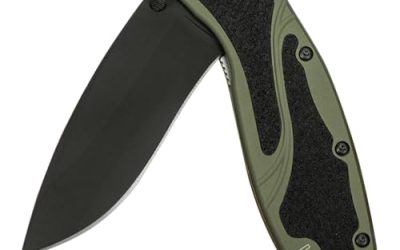
Kershaw Shuffle 8700BLK
- Best for: Everyday carry when you want a blade plus a screwdriver and bottle opener in one pocket tool.
- Blade Length: 2.4 Inches
- Blade Material: 8Cr13MoV stainless steel
- Blade Shape: Drop Point
- Handle Material: Glass-filled nylon with K-Texture grip
Everyday carry when you want a blade plus a screwdriver and bottle opener in one pocket tool.
The black-oxide coating shows scratches with hard use, and the 2.4-inch blade is short for larger cutting jobs.
The Shuffle is the most useful knife in this group for everyday carry, because it behaves like a small toolbox as much as a blade. The 2.4-inch drop-point blade handles boxes, cord, and food prep, while the flathead screwdriver tip and bottle opener at the butt end cover the small jobs that usually send you back inside. The glass-filled nylon handle has contoured finger grips and a K-Texture surface, so it stays put in a wet or gloved hand, and the reversible clip lets left- and right-handed carriers set it tip-up. At 2.8 ounces it is light enough to forget until you need it.
Watch out for: The black-oxide coating shows scratches with hard use, and the 2.4-inch blade is short for larger cutting jobs.
Opinel No. 8 Carbon
- Best for: Camp cooking, food prep, and whittling, where a long, thin edge matters more than one-hand opening.
- Blade Length: 3.28 Inches
- Blade Material: XC90 carbon steel
- Blade Shape: Clip Point
- Handle Material: Beechwood
Camp cooking, food prep, and whittling, where a long, thin edge matters more than one-hand opening.
Carbon steel stains and rusts if you put it away wet, and the beechwood handle swells if it soaks.
The Opinel No. 8 is the classic of this group, a French folding knife whose design has barely changed since the 1890s. The 3.28-inch carbon steel blade is the longest here, and its thin, convex-ground edge slices food, twine, and whittling wood with a precision the shorter folders cannot match. The beechwood handle warms to the hand and the Virobloc collar twists to lock the blade open or shut, so it carries safely in a pocket or apron. It opens with two hands, which slows it down for quick jobs, but for camp cooking and quiet cutting it is the most satisfying knife in this tier.
Watch out for: Carbon steel stains and rusts if you put it away wet, and the beechwood handle swells if it soaks.
Gerber Paraframe Mini
- Best for: The lightest everyday carry, when you want a real blade that adds almost nothing to your pocket.
- Blade Length: 2.2 Inches
- Blade Material: Stainless steel
- Lock: Frame lock
- Item Weight: 1.4 Ounces
The lightest everyday carry, when you want a real blade that adds almost nothing to your pocket.
The short blade and slim handle struggle with larger cutting jobs, and the open frame lets pocket lint in.
The Paraframe Mini is the lightest way into this tier, a slim frame-lock folder that disappears in a pocket until you need it. The 2.2-inch stainless steel blade is short, yet it is enough for envelopes, packaging, cord, and the small cuts that fill most days, and the open-frame handle keeps the weight down while giving your fingers a solid purchase. The frame lock is simple to work with one hand, and the fine edge arrives ready for light work. If you want a knife that adds almost nothing to your pocket, this is the one to carry.
Watch out for: The short blade and slim handle struggle with larger cutting jobs, and the open frame lets pocket lint in.
Kershaw Cinder 1025X
- Best for: Keychain carry, when the best knife is the one you always have with you.
- Blade Length: 1.4 Inches
- Blade Material: 3Cr13 stainless steel
- Blade Shape: Drop Point
- Blade Edge: Plain
Keychain carry, when the best knife is the one you always have with you.
The tiny handle suits three fingers at most, and the short blade is slow on anything bigger than packaging.
The Cinder is the smallest knife here, and that is the whole point. At 0.9 ounces with a 1.4-inch drop-point blade, it rides on a keychain or in a coin pocket, so it is there for the tape, twine, and packaging that a bigger folder never gets carried for. The glass-filled nylon handle gives three fingers a place to sit despite the size, the liner lock holds the blade steady, and the built-in bottle opener and lanyard hole make it a proper keychain tool. It will not replace a full-size folder, but as a knife you always have with you, it is hard to beat.
Watch out for: The tiny handle suits three fingers at most, and the short blade is slow on anything bigger than packaging.
Kershaw Shuffle II 8750TBLKBW
- Best for: Tougher cutting and bigger hands, when the original Shuffle feels a touch small.
- Blade Length: 2.6 Inches
- Blade Material: 8Cr13MoV stainless steel
- Blade Shape: Tanto Point
- Handle Material: Glass Reinforced Nylon
Tougher cutting and bigger hands, when the original Shuffle feels a touch small.
The tanto tip is less handy for slicing food, and it carries a little heavier than the original Shuffle.
The Shuffle II is the original Shuffle grown up, with a longer 2.6-inch tanto blade for tougher cutting and a bigger handle for a fuller grip. The tanto point punches through packaging and sheet material where a drop point skates, while the Blackwash finish hides scratches and keeps the blade low-glare. It keeps the family traits that make the Shuffle useful: a flathead screwdriver tip and bottle opener at the butt end, a liner lock, a thumb stud, and a reversible clip. If the first Shuffle feels a touch small in your hand, this is the one to step up to.
Watch out for: The tanto tip is less handy for slicing food, and it carries a little heavier than the original Shuffle.
Which One Fits Your Situation
First pocket knife
If you have never owned a folder, start with the Kershaw Shuffle. The liner lock and thumb stud are easy to learn, the grip fits most hands, and the screwdriver and bottle opener mean it gets used for more than cutting. The Cinder is the fallback if you want something smaller and simpler to carry every day.
Camp cooking and food prep
For slicing at camp, the Opinel No. 8 is the clear pick. The long, thin carbon steel blade cuts food cleanly, the beechwood handle is comfortable for longer prep sessions, and the Virobloc collar locks the blade shut in a pack. Keep it dry and wipe it down after use, and it will serve for years.
The smallest possible carry
If pocket space is the whole problem, carry the Cinder on your keys or the Paraframe Mini in your pocket. Both weigh under two ounces and disappear until needed, yet each still opens and locks like a real knife. Pick the Cinder for keychain carry and the Paraframe Mini when you want a pocket clip.
Hard use around the house and toolbox
For toolbox and garage work, the Shuffle II is the pick. The tanto point punches through tough packaging and sheet material, the bigger handle gives a secure grip with gloves, and the screwdriver tip handles small fasteners. The original Shuffle is the lighter backup if the tanto shape does not suit your cutting.
Common Mistakes
- Buying a blade longer than the rules where you live allow; check local rules before you carry.
- Picking an assisted-opening model when you wanted a manual one; model numbers that differ by one letter can mean a different mechanism, so match the model number exactly.
- Ignoring the lock; a folder without a reliable lock is a slip-joint in practice, so test the lock before you trust it.
- Choosing carbon steel without a care habit; carbon blades stain and rust when put away wet, so oil the blade and keep it dry.
- Judging a knife by its handle alone; a good grip cannot save a dull or flimsy blade, so check the steel and the edge first.
Frequently Asked Questions
What blade length works best for everyday carry in this tier?
For most people, a blade between 2 and 2.6 inches covers the everyday jobs: opening boxes, cutting cord, and trimming packaging. The 1.4-inch Cinder suits keychain carry, while the 3.28-inch Opinel suits food prep and camp work. Longer is not better by itself; a blade you can control safely beats a longer one you cannot.
Is carbon steel or stainless steel better for a first knife?
Stainless steel is the safer first choice, because it resists rust and asks little of you between uses. Carbon steel takes a finer edge and sharpens faster, but it stains and can rust if you put it away wet. If you enjoy looking after your tools, carbon rewards you; if you want a knife you can forget about, pick stainless.
Can a pocket knife in this tier hold an edge?
Yes, for everyday work. Steels like 8Cr13MoV and XC90 carbon take a keen edge and hold it through boxes, cord, and food prep, though they need a touch-up sooner than costlier steels. The habit matters more than the steel: a quick pass on a sharpener after heavy use keeps any of these knives cutting well.
What is the difference between the Kershaw Shuffle and the Shuffle II?
The Shuffle II is the bigger version: a 2.6-inch tanto blade instead of a 2.4-inch drop point, a longer handle, and a Blackwash finish that hides scratches. Both share the same steel, liner lock, screwdriver tip, bottle opener, and reversible clip. Pick the original for a smaller pocket carry and the II for tougher cutting and bigger hands.
More from Amazon
Programs that pair well with the guide above. Offers and eligibility are set by Amazon and may change.
Set up recurring deliveries of everyday items on eligible products. Terms and savings are set by Amazon.
Explore Subscribe & SaveCollect the home and kitchen items you want in one registry that guests can shop from.
Create a wedding registryFree shipping on eligible items, Prime Video and more. Eligible new members can start with a free trial.
Start a Prime free trialAudiobooks and podcasts to listen to on the go. Eligible new members can start with a free trial.
Try Audible freeAs an Amazon Associate we earn from qualifying purchases.
Write Your Review
No reviews yet. Be the first to share your experience!