
Our Short List of 3
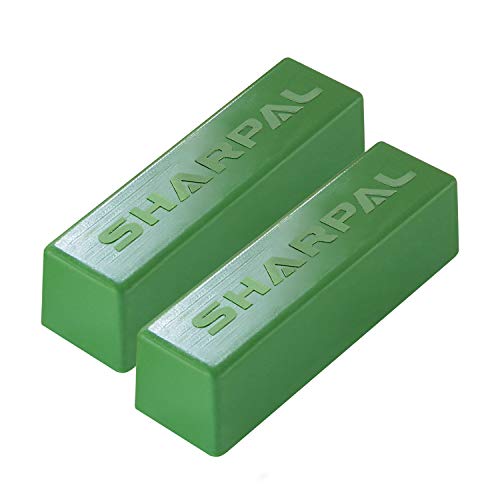
- Link: https://www.amazon.com/dp/B07WVQ8NM7

- Link: https://www.amazon.com/dp/B076X3LNQ3

- Link: https://www.amazon.com/dp/B00149DIBE
All 4 Picks at a Glance
| Product | Specs | Action |
|---|---|---|
| 1. SHARPAL 208H Fine Green Polishing Compound, 2-Pack |
| Check price on Amazon |
| 2. BeaverCraft P02 Green Polishing Compound |
| Check price on Amazon |
| 3. Tormek PA-70 Honing Compound |
| Check price on Amazon |
 4. FORMAX Green Chrome Oxide Compound, 6 oz |
| Check price on Amazon |
Key takeaways
- Compare the best knife polishing compound options for stropping, from green chromium oxide bars to honing paste, and learn how to get a polished edge.
Sharpening creates an edge, but polishing compound is what finishes it. After a knife leaves the stone, its edge still carries a thin, ragged burr and a bevel covered in fine scratches. Stropping on leather charged with polishing compound removes that burr, refines the scratches into a smooth, reflective bevel, and leaves an edge that cuts with noticeably less resistance. The confusing part is the choice: green bars, white bars, pastes in tubes, and powders all promise a mirror finish, and the colour alone tells you less than sellers imply. This guide explains what knife polishing compound actually is, how the abrasives and formats differ, and compares four established compounds, each suited to a slightly different way of working, so you can match one to your knives, your strop, and your sharpening routine.
As an Amazon Associate we earn from qualifying purchases.
What Polishing Compound Does to an Edge
A polishing compound is a fine abrasive held in a binder, usually wax, sometimes a paste base. When you rub it onto a leather strop, a felt wheel, or a honing wheel, the abrasive particles sit in and on that surface. Drawing a blade across it, edge trailing, does three things at once. It peels away the wire burr left by the stone, which is the fragile foil of metal that makes a freshly sharpened edge feel sharp one moment and dull the next. It abrades the bevel very lightly, smoothing the scratch pattern left by the final stone so the bevel reflects light evenly. And it slightly refines the very apex of the edge, which is where cutting ease is decided.
Compound is not a substitute for sharpening. It works in the final stage, on an edge that is already properly formed. A badly dulled, chipped, or rounded edge needs stones first; stropping a dull edge with compound mostly polishes the dullness. Used in the right place in the sequence, though, compound is the difference between an edge that works and an edge that glides.
The Abrasives Behind the Colours
Colour is a rough guide, not a standard. Manufacturers colour compounds for identification, and the same colour can hide different abrasives and particle sizes from different makers. What matters is the abrasive mineral and its particle size, usually given in microns or as an approximate grit equivalent.
Chromium oxide is the classic green abrasive for knife stropping. It is fine, relatively gentle, and known for producing a bright, polished bevel on steels used in kitchen, outdoor, and carving knives. Aluminium oxide is a common partner or alternative: slightly more aggressive in feel, widely used in white and other coloured bars, and effective for cleaning up a bevel before a final green pass. Some compounds blend the two, aiming to combine reasonable cutting speed with a fine finish. Diamond compounds sit at the specialist end, cutting even very hard, wear-resistant steels quickly, but they are a separate category from the wax bars and pastes compared here.
Particle size decides the finish. Coarser compounds, in relative terms, remove more metal and suit edge cleanup after a medium stone. Finer compounds, around the one to three micron range quoted by several makers below, remove very little metal and are aimed at burr removal and final polish. In practice, most home knife keepers need one fine compound and good technique far more than they need a shelf of grades.
The Four Picks at a Glance
All four products below are knife polishing compounds of the same general type: fine abrasive preparations made to charge a strop, felt wheel, or leather honing wheel. They differ in format, abrasive recipe, and quantity, and those differences are what the individual sections draw out.
1. SHARPAL 208H Fine Green Polishing Compound, 2-Pack
- Link: https://www.amazon.com/dp/B07WVQ8NM7
SHARPAL lists the 208H as a two-pack of green bars totalling about four ounces, with an abrasive blend of aluminium oxide and chromium oxide at a particle size of one to two microns, described as a micro-fine grade with a very high grit equivalent. The wax-based bars are made to be rubbed onto leather strops or applied to a honing wheel. This is the straightforward choice for a typical home setup built around a paddle or bench strop: the particle size is clearly stated, the two-bar pack means a spare is on hand or one bar can live at each workstation, and the blend is aimed squarely at final burr removal and a polished finish on kitchen and outdoor knives.
2. BeaverCraft P02 Green Polishing Compound
- Link: https://www.amazon.com/dp/B076X3LNQ3
BeaverCraft’s P02 is a single green bar of roughly two ounces, formulated, according to retailer listings of the product details, with chrome oxide and alumina abrasives. BeaverCraft is a carving-tool maker, and the P02 is positioned for the stropping that keeps carving knives, gouges, and other woodworking edges polished between sharpenings, as well as for general knife care. The bar format loads onto a leather strop by rubbing it on like a crayon. Choose this one if your stropping is mostly about carving and whittling tools, or if you want a compact single bar from a maker whose whole range is built around maintaining edged hand tools.
3. Tormek PA-70 Honing Compound
The PA-70 is different in format: a paste in a tube of about seventy grams rather than a wax bar. Tormek describes it for use on the leather honing wheels of its sharpening systems and on leather strops generally, with an average abrasive particle size of about three microns. A paste spreads thinly and evenly, recharges a honing wheel neatly, and suits the final honing stage in a Tormek workflow, where the compound is part of the standard process after grinding. It is equally usable on a hand strop, where a small amount goes a long way. Pick the PA-70 if you own or plan to use a Tormek machine, or if you simply prefer the control of a paste over rubbing on a bar.
4. FORMAX Green Chrome Oxide Compound, 6 oz
- Link: https://www.amazon.com/dp/B003E65XYU
The FORMAX compound is a single larger bar, listed at six ounces, made from chromium oxide with a fine grit type. The listing directs it to a felt wheel or leather strop for polishing, lapping, stropping, and honing woodworking tools to a very fine edge, and notes that it is made in the USA. The appeal is quantity and simplicity: one traditional green abrasive, in a bar sized for frequent use, suited to a workshop that strops chisels, plane irons, and knives regularly and does not want to reorder small bars often. If your stropping spans bench tools as well as knives, this is the workhorse option.
Bars Versus Pastes
Format affects daily use more than most buyers expect. Wax bars, like the SHARPAL, BeaverCraft, and FORMAX picks, are clean, shelf-stable, and applied by rubbing the bar across the strop until the leather changes colour and takes on a slight drag. They are hard to over-apply in a harmful way, though a heavy, caked layer wastes compound and can round an edge if you then press hard. Bars travel well and suit paddle strops, bench strops, and hanging strops alike.
Pastes, like the Tormek PA-70, spread thinner and more evenly and are the natural choice for powered leather honing wheels, where a bar is awkward to apply. A paste also lets you meter out a small, repeatable amount. The trade-off is tidiness and the need to let some pastes settle into the leather before use. Neither format is better in absolute terms; match the format to the surface you actually strop on.
How to Load a Strop and Use Compound Well
Technique decides the result more than brand does. Start with a clean strop. If an old strop is glazed or loaded with dark metal residue, a light cleaning or a fresh section of leather gives the new compound a fair chance. Apply compound evenly across the working area until the leather is coloured across its full width; you do not need a thick crust.
Strop with the edge trailing, spine leading, the opposite of the motion you would use to slice into the leather. Keep the bevel flat on the leather at the angle the edge was sharpened at, use light pressure, and draw the full length of the edge across the strop. Alternate sides, a handful of passes per side, and check the edge as you go. Heavy pressure is the most common mistake: leather gives under load, wraps slightly around the edge, and rounds the apex you are trying to refine. Light, flat, patient passes polish; hard, angled passes undo sharpening.
Work through the whole edge, including the curve toward the tip, by lifting the handle gradually as the belly of the blade crosses the strop. Finish with a few very light alternating passes, then wipe the blade clean, because compound residue left on a kitchen knife has no place near food preparation surfaces until the blade is washed.
Matching Compound to Your Knives and Routine
For a typical kitchen knife set maintained on stones and a paddle strop, the SHARPAL 208H is the balanced default: stated fine particle size, a practical two-bar supply, and an abrasive blend aimed at final polishing. For carving tools and a carver’s bench strop, the BeaverCraft P02 speaks the same language as the tools it maintains. For a Tormek owner, the PA-70 is the compound the system is designed around, and its paste format also flatters careful hand stropping. For a general workshop strop used on chisels, plane irons, and knives alike, the FORMAX bar offers a traditional single-abrasive recipe in a generous size.
Consider also how hard your steels are. Everyday kitchen and outdoor steels respond well to chromium oxide based compounds. Very hard, high-alloy steels still polish with these compounds, but more slowly, and patience rather than pressure is the answer. If a compound seems to do nothing, the usual cause is that the edge was not fully sharpened on the stones first; go back a step rather than stropping harder.
Common Mistakes to Avoid
The first mistake is stropping a dull edge and expecting polish to restore it. Compound refines; it does not rebuild an edge. The second is pressing hard, which rounds the apex on compressible leather. The third is using an edge-leading stroke, which cuts into the strop and dulls the blade. The fourth is mixing many compounds on one strop face until nobody knows what abrasive is actually on it; dedicate a face or a strop to one compound where you can. The fifth is neglecting the strop itself: a strop stored dirty, or in a dusty open spot, picks up grit that scratches the bevel you are trying to polish. Keep it covered or in a drawer, and keep compound bars and tubes capped and clean.
Frequently Asked Questions
Does the colour of a compound tell me its grit? Only loosely. Green usually signals chromium oxide and a fine finish, but particle size varies by maker. Trust the stated abrasive and micron size over colour alone.
How often should a knife be stropped with compound? Little and often works well. A few light passes after use, or whenever the edge starts to feel less keen, maintain a polished edge far longer between full sharpening sessions.
Can compound be used on a belt or felt wheel? The listings for several picks here name felt wheels and honing wheels as application surfaces, as well as leather strops. Follow the compound maker’s directions for the surface you use, and keep pressure light on powered wheels.
Will polishing compound remove scratches from a blade’s flat? It is made for the bevel and edge on a strop, not for refinishing a whole blade flat. Expect a polished bevel, not a restored blade finish.
Conclusion
The best knife polishing compound is a fine, honestly specified abrasive in the format your strop or honing wheel handles best. The SHARPAL 208H brings a clearly stated one to two micron blend in a practical two-pack. The BeaverCraft P02 is a compact green bar from a carving-tool maker. The Tormek PA-70 offers a paste of about three microns, at home on honing wheels and hand strops alike. The FORMAX green chrome oxide bar supplies a traditional recipe in a larger workshop size. Load the strop evenly, strop edge-trailing with light pressure, and any of the four will turn a freshly sharpened edge into a polished one that cuts cleanly and stays keen longer between trips to the stones.
More from Amazon
Programs that pair well with the guide above. Offers and eligibility are set by Amazon and may change.
Set up recurring deliveries of everyday items on eligible products. Terms and savings are set by Amazon.
Explore Subscribe & SaveCollect the home and kitchen items you want in one registry that guests can shop from.
Create a wedding registryFree shipping on eligible items, Prime Video and more. Eligible new members can start with a free trial.
Start a Prime free trialAudiobooks and podcasts to listen to on the go. Eligible new members can start with a free trial.
Try Audible freeAs an Amazon Associate we earn from qualifying purchases.
Write Your Review
No reviews yet. Be the first to share your experience!