
Our Short List of 3
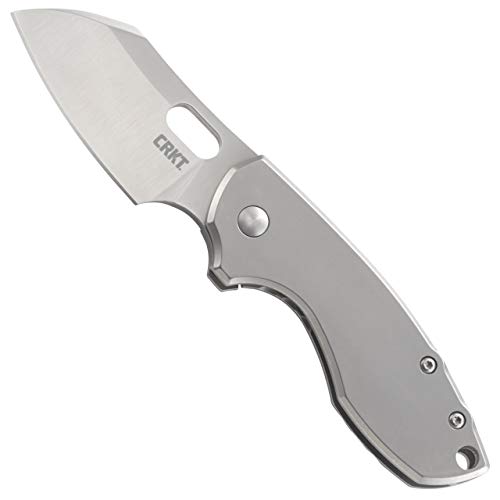
- Best for: Fifth-pocket and small-pocket carry where grip security matters more than blade length.
- Model: Pilar, 5311
- Blade length: 2.402 inches
- Blade steel: 8Cr13MoV, satin finish, flat grind
- Blade thickness: 0.145 inches
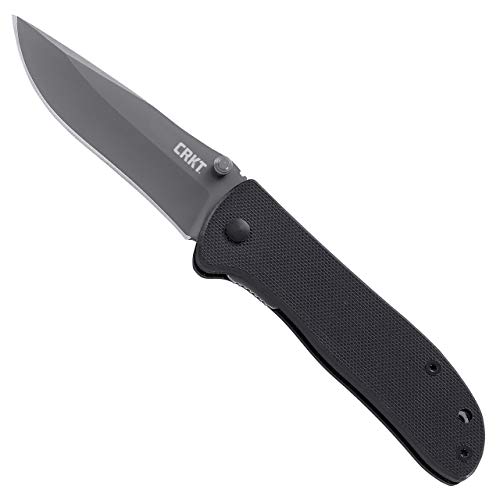
- Best for: A first everyday carry knife, or a light workhorse for buyers who open and close a blade all day.
- Model: Drifter, 6450K
- Blade length: 2.88 inches
- Blade steel: 8Cr14MoV
- Blade finish: Titanium nitride

- Best for: Office, dress-pocket and travel carry where a knife must stay invisible until it is needed.
- Model: CEO Blackout, 7097K
- Blade length: 3.35 inches
- Blade steel: AUS 8
- Edge: Plain
All 4 Picks at a Glance
| Product | Specs | Action |
|---|---|---|
| CRKT Pilar 5311 |
| Check price on Amazon |
| CRKT Drifter G10 6450K |
| Check price on Amazon |
| CRKT CEO Blackout 7097K |
| Check price on Amazon |
 CRKT Squid Compact 2485K |
| Check price on Amazon |
Key takeaways
- Four CRKT everyday carry folders compared by listing specs: the compact Pilar, lightweight Drifter G10, slim CEO Blackout and tiny assisted Squid Compact.
Choosing a CRKT knife is rarely about whether the brand makes a good folder. It is about which of its very different design languages matches the pocket you actually carry it in. CRKT sells a squat all-steel sheepsfoot, a featherweight G10 workhorse, a pen-slim gentleman’s flipper and a keychain-sized assisted opener, all under the same logo and all honestly described as everyday carry. Picking by logo alone is how buyers end up with a knife that is too heavy for gym shorts or too delicate for warehouse work.
This roundup is for four kinds of buyers: office workers who need a knife that disappears in a shirt pocket, first-time carriers who want one forgiving all-rounder, minimalists who carry on a keychain or in a fifth pocket, and shoppers who like a stout little blade that fills the hand. Every pick below is a genuine CRKT model, chosen from the specifications printed on its Amazon listing.
Quick Picks
As an Amazon Associate we earn from qualifying purchases.
| Product | Best for | Key spec from title |
|---|---|---|
| CRKT Pilar 5311 | Small-pocket carry that still fills the hand | 2.402-inch blade, frame lock |
| CRKT Drifter G10 6450K | A light daily beater you can forget you carry | 2.4 oz with a G10 handle |
| CRKT CEO Blackout 7097K | Discreet office and shirt-pocket carry | 3.35-inch AUS 8 blade, 1.9 oz |
| CRKT Squid Compact 2485K | Keychain and backup carry | 1.75-inch blade, assisted opening |
How to Choose
Start with blade length, not blade style
The four knives here span 1.75 to 3.35 inches of blade, and that spread matters more than any styling detail. A blade under two inches opens packages, cuts cord and trims tape without drawing attention, but it runs out of edge quickly on food prep or long cuts through cardboard. A blade around three inches handles those bigger jobs and still rides flat in most pockets. Measure the knife against your real daily tasks: if your cutting is mostly packaging and string, the small end of this range is enough, and you gain a knife you will actually carry every day.
Match the opening method to your hands and habits
CRKT uses almost every opening system in this one lineup. The Pilar opens through a thumb slot, which works with gloves and with either hand. The Drifter uses thumb studs on a manual pivot, simple and predictable. The CEO Blackout is a flipper running on an IKBS ball-bearing pivot, so it snaps open with a push on the tab. The Squid Compact adds assisted opening on top of IKBS bearings, the fastest of the four. If you open a knife dozens of times a day, bearings and a flipper feel effortless; if you prefer slow, deliberate, two-stage control, a plain thumb stud or slot is the better tool.
Weigh the lock and handle material together
Lock type and handle material decide how a small knife feels after a month of carry. The Pilar and Squid Compact use frame locks cut into stainless steel handles, which makes them slim and strong but noticeably heavy for their size. The Drifter pairs a liner lock with G10 scales, trading a little ultimate rigidity for a much lighter, grippier package. The CEO Blackout goes furthest toward lightness with a glass-reinforced nylon handle and a liner lock at just 1.9 ounces. Decide which you notice more in a pocket: ounces, or the solid, bank-vault feel of an all-steel frame.
Know what these blade steels ask of you
Every blade here sits in the easy-sharpening family: 8Cr13MoV on the Pilar, 8Cr14MoV on the Drifter, AUS 8 on the CEO Blackout and high-carbon stainless on the Squid Compact. None of them will hold an edge through weeks of cardboard the way a premium powder steel does, and the listings make no such claim. What they do offer is quick touch-ups on almost any sharpener, decent corrosion resistance for pocket carry, and edges that forgive beginners. All four listings specify hand washing only, so budget a minute at the sink rather than a trip through the dishwasher.
The 4 Best Options
CRKT Pilar 5311
- Best for: Fifth-pocket and small-pocket carry where grip security matters more than blade length.
- Model: Pilar, 5311
- Blade length: 2.402 inches
- Blade steel: 8Cr13MoV, satin finish, flat grind
- Blade thickness: 0.145 inches
Fifth-pocket and small-pocket carry where grip security matters more than blade length.
At 4.2 ounces it weighs as much as knives with far longer blades, and several Pilar generations and sizes exist, so confirm the listing says 5311 before ordering.
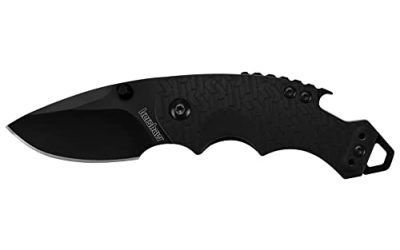
The Pilar is the answer for buyers who want the smallest knife that still works like a real tool. Jesper Voxnaes designed its broad sheepsfoot blade with a deep finger choil, so even though the closed knife is barely three and a half inches long, your index finger locks in close to the edge and the stubby handle fills a full-size hand. The flat grind and fine tip suit detail work, opening clamshell packaging and scoring cuts, while the all-stainless build shrugs off pocket lint and moisture. It is dense for its size, which most owners read as solidity rather than burden.
CRKT Drifter G10 6450K
- Best for: A first everyday carry knife, or a light workhorse for buyers who open and close a blade all day.
- Model: Drifter, 6450K
- Blade length: 2.88 inches
- Blade steel: 8Cr14MoV
- Blade finish: Titanium nitride
A first everyday carry knife, or a light workhorse for buyers who open and close a blade all day.
CRKT sells this knife in plain and part-serrated edges and in a separate stainless frame-lock version, so check the edge type and handle material fields on the listing you order.
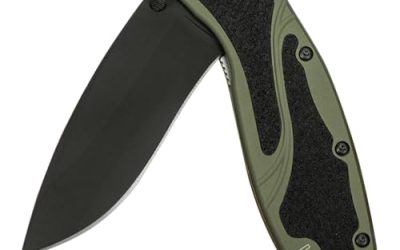
The Drifter is the traditionalist of the group: a drop point blade, a liner lock and a pocket clip, with nothing exotic to learn. What earns it a place here is the G10 version’s weight. At 2.4 ounces it carries like a pen, yet the 2.88-inch hollow-ground blade is the most general-purpose edge in this roundup, long enough for food prep on a work trip and tough enough for daily box and strap cutting. The InterFrame build with stainless liners keeps the slim handle rigid, and the gray titanium nitride finish shrugs off the scuffs a beater knife collects.
CRKT CEO Blackout 7097K
- Best for: Office, dress-pocket and travel carry where a knife must stay invisible until it is needed.
- Model: CEO Blackout, 7097K
- Blade length: 3.35 inches
- Blade steel: AUS 8
- Edge: Plain
Office, dress-pocket and travel carry where a knife must stay invisible until it is needed.
The smaller CEO Compact 7095 is a different knife with a shorter blade, and the standard CEO comes in several colors and finishes, so verify the listing title says Blackout and 7097K.
Richard Rogers designed the CEO to look like a pen and ride like one, and the Blackout version leans into that brief with a black finish over the whole knife. Closed, it is a slim stick that vanishes in a shirt pocket; flick the flipper and a 3.35-inch blade, the longest here, rolls out on IKBS bearings. That combination of reach and invisibility is exactly what office carriers ask for. The trade is structural: a 1.9-ounce glass-reinforced nylon handle and a liner lock are built for envelopes, tape and light packaging, not prying paint cans or twisting cuts.
CRKT Squid Compact 2485K
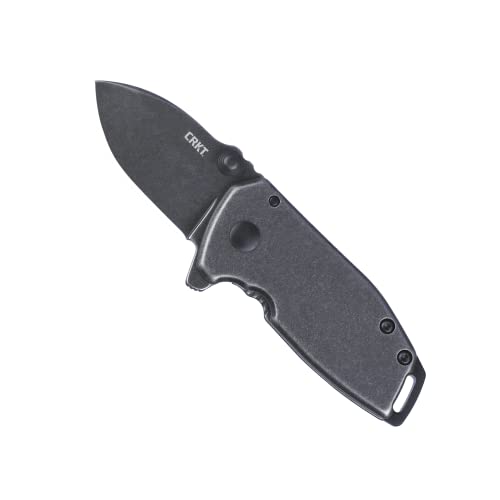
- Best for: Keychain, coin-pocket and backup carry, and buyers who want assisted opening in the smallest CRKT package.
- Model: Squid Compact, 2485K
- Blade length: 1.75 inches
- Blade material: High-carbon stainless steel
- Overall length: 4.68 inches
Keychain, coin-pocket and backup carry, and buyers who want assisted opening in the smallest CRKT package.
Assisted-opening knives are restricted in some places, so check your local rules before carrying one, and note the smooth stainless handle offers little texture for wet or gloved hands.
Lucas Burnley’s Squid was already a small knife; the Squid Compact shrinks it to 4.68 inches open, small enough to hang from the lanyard hole on a keychain fob. It is the only assisted opener here: start the blade with a flick of the thumb and the spring finishes the job, with IKBS bearings keeping the action smooth and a frame lock securing it open. The all-stainless construction gives this tiny tool a reassuring heft and the durability to live on a key ring. Treat it as a package-and-cord specialist that is always on you, rather than a stand-in for a full-size folder.
Which One Fits Your Situation
You wear dress clothes and carry in a shirt pocket
Take the CEO Blackout. Nothing else here disappears against a shirt pocket seam, and its flipper gives you one-handed opening without fishing for a stud. The 3.35-inch blade is long enough for the cutting an office actually generates, and at 1.9 ounces it will not drag a pocket out of shape. Just keep its work light: this is a letter-and-package knife, not a pry bar.
You want one knife for work, home and weekends
Take the Drifter G10. Its 2.88-inch drop point is the most versatile blade shape in this group, the G10 handle grips well with work gloves, and the 2.4-ounce weight means you will still be carrying it in month six. It opens with a simple thumb stud, locks with a liner lock, and asks for nothing more than a quick touch-up on a basic sharpener when the edge fades.
Your pockets are small but your hands are not
Take the Pilar. Most sub-two-and-a-half-inch knives force a two-finger grip; the Pilar’s finger choil and broad handle let a large hand choke up and control the cut properly. The frame lock is the stoutest lock style here, and the stainless build tolerates being dropped, sat on and carried loose with keys. Accept the weight: that density is the price of a small knife that does not feel like a toy.
You keep forgetting to carry a knife at all
Take the Squid Compact and put it on your keys. A knife on a keychain has a perfect carry record, and the assisted opening makes it genuinely one-handed when your other hand is holding the package. Its 1.75-inch blade will not replace a kitchen or camp knife, but it covers the ninety percent of daily cutting that is tape, blister packs, zip ties and string.
Common Mistakes
- Buying by blade length alone and ignoring closed size, which is what your pocket actually feels all day.
- Ordering the wrong variant: CRKT reuses model names across sizes, edges and finishes, so the model number in the listing title is the detail to check.
- Expecting budget stainless steels to hold an edge like premium steels, instead of planning on quick, frequent touch-ups.
- Carrying an assisted-opening knife without checking local rules, which vary widely between cities and workplaces.
- Putting any of these folders through a dishwasher, when every listing here specifies hand washing only.
Frequently Asked Questions
Are CRKT knives a sensible first everyday carry purchase?
Yes, and this lineup shows why. CRKT’s budget folders use steels that sharpen easily on inexpensive stones, simple locks with few failure points, and shapes designed by well-known custom makers. A first-time carrier is more likely to dull a blade through learning than to break one, and an edge that comes back in two minutes on a basic sharpener is the forgiving place to start.
Which of these knives is best for an office environment?
The CEO Blackout, by design. It was shaped to resemble a pen, carries flat in a shirt pocket and opens with a discreet flipper tab rather than a wide thumb disc. Its long, slim blade suits envelopes, packaging tape and light food tasks. The Pilar is the runner-up for offices where a shorter blade is preferred, since its sheepsfoot profile reads as a tool rather than a weapon.
What is the practical difference between a frame lock and a liner lock?
A frame lock is part of the handle itself: a section of the steel frame springs behind the blade, which makes it simple and strong, as on the Pilar and Squid Compact. A liner lock uses a separate spring liner inside the handle, as on the Drifter and CEO Blackout, which allows lighter scale materials like G10 and nylon. For everyday cutting both are proven; the choice mostly decides weight and feel.
How should I maintain one of these blades?
Follow the listings: hand wash only, dry the knife before closing it, and touch up the edge little and often rather than letting it go fully dull. These steels respond well to a few passes on a fine stone or ceramic rod. Keep the pivot clean and dry, since pocket lint gathers there first, and store the knife closed so the edge stays protected.
More from Amazon
Programs that pair well with the guide above. Offers and eligibility are set by Amazon and may change.
Set up recurring deliveries of everyday items on eligible products. Terms and savings are set by Amazon.
Explore Subscribe & SaveCollect the home and kitchen items you want in one registry that guests can shop from.
Create a wedding registryFree shipping on eligible items, Prime Video and more. Eligible new members can start with a free trial.
Start a Prime free trialAudiobooks and podcasts to listen to on the go. Eligible new members can start with a free trial.
Try Audible freeAs an Amazon Associate we earn from qualifying purchases.
Write Your Review
No reviews yet. Be the first to share your experience!