
Our Short List of 3
All 5 Picks at a Glance
| Product | Specs | Action |
|---|---|---|
 1. Victorinox Fibrox Pro Curved Boning Knife, Flexible, 6-Inch | Check price on Amazon | |
 2. Victorinox Fibrox Pro Curved Boning Knife, Semi-Stiff, 6-Inch | Check price on Amazon | |
 3. Mercer Culinary Millennia Flexible Boning Knife, 6-Inch | Check price on Amazon | |
 4. Dexter-Russell Sani-Safe Curved Boning Knife, 6-Inch | Check price on Amazon | |
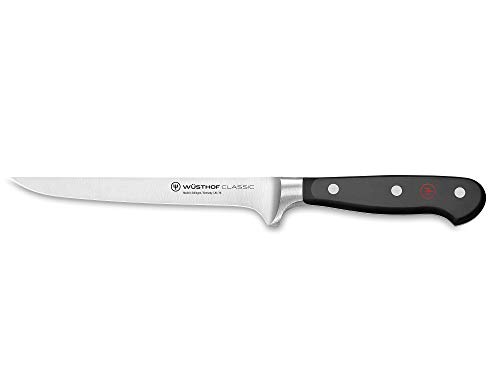 5. Wusthof Classic Flexible Boning Knife, 6-Inch | Check price on Amazon |
Our Top Picks
- Victorinox Fibrox 6-In Curved Boning & Fillet Knife6"11.22 x 1.77 x 0.2 inches0.2 PoundsCheck on Amazon
Breasting a duck is a short job with very little room for error. The breast sits tight against a prominent keel bone in the center and a curved rib cage on either side, and the goal is to free each side in one clean piece while leaving as little meat on the carcass as possible. A wide chef knife cannot follow those curves, and a dull or overly stiff blade tends to tear through skin and fat instead of tracing the bone. The right tool is a narrow boning or fillet knife with a pointed tip, a blade around six inches long, and enough flex to bend along the ribs while still holding a precise line down the keel.
This guide compares five boning knives that suit that work, from flexible curved models built for processing lines to a forged flexible knife for cooks who want more weight and refinement at the table. Every pick is the same basic type, a six-inch boning knife, because that is the shape the task actually calls for. Differences in curve, stiffness, handle material, and steel decide which one fits a particular routine, whether that means breasting a limit of mallards at a cleaning station, breaking down whole farm ducks in the kitchen, or handling a mix of ducks, geese, and other poultry through the season.
As an Amazon Associate, we earn from qualifying purchases.
How to Choose a Knife for Breasting Ducks
Blade shape matters more than blade size. A curved blade helps the edge stay in contact with the rib cage as the cut sweeps from the keel toward the wing, and the upswept tip makes it easier to work around the wishbone at the top of the breast. A straight blade can do the same work, but it asks for more wrist adjustment on each stroke. For most duck work, a curved profile is the simpler and more forgiving choice, especially when several birds need to be processed in a row and consistency matters more than speed on any single cut.
Flex is the second decision. A flexible blade bends along the breastplate and ribs, which helps keep the edge close to bone and reduces wasted meat. That flex is valuable on smaller birds such as teal and wood ducks, where the breast is compact and the curves are tight. A semi-stiff blade gives up some of that bend in exchange for more control when the tip is pushed along the keel or when tougher joints and thicker skin on larger birds, such as big mallards or farm-raised ducks, resist the cut. Neither option is universally better. Flexible suits careful fillet-style work, while semi-stiff suits anyone who prefers to guide the blade with pressure rather than letting it bend on its own.
Blade length around six inches covers the full length of a duck breast without excess edge getting in the way. Shorter blades can feel cramped on larger birds, and longer fillet blades can feel loose and hard to steer around the wishbone. Steel choice is mostly about maintenance. High-carbon stainless steels used in professional boning knives sharpen quickly on a steel or stone, resist corrosion from blood and water, and tolerate frequent washing. Forged high-carbon stainless steel adds weight and a harder temper, which can hold an edge longer but takes a little more care to restore once dull.
Handle grip deserves attention because breasting is wet work. Hands and handles get covered in water, fat, and blood, so a textured, non-slip handle made from a synthetic material such as Fibrox, Santoprene, or polypropylene is safer and easier to rinse clean than a smooth handle. A sealed blade-to-handle joint also helps hygiene, since there is no gap where residue can collect. Finally, a blade that responds well to a honing steel between birds is a practical advantage, and a sheath or edge guard keeps the narrow tip from damage in a field kit or drawer.
1. Victorinox Fibrox Pro Curved Boning Knife, Flexible, 6-Inch
The flexible curved model in the Fibrox Pro line is the closest match to the classic processing-station boning knife, and it fits duck breasting naturally. The curved profile follows the rib cage in a single sweeping motion, and the flexible blade bends against the breastplate so the edge can stay close to bone from the keel out toward the wing. The pointed tip handles the detail work at the wishbone and around the wing joint, where a broader blade would force awkward angles and risk cutting into the breast itself.
The black Fibrox handle is textured for grip in wet conditions and shaped to fill the hand without hot spots during repetitive work. That matters when several birds are waiting, because control tends to slip before an edge does. The high-carbon stainless steel blade is built for frequent sharpening, so a few passes on a steel between birds can restore the working edge without stopping for a full sharpening session. For anyone setting up a dedicated bird-cleaning kit, this is the straightforward starting point against which the other picks can be judged.
Who It Suits
This knife suits hunters and home processors who breast several ducks at a time and want maximum flex along the ribs. It also suits anyone who values an easy-to-clean synthetic handle and a blade that is simple to hone back to working sharpness. Anyone who prefers a firmer blade for pushing through tougher joints may prefer the semi-stiff version below instead.
2. Victorinox Fibrox Pro Curved Boning Knife, Semi-Stiff, 6-Inch
The semi-stiff version keeps the same curved shape and Fibrox Pro handle as the flexible model, but the blade resists bending. That small change alters how the knife behaves along the keel bone. Instead of flexing away under pressure, the edge tracks where the hand points it, which can feel more predictable when cutting down one side of the keel and then turning the tip under the wishbone. On larger ducks with thicker skin and a heavier layer of fat, that firmer response helps the blade keep moving rather than deflecting.
Like the flexible model, it uses high-carbon stainless steel and a six-inch curved blade, so the overall size and reach are familiar. The difference is purely in control style. Processors who learned on a stiff boning knife, or who also use the same knife for trimming red meat and breaking down chickens, often find semi-stiff more versatile across tasks. For pure duck breasting on smaller birds, the flexible model has a slight edge in following tight curves, but for mixed poultry and larger waterfowl, the semi-stiff blade is a balanced compromise.
Who It Suits
This knife suits cooks and hunters who want one boning knife for ducks, chickens, and trimming work, and who prefer guiding the blade with deliberate pressure. It is also a sensible pick for larger birds, where a very flexible blade can feel underpowered around joints and through thicker skin.
3. Mercer Culinary Millennia Flexible Boning Knife, 6-Inch
The Millennia flexible boning knife from Mercer Culinary is a professional-line option built around a six-inch flexible blade and an ergonomic handle that combines a soft grip with a firmer core. The handle design includes textured finger points intended to improve grip and control, which is relevant for breasting because the knife is often held at changing angles as the cut moves from the keel down around the ribs. A comfortable, secure grip reduces the need to squeeze hard, and that in turn makes the fine tip work at the top of the breast more controlled.
The blade is made from high-carbon, stain-free Japanese steel, a formulation chosen for edge retention and straightforward sharpening in busy kitchens. In practical terms, that means the knife is aimed at repeated daily use rather than occasional display, and it fits a routine where the blade is honed often and washed frequently. The flexible blade profile suits the fillet-style motion used to peel a duck breast away from the carcass in one piece, keeping the edge moving along bone rather than digging into meat.
Who It Suits
This knife suits home cooks and processors who want a flexible blade with a particularly secure, cushioned grip for longer sessions. It also suits anyone who breasts ducks alongside other kitchen boning tasks, such as trimming pork or breaking down whole fish, and wants one affordable professional-style knife to cover all of them.
4. Dexter-Russell Sani-Safe Curved Boning Knife, 6-Inch
Dexter-Russell has a long history in American processing plants, and the Sani-Safe curved boning knife reflects that background. The six-inch curved blade is flexible, with a narrow profile that suits sliding along a duck breastplate and under the breast meat as it is lifted away from the ribs. The blade uses the maker proprietary DEXSTEEL high-carbon steel, ground and honed for the kind of edge that can be maintained quickly during continuous work rather than treated as a delicate showpiece.
The white Sani-Safe handle is made from textured polypropylene and is designed with an impervious seal between blade and handle, a detail aimed at hygiene in professional settings. For duck processing, that seal and the easy-rinse handle are practical benefits, since the knife will be washed repeatedly and used with wet, messy hands. The white handle also stands out on a crowded cleaning table, which makes it easier to spot and less likely to be left behind.
Who It Suits
This knife suits processors who prioritize hygiene, easy cleaning, and a proven processing-plant design. It is a strong fit for a shared cleaning station, a hunting camp kit, or any setup where the knife will be washed often, used hard, and expected to resharpen without fuss.
5. Wusthof Classic Flexible Boning Knife, 6-Inch
The Wusthof Classic flexible boning knife is the premium option in this group, and the difference shows in construction. It is precision forged from a single piece of high-carbon stainless steel in Solingen, Germany, and tempered to a hardness of 58 on the Rockwell scale. That forged build gives the knife more heft and balance than the stamped professional models above, and the flexible six-inch blade still bends enough to follow a duck rib cage and release the breast cleanly. For cooks who breast farm-raised ducks at a kitchen counter rather than wild birds at a cleaning station, that weight and finish can feel more settled and precise.
The handle is made from polyoxymethylene, a durable synthetic material that resists fading and discoloration, and it is shaped in the traditional triple-riveted Classic style. The handle length is listed at 4.4 inches, and the blade width is listed at 1.2 inches, giving the knife a slightly broader presence in hand than the narrowest processing blades while keeping the pointed tip needed for wishbone work. Care expectations are higher than with the workhorse picks. A forged knife benefits from hand washing, careful storage, and proper honing, so it suits an owner willing to maintain it as a long-term kitchen tool.
Who It Suits
This knife suits home cooks who want one refined boning knife for ducks, poultry, and general kitchen butchery, and who are willing to hand wash and store it carefully. It is less suited to a rough camp kit or shared station where knives are treated as disposable tools, since its forged construction rewards more attentive care.
Frequently Asked Questions
Is a boning knife or a fillet knife better for breasting ducks?
Both can work, because both are narrow, pointed, and built to follow bone. A boning knife is generally the better default for ducks because its blade is sturdy enough to work around the wishbone and wing joints while still flexing along the ribs. A very thin, long fillet knife can feel too loose on larger birds and is easier to deflect when cutting along the keel. A six-inch curved boning knife with flexible or semi-stiff flex sits in the middle and covers the whole job without needing a second blade.
How flexible should the blade be for duck breasts?
Moderate flex is the useful range. The blade should bend enough to stay against the breastplate and rib cage as the breast is peeled away, because that contact is what reduces meat left on the carcass. If the blade is completely rigid, it tends to cut straight lines through curved anatomy and waste meat or nick the breast. If it is extremely flexible, tip control suffers at the keel and wishbone. Flexible models suit smaller ducks and careful work, while semi-stiff models suit larger birds and anyone who prefers to steer the edge with pressure.
Can the same knife be used for geese and chickens?
Yes, with size in mind. A six-inch boning knife that works on ducks also handles chickens well, since the anatomy is similar and the breast is comparable in scale. Geese are larger, with a longer breast and thicker skin, so the same knife still works but the job takes longer strokes and sometimes more pressure, which is where a semi-stiff blade can help. Anyone who regularly processes geese alongside ducks may prefer the semi-stiff pick in this guide, while duck-focused use is well served by any of the flexible options.
How should a duck breasting knife be maintained?
Rinse and wash the knife promptly after use, dry it fully, and hone it regularly so the edge stays aligned for the next bird. Bone contact dulls a working edge gradually, so brief honing between sessions is more effective than waiting until the blade tears instead of cuts. Store the knife with the tip and edge protected, either in a sheath, on a magnetic strip, or in a dedicated slot, rather than loose in a drawer or field bag. Forged and premium models should be hand washed, while the professional synthetic-handle models in this guide are built to tolerate frequent washing as part of a processing routine.
Final Verdict
For most people breasting ducks, the Victorinox Fibrox Pro flexible curved boning knife is the clearest match. Its curved, flexible six-inch blade follows the exact path the cut requires, from the keel down along the ribs and around the wishbone, and its textured handle stays secure in wet conditions. Anyone who wants firmer control for larger birds or mixed poultry work should choose the semi-stiff version of the same knife instead. The Mercer Culinary Millennia flexible model is the comfort-focused alternative, the Dexter-Russell Sani-Safe is the hygiene-first processing pick, and the Wusthof Classic is the forged upgrade for cooks who want a boning knife that will serve at the kitchen counter for years. Whichever option is chosen, the important point is the type itself: a narrow six-inch boning knife, kept sharp and honed, will breast ducks more cleanly and with less waste than any general-purpose kitchen knife.
Product and ASIN Reference
| Product | ASIN |
|---|---|
| Victorinox Fibrox Pro Curved Boning Knife, Flexible, 6-Inch | B0019WQDOU |
| Victorinox Fibrox Pro Curved Boning Knife, Semi-Stiff, 6-Inch | B001U57EJ4 |
| Mercer Culinary Millennia Flexible Boning Knife, 6-Inch | B00MJ0A64O |
| Dexter-Russell Sani-Safe Curved Boning Knife, 6-Inch | B000LEHWCO |
| Wusthof Classic Flexible Boning Knife, 6-Inch | B085V5MX84 |
More from Amazon
Programs that pair well with the guide above. Offers and eligibility are set by Amazon and may change.
Set up recurring deliveries of everyday items on eligible products. Terms and savings are set by Amazon.
Explore Subscribe & SaveCollect the home and kitchen items you want in one registry that guests can shop from.
Create a wedding registryFree shipping on eligible items, Prime Video and more. Eligible new members can start with a free trial.
Start a Prime free trialAudiobooks and podcasts to listen to on the go. Eligible new members can start with a free trial.
Try Audible freeAs an Amazon Associate we earn from qualifying purchases.
Write Your Review
No reviews yet. Be the first to share your experience!