
Our Short List of 3

- Best for: Home cooks who want a capable forged santoku for daily prep at a modest outlay.
- 7-inch blade, high-carbon German steel
- Precision-forged, single-piece construction
- Granton edge with ground shallows that release slices
- Santoprene nonslip handle

- Best for: Busy households that want a santoku they can wash, hone, and use every day without fuss.
- 7-inch blade with Granton edge (6.7 in per Victorinox)
- High-carbon stainless steel
- Fibrox non-slip handle
- Dishwasher safe

- Best for: Cooks who want a heavy, durable German santoku that rocks cleanly and lasts for years.
- 7-inch forged blade, high-carbon stainless steel
- 58 HRC
- Hollow (Granton) edge
- Full tang with triple-riveted handle
All 5 Picks at a Glance
| Product | Specs | Action |
|---|---|---|
| Mercer Culinary Genesis 7-Inch Santoku |
| Check price on Amazon |
| Victorinox Fibrox Pro 7-Inch Granton Santoku |
| Check price on Amazon |
| Wüsthof Classic 7-Inch Hollow Edge Santoku |
| Check price on Amazon |
 Shun Classic 7-Inch Santoku DM0702 |
| Check price on Amazon |
 DALSTRONG Shogun Series 7-Inch Santoku |
| Check price on Amazon |
Key takeaways
- Find a santoku that rocks through herbs, onions, and garlic. Compare 5 curved-belly santoku knives by steel, edge, handle, and balance before you buy.
A classic santoku has a nearly flat edge, which makes it brilliant for straight push cuts and terrible for the rocking motion most home cooks learned on a chef knife. If you mince garlic, chop herbs, or dice onions with the tip anchored on the board and the heel rising and falling, you need a santoku with a gentle curve toward the tip. The wrong pick forces you to lift the whole blade for every cut, and that slows down prep and tires your wrist.
This guide is for home cooks who want one santoku that handles both jobs: clean push cuts for vegetables and a smooth rock for mincing. It also suits cooks replacing a chef knife with a shorter, lighter blade, and anyone buying a first Japanese-style knife without giving up a familiar motion. Every knife below was chosen from the name and specifications shown on its Amazon product page, with attention to blade curve, edge type, steel, and handle.
Quick Picks
As an Amazon Associate we earn from qualifying purchases
| Product | Best for | Key spec from title |
|---|---|---|
| Mercer Culinary Genesis 7-Inch Santoku | Everyday prep on a budget | 7 in, forged German steel, Granton edge |
| Victorinox Fibrox Pro 7-Inch Granton Santoku | Low-maintenance daily use | 7 in, Granton edge, non-slip Fibrox handle |
| Wüsthof Classic 7-Inch Hollow Edge Santoku | A buy-once German blade | 7 in, forged, 58 HRC, hollow edge |
| Shun Classic 7-Inch Santoku DM0702 | A premium Japanese gift | 7 in, VG-MAX core, 68-layer Damascus |
| DALSTRONG Shogun Series 7-Inch Santoku | The hardest edge here | 7 in, AUS-10V core, 67-layer Damascus |
How to Choose
Blade Curve and Rocking Motion
Look at the belly, the curve from the middle of the blade to the tip. A santoku with a flat edge keeps the whole cutting edge on the board at once, which suits push cuts and tap chopping but fights a rocking stroke. A gentle curve near the tip lets the heel lift while the tip stays planted, so the blade rolls forward through herbs and garlic. Hold the knife on a board and imagine the motion: if the edge touches the board along its full length when flat, it will not rock. The five knives in this guide all have enough curve to rock, with the German blades curving a little more than the Japanese ones.
Plain Edge or Granton Edge
A Granton edge has shallow scallops ground into the blade face, and those hollows create small air pockets that stop thin slices from clinging to the steel. That matters when you slice potatoes, cucumbers, or onions, because stuck slices slow you down and invite a cut finger when you peel them off. A plain edge gives you a longer uninterrupted cutting surface and is simpler to sharpen, since there are no scallops to work around. If you slice a lot of wet vegetables, pick a Granton or hollow edge. If you mostly chop and mince, a plain edge is fine, and the Mercer and Shun picks below cover both styles.
Steel Hardness and Edge Care
Harder steel holds a keen edge longer but chips more easily, while softer steel dulls faster but shrugs off rough treatment. Japanese blades in this guide run from about 60 to 62 HRC, so they stay sharp through long prep sessions yet demand care around bones, frozen food, and hard rinds. German blades sit near 56 to 58 HRC, which means more frequent honing but far less risk of chipping if the knife meets a stray bone. Match the steel to your habits: if you hone often and treat a knife gently, hard steel rewards you; if you want a blade that forgives the occasional mistake, softer steel is the safer buy.
Handle, Balance, and Weight
A santoku should feel like an extension of your hand, not a tool you fight. Western handles with a full tang and rivets, like the Wüsthof, put weight toward the handle and feel steady for larger hands. Japanese D-shaped handles, like the Shun, shift balance toward the blade and suit a pinch grip. Textured synthetic handles, such as the Santoprene on the Mercer and the Fibrox on the Victorinox, stay grippy when wet, which matters during long prep. Check the listed weight and handle material on the product page before ordering, and remember that a knife that feels heavy in the listing often feels heavier after twenty minutes of chopping.
The 5 Best Options
Mercer Culinary Genesis 7-Inch Santoku
- Best for: Home cooks who want a capable forged santoku for daily prep at a modest outlay.
- 7-inch blade, high-carbon German steel
- Precision-forged, single-piece construction
- Granton edge with ground shallows that release slices
- Santoprene nonslip handle
Home cooks who want a capable forged santoku for daily prep at a modest outlay.
Hand wash only, and confirm the listing shows the Granton-edge model before ordering.
The Mercer Genesis is the workhorse pick for cooks who want a forged santoku that rocks well without spending much. Its 7-inch blade carries a Granton edge, so thin slices release cleanly, and the taper-ground edge arrives sharp enough for tomatoes and herbs on day one. The black Santoprene handle stays secure when wet, and the full forged construction gives the knife a solid, balanced feel that suits both pinch and handle grips. It is a culinary-school staple for a reason, and it handles daily onion, garlic, and vegetable prep without complaint.
Watch out for: Hand wash only, and confirm the listing shows the Granton-edge model before ordering.
Victorinox Fibrox Pro 7-Inch Granton Santoku
- Best for: Busy households that want a santoku they can wash, hone, and use every day without fuss.
- 7-inch blade with Granton edge (6.7 in per Victorinox)
- High-carbon stainless steel
- Fibrox non-slip handle
- Dishwasher safe
Busy households that want a santoku they can wash, hone, and use every day without fuss.
Softer steel near 55 to 56 HRC needs honing more often than the harder Japanese blades here.
The Victorinox Fibrox Pro is the easiest knife in this guide to live with. Its stamped high-carbon stainless blade carries a Granton edge, and the textured Fibrox handle grips well even with wet hands. Unlike the harder Japanese blades here, this one tolerates the dishwasher and the occasional knock, and its softer steel is simple to bring back with a honing rod. The blade runs a touch shorter than the listed 7 inches, but the curved belly still rocks smoothly through herbs and garlic, making it a strong first santoku.
Watch out for: Softer steel near 55 to 56 HRC needs honing more often than the harder Japanese blades here.
Wüsthof Classic 7-Inch Hollow Edge Santoku
- Best for: Cooks who want a heavy, durable German santoku that rocks cleanly and lasts for years.
- 7-inch forged blade, high-carbon stainless steel
- 58 HRC
- Hollow (Granton) edge
- Full tang with triple-riveted handle
Cooks who want a heavy, durable German santoku that rocks cleanly and lasts for years.
The heavier build can tire smaller hands during long prep, and the hollow edge leaves less steel to sharpen over many years.
The Wüsthof Classic is the buy-once German option, forged in Solingen from high-carbon stainless steel and finished with a hollow edge that keeps slices from sticking. Its belly has the most generous curve of the German blades here, so the rocking motion feels natural, and the full tang with a triple-riveted handle gives it a reassuring heft. At 58 HRC the steel is hard enough to hold an edge through a long prep session yet forgiving enough to survive the odd encounter with a bone. It is the knife to pick when you want one santoku for the next decade.
Watch out for: The heavier build can tire smaller hands during long prep, and the hollow edge leaves less steel to sharpen over many years.
Shun Classic 7-Inch Santoku DM0702
- Best for: Cooks who want a beautiful, razor-keen Japanese santoku, and gift buyers who want a knife that impresses.
- 7-inch blade, VG-MAX steel core
- 68-layer Damascus stainless cladding
- 16-degree edge per side
- D-shaped Pakkawood handle
Cooks who want a beautiful, razor-keen Japanese santoku, and gift buyers who want a knife that impresses.
The hard, thin edge can chip on bone or frozen food, the D-shaped handle favors right-handed use, and hand washing is required.
The Shun Classic DM0702 is the premium Japanese pick, handcrafted in Seki from a VG-MAX core wrapped in 68 layers of Damascus cladding. Its 16-degree edge per side arrives exceptionally keen, and the D-shaped Pakkawood handle feels light and precise in a pinch grip. The belly has a subtle curve that supports a gentle rock, though this knife shines brightest on push cuts and fine slicing. Shun includes free sharpening and honing, which takes the hardest maintenance chore off your list and makes the higher outlay easier to justify.
Watch out for: The hard, thin edge can chip on bone or frozen food, the D-shaped handle favors right-handed use, and hand washing is required.
DALSTRONG Shogun Series 7-Inch Santoku
- Best for: Serious home cooks who want the longest-lasting edge and a showpiece blade for the kitchen.
- 7-inch blade, Japanese AUS-10V super steel core
- 67-layer Damascus cladding
- 62 HRC and above
- Hammered tsuchime finish
Serious home cooks who want the longest-lasting edge and a showpiece blade for the kitchen.
Very hard steel needs a wooden or plastic board and gentle handling, and the knife should never meet bone or frozen food.
The DALSTRONG Shogun brings the hardest steel in this guide, a Japanese AUS-10V core at 62 HRC and above, wrapped in 67 layers of Damascus with a hammered tsuchime finish that helps food release. Its 7-inch blade has enough curve to rock through garlic and herbs, and the black G10 handle is shaped for a secure grip during fast prep. A protective sheath comes in the box, which solves storage in a crowded drawer. This is the pick for cooks who want maximum edge retention and a striking blade, and who are willing to care for hard steel properly.
Watch out for: Very hard steel needs a wooden or plastic board and gentle handling, and the knife should never meet bone or frozen food.
Which One Fits Your Situation
Daily Family Cooking on a Budget
Pick the Mercer Genesis. It costs far less than the Japanese blades here yet brings a forged blade, a Granton edge, and a grip that stays secure through a full dinner prep. The rocking curve is generous enough for mincing garlic and herbs, and the knife is sturdy enough for the daily onion-and-vegetable routine. If you cook most nights and want one santoku that simply works, start here.
A Low-Maintenance Household
Pick the Victorinox Fibrox Pro. It is the only knife in this guide that tolerates the dishwasher, and its softer steel is easy to hone back to sharp. The Granton edge keeps potato and cucumber slices moving, and the non-slip handle suits cooks who prep with wet hands. Choose it when convenience matters more than maximum edge retention.
Buy-Once German Quality
Pick the Wüsthof Classic. The forged Solingen blade, full tang, and 58 HRC steel give you a knife that holds an edge well and forgives the occasional mistake. Its hollow edge and curved belly make rocking feel natural, and the lifetime guarantee backs the build. Choose it when you would rather buy one excellent knife than replace a cheaper one twice.
A Japanese Damascus Blade
Pick the Shun Classic for a lighter, more refined feel and free lifetime sharpening, or the DALSTRONG Shogun for the hardest edge and boldest look. Both have Damascus cladding and keen 16-degree-class edges, but the Shun suits a pinch grip and gift giving, while the DALSTRONG suits cooks who prize edge retention above all. Either one rewards careful handling with years of sharp service.
Common Mistakes
- Using a santoku like a cleaver on bones, frozen food, or hard squash rinds, which chips hard Japanese edges.
- Rocking with the tip lifted high off the board instead of keeping it anchored, which turns a smooth roll into choppy cuts.
- Putting a hand-wash knife in the dishwasher, where heat and detergent dull the edge and damage the handle.
- Cutting on glass, granite, or ceramic boards, which roll and dull any edge far faster than wood or soft plastic.
- Storing a santoku loose in a drawer without a sheath or blade guard, where the edge knocks against other tools.
Frequently Asked Questions
Can you rock a santoku knife?
Yes, if the blade has a gentle curve toward the tip. A classic flat-edged santoku suits push cuts, but the knives in this guide have enough belly for the tip to stay planted while the heel rises and falls. Rock with small, controlled strokes and keep your guide hand curled, and the motion feels natural within a few minutes of practice.
Santoku or chef knife for rocking?
A chef knife has a deeper curve and rocks more easily, so it wins for large rocking jobs like mincing a big pile of herbs. A santoku wins for straight push cuts, fine slicing, and smaller hands, since its shorter blade is easier to control. If you already own a chef knife, a rocking santoku adds precision for vegetables without duplicating the chef knife.
What does a Granton edge do?
A Granton edge has shallow scallops on the blade face that trap tiny air pockets between the steel and the food. Those pockets stop thin slices of potato, cucumber, and onion from clinging to the blade, so slices fall away instead of stacking up. It does not make the knife sharper, but it makes slicing faster and safer.
How do you sharpen a hard Japanese santoku?
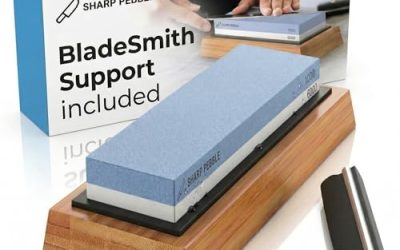
Use a whetstone at the factory angle, about 15 to 16 degrees per side, with light, even strokes and water to keep the stone clean. Avoid pull-through sharpeners, which can chip a hard thin edge. If you own the Shun Classic, use the maker free sharpening service instead, and hone the softer German blades here with a steel between sharpenings.
More from Amazon
Programs that pair well with the guide above. Offers and eligibility are set by Amazon and may change.
Set up recurring deliveries of everyday items on eligible products. Terms and savings are set by Amazon.
Explore Subscribe & SaveCollect the home and kitchen items you want in one registry that guests can shop from.
Create a wedding registryFree shipping on eligible items, Prime Video and more. Eligible new members can start with a free trial.
Start a Prime free trialAudiobooks and podcasts to listen to on the go. Eligible new members can start with a free trial.
Try Audible freeAs an Amazon Associate we earn from qualifying purchases.
Write Your Review
No reviews yet. Be the first to share your experience!