
Our Short List of 3
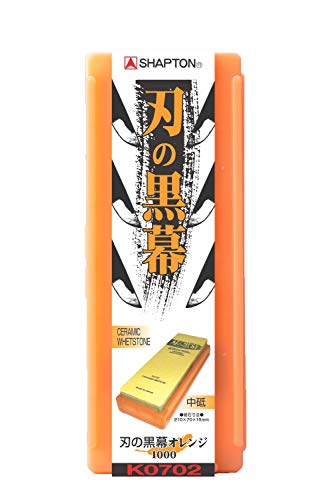
- Best for: Cooks who sharpen regularly and want one medium stone that sets up in seconds and restores dull edges efficiently.
- Grit: #1000 (orange, medium)
- Stone size: 210 x 70 x 15 mm
- Material: ceramic abrasive
- Use: splash-and-go, no soaking required

- Best for: First-time sharpeners who want a complete, guided setup for both sharpening and polishing everyday kitchen knives.
- Grits: 1000 and 6000, double-sided
- Material: aluminum oxide (corundum)
- Non-slip bamboo base included
- Angle guide included

- Best for: Repairing damaged edges quickly, sharpening very hard steels, and flattening dished water stones.
- Grit: coarse, 325 mesh (45 micron)
- Surface: continuous monocrystalline diamond
- Size: 8 x 3 x 0.38 inches
- Use: water or dry, no oil
All 3 Picks at a Glance
| Product | Specs | Action |
|---|---|---|
| 1. Shapton Pro Ha No Kuromaku Ceramic Whetstone #1000 |
| Check price on Amazon |
| 2. Sharp Pebble Premium Whetstone Kit 1000/6000 |
| Check price on Amazon |
| 3. DMT D8C Dia-Sharp Bench Stone Coarse |
| Check price on Amazon |
Key takeaways
- Compare the best whetstones for knife sharpening, from a splash-and-go ceramic stone to a complete soaking kit and a diamond plate, with grit and specs from each listing.
A whetstone is still the most controlled way to sharpen a kitchen knife: you set the angle, you choose the grit, and the stone tells you through its feedback when the edge is forming. The problem is that “whetstone” covers very different products, from fast-cutting ceramic stones that need only a splash of water to traditional soaking stones and diamond plates that never need flattening.
This guide compares three sharpening stones that cover the main approaches a home cook will meet. Each one states its grit clearly on the listing, because grit is the number that decides whether a stone repairs a dull edge, maintains a sharp one, or polishes it. Match the stone to the condition of your knives rather than buying the highest grit on the shelf.
Quick Picks
As an Amazon Associate we earn from qualifying purchases.
| Product | Best for | Key spec from title |
|---|---|---|
| Shapton Pro Ha No Kuromaku Ceramic Whetstone #1000 | Everyday sharpening of dull kitchen knives | 1000 grit ceramic stone, splash-and-go |
| Sharp Pebble Premium Whetstone Kit 1000/6000 | A complete first kit with base and angle guide | Dual grit 1000/6000 with bamboo base |
| DMT D8C Dia-Sharp Bench Stone Coarse | Fast repair work and flattening other stones | 325 coarse diamond surface, 8 x 3 inches |
How to Choose
Start With the Grit Your Knives Actually Need
Grit decides what a stone can do. Coarse stones around 325 to 400 remove metal quickly and suit chipped, damaged, or very dull blades. A 1000 grit stone is the workhorse for routine sharpening, restoring an edge that has gone dull through normal use. Finer stones from 3000 to 6000 refine and polish an edge that is already sharp. Most home cooks need a medium stone first; a fine polishing stone only helps once the edge geometry is sound. Buying a high-grit stone for a badly dulled knife leads to long, frustrating sessions with little progress.
Soaking, Splash-and-Go, or Diamond
Traditional water stones soak in water for several minutes before use and wear gradually, which gives them a forgiving feel but means they need periodic flattening. Splash-and-go ceramic stones need only a sprinkle of water, cut faster, and wear more slowly, so they suit cooks who sharpen often and want a quick setup. Diamond plates use water or run dry, never dish out, and cut aggressively, which makes them excellent for repairs and for flattening water stones. None of the three is universally better; the right choice depends on how often you sharpen and how much maintenance you accept.
Size and Stability Matter More Than Extras
A stone around 8 inches long gives enough stroke length for a chef’s knife, letting the whole edge pass across the surface in one motion. Shorter stones force awkward, choppy strokes that produce uneven edges. Stability matters just as much: a non-slip base, a holder, or a damp towel under the stone keeps it planted while both hands work. Kits that include a base and an angle guide help beginners hold a consistent angle, which is the single biggest factor in whether sharpening succeeds. Angle consistency beats premium abrasives every time.
Match the Stone to Your Knife Steel
Soft stainless and carbon steels sharpen easily on almost any water stone. Harder Japanese steels and modern powder steels respond well to ceramic stones, which cut hard alloys without loading up. Diamond plates handle every steel type, including very hard and wear-resistant blades that feel slippery on softer stones. If your knives are a mixed drawer of everyday stainless, a medium ceramic or combination stone covers them all. If you own one very hard knife that nothing seems to bite into, a diamond plate is the practical answer.
The 3 Best Options
1. Shapton Pro Ha No Kuromaku Ceramic Whetstone #1000
- Best for: Cooks who sharpen regularly and want one medium stone that sets up in seconds and restores dull edges efficiently.
- Grit: #1000 (orange, medium)
- Stone size: 210 x 70 x 15 mm
- Material: ceramic abrasive
- Use: splash-and-go, no soaking required
Cooks who sharpen regularly and want one medium stone that sets up in seconds and restores dull edges efficiently.
It is a single medium grit, so badly chipped blades need a coarser stone first and polished edges need a finer stone after.
The Shapton Pro 1000 is the stone many sharpeners treat as the default medium grit, and the listing shows why: it is a ceramic whetstone that works splash-and-go, so there is no soaking bucket and no waiting before you start. It cuts quickly for a 1000 grit, which shortens sessions on genuinely dull knives, and it wears slowly compared with softer soaking stones. The included storage case doubles as a stone holder, raising the stone off the counter and keeping it stable while you work both sides of the blade.
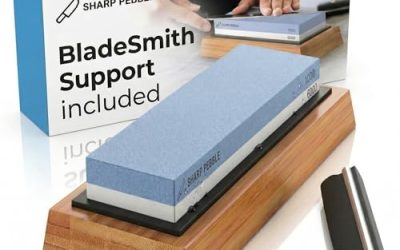
2. Sharp Pebble Premium Whetstone Kit 1000/6000
- Best for: First-time sharpeners who want a complete, guided setup for both sharpening and polishing everyday kitchen knives.
- Grits: 1000 and 6000, double-sided
- Material: aluminum oxide (corundum)
- Non-slip bamboo base included
- Angle guide included
First-time sharpeners who want a complete, guided setup for both sharpening and polishing everyday kitchen knives.
As a softer soaking stone it will dish with use and needs occasional flattening, and the angle guide fits common knife spines rather than every blade shape.
The Sharp Pebble kit bundles the two grits a beginner actually needs into one package: a 1000 side for restoring a dull edge and a 6000 side for refining it, mounted on a non-slip bamboo base that keeps the stone steady on the counter. The included angle guide clips onto the knife spine and helps hold a repeatable angle while you learn, which removes the most common beginner problem. This is a soaking stone, so it goes into water before use, and the kit format means there is nothing else to buy before your first session.
3. DMT D8C Dia-Sharp Bench Stone Coarse
- Best for: Repairing damaged edges quickly, sharpening very hard steels, and flattening dished water stones.
- Grit: coarse, 325 mesh (45 micron)
- Surface: continuous monocrystalline diamond
- Size: 8 x 3 x 0.38 inches
- Use: water or dry, no oil
Repairing damaged edges quickly, sharpening very hard steels, and flattening dished water stones.
The coarse grit leaves a rough edge that needs a medium and fine stone afterward for kitchen use, and the aggressive cut removes metal fast if you press too hard.
The DMT D8C is a diamond plate rather than a bonded stone: a continuous diamond surface in a coarse 325 grit that removes metal fast and never hollows or grooves, so it stays flat for its whole working life. At 8 by 3 inches it gives a generous stroke area for long kitchen knives, and it works with water or dry. Beyond repairing chipped and neglected edges, this is the plate sharpeners reach for when their water stones need flattening, which makes it a useful second purchase even if a water stone does your routine work.
Which One Fits Your Situation
Your Knives Are Dull but Undamaged
Start with the Shapton Pro 1000. A medium ceramic grit restores a working edge on knives that have simply gone dull through daily use, and the splash-and-go format means you can sharpen one knife in a few minutes without setting up a soaking station. If you later want a more refined edge for slicing tomatoes and herbs cleanly, add a finer stone as a second step rather than replacing this one.
You Have Never Sharpened Before
Choose the Sharp Pebble kit. The two grits cover the full sharpen-then-polish sequence, the bamboo base holds the stone still so you can concentrate on the blade, and the angle guide gives you a reference while your hands learn the motion. Expect your first sessions to be slow; consistency matters more than speed, and a forgiving soaking stone is a patient teacher.
You Have a Chipped or Neglected Blade
Reach for the DMT D8C first. A coarse diamond surface regrinds a damaged edge far faster than a medium stone, and because the plate cannot dish, the bevel you form stays even along its length. Work through the repair on the diamond, then move to a medium stone to refine the scratch pattern before the knife goes back into the drawer.
You Sharpen for the Whole Household
Pair the Shapton Pro 1000 with the DMT D8C. The diamond plate handles the abused knives, flattens the ceramic stone when it eventually needs it, and deals with hard steels, while the Shapton does the weekly maintenance work quickly. That two-stone combination covers nearly every kitchen situation without a shelf full of grits you rarely touch.
Common Mistakes
- Buying a very fine stone, such as 6000 or 8000 grit, to fix a dull knife; fine stones polish an existing edge and cannot rebuild one.
- Pressing down hard on the stone, which digs the edge into the surface, rounds the bevel, and wears the stone unevenly.
- Changing the angle mid-stroke, so each pass cuts a slightly different bevel and the edge never becomes uniformly sharp.
- Skipping flattening on soaking stones, leaving a dished surface that contacts only part of the blade.
- Using oil on a water stone or a diamond plate designed for water, which clogs the surface and slows cutting.
Frequently Asked Questions
How often should I sharpen kitchen knives on a whetstone?
It depends on use, but a home cook who cooks daily typically sharpens every few weeks to a few months, using a honing rod or a few light stone passes in between to maintain the edge. When a knife starts crushing tomato skins instead of slicing them, it is time for a proper session on a medium grit stone.
Do I need to soak every whetstone before using it?
No. Soaking stones need several minutes in water until bubbles stop rising, while splash-and-go ceramic stones like the Shapton Pro need only a sprinkle of water on the surface. Diamond plates work with a little water or completely dry. Check the listing or packaging for your stone type, because soaking a splash-and-go stone is unnecessary and using a soaking stone dry damages it.
What angle should I hold the knife at?
Most Western kitchen knives sharpen well at about 15 to 20 degrees per side, while many Japanese knives use a slightly lower angle. The exact number matters less than consistency: pick an angle and hold it through the full stroke on both sides. An angle guide, like the one in the Sharp Pebble kit, helps beginners build that consistency.
Can a whetstone fix a chipped knife edge?
Yes, within reason. Small chips are ground out on a coarse stone, around 325 to 400 grit, by sharpening until the chip disappears into a new edge, then refining on medium and fine grits. Large chips and broken tips take much longer and remove a lot of metal, so a badly damaged blade may be a job for a professional sharpener instead.
More from Amazon
Programs that pair well with the guide above. Offers and eligibility are set by Amazon and may change.
Set up recurring deliveries of everyday items on eligible products. Terms and savings are set by Amazon.
Explore Subscribe & SaveCollect the home and kitchen items you want in one registry that guests can shop from.
Create a wedding registryFree shipping on eligible items, Prime Video and more. Eligible new members can start with a free trial.
Start a Prime free trialAudiobooks and podcasts to listen to on the go. Eligible new members can start with a free trial.
Try Audible freeAs an Amazon Associate we earn from qualifying purchases.
Write Your Review
No reviews yet. Be the first to share your experience!