

The best bread knives are long, comfortably handled, and fitted with serrations that match the bread you bake most often: for most kitchens, a 10- to 10.5-inch stainless-steel knife with medium, pointed serrations is the most versatile choice.
A good bread knife should saw through a hard crust without crushing the interior, then move through soft sandwich bread without leaving a trail of crumbs. The decision is less about maximum sharpness than it is about serration design, blade length, control, and how realistically the edge can be maintained.
Our top picks
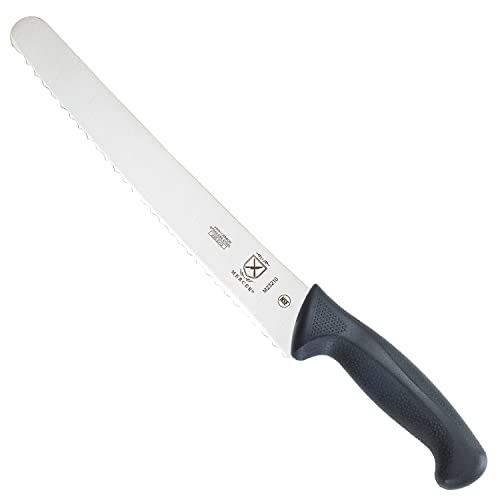 Mercer Culinary M23210 Millennia Black Handle
- Knife is crafted with one-piece high-carbon Japanese steel…
- Built to last ergonomic handle with textured finger…
- The teeth on the wavy edge of the…
 imarku Bread Knife 10 Inch: Japanese High
- Premium Quality Blade: This bread cutting knife is…
- Ergonomic Handle Design: The bread slicing knife is…
- Superior Cutting Performance: With a serrated edge and…
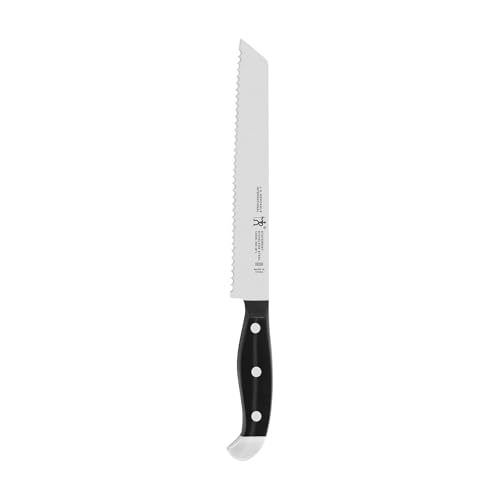 HENCKELS Statement 8 Inch Bread Knife
- Superior professional-level sharpness that ensures precision cutting.
- THE LAST KNIFE YOU’LL EVER NEED TO BUY:…
- Enjoy easy cutting with minimal effort with this…
| Product | Key specs | |
|---|---|---|
| Mercer Culinary M23210 Millennia Black Handle | Knife is crafted with one-piece high-carbon Japanese steel… Built to last ergonomic handle with textured finger… The teeth on the wavy edge of the… | Check price |
| imarku Bread Knife 10 Inch: Japanese High | Premium Quality Blade: This bread cutting knife is… Ergonomic Handle Design: The bread slicing knife is… Superior Cutting Performance: With a serrated edge and… | Check price |
| HENCKELS Statement 8 Inch Bread Knife | Superior professional-level sharpness that ensures precision cutting. THE LAST KNIFE YOU’LL EVER NEED TO BUY:… Enjoy easy cutting with minimal effort with this… | Check price |
 Cuisinart 8" Stainless Steel Bread Knife with Cuisinart 8" Stainless Steel Bread Knife with | High-quality stainless steel blade Ideal for cutting bread and rolls Includes matching blade guard for safe and easy… | Check price |
As an Amazon Associate we earn from qualifying purchases at no extra cost to you.
Best bread knives by situation
| Kitchen situation | Recommended choice | Useful specification | Why it fits |
|---|---|---|---|
| One knife for most loaves | Victorinox Fibrox Bread Knife | 10.25-inch serrated stainless-steel blade | Long enough for standard boules and sandwich loaves, with a secure, practical handle |
| Lowest-cost reliable option | Mercer Culinary Millennia Bread Knife | Typically available in 10- or 10.5-inch versions | Good reach and comfortable grip without a premium price |
| Japanese-style thin slicing | Tojiro Bread Slicer F-737 | Approximately 235 mm blade | Thin, flexible profile produces neat slices with relatively little drag |
| Frequent baking and premium fit and finish | Wüsthof Classic Bread Knife | Commonly sold with a 9-inch serrated blade | Solid construction and controlled cutting for users who prefer a shorter, substantial knife |
| Very large loaves or wide cakes | Long 12-inch serrated bread knife | About 12 inches of cutting edge | Reduces the need to cut from both sides of a tall boule or layered cake |
What makes a serration pattern effective?
Serrated edges are not interchangeable. The teeth, valleys, spacing, and blade thickness determine whether a knife glides through a loaf or tears it apart.
Pointed, widely spaced teeth
Large pointed teeth bite firmly into thick, dark crusts. They are particularly useful for sourdough boules, rustic country loaves, and crusty baguettes. The trade-off is a slightly rougher cut through very soft bread, especially if you press downward instead of using a light sawing motion.
Small or scalloped serrations
Small teeth or rounded scallops tend to be gentler on tender sandwich bread, brioche, and soft rolls. They can produce a cleaner surface on delicate crumb, but may require more strokes on a heavily blistered crust. A knife with very fine serrations can also feel slower when cutting a tall loaf.
Single-sided and double-sided edges
Most Western bread knives have serrations on both sides of the edge and are easy to use with either hand. Some Japanese bread slicers use a more specialized grind or a thin, flexible blade. These can make exceptionally clean slices, but their handling may feel less familiar and replacement or professional sharpening may be less convenient.
For a general-purpose purchase, choose medium-depth serrations with enough space between teeth to clear crumbs. Extremely shallow serrations can skate on a hard crust, while aggressive teeth can snag and pull at soft bread.
Blade length: 9, 10, or 12 inches?
A 9-inch bread knife is nimble and easier to store. It works well for sandwich bread, small boules, rolls, and cakes. It is also a sensible choice if your cutting board is compact or you prefer a heavier, more controlled stroke.
A 10- to 10.5-inch blade is the best compromise for most homes. It can cross a standard loaf in one pass, while remaining manageable in a kitchen drawer or knife block. This is the length category to prioritize if you want one bread knife rather than several.
A 12-inch knife is valuable for large round loaves, wide focaccia, and tall cakes. The extra length helps keep the cut level and reduces the temptation to saw halfway through, rotate the loaf, and continue from the other side. Its disadvantages are storage space and less maneuverability around small loaves.
Measure the usable blade, not only the overall knife length. A knife advertised as 12 inches overall may have a 10-inch cutting edge once the handle and bolster are excluded.
Handle comfort matters more than it first appears
Bread cutting involves repeated back-and-forth movement, so a handle that feels acceptable for one slice may become tiring after several loaves. Look for a handle that allows a relaxed grip, has no sharp edges at the seams, and leaves enough room for all four fingers without forcing the little finger onto the blade heel.
- Textured synthetic handles: Usually practical, slip-resistant, and easy to clean. Fibrox-style handles are popular for this reason.
- Riveted composite or wood handles: Can feel more substantial and attractive, but inspect the joints for food buildup and avoid prolonged soaking.
- Lightweight handles: Make long knives feel agile, though an extremely light knife may transmit more vibration through a hard crust.
- Heavier handles: Can improve balance for some users, but weight alone does not create a cleaner slice.
Hold the knife with the blade parallel to a cutting board if possible. The handle should not force your wrist sharply upward or downward. Comfort is especially important for left-handed users, who should confirm that the edge geometry does not favor one side.
How different knives perform on real bread
Soft sandwich bread
Use a light grip and let the serrations do the work. A medium-to-fine serration pattern and a relatively thin blade usually produce the cleanest slices. Pressing down is the common mistake: it compresses the crumb before the teeth cut it, creating a flattened edge and extra crumbs.
Crusty sourdough and country loaves
Here, tooth engagement and blade length matter most. A pointed, moderately aggressive edge starts the cut more easily than rounded scallops. A 10- or 12-inch blade allows a longer, shallower stroke, which is less likely to crack the crust into fragments.
Baguettes and narrow rolls
A 9-inch knife is usually sufficient. A shorter blade gives better control and is less cumbersome when the loaf is narrow. If the crust is unusually hard, choose deeper teeth rather than simply buying a longer knife.
Layer cakes and pastries
A clean serrated knife can level cake layers and slice delicate pastries without the downward pressure associated with a straight edge. Use a long blade for a full-width cake, wipe the edge between slices, and avoid forcing the knife through chilled, dense fillings.
Sharpening and the cost of ownership
Serrated knives do not respond well to a flat pull-through sharpener. The sharp parts of the edge sit at different angles, and a conventional whetstone cannot easily reach the valleys. Using the wrong sharpener can remove material unevenly and make the knife perform worse.
There are three sensible maintenance options:
- Use the knife until it is dull, then replace it. This is reasonable for an inexpensive bread knife used occasionally. Since serrated edges wear slowly, replacement may take years.
- Use a tapered ceramic serration rod. Match the rod diameter to the valleys and sharpen each groove individually from the appropriate side. This requires patience and is easier on a knife with clearly defined serrations.
- Send it to a professional sharpener. This is the safest choice for a premium knife or a specialized Japanese blade. Ask whether the service handles serrated edges before sending it.
For a simple ownership calculation, assume a $25 bread knife lasts five years and is used twice a week. That is approximately 520 uses, or about five cents per use before cleaning and replacement. A $120 premium knife used four times a week for ten years costs about six cents per use. The more expensive knife only becomes economical if its comfort, balance, finish, or repairability matters to you; it does not automatically make every loaf cleaner.
Cleaning mistakes that shorten a bread knife’s life
Hand-wash the knife soon after use with warm water, mild dish soap, and a soft sponge. Dry it immediately, paying attention to the serration valleys and the handle-to-blade joint. Even corrosion-resistant stainless steel can develop spots when salt, acidic dough residue, or moisture remains trapped against the edge.
- Do not scrape the blade across the cutting board to move crumbs.
- Do not twist the knife sideways while it is embedded in a crust.
- Do not store it loose in a crowded drawer, where the teeth can strike other utensils.
- Do not put a wood-handled knife in a dishwasher or leave it submerged.
- Do not use a bread knife on bones, frozen food, or hard squash.
A magnetic strip, knife block slot, or blade guard is preferable to a drawer. A guard is particularly useful for a 12-inch model that may not fit a standard block.
Final buying recommendation
Choose a 10- to 10.5-inch bread knife with medium, pointed serrations if you bake or buy a mixture of soft and crusty loaves. The Victorinox Fibrox Bread Knife is a practical all-round category choice, while the Mercer Culinary Millennia offers a budget-oriented alternative. Choose the Tojiro Bread Slicer F-737 when thin, delicate slices and a lightweight Japanese profile are more important than universal familiarity. Select a 9-inch premium knife for control and compact storage, or a 12-inch model for large boules and wide cakes.
Whichever model you choose, a comfortable handle, a thin enough blade, and correct sawing technique will contribute more to crumb-free slices than a high price or an unusually aggressive serration pattern.








Write Your Review
No reviews yet. Be the first to share your experience!