

The best Japanese chef knives for home cooks are the Tojiro DP 210mm for value, the MAC MTH-80 for an all-purpose workhorse, the Shun Classic 8-inch for a polished Western-Japanese hybrid, and a 240mm gyuto in SG2 or Aogami Super for experienced cooks who want a thinner, sharper blade.
Our top picks
 HOSHANHO Kitchen Knife in Japanese High Carbon
- 【High-End Japanese Steel Chef's Knife】 HOSHANHO chef's knife…
- 【Fashion Matte Blade Design】 The blade has a…
- 【Thoughtful Details】 Handle is made of ultra-durable wood,…
 Japanese Chef Knife Set 3 Pcs
- 【Damascus Knife Set】Atumuryou 3 piece knife set comes…
- 【Japanese VG10 Steel Core】 Featuring a premium Japanese…
- 【Real Damascus Knife】 Atumuryou Japanese knife is forged…
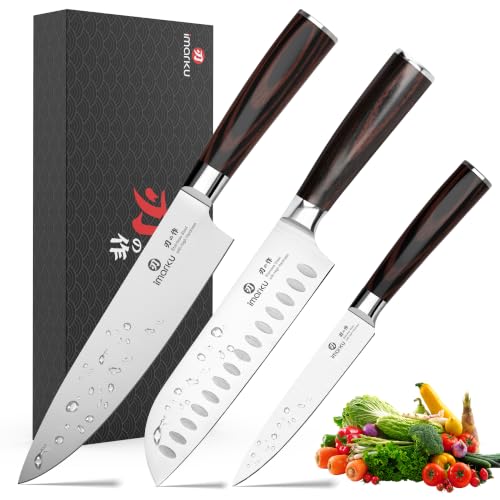 imarku 3 Pieces Knife Set
- Razor Sharp with Durable Edges: Sharpness is the…
- Muti-Purpose Kitchen Knves - The imarku Professional 3…
- Full Tang Ergonomic Pakkawood Handle: Designed with a…
As an Amazon Associate we earn from qualifying purchases at no extra cost to you.
Quick comparison: the best Japanese chef knives by use
| Knife | Typical blade steel | Common size | Typical edge angle | Approx. weight | Best for | Typical market range |
|---|---|---|---|---|---|---|
| Tojiro DP Gyuto | VG10 core, stainless cladding | 210mm / 8.3in | About 12–15° per side | 170–190g | First Japanese chef knife, limited budget | $70–$110 |
| MAC MTH-80 | MAC high-carbon stainless steel | 210mm / 8.3in | About 10–15° per side | 150–165g | Fast prep and general home cooking | $140–$190 |
| Shun Classic 8in Chef’s Knife | VG-MAX core, Damascus cladding | 200mm / 8in | About 16° per side | 200–220g | Comfortable Western-style handling and presentation | $170–$230 |
| Miyabi Artisan Gyutoh | SG2 powdered stainless steel | 200mm / 8in | About 9–12° per side | 190–210g | Very fine edge retention with low rust risk | $250–$350 |
| Global G-2 | CROMOVA 18 stainless steel | 200mm / 8in | About 15° per side | 170–180g | Light, compact, distinctive all-metal design | $120–$170 |
Exact weights and edge geometry vary by production run, sharpening method, and blade length. Treat the figures as useful buying comparisons rather than laboratory specifications.
The four strongest choices
Best value: Tojiro DP Gyuto
The Tojiro DP is a sensible entry point into Japanese knives because its VG10 stainless core offers good corrosion resistance, respectable edge retention, and a relatively thin cutting geometry without reaching premium prices. The 210mm gyuto is long enough for cabbage, onions, herbs, and boneless proteins while remaining manageable on a standard home counter.
Its Western-style handle is familiar, but the fit and finish are utilitarian rather than luxurious. That is an advantage if you want cutting performance instead of decorative materials. The edge can feel delicate compared with a heavier German chef’s knife, so avoid twisting it through hard squash, frozen food, or bones.
Best everyday workhorse: MAC MTH-80
The MAC MTH-80 is an excellent choice for cooks who want a light knife with a useful amount of blade height and a profile suited to both push-cutting and rocking. Small dimples on the blade may reduce some food sticking, although no granton-style pattern makes a knife completely nonstick.
It is less demanding than many ultra-thin Japanese knives. The stainless blade tolerates busy weeknight use, and its moderate price makes sharpening or eventual replacement less painful than with a high-end powder-steel knife. Choose it when you want one knife for vegetables, boneless meat, fish, and routine meal preparation.
Best polished Western-Japanese option: Shun Classic 8-inch Chef’s Knife
The Shun Classic combines a Western handle, a curved chef’s-knife profile, and a layered Damascus appearance. Its VG-MAX core is stainless and its factory edge is relatively acute, which makes it feel precise on onions, herbs, tomatoes, and boneless proteins.
The trade-off is a more delicate cutting edge and a higher price than practical starter knives. Shun’s D-shaped handle is comfortable for many right-handed users, but it is not as universally neutral as a symmetrical handle. It suits cooks who value refined finishing, gift-worthy presentation, and a familiar rocking motion.
Best premium stainless option: Miyabi Artisan Gyutoh
The Miyabi Artisan range uses SG2 powdered stainless steel, a hard steel capable of holding a very fine edge for a long time when used on suitable cutting boards. Its thin geometry rewards controlled push cuts and precise slicing. The stainless construction also makes it easier to own than reactive carbon steel.
Hardness brings responsibility: the edge is not designed for chopping through poultry joints, prying apart stuck food, or contact with glass, stone, or ceramic boards. It is a strong premium pick for an experienced cook who sharpens carefully and wants low-maintenance corrosion resistance.
Blade steel: what the labels mean in daily use
- VG10: A common stainless choice with a useful balance of sharpness, corrosion resistance, and affordability. It is practical for most households but can chip if abused.
- VG-MAX: A proprietary stainless steel used in some Shun knives. It is intended to improve hardness and edge performance while retaining stainless maintenance.
- SG2 or R2: Powdered stainless steel known for high hardness and strong edge retention. It can stay sharp longer, but sharpening takes more patience and careless impacts can chip the edge.
- Aogami Super or other carbon steels: Capable of an exceptionally keen edge and pleasant sharpening response. They can discolor or rust, so they require prompt drying and more attentive ownership.
- AUS-8 and similar midrange stainless steels: Usually easier to sharpen and forgiving in use, though they may need refreshing more often than harder premium steels.
Steel alone does not determine performance. Blade thickness behind the edge, heat treatment, grind quality, handle fit, and sharpening all matter at least as much as the name stamped on the blade.
Choose the profile and size for your cutting style
A gyuto is the Japanese equivalent of a chef’s knife. A 210mm blade is the best general-purpose size for many home cooks. A 240mm gyuto gives more room for large vegetables and long slicing strokes, but it needs a larger board and more storage space. A 180mm gyuto is easier to control in a small kitchen, though it provides less cutting clearance.
For a rocking motion, choose a blade with a more pronounced curve toward the tip, such as many Western-style chef’s knives. For push cuts and precise vegetable work, a flatter profile is often better. A flatter gyuto also makes it easier to keep more of the edge in contact with the board during straight-down or forward cuts.
If vegetables dominate your cooking, a nakiri can be more comfortable than a pointed chef’s knife. Its straight edge excels at up-and-down chopping, but it is less suitable for large slicing jobs and tasks requiring a sharp tip. For fish or boneless meat, a longer sujihiki provides cleaner slicing strokes than a short general-purpose knife.
Handle styles: comfort is a performance feature
- Western handle: Riveted, fuller, and familiar. It works well for cooks transitioning from European chef’s knives and often gives a secure grip with a pinch hold.
- Wa handle: A lighter Japanese handle, often octagonal, oval, or D-shaped. It shifts less weight toward the hand and can make a thin blade feel nimble.
- Symmetrical handle: Suitable for left- or right-handed users and easy to share among household members.
- D-shaped or strongly asymmetrical handle: Can provide excellent orientation and control for the intended hand, but check compatibility before buying.
Hold the knife in a pinch grip, with the thumb and index finger on opposite sides of the blade near the bolster. A handle that feels attractive in a photograph may still be too thick, too narrow, or poorly balanced for your hand.
Decision matrix for different home cooks
| Your situation | Recommended direction | Why | What to avoid |
|---|---|---|---|
| Budget under $120; first Japanese knife | Tojiro DP 210mm | Strong performance-to-price ratio and stainless construction | Very hard carbon steel if you do not want extra care |
| Small board or compact kitchen | 180–200mm gyuto or MAC MTH-80 | Easier to maneuver and store | 240mm blades that overhang the board |
| Frequent vegetable prep and push cutting | Thin 210–240mm gyuto, often SG2 | Long edge and low cutting resistance | Heavy German-style blades if speed is the priority |
| Mostly rocking herbs and garlic | Curved chef’s profile, such as Shun Classic | Supports a familiar rocking motion | Very flat nakiri profiles |
| Shared kitchen with minimal maintenance | Stainless gyuto with Western handle | Easy hand washing, drying, and user orientation | Reactive carbon steel or highly asymmetric wa handles |
| Experienced sharpener seeking maximum edge life | SG2 or Aogami Super | Fine edges and strong retention when used correctly | Dishwashers, glass boards, and twisting cuts |
Maintenance that protects the edge
- Use the right board. Choose end-grain or edge-grain wood, quality soft plastic, or another knife-friendly surface. Glass, marble, granite, and ceramic boards accelerate edge damage.
- Wash by hand. Use warm water and mild detergent, then dry immediately. Dishwashers expose the knife to heat, detergent, vibration, and contact with other utensils.
- Store the edge safely. A saya, blade guard, magnetic strip mounted securely, or knife block prevents the edge from striking drawers and other tools.
- Sharpen instead of repeatedly honing. A ceramic honing rod may realign a moderately misaligned edge, but it cannot replace metal removed by sharpening. Use whetstones or a reputable professional sharpener when the knife begins to slide rather than bite.
- Remove residue promptly. Salt, citrus, onions, and acidic foods can stain reactive steel. Pat carbon steel dry during preparation and apply a food-safe protective oil for longer storage.
A useful ownership calculation is simple: if a $180 knife is used four times each week for five years, that is about 1,040 uses, or roughly 17 cents per use before sharpening. The calculation only works if the knife is maintained; a premium blade treated like a disposable utensil can become an expensive repair or replacement.
Common mistakes to avoid
Do not choose the hardest steel simply because it has the highest advertised hardness. A slightly softer knife that you can sharpen confidently may serve you better. Do not use a Japanese chef knife to split bones, open packaging, scrape food with the edge, or lever apart stuck ingredients. Turn the knife over and use the spine or a bench scraper for scraping.
For most home cooks, start with a 210mm stainless gyuto, a comfortable handle, and a good cutting board. Choose the Tojiro DP for value, the MAC MTH-80 for a light daily workhorse, the Shun Classic for a curved and polished Western-Japanese feel, or the Miyabi Artisan when premium SG2 performance and stainless convenience justify the price.








Write Your Review
No reviews yet. Be the first to share your experience!