

The best boning knives for most home cooks are a 5- to 6-inch semi-flexible model with a secure, easy-clean handle; choose a stiff blade for cutting through joints and a flexible blade for closely following bones and trimming poultry or fish.
Our top picks
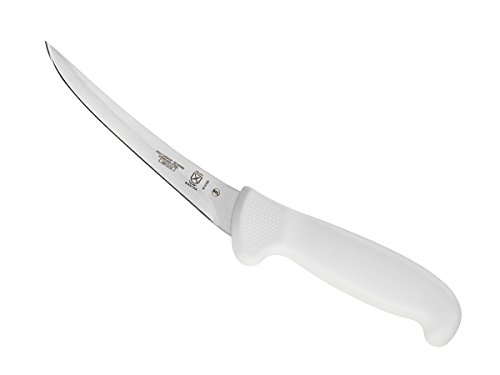 Mercer Culinary Ultimate White
- Knives are crafted with high-carbon Japanese steel for…
- Built to last ergonomic handles with textured finger…
- For separating meat from the bone
 Cutluxe Curved Boning Knife
- Perfectly engineered flexible boning knife tapered to a…
- Meat Knife is hand sharpened edge at 14-16…
- Luxury pakkawood handle that is triple-riveted for absolute…
 Victorinox Fibrox 6-In Curved Boning & Fillet
- As its name suggests, the Fibrox Pro Boning…
- The curved, flexible stainless steel blade is ideal…
- Patented Fibrox handle is textured, slip resistant, and…
| Product | Key specs | |
|---|---|---|
| Mercer Culinary Ultimate White | Knives are crafted with high-carbon Japanese steel for… Built to last ergonomic handles with textured finger… For separating meat from the bone | Check price |
| Cutluxe Curved Boning Knife | Perfectly engineered flexible boning knife tapered to a… Meat Knife is hand sharpened edge at 14-16… Luxury pakkawood handle that is triple-riveted for absolute… | Check price |
| Victorinox Fibrox 6-In Curved Boning & Fillet | As its name suggests, the Fibrox Pro Boning… The curved, flexible stainless steel blade is ideal… Patented Fibrox handle is textured, slip resistant, and… | Check price |
 Victorinox Swiss Classic 6-Inch Boning Knife with Victorinox Swiss Classic 6-Inch Boning Knife with | With a thin blade and enhanced flexibility, This… The National sanitary foundation (NSF) approved Fibro Pro… "Highly recommended" By a leading gourmet consumer magazine… | Check price |
As an Amazon Associate we earn from qualifying purchases at no extra cost to you.
Best boning knives at a glance
| Pick | Blade and profile | Handle and steel | Best for | Typical market range |
|---|---|---|---|---|
| Victorinox Fibrox Pro Boning Knife | 6-inch, semi-flexible, narrow curved blade | Textured thermoplastic handle; high-carbon stainless steel | Most home cooks and first-time buyers | $30–$45 |
| Mercer Culinary Genesis Boning Knife | 6-inch, flexible or semi-flexible versions available | Ergonomic Santoprene handle; high-carbon German stainless steel | Frequent trimming on a moderate budget | $25–$45 |
| Wüsthof Classic Boning Knife | 6-inch, semi-flexible, relatively robust blade | Full-tang synthetic handle; high-carbon stainless steel | Long-term ownership and general meat preparation | $150–$220 |
| Shun Classic Boning Knife | 6-inch, narrow, flexible profile | Contoured pakkawood handle; VG-MAX layered construction | Precise poultry, fish and delicate trimming | $180–$250 |
Prices are broad market ranges and vary by retailer, promotions and regional availability. The most useful distinction is not price but blade behavior: a flexible knife bends around bone, while a stiff knife transfers more pressure into straight cuts and joints.
Our top picks by cutting situation
Best overall: Victorinox Fibrox Pro 6-inch
The Victorinox Fibrox Pro is the sensible starting point for most kitchens. Its 6-inch blade is long enough for a chicken or roast but compact enough for controlled work around joints. The semi-flexible profile provides some forgiveness when tracing a bone without feeling floppy during trimming.
Its textured synthetic handle is less elegant than wood or polished resin, but it offers dependable grip when hands are damp or greasy. That matters more than appearance during repetitive trimming. The steel is not unusually hard, so it will need regular honing and occasional sharpening, but that also makes it comparatively easy to maintain.
Choose this knife if you debone poultry a few times a month, trim steaks occasionally or want one versatile tool without a premium price.
Best budget alternative for frequent prep: Mercer Culinary Genesis
The Mercer Culinary Genesis boning knife is a strong value choice, particularly when you want an ergonomic handle and a choice between flexible and stiffer versions. The Santoprene handle has a soft, secure feel, while the high-carbon German stainless steel offers a useful balance of edge life and sharpenability.
Look closely at the exact version before buying. “Flexible” is better for removing meat from poultry carcasses and working around fish bones; “stiff” is better for separating joints, trimming connective tissue and handling larger cuts. The range is more important than the brand name alone.
Best premium all-purpose option: Wüsthof Classic 6-inch
The Wüsthof Classic boning knife suits cooks who want a substantial, durable tool rather than the lightest possible blade. Its semi-flexible design gives it broader use than a very soft fish-filleting knife, while the robust construction tolerates firm trimming and joint work.
The synthetic handle is straightforward to clean, and the full-tang construction supports long-term use. Its main drawback is cost: for occasional chicken preparation, it will not necessarily cut better than a good mid-priced knife. It makes more sense when you prepare meat regularly and value balance, fit and a durable handle.
Best for delicate, close trimming: Shun Classic 6-inch
The Shun Classic boning knife is aimed at precision. Its narrow, flexible blade is useful for separating meat from poultry bones, trimming silver skin and working around fish without removing unnecessary flesh. The contoured pakkawood handle feels refined, though it deserves more care than a basic molded handle.
It is not the best choice for forcing through joints or twisting the blade. Use a cleaver, sturdy chef’s knife or dedicated poultry shears for those tasks. The Shun is most valuable when clean, controlled cuts matter more than brute strength.
Stiff versus flexible: which profile do you need?
| Task | Preferred profile | Why | Useful blade length |
|---|---|---|---|
| Deboning chicken thighs or breasts | Flexible or semi-flexible | Follows the contour of the bone and reduces wasted meat | 5–6 inches |
| Trimming steaks and roasts | Semi-flexible | Balances precision with enough resistance for connective tissue | 6 inches |
| Separating joints | Stiff | Provides control and does not bend under moderate pressure | 5–6 inches |
| Filleting small fish | Flexible | Glides close to the skeleton and adapts to curves | 6–7 inches |
| Large roasts or game | Stiff or semi-flexible | Resists deflection during long, firm trimming cuts | 6–8 inches |
A useful rule is to match flexibility to the surface you are following. If the job involves tracing a curved bone, choose flexible. If the job involves pushing through dense tissue or making a controlled straight cut, choose stiff. A semi-flexible knife is the best compromise when you do several types of preparation.
How blade length, grip and edge retention change the decision
Blade length
A 5-inch knife is nimble and convenient for small poultry, narrow cutting boards and cooks with smaller hands. A 6-inch knife is the most versatile size for home use. Blades of 7 or 8 inches provide longer slicing strokes on large roasts and fish, but they require more workspace and can feel cumbersome around small joints.
Handle grip
Look for a handle that remains secure with a pinch grip and does not force your thumb onto a sharp bolster edge. Textured synthetic handles are practical for wet work and are usually the easiest to sanitize. Pakkawood is moisture-resistant and comfortable, but it should not be soaked or left in standing water. Smooth polished handles can feel slippery when coated with fat.
Edge retention
Harder steel can hold a fine edge longer, but it is not automatically superior. Boning knives encounter cartilage, connective tissue and occasional contact with bone; a very hard, thin edge may chip if twisted. Tough stainless steel with moderate hardness is often the safer choice for general home use.
Consider ownership cost as well as purchase price. A $35 knife used twice a month for three years costs about 49 cents per use before sharpening. A $190 knife used twice a month for the same period costs about $2.64 per use. If the premium knife is used weekly, its cost falls to about $1.22 per use over three years. Frequency and comfort therefore matter more than prestige.
Buying checklist for home cooks
- Choose 5–6 inches for general poultry and meat preparation.
- Choose flexible for curved bones and fish; choose stiff for joints and firm trimming.
- Prefer a textured, moisture-resistant handle if the knife will be used often.
- Check whether the listed model is flexible, semi-flexible or stiff; product names are not always consistent.
- Look for a continuous, well-finished handle-to-blade junction that is easy to clean.
- Do not select a boning knife as a substitute for a cleaver or saw; forcing it through bone can damage the edge.
Care and common mistakes
Wash a boning knife by hand soon after use, using warm water, mild detergent and a soft sponge. Dry it immediately. Even stainless steel can stain or develop corrosion spots when left wet, especially around the handle junction. Keep it out of the dishwasher: heat, detergent and contact with racks can dull the edge and damage handles.
Use a plastic, wood or composite cutting board rather than glass, stone or ceramic. Hone lightly with a suitable honing rod when the edge begins to feel less precise, and have the knife sharpened when honing no longer restores performance. Do not use a pull-through sharpener aggressively on a thin flexible blade.
The most common misuse is twisting the knife sideways while it is embedded in meat. Make a fresh cut, change the angle or use kitchen shears for stubborn joints. A boning knife should separate meat with controlled strokes, not act as a lever.
Bottom line
The Victorinox Fibrox Pro 6-inch is the easiest recommendation for most home cooks because it combines a useful semi-flexible profile, secure grip and manageable upkeep. Choose a Mercer Genesis if you want a lower-cost flexible or stiff option, a Wüsthof Classic for a more substantial long-term tool, or a Shun Classic when delicate, close trimming is your priority. The right blade profile and comfortable grip will improve results more than paying for the most expensive steel.








Write Your Review
No reviews yet. Be the first to share your experience!