

The best tamagoyaki pans are usually 13–18 cm rectangular nonstick pans for beginners, lightweight carbon-steel pans for cooks who want high heat and long service, or cast-iron pans when heat retention matters more than easy handling.
Our top picks
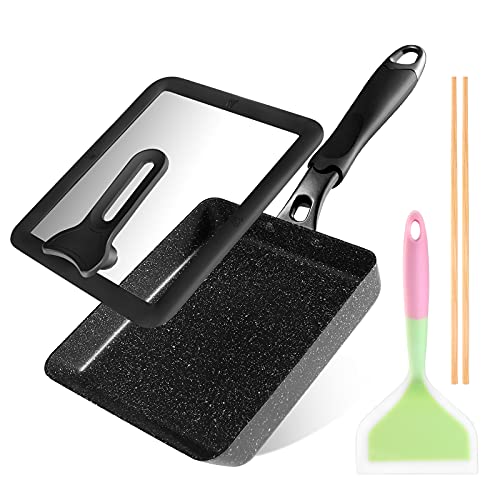 HAPPI STUDIO Tamagoyaki Pan
- Ultimate Tamagoyaki Pan Set: This premium tamago pan…
- Versatile Japanese Square Pan: Ideal for daily use,…
- Perfect Size and Safe Materials: Measuring 7 x…
 DXBVIEX 9Pcs Tamagoyaki Pan Set
- Package included: The Japanese Omelet Pan Set includes…
- Dimension:7 inch length & 5 inch wide &…
- Application: Applicable for induction cooker, electric furnace, gas…
 TECHEF
- Built for Performance: Forged heavy-gauge aluminum (commercial-grade 3004)…
- Exceptional Design: The specially designed sloped front and…
- 3-layer Reinforced Teflon Nonstick Coating - New Safe…
| Product | Key specs | |
|---|---|---|
| HAPPI STUDIO Tamagoyaki Pan | Ultimate Tamagoyaki Pan Set: This premium tamago pan… Versatile Japanese Square Pan: Ideal for daily use,… Perfect Size and Safe Materials: Measuring 7 x… | Check price |
| DXBVIEX 9Pcs Tamagoyaki Pan Set | Package included: The Japanese Omelet Pan Set includes… Dimension:7 inch length & 5 inch wide &… Application: Applicable for induction cooker, electric furnace, gas… | Check price |
| TECHEF | Built for Performance: Forged heavy-gauge aluminum (commercial-grade 3004)… Exceptional Design: The specially designed sloped front and… 3-layer Reinforced Teflon Nonstick Coating - New Safe… | Check price |
 HexClad Hybrid Nonstick Japanese Tamagoyaki Egg Pan HexClad Hybrid Nonstick Japanese Tamagoyaki Egg Pan | HexClad's patented hybrid tech utilizes tri-ply construction Already a bestseller in Japan, this evolution of… Use your HexClad cookware on any home cooktop… | Check price |
As an Amazon Associate we earn from qualifying purchases at no extra cost to you.
Best tamagoyaki pans by cooking situation
| Best for | Recommended pan type | Typical size | Typical weight | Why it fits |
|---|---|---|---|---|
| First-time cooks | Coated aluminum tamagoyaki pan | 13 × 18 cm | 450–700 g | Fast release, low sticking, easy rolling |
| Frequent home use | Thick aluminum nonstick pan | 15 × 18 cm | 600–900 g | Balanced heating and manageable weight |
| Traditional technique | Seasoned carbon steel | 13 × 18 cm | 700–1,100 g | Excellent browning and high-heat tolerance |
| Induction cooking | Induction-compatible coated pan | 15 × 18 cm | 800–1,300 g | Works on modern cooktops; usually has a thicker base |
| Maximum heat retention | Cast iron | 13–18 cm square | 1.5–2.5 kg | Stable temperature but slower response and heavier lifting |
Dimensions in this table refer to common published pan sizes, not guaranteed cooking-surface measurements. Manufacturers measure the rim, base, or exterior differently, so check the usable interior before buying.
Our top choices
Best overall for most cooks: Yoshikawa Atsugi Tamagoyaki Pan
The Yoshikawa Atsugi tamagoyaki pan is a strong all-purpose choice for cooks who want a purpose-built Japanese omelet pan without moving immediately to carbon steel. The Atsugi range is known for thick aluminum construction and a nonstick cooking surface, giving it more even heat distribution than an ultra-thin budget pan.
Choose the approximately 15 × 18 cm version if you normally cook two to four eggs. Its longer rectangular shape gives each layer enough room to set before you roll it, while the sloped sides help the omelet move toward the far edge. A comfortable handle is particularly valuable here: tamagoyaki requires repeated lifting, tilting, and turning rather than simply stirring in place.
This is the best fit for regular home use on a gas or electric hob. It is less suitable if induction compatibility is essential; confirm the exact model, because Yoshikawa sells several pans with different bases and coatings.
Best beginner option: TeChef Tamagoyaki Japanese Omelette Pan
The TeChef tamagoyaki pan is aimed at convenience. Its coated aluminum body is generally lighter and easier to control than cast iron, and the low-friction surface makes the first few layers less frustrating when your rolling technique is still developing.
A pan around 13 × 18 cm is a good beginner size. Smaller pans are easier to maneuver and use less egg mixture, but they produce a narrower omelet. A 15 × 18 cm pan gives more room for a thicker family-style omelet but demands more filling and slightly more confident rolling.
TeChef’s coating is the part that requires the most care. Use silicone, wood, or other manufacturer-approved utensils; avoid metal edges, aerosol cooking sprays that can leave residue, and stacking the pan against hard cookware. A coated pan is usually the easiest option, but it is not the most durable option if used daily at high heat.
Best for traditional high-heat cooking: Yoshikawa carbon-steel tamagoyaki pan
A carbon-steel tamagoyaki pan rewards cooks who are willing to season and maintain it. It can tolerate higher heat than many coated pans, develops a naturally more release-friendly surface over time, and gives the omelet edges a little more color when the heat is managed well.
Carbon steel is not automatically easier. Eggs can stick badly in a new or poorly seasoned pan, and the rectangular corners are harder to scrub without damaging the seasoning. The pan must be dried immediately after washing and wiped with a very thin layer of oil before storage.
Pick carbon steel if you make tamagoyaki at least weekly, already understand preheating, and do not mind maintenance. For occasional breakfasts, the convenience of a coated pan usually outweighs its shorter coating lifespan.
Best for heat retention: Iwachu cast-iron tamagoyaki pan
Iwachu makes cast-iron cookware, including Japanese-style egg pans. A cast-iron model holds heat steadily and feels planted on the hob, which can help when adding several thin layers in succession. It is also a durable choice when cared for correctly.
The trade-off is substantial weight. A cast-iron tamagoyaki pan can weigh roughly two to four times as much as a small coated aluminum model. That matters because the pan is often tilted or lifted to roll each layer. Cast iron also responds slowly when the heat is turned down, so it is easier to overcook eggs while learning.
This is best for cooks who value longevity, use a gas or stable electric hob, and are comfortable manipulating cookware with two hands when necessary. It is a poor choice for small kitchens with limited storage or anyone who wants quick, low-effort breakfasts.
How the important design details affect the result
Dimensions and capacity
A 13 × 18 cm pan typically suits two to three large eggs per omelet, while a 15 × 18 cm pan can handle about three to four eggs without making the layers excessively thick. These are working estimates: the amount also depends on the added dashi, milk, sugar, vegetables, and how thinly you spread each layer.
For a rough sizing calculation, one large egg provides about 45–50 ml of liquid. Three eggs plus 15 ml of dashi produce approximately 150 ml of mixture. Dividing that into five additions gives only about 30 ml per layer, enough for a thin sheet in a 15 × 18 cm pan. If you add 60 ml at a time, the layer may be too thick to roll neatly before the underside browns.
Slope and corner shape
Gently sloped sides are more useful than perfectly vertical walls for beginners. They let a spatula slide beneath the omelet and make it easier to push the finished roll toward the far end. A sharply squared corner can produce a tidy rectangular cross-section, but it also creates a place where egg sticks if the pan is not well oiled.
Look for a pan whose short sides are low enough for a spatula to enter. Tall walls may increase capacity, but they make rolling awkward and can trap uncooked mixture in the corners.
Coatings
Nonstick coatings offer the shortest learning curve and the easiest cleanup. Their main weakness is wear: overheating, abrasive cleaning, metal utensils, and empty preheating can all shorten useful life. Once the surface starts sticking persistently despite adequate oil, replacement is safer and more practical than aggressive scrubbing.
Carbon steel has no synthetic nonstick layer to wear through, but its release performance depends on seasoning. Cast iron is similarly durable but slower to heat and heavier. Choose the material based on your routine rather than assuming the most traditional material is automatically best.
Handle comfort and balance
A tamagoyaki handle should be long enough to keep your hand away from the hot sidewall but not so long that it makes the pan awkward to store. A slight upward angle can improve wrist comfort when tilting. Check whether the handle is permanently attached, riveted, or removable, and measure the total length if cupboard space is limited.
Balance matters more than advertised weight. A heavy pan with a long handle may feel front-heavy when you lift it. If you roll with a spatula rather than flipping the pan, weight is less important; if you tilt the pan repeatedly, a lighter aluminum design is usually easier.
Decision matrix: which pan should you buy?
| Your situation | Best choice | Size to consider | Reason |
|---|---|---|---|
| Budget-conscious and cooking occasionally | Basic coated aluminum | 13 × 18 cm | Low upfront cost and simple cleanup |
| Learning the technique | Sloped nonstick pan | 13 × 18 cm | Smaller batches and easier release |
| Cooking for three or more people | Thick coated aluminum | 15 × 18 cm | More room for four-egg batches |
| Using induction | Induction-compatible model | 15 × 18 cm | Requires a magnetic base; verify the exact product |
| Making tamagoyaki weekly | Carbon steel | 13 × 18 or 15 × 18 cm | Long service life with seasoning care |
| Minimal cupboard space | Compact 13 × 18 cm coated pan | 13 × 18 cm | Smaller footprint and lower weight |
Heat control and maintenance that prevent common failures
Start with medium-low heat rather than high heat. The pan should set the egg within roughly 30–60 seconds, but the underside should remain pale enough to roll without cracking. If the mixture bubbles hard or browns before the top becomes slightly tacky, reduce the heat and wait briefly between layers.
Use a thin film of oil before each addition, even in a nonstick pan. Too much oil makes the layer slide apart; too little encourages tearing at the corners. Keep the egg mixture stirred so sugar and seasonings do not settle, and strain it if you want an especially smooth surface.
Let a coated pan cool before washing it with a soft sponge and mild detergent. Do not plunge a hot pan into cold water, which can stress the base and cause distortion. For carbon steel or cast iron, wash promptly, dry over low heat, and apply a barely visible layer of cooking oil. Store it dry and avoid soaking.
The most common ownership mistake is buying a large pan for small batches. A large surface spreads two eggs too thinly, making the first layer fragile and difficult to roll. For one or two diners, the smaller 13 × 18 cm format is usually the more forgiving choice.
Final recommendation
For most households, choose a sloped, coated aluminum pan around 15 × 18 cm if you cook tamagoyaki regularly, or 13 × 18 cm if you are learning or usually cook two eggs. The Yoshikawa Atsugi range is a strong everyday direction, TeChef is a practical beginner-oriented alternative, carbon steel suits committed cooks who accept seasoning work, and Iwachu cast iron is best reserved for those who specifically want heavy, stable cookware. Prioritize usable dimensions, a manageable handle, and controllable low-to-medium heat over decorative details.








Write Your Review
No reviews yet. Be the first to share your experience!