

The best tamale steamer pot for most home cooks is a 32-quart stainless-steel steamer with a removable perforated insert, a snug lid, and enough water capacity for a full batch without crowding the tamales.
That recommendation changes if you cook for one or two people, have limited cabinet space, or make tamales only once a year. Capacity is important, but the basket design, water-level visibility, lid fit, and long-term maintenance determine whether a steamer is convenient or frustrating.
Our top picks
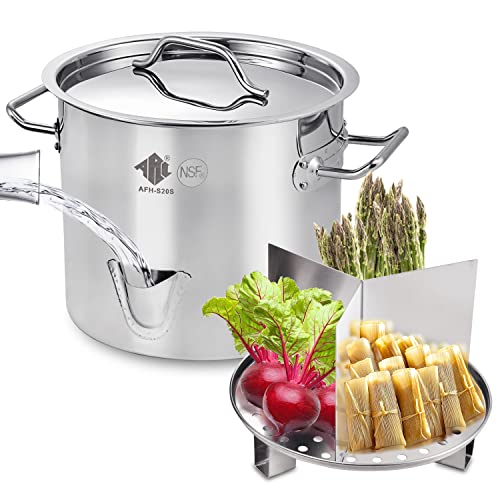 ARC 20QT Stainless Steel Tamale Steamer Pot
- ARC Vegetable steamer pot and parts are made…
- Vaporeras para tamales with spout allows adding more…
- 3 types of food can cook together to…
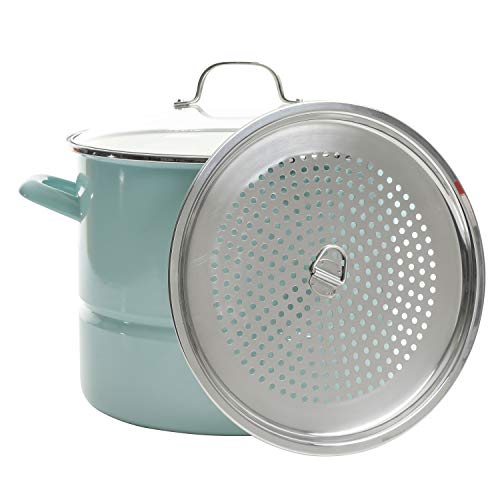 Kenmore Broadway 16-Quart Stock Pot With Steamer
- Stainless steel insert seamlessly fits over steamer pot…
- Durable steel pot construction promotes quick, precise heating
- Make lifting and moving the pot easy even…
ARC 24QT Stainless Steel Tamale Steamer Pot- ARC Vegetable steamer pot and parts are made…
- Vaporeras para tamales with spout allows adding more…
- 3 types of food can cook together to…
| Product | Key specs | |
|---|---|---|
| ARC 20QT Stainless Steel Tamale Steamer Pot | ARC Vegetable steamer pot and parts are made… Vaporeras para tamales with spout allows adding more… 3 types of food can cook together to… | Check price |
| Kenmore Broadway 16-Quart Stock Pot With Steamer | Stainless steel insert seamlessly fits over steamer pot… Durable steel pot construction promotes quick, precise heating Make lifting and moving the pot easy even… | Check price |
| ARC 24QT Stainless Steel Tamale Steamer Pot | ARC Vegetable steamer pot and parts are made… Vaporeras para tamales with spout allows adding more… 3 types of food can cook together to… | Check price |
 ARC 32QT Stainless Steel Tamale Steamer Pot ARC 32QT Stainless Steel Tamale Steamer Pot | ARC Vegetable steamer pot and parts are made… Vaporeras para tamales with spout allows adding more… 3 types of food can cook together to… | Check price |
As an Amazon Associate we earn from qualifying purchases at no extra cost to you.
Best tamale steamer pots by cooking situation
| Cooking situation | Recommended pot type | Typical capacity | Why it fits | Main compromise |
|---|---|---|---|---|
| Small household or occasional cooking | Compact stainless-steel tamale pot | 12–16 quarts | Uses less storage space and works for roughly 12–24 tamales | Shorter cooking height and fewer tamales per batch |
| Regular home batches | Mid-size stainless-steel steamer | 24–32 quarts | Good balance of batch size, stability, and price | Needs a tall cabinet or pantry shelf |
| Holiday cooking or large family | Large aluminum or stainless-steel tamale steamer | 32–40 quarts | Holds several dozen tamales and plenty of steaming water | Heavy, bulky, and slower to heat when fully loaded |
| Very limited storage | Stockpot with steamer insert | 8–16 quarts | Can serve as an ordinary stockpot when not steaming | Often has less vertical room and a less specialized basket |
What to look for in the best tamale steamer pot
Capacity and usable cooking height
Manufacturers usually list the pot’s total volume, not the space available for tamales. The insert, lid clearance, and recommended water line reduce usable capacity. A 32-quart pot may hold approximately 24–36 medium tamales, depending on whether they are arranged upright, how tightly they are packed, and how much room is left for steam circulation.
For upright tamales, measure height as carefully as volume. A useful rule is to allow at least 2 inches of space between the water surface and the bottom of the steamer basket, plus enough clearance for the tamales and lid. If the lid presses against the tops, steam can escape and the tamales may cook unevenly.
Do not fill the basket tightly enough to block steam. A slightly smaller batch with visible gaps usually cooks more consistently than a larger batch compressed into one dense layer.
Steamer-basket design
The insert is often the most important difference between a good tamale pot and a difficult one. Look for a rigid basket with evenly spaced perforations, a flat or stable base, and handles that remain accessible when the basket is loaded.
- Removable perforated insert: easiest to load, lift, drain, and wash.
- Raised platform or rack: useful when the pot has a broad bottom, but it may shift while loading.
- Collapsible insert: saves storage space, although thin petals can bend under a heavy batch.
- Deep basket: better for upright tamales and large batches.
- Shallow basket: easier to handle, but more suitable for small batches or foods arranged in layers.
Check whether the basket sits securely on a ledge rather than balancing on loose feet. A basket that tilts can spill boiling water when removed. A center post can help organize tamales upright, but it also takes up room and may make loading awkward.
Water-level visibility and refill access
Steamers eventually run low on water, especially during a long batch. A pot with a transparent water-level window, external gauge, or refill opening lets you check the level without removing a hot lid. These features are convenient, but they should not be treated as essential if the pot has a broad opening and clear minimum-fill markings.
Many basic tamale pots have no window. In that case, use a long-handled spoon or heat-resistant measuring cup to add hot water through the side of the basket, keeping the water below the tamales. Never pour cold water into a very hot empty pot unless the manufacturer permits it; sudden temperature changes can warp thin metal.
A practical calculation helps explain the difference between pot sizes. If a steamer loses approximately 1 to 1.5 cups of water per hour and a batch takes 90 minutes, it may use 1.5 to 2.25 cups before accounting for the starting water. Starting with 6 cups gives more margin than starting with 3, but the exact amount depends on the burner, lid seal, and pot diameter. Always follow the pot’s minimum and maximum fill marks.
Lid fit and steam retention
A lid should sit firmly without requiring force and should have enough depth to clear the tamales. A vent is useful because it releases excess pressure, but a steamer lid should not lock like a pressure-cooker lid unless it is specifically designed and labeled for pressure cooking.
Domed lids provide more vertical clearance than flat lids. A loose lid wastes heat and can extend cooking time; a lid that is too tight may trap condensation and drip heavily onto the tamales. Stainless-steel lids are durable, while tempered-glass lids make it easier to monitor condensation but add breakage risk and may be heavier.
Material durability
Stainless steel is the strongest all-purpose choice for frequent use. It resists rust, tolerates scrubbing, and is less likely to react with acidic ingredients. Look for a sturdy rim and a base compatible with your cooktop. Multi-layer or encapsulated bases distribute heat more evenly than very thin single-layer bottoms.
Aluminum heats quickly and keeps large pots relatively light. It is common in oversized commercial-style steamers and is often less expensive. The trade-off is a greater chance of dents, scratches, and discoloration. Avoid aggressive metal tools and abrasive cleaners on uncoated aluminum.
Enamel-coated steel can be attractive and easy to wipe clean, but chips in the coating expose the metal underneath. It is better for occasional use when handled carefully than for rough, frequent loading.
Expect the first wear at the lid handle, basket feet, rivets, and thin rim. Silicone or plastic handles can loosen or crack after repeated high-heat cycles. Replace a damaged handle or basket rather than continuing to use a pot that can spill boiling water.
Head-to-head: common steamer designs
Dedicated tamale pot versus stockpot with insert
A dedicated tamale pot normally offers more vertical height, a better-fitting basket, and a lid shaped for upright tamales. It is the stronger choice if you make tamales several times a year or prepare large batches. A stockpot with an insert is more versatile: it can cook soup, pasta, corn, or seafood between tamale sessions. However, the insert may be too shallow, leaving the tamales lying down or forcing you to make smaller batches.
Stainless steel versus aluminum
Choose stainless steel for durability, easier long-term cleaning, and regular use. Choose aluminum when low weight, fast heating, and a lower general market price matter more than appearance. For a 32-quart model, general market ranges are approximately $35–$90 for basic aluminum and $50–$140 for sturdier stainless-steel designs, depending on construction and included accessories.
Visible gauge versus simple marked interior
A visible gauge is useful for long cooking sessions, but it adds a component that can become cloudy, leak, or break. A simple interior fill line is more durable and easier to replace around. For most households, a reliable lid and strong basket are worth prioritizing over a water window.
Size the pot before buying
Measure three things: the storage height, the cooking surface, and the route from storage to the stove. A tall 32-quart pot may fit the burner but not a standard upper cabinet. Allow at least 3 inches of clearance above the lid so you can lift it safely, and check that the loaded pot will not overhang the cooktop.
As a rough planning guide, a 12–16-quart pot suits a small batch of about 12–24 medium tamales. A 24–32-quart pot is more appropriate for approximately 24–36. Large 32–40-quart models may hold 40 or more, but only if the tamales and basket dimensions allow it. These are estimates, not guarantees; husk size and filling thickness change the arrangement substantially.
Setup, cleaning, and storage
- Wash and inspect the pot first. Confirm that the basket sits level and that the lid does not wobble excessively.
- Add water below the basket. Keep the water from touching the tamales. Use the manufacturer’s minimum-fill line where provided.
- Arrange tamales upright when the basket is deep enough. Leave small gaps for steam and keep the open ends facing upward.
- Bring the water to a boil before covering fully. Once steaming begins, reduce heat enough to maintain steady steam without violent boiling.
- Check water periodically. Add hot water carefully if the level falls, but do not lift a loaded basket over an almost-empty pot.
- Cool before washing. Remove the basket with dry, stable handles, empty the remaining water, and wash food residue before it dries.
- Dry every component completely. Trapped moisture around rivets and basket feet can encourage corrosion or odor.
Store the basket inside the pot when possible, with a folded towel between metal parts to prevent scratches. If the lid does not nest inside, place it upside down on the pot rather than sealing a damp interior. For small kitchens, a collapsible insert or a pot that doubles as a stockpot may justify choosing a slightly smaller capacity.
Final buying recommendation
For most home cooks, choose a 24–32-quart stainless-steel tamale steamer with a deep, rigid basket, a domed lid, clear interior water markings, and handles that stay cool enough to grip safely. Move down to 12–16 quarts if storage is limited or batches are small. Move up to 32–40 quarts for holiday cooking, but confirm the loaded weight, burner size, and storage location first. The best tamale steamer pot is not simply the largest one—it is the pot whose basket, lid, and water capacity match the batch you can safely lift and store.








Write Your Review
No reviews yet. Be the first to share your experience!