

Key takeaways
- Made from all Natural Clay Material
- Unglazed lid is soaked before use
- Bottom section is glazed with glass frit lining…
The best clay cooking pot for slow cooking is a 3–4 litre unglazed or lightly glazed earthenware roaster for oven braises, while a Japanese donabe is the better choice if you want to slow-cook directly on a gas or electric hob.
Clay pots excel at gentle, steady cooking: their thick walls warm gradually, retain heat well, and help meat, beans, grains, and vegetables cook in a humid environment. They are less versatile than metal cookware, however. The wrong heat source, a sudden temperature change, or repeated overfilling can shorten a pot’s life.
Our top picks
 Reston Lloyd Eurita 2 Quart Terracotta Clay Dutch
- Made from all Natural Clay Material
- Unglazed lid is soaked before use
- Bottom section is glazed with glass frit lining…
 Magnifique 5 Quart Flami Pot with Lid
- PURE, NATURAL, NON-TOXIC CLAY: Crafted from pure, natural,…
- Built for real cooking, this Dutch Oven is…
- The Flami Pot naturally absorbs, distributes, and retains…
| Product | Key specs | |
|---|---|---|
| Reston Lloyd Eurita 2 Quart Terracotta Clay Dutch | Made from all Natural Clay Material Unglazed lid is soaked before use Bottom section is glazed with glass frit lining… | Check price |
| Magnifique 5 Quart Flami Pot with Lid | PURE, NATURAL, NON-TOXIC CLAY: Crafted from pure, natural,… Built for real cooking, this Dutch Oven is… The Flami Pot naturally absorbs, distributes, and retains… | Check price |
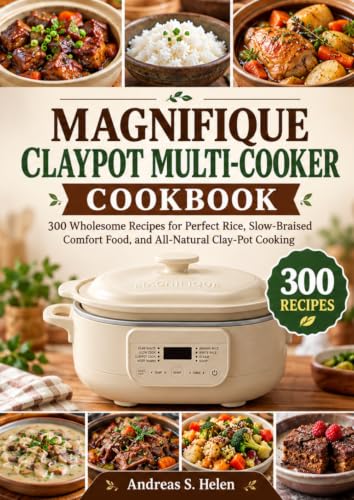 MAGNIFIQUE CLAYPOT MULTI-COOKER COOKBOOK: 300 Wholesome Recipes MAGNIFIQUE CLAYPOT MULTI-COOKER COOKBOOK: 300 Wholesome Recipes | Check price | |
 BSONEDO 1.9-Quarts Clay Pot for Cooking with BSONEDO 1.9-Quarts Clay Pot for Cooking with | Made without a synthetic nonstick coating and fired… 1.9 QT COMPACT CAPACITY The ceramic body warms gradually and stays hot… | Check price |
As an Amazon Associate we earn from qualifying purchases at no extra cost to you.
Quick picks by cooking situation
| Situation | Best pot type | Useful capacity | Why it fits |
|---|---|---|---|
| Oven braises for two to four people | Unglazed clay roaster | 3–4 litres | Moist cooking with minimal added liquid; straightforward long-braise performance |
| Frequent stovetop cooking | Flame-safe donabe | 2–3.5 litres | Designed for direct gas or electric heat, provided the manufacturer permits it |
| Family stews and whole poultry | Large clay roaster | 5–6 litres | More room for a 1.5–2 kg chicken or a large batch of stew |
| Small kitchen or occasional use | Compact covered clay casserole | 1.5–2.5 litres | Lower storage burden and enough capacity for two generous servings |
Head-to-head: the main clay pot choices
Unglazed clay roaster
A traditional unglazed roaster, such as a Römertopf-style pot, is the strongest all-round choice for oven slow cooking. The porous clay is normally soaked before use, then placed in a cold oven so the vessel and food heat together. Steam released from the food circulates beneath the lid, making this format particularly good for chicken, lamb shoulder, root vegetables, and bean dishes.
Its limitation is cooking-surface compatibility. Unless the maker specifically states otherwise, do not use an unglazed roaster on a hob, under a grill, or on a preheated baking stone. A typical 3.5-litre roaster weighs about 3–4 kg empty, so it is stable in the oven but awkward to lift when full.
Glazed clay casserole
A glazed clay casserole is easier to clean and less absorbent than an unglazed model. It is a practical choice for tomato-based stews, curries, and dishes that may leave strong aromas. Glazing does not automatically make a pot flame-safe: check the base and instructions for oven, gas, electric, ceramic, or induction approval separately.
Glazed cookware usually needs little or no soaking, but it still requires gradual heating. A cold pot should not go directly onto a hot burner, and a hot pot should not be filled with cold liquid.
Flame-safe donabe
Japanese donabe pots are thick, lidded earthenware vessels designed for gentle direct heat when used according to the manufacturer’s instructions. Models from established makers such as Nagatani-en are commonly used for rice, soups, hot pots, and slow-cooked dishes.
A donabe can be the most versatile clay option, but it is not automatically induction-compatible. Traditional clay is generally unsuitable for induction because it is not magnetic. A separate heat diffuser may be required for some electric or glass cooktops, and a diffuser does not override the maker’s restrictions.
Electric clay multicooker
An electric clay multicooker, such as a VitaClay-style cooker, reduces concerns about burner compatibility because the heating base controls the cooking environment. It can suit people who want unattended low-temperature cooking, but it is a different ownership proposition: the electrical base, removable clay insert, lid, and replacement parts all need care.
These appliances are convenient for repeated use, though they offer less flexibility than an oven-safe pot for browning or serving at the table.
What matters most before buying
Capacity and usable space
Clay pots should not be filled to the rim. Allow roughly 20% headroom for bubbling, steam, and safe handling. A nominal 3-litre pot therefore provides about 2.4 litres of comfortable working capacity. That is usually enough for two to four portions, depending on how much meat and liquid the recipe contains.
For a whole chicken, measure the internal length and height rather than relying only on litres. A 1.5 kg bird commonly needs at least 30 cm of internal length and approximately 12–15 cm of internal height once vegetables are added.
Wall thickness and heat tolerance
Thicker walls hold heat for longer but make the pot heavier and slower to respond. For slow cooking, a wall thickness around 8–15 mm is common in substantial earthenware cookware. Treat thickness as a guide, not a safety rating: clay composition, glazing, firing quality, and the base design matter just as much.
Look for a clearly stated maximum oven temperature. Many clay pots are comfortable around 200–230°C, but the safe limit varies. Do not assume that a decorative terracotta vessel is food-safe or heat-safe.
Cooking-surface compatibility
- Conventional oven: Usually the safest and most useful setting, subject to the stated temperature limit.
- Gas hob: Suitable only for a flame-safe donabe or pot specifically marked for stovetop use.
- Electric or ceramic hob: Often requires a diffuser and gradual heating; follow the maker’s instructions.
- Induction: Traditional clay is not induction-compatible unless the product has a built-in magnetic base.
- Grill or broiler: Usually unsuitable because intense top heat can create a damaging temperature gradient.
Soaking requirements
Unglazed clay roasters commonly need 10–20 minutes of soaking in cool water before cooking. The damp walls help support a moist cooking environment and reduce the chance of rapid drying during the first heating stage. Drain the pot without towel-drying it, add the ingredients, and place it in a cold oven unless the instructions specify a different method.
Do not soak a glazed pot automatically. Prolonged soaking can allow water into tiny flaws around the rim or unglazed base. Always follow the product’s care instructions, especially for a pot with a partially glazed interior.
Durability during long braises
The part most likely to suffer is not the lid but the pot body, particularly the base and rim. Hairline cracks often begin after thermal shock: moving a hot pot onto a cold stone surface, adding chilled stock, or rinsing it immediately after cooking. A lid can also chip if it is placed on a hard countertop or knocked against the sink.
For longer service life:
- Start with a cold oven unless the manufacturer explicitly allows preheating.
- Use room-temperature or warm liquid during a long braise.
- Keep some liquid in the pot; do not heat an empty clay vessel.
- Lift rather than slide the pot across a hob or oven shelf.
- Cool it completely before washing.
- Use a soft brush or non-abrasive sponge, not metal scouring pads.
- Dry it fully with the lid off before storing to prevent stale odours or mould in porous clay.
Unglazed pots can absorb oils and spices over time. That staining is normal, but strong detergent may remain in the pores and affect later dishes. For an unglazed roaster, hot water, a soft brush, and thorough air-drying are usually preferable. If persistent mould or an unpleasant smell develops, follow the manufacturer’s cleaning guidance rather than sealing the pot with oil.
Best buying decision by budget and frequency
| Use pattern | Recommended specification | Typical market range | Ownership trade-off |
|---|---|---|---|
| Occasional oven braises | 2.5–4 litre unglazed roaster, 6–10 mm walls | About $40–$90 | Lowest entry cost; requires soaking and careful temperature changes |
| Weekly family cooking | 4–6 litre glazed or unglazed roaster, 8–15 mm walls | About $70–$160 | Better batch capacity, but heavier and more demanding to store |
| Frequent stovetop meals | 2–3.5 litre flame-safe donabe | About $80–$250 | More versatile; compatibility rules must be followed closely |
| Unattended scheduled cooking | Electric clay multicooker with 2–6 litre insert | About $100–$250 | Convenient control, but includes electrical parts and replacement considerations |
How to use a clay pot for a long braise
- Check the pot: Look for cracks, loose glaze, or a damaged rim before adding food.
- Prepare according to the material: Soak an unglazed roaster if required; leave a glazed pot dry unless instructed otherwise.
- Load with room-temperature ingredients: Avoid frozen meat, icy stock, and a completely empty vessel.
- Use a cold start when required: Place the covered pot in the oven, then set the temperature, commonly between 160°C and 180°C for a slow braise.
- Allow extra time: A clay pot may take longer to heat than metal. Start checking doneness according to the recipe, not just the oven timer.
- Rest before serving: Set the hot pot on a wooden board or folded towel and let it rest for 10–15 minutes.
Final recommendation
Choose a 3–4 litre unglazed clay roaster if your priority is moist oven braises and you do not mind soaking and careful cleaning. Choose a flame-safe 2–3.5 litre donabe if stovetop cooking is central to your routine. For the least maintenance, select a glazed oven-safe casserole, but verify its heat-surface compatibility rather than assuming that all clay cookware can go on the hob.








Write Your Review
No reviews yet. Be the first to share your experience!