

Best Chinese Clay Pots for Flavorful Cooking
The best Chinese clay pots for most home cooks are medium-capacity, glazed or partially glazed sand pots rated for direct stovetop use, while unglazed pots are the better choice for cooks who want traditional seasoning and maximum moisture retention.
Quick picks by cooking situation
| Your situation | Best choice | Why it fits | What to watch for |
|---|---|---|---|
| First clay pot | 2.0–2.5 L glazed sand pot | Easier cleaning and less seasoning work | Confirm that the base is approved for your stovetop |
| Cooking soup for two to four people | 2.5–3.0 L pot | Enough room for broth, vegetables, and protein without excessive evaporation | Leave at least 3 cm of headspace to prevent bubbling over |
| Single portions or small kitchen | 0.8–1.2 L pot | Compact for rice, congee, and one- or two-person stews | Small pots can boil dry quickly |
| Traditional slow braises | Unglazed 2.5–4.0 L sand pot | Porous walls moderate heat and retain moisture well | Requires gradual heating, careful cleaning, and regular seasoning |
| Induction cooktop | Induction-compatible clay pot or clay pot with approved diffuser | Provides a safe interface between clay and induction heat | Do not assume a metal-looking base is induction-safe |
Unglazed versus glazed Chinese clay pots
Unglazed clay
Unglazed Chinese clay pots are made from porous ceramic material, often sold as traditional sand pots or casserole pots. Their pores absorb a small amount of moisture and cooking aroma, and the thick walls heat gently. This makes them particularly effective for chicken soup, pork rib soup, herbal broths, braised tofu, and rice dishes that benefit from steady heat.
Our top picks
 Okllen Large Korean Ceramic Bowl with Lid
- Okllen Korean ceramic bowl overall size, 9.8"Dx5.1"H, holding…
- Premium Material: This Korean ceramic bowl is crafted…
- Easy to Grip: Designed with double handles and…
 XICHENGSHIDAI Ceramic Casserole Pot with Lid
- 2.1 Quart Ceramic Casserole Pot
- Natural Clay & Smooth Glazed Interior
- Thick Wall for Even Heating
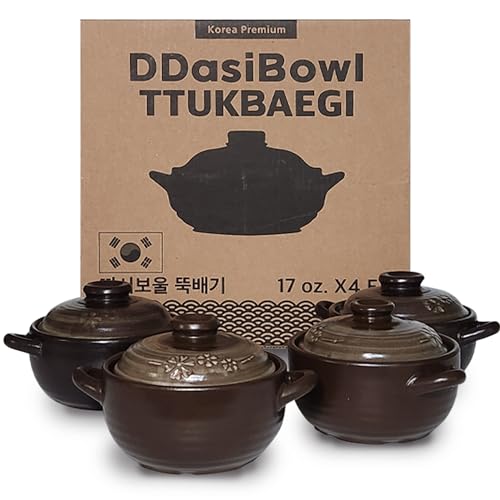 DDasiBowl
- Authentic Korean Stoneware Set
- Safe & Trusted Korean Cookware
- Versatile Clay Cooking Pots for Every Kitchen
| Product | Key specs | |
|---|---|---|
| Okllen Large Korean Ceramic Bowl with Lid | Okllen Korean ceramic bowl overall size, 9.8"Dx5.1"H, holding… Premium Material: This Korean ceramic bowl is crafted… Easy to Grip: Designed with double handles and… | Check price |
| XICHENGSHIDAI Ceramic Casserole Pot with Lid | 2.1 Quart Ceramic Casserole Pot Natural Clay & Smooth Glazed Interior Thick Wall for Even Heating | Check price |
| DDasiBowl | Authentic Korean Stoneware Set Safe & Trusted Korean Cookware Versatile Clay Cooking Pots for Every Kitchen | Check price |
 Shaguo Casserole Pot 40oz Brown Clay Unglazed Shaguo Casserole Pot 40oz Brown Clay Unglazed | Premium Material and Capacity: Made from natural clay… Extended Heat Retention: Suitable for bibimbaps and keeping… Versatile Usage: High quality ceramic stone bowls can… | Check price |
As an Amazon Associate we earn from qualifying purchases at no extra cost to you.
The trade-off is ownership effort. An unglazed pot must be dried thoroughly after washing, and many cooks season it by simmering rice porridge or plain rice in the pot several times. Seasoning is not a permanent nonstick coating; it gradually reduces absorption and helps stabilize the cooking surface. Strongly flavored foods can still leave aromas behind.
Glazed clay
Glazed pots have a glass-like interior that resists stains and makes them more versatile for tomato-based stews, spicy dishes, seafood, and soups with aromatics. They require less seasoning and are generally easier to inspect and clean. A glazed interior also reduces the risk that old flavors will transfer to a delicate dish.
Glaze does not make a pot immune to thermal shock. Rapidly moving a hot pot onto a cold counter, adding refrigerated liquid to a heated pot, or placing a hot pot in water can crack either the glaze or the clay beneath it. A glazed pot is the practical choice for frequent cooking, but it still needs gradual temperature changes.
Capacity, weight, and useful cooking space
Clay pots are usually filled only two-thirds to three-quarters full. The contents need room to simmer without pushing liquid through the lid vent or over the rim. The table below gives realistic planning figures for common sizes; exact dimensions vary by maker and wall thickness.
| Nominal capacity | Approximate usable fill | Typical empty weight | Best uses |
|---|---|---|---|
| 0.8–1.2 L | 0.6–0.9 L | 1.2–2.0 kg | Congee, one serving of rice, small stews, two servings of soup |
| 1.5–2.0 L | 1.1–1.5 L | 1.8–2.8 kg | Rice for two to three people, side dishes, compact braises |
| 2.5–3.0 L | 1.8–2.3 L | 2.8–4.0 kg | Family soup, chicken pieces, clay-pot rice for three to five people |
| 3.5–4.5 L | 2.6–3.4 L | 4.0–6.0 kg | Large batches of soup and stew, but heavier to lift when full |
A useful sizing calculation is to allow roughly 500–600 ml of finished soup per adult serving, then add 25 percent for headspace and evaporation. For four servings, 4 × 550 ml = 2.2 L; adding headspace means a pot near 3 L is more suitable than a 2 L model.
Stovetop compatibility matters more than appearance
Look for explicit wording such as “direct flame,” “gas stovetop,” “electric stovetop,” or “ceramic hob compatible.” A decorative clay casserole may be suitable for serving but unsafe for direct heat. If the manufacturer does not specify stovetop use, treat it as an oven- or serving-only vessel.
- Gas: Usually the most suitable heat source. Begin with low heat and use a flame diffuser if the flame extends beyond the base.
- Electric coil: Often workable if the pot has a flat, stable base, but preheating must be gradual.
- Glass-ceramic: Use only if the pot is approved for it. Avoid dragging a rough clay base across the surface.
- Induction: Ordinary clay is not magnetic and will not heat directly. Use a manufacturer-approved induction model or diffuser, and check the cooktop’s instructions.
- Oven: Confirm the stated maximum temperature and whether the lid includes materials that limit oven use.
Never place an empty clay pot over high heat. For stovetop cooking, add liquid or ingredients before heating, then increase the temperature in stages. Clay stores heat, so the pot often continues simmering after the burner is lowered.
How to season an unglazed pot
- Rinse with warm water. Remove loose manufacturing dust without using scented detergent.
- Inspect the pot. Check the rim, lid, base, and interior for cracks or chips before heating.
- Fill it halfway with water and rice. A thin rice porridge is useful because its starch coats small pores.
- Heat gradually. Start on low for 10–15 minutes, then bring the mixture to a gentle simmer for 30–45 minutes.
- Cool naturally. Leave the pot untouched until it reaches room temperature.
- Rinse and dry completely. Repeat once or twice if the surface is highly absorbent.
Some pots arrive pre-seasoned or have manufacturer-specific instructions, so those instructions take priority. Do not season a glazed cooking surface unless the maker specifically recommends it.
Cooking performance: soups, stews, and rice
Soups
Clay is well suited to long, gentle simmering. Put meat, vegetables, and cool or room-temperature liquid into the pot, heat slowly, and skim as needed. The lid helps limit evaporation, but check the liquid during the first few uses because different lids fit differently.
Stews and braises
Clay pots excel at dishes that should cook steadily rather than aggressively. Keep the burner low once the liquid reaches a simmer. High heat can scorch the bottom before the thick walls have warmed evenly, especially with sticky sauces or reduced braises.
Rice
For clay-pot rice, rinse the rice, soak it if your variety requires it, and use a little less water than for an uncovered saucepan because the lid reduces evaporation. Start at low-to-medium heat, then lower the burner when steam becomes vigorous. Allow 10–15 minutes of covered resting after heat is turned off; the stored heat finishes the grains and helps form a crisp bottom layer.
Care, durability, and common mistakes
The lid knob, rim, and base usually show wear before the main body. A lid can chip if placed down heavily, while a rough base can scratch a glass cooktop. Inspect the pot periodically for hairline cracks, expanding chips, or a hollow rattling sound when gently tapped. Retire a pot if a crack grows, leaks, or crosses the cooking chamber.
- Wash with a soft sponge and mild unscented detergent; avoid metal scouring pads.
- Do not soak an unglazed pot for hours, because absorbed water prolongs drying.
- Dry the pot and lid separately with the lid ajar to prevent trapped moisture and odors.
- Do not put a hot pot on a wet towel, cold stone surface, or directly under cold water.
- Avoid cooking directly from frozen ingredients unless the maker explicitly permits it.
- Do not use an unglazed pot for deep-frying or dry roasting unless it is specifically designed for that purpose.
Final buying recommendation
Choose a 2.0–2.5 L glazed Chinese sand pot for the easiest all-purpose ownership, especially if you cook several times a week and want one vessel for soup, stew, and rice. Choose a 2.5–3.0 L unglazed pot if traditional slow cooking, seasoning, and aroma retention matter more than effortless cleaning. In either case, stovetop approval, gradual heating, and a capacity matched to your usual batch are more important than decorative finish or unusually thick walls.








Write Your Review
No reviews yet. Be the first to share your experience!