

The best crepe pan for most home cooks is a lightweight carbon steel pan such as the De Buyer Mineral B, because its low sides make flipping easy and it develops a natural nonstick surface. If you prefer zero seasoning, a nonstick pan from SENSARTE (budget) or Cuisinart is the easiest choice, and a dedicated electric crepe maker suits batch cooking. A good crepe pan is usually 10 to 12 inches across, flat-bottomed, with very low sides.
Quick Comparison of Crepe Pans
| Pick | Best for | Key specs | Price range |
|---|---|---|---|
| De Buyer Mineral B Crepe Pan | Best overall for traditional results | Carbon steel, induction compatible, needs seasoning, about 4 lb in the 12-inch size | Mid |
| Cuisinart Chef’s Classic 10-Inch Nonstick | Easiest cleanup | Hard-anodized, ceramic nonstick coating per maker, oven safe to 500 F, not for induction | Mid |
| SENSARTE 10-Inch Nonstick | Best budget pick | Nonstick, lightweight, induction-compatible versions available | Budget |
| Lodge 10.5-Inch Cast Iron Griddle | Cheap, durable stovetop option | Pre-seasoned, oven safe to 650 F, about 4.5 lb | Budget |
| Cucina Pro Electric Crepe Maker | Making many crepes quickly | 13-inch plate, adjustable heat, includes batter spreader | Mid |
| Cast iron crepe pan (class) | Heat retention for slow service | Heavy, 10 to 11 in., low flared sides | Budget to mid |
Best Overall: De Buyer Mineral B Carbon Steel
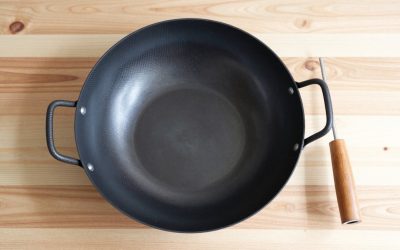
Professional crepe makers often use carbon steel because it heats quickly, responds fast to heat changes and builds a slick seasoned surface. The De Buyer Mineral B is a well-known choice. It is oven safe up to a stated limit, works on induction and comes with a protective beeswax coating you remove before first use. The trade-offs are the initial seasoning work and the fact that sides are slightly higher than some dedicated crepe pans, which adds friction when you slide a spatula under the crepe. Reviewers sometimes prefer the blue carbon steel version for crepes for that reason.
Best Nonstick: Cuisinart Chef’s Classic 10-Inch
The Cuisinart Chef’s Classic is an everyday nonstick that releases crepes with a light wipe of butter. According to the maker it has a hard-anodized body and an oven-safe rating of 500 degrees Fahrenheit. It does not work on induction, which is the main limitation, and nonstick wears over time, so use wooden or silicone tools.
Best Budget: SENSARTE 10-Inch Nonstick
SENSARTE sells inexpensive nonstick pans with lightweight bodies and comfortable handles. They are a good starter for someone making crepes only occasionally. Do not expect heirloom longevity, and avoid preheating them empty over high heat.
Best Cheap Workhorse: Lodge 10.5-Inch Cast Iron Griddle
Lodge’s round griddle has a low edge and a flat surface that works well for thin crepes. It holds heat very evenly once it comes up to temperature, and it is made to take serious abuse. It is heavy at about 4.5 pounds, so flipping a crepe by tossing the pan is not realistic, and the pan needs seasoning care. It is not sold as a crepe pan, but the geometry suits crepes.
Best for Batches: An Electric Crepe Maker
Electric crepe makers like the Cucina Pro have a flat plate, a thermostat and a batter spreader. They remove the pan-tilting skill from the process and are good for parties or kids. The downside is the single-purpose footprint and limited browning compared with a hot pan. They are best for households that make crepes on a regular basis.
How to Choose a Crepe Pan
- Diameter: A 10-inch cooking surface makes a classic 8-inch crepe. A 12-inch pan makes large dinner crepes but is harder to rotate.
- Side height: Under 1 inch is ideal. Taller sides trap steam and make flipping harder.
- Material: Carbon steel for the best browning, nonstick for convenience, cast iron for steady heat.
- Weight: Aim for under 3 pounds if you intend to swirl the batter by tilting the pan.
- Cooktop: Check induction compatibility. Many nonstick pans do not work on induction.
- Handle: A long, comfortable handle gives control for the wrist swirl.
Decision Matrix
| Cook profile | Pick |
|---|---|
| Enjoys technique, cooks often | Carbon steel (De Buyer) |
| Wants zero fuss | Nonstick (Cuisinart, SENSARTE) |
| Induction cooktop | Carbon steel or a pan marked induction compatible |
| Feeds a crowd | Electric crepe maker |
| On a tight budget | SENSARTE or Lodge griddle |
Step by Step: Making a Crepe in a New Pan
- Rest the batter for 30 minutes or more so the flour hydrates and the crepes stay tender.
- Heat the pan over medium heat until a drop of water dances and evaporates, about 2 minutes.
- Rub a thin film of butter or oil with a paper towel. Too much fat makes lacey, greasy crepes.
- Pour about a quarter cup of batter for an 8 to 10 inch crepe and tilt the pan to coat the surface.
- Cook until the edges lift and the surface looks matte, about 60 to 90 seconds.
- Flip with a thin spatula or your fingers and cook another 20 to 30 seconds.
- Stack the crepes on a plate and cover so they stay soft.
The first crepe is typically a test. Adjust heat down if it browns too fast, up if it turns pale and rubbery.
Worked Example: Batter for Six People
A classic batter of 1 cup flour, 2 eggs, 1 cup milk, 2 tablespoons melted butter and a pinch of salt makes about 8 crepes of 8 inches. For six people at 3 crepes each you need 18 crepes, so triple the recipe: 3 cups flour, 6 eggs, 3 cups milk and 6 tablespoons butter. At roughly 90 seconds per crepe, a single pan needs around 30 minutes, while two pans cut that to about 15.
Material Comparison for Crepes
| Material | Heat-up time | Typical weight (10 in.) | Seasoning needed | Typical lifespan |
|---|---|---|---|---|
| Carbon steel | Fast, about 1 to 2 minutes | 2 to 3 lb | Yes | Decades with care |
| Nonstick aluminum | Fast | 1 to 2 lb | No | 2 to 5 years |
| Cast iron | Slow, 4 to 6 minutes | 4 to 5 lb | Yes (pre-seasoned) | Decades |
| Electric plate | 3 to 5 minutes | Appliance | No | Varies by model |
The numbers above are general ranges drawn from manufacturer spec sheets and typical cookware construction, not a guarantee for any single model. Heat-up speed matters because crepe batter sets in seconds: a pan that recovers slowly after each crepe will produce uneven color across a stack.
Ownership Realities
- Carbon steel and cast iron should not soak or go in the dishwasher. Wipe, dry and oil lightly.
- Nonstick pans wear faster if you use cooking spray, which can leave residue.
- Never preheat an empty nonstick pan on high heat.
- Keep one pan just for crepes if you can, so no savory residues interfere.
Frequently Asked Questions
Do I need a special crepe pan?
No, a flat nonstick skillet works. A dedicated crepe pan has lower sides and a flatter base, which makes flipping and spreading easier.
What size crepe pan is best?
A 10-inch pan suits most households. Choose 12 inches for large dinner crepes and 8 inches for small dessert crepes.
Is carbon steel better than nonstick for crepes?
Carbon steel browns better and lasts longer, but needs seasoning. Nonstick is easier for beginners.
Can I use a crepe pan on induction?
Only if it is magnetic or labelled induction compatible. Carbon steel and cast iron work, while many aluminum nonstick pans do not.
Why do my crepes stick or tear?
Common causes are low heat, too little fat, a cold pan or a batter that has not rested. Preheat well and wait for the edges to lift.
How do I season a carbon steel crepe pan?
Remove the factory coating, heat the pan, rub on a thin layer of high-smoke-point oil and heat until it smokes lightly. Repeat several times for a durable surface.

Write Your Review
No reviews yet. Be the first to share your experience!