

Key takeaways
- ✔️ COMPACT AND LIGHTWEIGHT
- ✔️ STURDY AND DURABLE
- ✔️ 18 ROUNDED MOLDS
Best Takoyaki Pan for Octopus Balls
The best takoyaki pan for octopus balls is a heavy cast-iron pan with 16 medium-size wells if you want evenly browned, properly rounded takoyaki on a gas or induction-compatible cooktop; for faster heating and easier handling, choose a lighter aluminum pan designed for your specific stovetop.
The right choice depends less on the name “takoyaki pan” than on five practical details: hole size, pan weight, material, heat distribution, and stovetop compatibility. A pan that heats unevenly can leave one side raw while another burns, and shallow or oversized wells make it difficult to create the compact, round shape associated with good takoyaki.
Our top picks
 StarBlue Takoyaki Maker
- ✔️ COMPACT AND LIGHTWEIGHT
- ✔️ STURDY AND DURABLE
- ✔️ 18 ROUNDED MOLDS
 Takoyaki Maker Machine by StarBlue with FREE
- The takoyaki pan has an adjustable temperature control…
- Thick aluminum with HDPE body makes this electric…
- This electric takoyaki machine can make 18 Japanese…
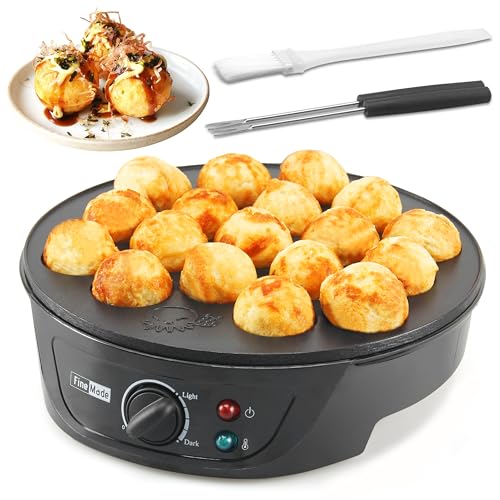 FineMade Takoyaki Maker Pan with Temperature Control
- [TEMPERATURE CONTROL]: This machine not only can cook…
- [NO MESS WITH NON STICK SURFACE ]:The non-stick…
- [18 OCTOPUS BALLS]: Efficiently cook maximum 18 octopus…
| Product | Key specs | |
|---|---|---|
| StarBlue Takoyaki Maker | ✔️ COMPACT AND LIGHTWEIGHT ✔️ STURDY AND DURABLE ✔️ 18 ROUNDED MOLDS | Check price |
| Takoyaki Maker Machine by StarBlue with FREE | The takoyaki pan has an adjustable temperature control… Thick aluminum with HDPE body makes this electric… This electric takoyaki machine can make 18 Japanese… | Check price |
| FineMade Takoyaki Maker Pan with Temperature Control | [TEMPERATURE CONTROL]: This machine not only can cook… [NO MESS WITH NON STICK SURFACE ]:The non-stick… [18 OCTOPUS BALLS]: Efficiently cook maximum 18 octopus… | Check price |
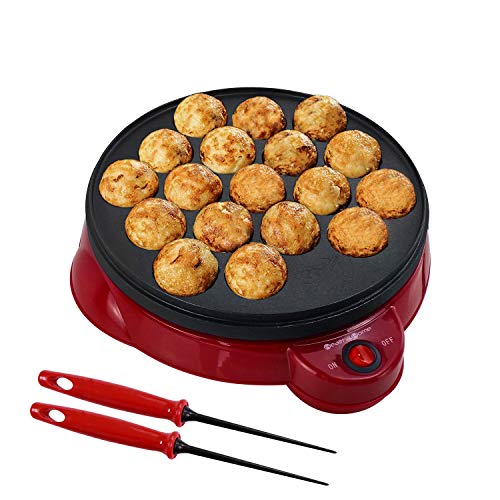 Health and Home Electric Takoyaki Maker With Health and Home Electric Takoyaki Maker With | This Takoyaki maker Measures 10.9 x 10.8 x… 18 Rounded molds--Takoyaki Maker heat 18 perfect 1.57… Non-stick surface-- After you have done the cooking,… | Check price |
As an Amazon Associate we earn from qualifying purchases at no extra cost to you.
Quick Picks by Cooking Situation
| Cooking situation | Best pan type | Useful target specifications | Why it fits |
|---|---|---|---|
| First-time cook using gas | Aluminum or carbon-steel takoyaki plate | 16 wells, 35–40 mm diameter, 1–2.5 kg | Heats quickly and is easy to rotate while learning |
| Frequent weekend cooking | Thick cast iron | 12–16 wells, 38–45 mm diameter, 2.5–4 kg | Stores heat well and gives more consistent browning |
| Induction cooktop | Flat-bottom induction-compatible steel pan | Magnetic base, 16 wells, 2–3.5 kg | Transfers heat through the induction surface instead of relying on a flame |
| Small kitchen or occasional use | Removable electric takoyaki maker | 12–18 wells, 600–1,000 W, 1–2.5 kg | Needs no separate burner and is simple to store |
| Largest, restaurant-style balls | Deep cast-iron or steel pan | 12 wells, 45–50 mm diameter, 3–5 kg | Holds more batter and filling, but requires better turning technique |
Best Overall: A 16-Well Cast-Iron Takoyaki Pan
For cooks who want the most dependable results, a 16-well cast-iron pan is the strongest all-purpose choice. Cast iron heats more slowly than aluminum, but its greater thermal mass helps prevent temperature drops when cold batter and octopus are added. Once fully preheated, it produces a more stable cooking surface and stronger browning.
Look for wells around 38–42 mm across and at least 18–22 mm deep. This size gives enough room for batter, octopus, green onion, and tenkasu without making the balls unwieldy. Sixteen wells are also a useful capacity: enough for a family serving, but not so many that the pan becomes difficult to lift or heat evenly.
The trade-off is weight. A cast-iron pan weighing 2.5–4 kg is less convenient to move, and a small burner may not heat the outer wells as effectively as the center. Preheating for approximately 8–12 minutes over medium heat usually works better than turning the burner to high immediately.
Strong Cast-Iron Examples
Lodge’s cast-iron Aebleskiver Pan is a legitimate alternative for takoyaki-style cooking. It has seven deep wells rather than the 12 or 16 wells common on Japanese takoyaki pans, so it is better for small batches and larger, deeper balls. Its approximately 9.5-inch diameter and roughly 6-pound weight make it very stable, but also cumbersome for cooks who need to move the pan frequently.
Cast-iron takoyaki pans sold by brands such as Norpro can offer 12-well layouts and are often less expensive than premium cookware. Check the actual well diameter, handle design, and cooktop instructions before buying: “takoyaki” models vary considerably in size, and some are intended only for gas burners.
Best for Gas Stoves: A Lightweight Aluminum or Steel Plate
On a gas stove, a lightweight aluminum or carbon-steel plate is often easier to control than cast iron. Aluminum responds quickly when the flame is adjusted, while carbon steel offers better browning and can develop a useful seasoning layer over time.
The Iwatani Takoyaki Plate CB-P-TK3 is a well-known example of a burner-specific plate. Its key advantage is the shaped underside intended for compatible Iwatani cassette stoves, which helps keep the plate positioned over the burner. This is not the same as universal compatibility: the fit should be checked against the exact stove model.
Lightweight plates are particularly useful for beginners because the cook can tilt or shift them to compensate for hot spots. Their weakness is heat retention. Adding batter to every well at once can cool the surface, especially on a small flame, so preheating and cooking in a slightly smaller batch may produce better browning.
Best for Induction: Flat Magnetic Steel
Induction users should not assume that a pan advertised as cast iron will work well. The pan must have a flat, magnetic base that makes good contact with the glass surface. A heavily ridged underside, curved base, or separate adapter plate can reduce efficiency and create uneven heating.
Before purchasing, test the base with a magnet if the manufacturer does not clearly state induction compatibility. The magnet should hold firmly across the cooking surface, not only at a narrow center section. A pan measuring roughly 20–24 cm across is usually easier to keep within the active induction zone than an oversized commercial-style model.
Induction heats quickly, so begin at a moderate setting rather than maximum power. Cast iron can overshoot the target temperature and continue cooking aggressively after the control is lowered. Carbon steel or a thinner induction-compatible steel pan offers faster response, while cast iron gives better heat stability.
Hole Size Matters More Than Capacity
Well diameter determines how much batter each takoyaki needs and how difficult the turning process will be. Small 30–35 mm wells create bite-size balls and cook quickly, but they leave little room for octopus and fillings. Standard 38–42 mm wells are the most flexible for home cooking. Wells of 45 mm or more produce substantial balls but need more batter, longer cooking, and more rotation.
A useful portion estimate is:
- 30–35 mm well: approximately 20–25 ml of batter per ball
- 38–42 mm well: approximately 30–40 ml of batter per ball
- 45–50 mm well: approximately 45–60 ml of batter per ball
These are starting amounts rather than fixed rules because batter thickness and filling volume change the result. Filling each well to about three-quarters full, then adding a little extra batter after the edges set, makes it easier to build a round shape without overflowing the pan.
Material Comparison
| Material | Typical weight for a home pan | Heat behavior | Maintenance | Best use |
|---|---|---|---|---|
| Cast iron | 2.5–5 kg | Slow to heat; excellent heat retention | Dry immediately; oil or reseason as needed | Frequent cooking and deep browning |
| Carbon steel | 1.5–3 kg | Responsive with good heat retention after preheating | Requires seasoning and protection from moisture | Gas cooking and cooks who want a lighter pan |
| Cast aluminum | 1–2.5 kg | Fast heating; more sensitive to burner hot spots | Follow coating instructions; avoid metal tools on nonstick surfaces | Easy handling and occasional use |
| Stainless steel | 1.5–3.5 kg | Durable but can heat unevenly without a thick base | Simple washing; sticking is the main concern | Long-term durability where a thick base is present |
How to Get Evenly Shaped Takoyaki
- Preheat gradually. Warm cast iron for 8–12 minutes and lighter metal for about 4–7 minutes. A drop of batter should sizzle immediately but not turn dark within seconds.
- Oil every well. Use a brush or folded paper towel held with tongs. Oil the rims as well as the bottoms because the rims help release the balls during turning.
- Fill consistently. Add the same initial amount to each well, then distribute octopus and toppings quickly. Inconsistent filling creates different cooking times across the pan.
- Turn when the edges set. When the underside is firm and the top is still fluid, run a pick around the rim and rotate each piece about 90 degrees. Add a little more batter if needed.
- Move the hotter wells. If the center browns faster, rotate individual takoyaki or shift the pan rather than raising the heat for the entire surface.
- Finish with smaller rotations. Continue turning until the balls are round and evenly golden, usually 3–6 minutes after the first turn depending on well size and heat.
Ownership Costs and Common Mistakes
A basic lightweight pan generally falls in the broad market range of $20–$45, while heavier cast iron or branded burner-specific cookware commonly ranges from $35–$90. If a $50 pan lasts 50 cooking sessions, its cookware cost is about $1 per use before ingredients. A cheaper pan that warps, loses its coating, or cooks unevenly may cost more over time if it has to be replaced.
For cast iron and carbon steel, moisture is the main enemy. Do not leave the pan soaking, and do not put it away while damp. Wash with hot water and a soft brush, dry over low heat, then apply a very thin film of cooking oil. Excess oil becomes sticky and can turn rancid.
For nonstick aluminum, the coating is usually the first part to wear. Use wooden, bamboo, or heat-resistant plastic picks rather than metal skewers, and avoid abrasive cleaners. Never preheat an empty coated pan over high heat for an extended period.
The most common purchasing mistake is choosing a pan based only on the number of wells. A 24-well pan may look efficient, but if its base is larger than the burner or induction zone, the outer balls can remain pale while the center burns. Match the pan’s base to the heat source first, then choose the well count.
Final Recommendation
Choose a 16-well cast-iron pan with 38–42 mm wells for the best balance of shape, browning, and heat stability. Choose a lighter aluminum or carbon-steel plate for gas cooking when easy handling matters more than heat retention, and choose only a clearly marked flat-bottom magnetic model for induction. Whichever material you select, consistent well size, a properly preheated surface, and a base that matches your burner will matter more than having the highest capacity.








Write Your Review
No reviews yet. Be the first to share your experience!