

Best Tava Pan for Indian Flatbread
The best tava pan for Indian flatbread is a 10–12-inch, gently curved carbon-steel or cast-iron pan with a stable handle: choose carbon steel for faster heat control and regular roti or paratha, cast iron for maximum heat retention, and a quality nonstick dosa tawa when low-oil cooking and easy release matter most.
A tava must do more than sit flat on a burner. Its diameter determines how easily you can rotate dough, its curvature affects puffing and flipping, and its material controls whether the surface recovers quickly after a cold roti is added. The right choice depends on whether you mainly make roti, layered paratha, or thin dosa.
Our top picks
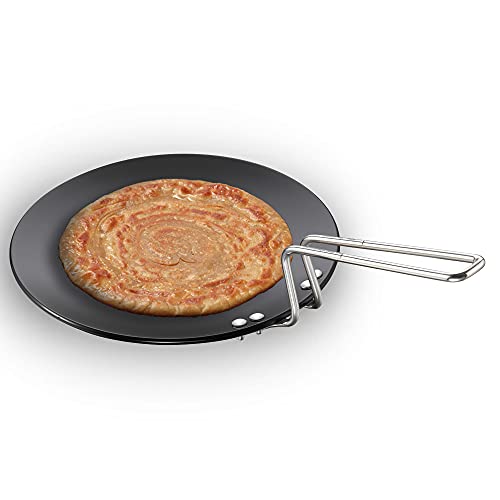 Hawkins Futura 28 cm Tava
- Hard Anodised Aluminium - tough and durable, will…
- It is preferred for heavy gauge, and a…
- The Futura Hard Anodised surface is non-toxic, non-staining…
 Hawkins Futura 24 cm Roti Tava
- Material: Hard Anodised Aluminium - tough and durable,…
- It is preferred for heavy gauge, and a…
- The Futura Hard Anodised surface is non-toxic, non-staining…
 Iron Tawa Flat Griddle Pan for Roti
- ✅ Traditional Cooking: Perfect for making roti, chapati,…
- Durable Construction: The tawa is made of high-quality…
- Versatile Cooking: The tawa is perfect for cooking…
| Product | Key specs | |
|---|---|---|
| Hawkins Futura 28 cm Tava | Hard Anodised Aluminium - tough and durable, will… It is preferred for heavy gauge, and a… The Futura Hard Anodised surface is non-toxic, non-staining… | Check price |
| Hawkins Futura 24 cm Roti Tava | Material: Hard Anodised Aluminium - tough and durable,… It is preferred for heavy gauge, and a… The Futura Hard Anodised surface is non-toxic, non-staining… | Check price |
| Iron Tawa Flat Griddle Pan for Roti | ✅ Traditional Cooking: Perfect for making roti, chapati,… Durable Construction: The tawa is made of high-quality… Versatile Cooking: The tawa is perfect for cooking… | Check price |
 Sahishnu Online & Marketing Hard Anodized Aluminium Sahishnu Online & Marketing Hard Anodized Aluminium | Perfect for making soft and fluffy roti and… Hard Anodized coating, scratch resistant, durable. Item Dimension - Length- 16.5, Width- 9.8, Height-… | Check price |
As an Amazon Associate we earn from qualifying purchases at no extra cost to you.
Quick comparison: which tava suits your kitchen?
| Tava type | Typical diameter | Approx. weight | Best for | Heat response | Seasoning required |
|---|---|---|---|---|---|
| Carbon-steel tava | 10–12 inches | 1.2–2.2 kg | Roti, paratha, everyday cooking | Fast and adjustable | Yes |
| Cast-iron tava | 10–12 inches | 2–3.5 kg | Paratha, roti, high-heat cooking | Slow to heat, excellent retention | Yes |
| Hard-anodised nonstick dosa tawa | 11–13 inches | 0.9–1.8 kg | Dosa, low-oil cooking, beginners | Even and moderate | No |
| Traditional aluminium tawa | 10–12 inches | 0.5–1.2 kg | Low-cost, occasional use | Very fast, less forgiving | Usually no |
Weights vary according to thickness, handle construction, and whether the pan has a smooth or ridged underside. A heavier pan is not automatically better: it retains heat well but is less convenient to lift repeatedly while making a batch of flatbreads.
Best overall: a 10–12-inch carbon-steel tava
For most households, a smooth carbon-steel tava offers the best balance of responsiveness, durability, and cooking performance. It heats more quickly than cast iron, reacts reasonably fast when the burner is lowered, and can build a naturally nonstick surface through seasoning.
Carbon steel is particularly effective for roti and paratha. When the dough is placed on a properly heated surface, the pan provides enough heat to create brown spots without making the exterior burn before the centre cooks. Its relatively light weight also makes it easier to tilt or lift when managing several breads.
Look for a cooking surface around 2–3 millimetres thick. Thinner steel may develop hot spots and lose heat as soon as a cold piece of dough lands on it. Very thick carbon steel performs well but begins to approach cast iron in weight and warm-up time.
Good carbon-steel design features
- A diameter of 10 inches is manoeuvrable and suits smaller burners; 12 inches gives more room for large rotis and parathas.
- A shallow rim or nearly flat surface makes flipping easier.
- A gently raised edge helps contain oil for paratha without obstructing a spatula.
- A long, heat-resistant handle is safer than a short metal loop when the pan is used on a powerful gas burner.
- A completely flat base is essential for induction; traditional rounded-bottom tawas require a compatible support ring or a different cooktop.
When cast iron is the better choice
Choose cast iron if you cook several flatbreads in succession, prefer strong browning, or want a pan that holds a steady temperature. Once heated, a cast-iron tava is less affected by repeated additions of dough. That makes it excellent for paratha, where the pan needs to stay hot through several flips and additions of oil or ghee.
The disadvantages are practical rather than culinary. Cast iron heats slowly, so rushing the preheating stage often leads to pale first rotis followed by over-browned later ones. It is also heavy: a 12-inch model can weigh more than 3 kilograms, which may make frequent lifting uncomfortable. A cast-iron cooking surface can also be rougher than carbon steel unless it has been well finished.
For dosa, a very rough cast-iron surface may make spreading batter difficult. A smooth, well-seasoned cast-iron dosa tawa can work well, but beginners generally find a broad, smooth hard-anodised or coated dosa tawa easier to use.
Best by flatbread and cooking situation
| Your situation | Recommended choice | Why | Main compromise |
|---|---|---|---|
| Making roti several times a week | 10–12-inch carbon steel | Quick response, durable surface, manageable weight | Needs seasoning and careful drying |
| Making large batches of paratha | 11–12-inch cast iron or thick carbon steel | Retains heat between breads | Heavier and slower to preheat |
| Mostly dosa and occasional roti | 11–13-inch smooth nonstick or hard-anodised dosa tawa | Easy batter spreading and release | Coating needs gentle utensils and moderate heat |
| Small kitchen or compact hob | 10-inch carbon steel | Fits smaller burners and cupboards | Less space for oversized flatbreads |
| First tava and limited maintenance time | Coated nonstick dosa tawa | No seasoning routine and easy cleanup | Finite coating life and lower heat tolerance |
| Induction cooktop | Flat-bottom induction-compatible model | Transfers heat reliably without an adapter | Some traditional tawas are incompatible |
Diameter and curvature: the specifications that change results
A 10-inch tava is usually the safest all-purpose size for a household that makes 6–8-inch rotis. It leaves enough margin for turning the bread while staying easy to heat evenly. Choose 12 inches if your dough rounds regularly become 9–10 inches or if you cook wide parathas. Before buying, measure the burner: a pan much wider than the effective flame or heating zone may produce a pale centre and darker perimeter.
Curvature matters differently for each bread. A shallow concave surface helps a roti sit centrally and makes it easier to add oil around a paratha. However, a sharply curved pan reduces the usable flat area and makes dosa spreading frustrating. For dosa, select a broad, smooth surface with only a slight lip. For roti, either a shallow concavity or a nearly flat tava works well.
Handle design and heat responsiveness
A fixed metal handle lasts a long time and tolerates high temperatures, but it may become hot and can make storage awkward. A riveted handle is generally more secure than a loosely attached screw-on handle, although rivets can collect flour and oil. A wooden or heat-resistant grip improves comfort but must stay away from direct flame and may limit oven use.
Carbon steel responds quickly to burner changes, which helps when the first roti is browning too quickly. Cast iron needs a longer preheat—often around 5–10 minutes on medium heat—but then stays hot. Nonstick heats efficiently and should usually be used over low to medium heat; excessive heat can shorten coating life without improving the flatbread.
Seasoning a carbon-steel or cast-iron tava
Seasoning is a thin, baked-on layer of oil, not a thick coating of grease. It improves release, limits rust, and becomes more useful with repeated cooking.
- Wash a new uncoated tava with warm water and a small amount of detergent to remove manufacturing residue.
- Dry it completely over low heat, then wipe on a very thin film of neutral oil such as vegetable or canola oil.
- Buff the surface with a clean cloth until it looks almost dry. Excess oil creates sticky patches.
- Heat the pan until the oil lightly smokes, then let it cool. Repeat two or three times.
- Cook a few oily parathas or flatbreads before judging the surface. Seasoning improves through use rather than appearing perfectly nonstick immediately.
After cooking, wipe away loose food, rinse briefly if necessary, dry over heat, and apply a tiny amount of oil. Avoid soaking carbon steel or cast iron. Occasional small areas of rust can usually be scrubbed away, dried thoroughly, and reseasoned; deep pitting or a badly warped base is a more serious ownership problem.
Nonstick maintenance and common mistakes
A coated tava needs no seasoning. Use silicone, wood, or nylon tools rather than metal spatulas, and let the pan cool before washing. Do not preheat an empty coated pan on maximum heat, and do not stack rough cookware directly on its cooking surface. Peeling, blistering, or persistent flaking means the pan should be replaced rather than scraped back into service.
The most common mistake with any tava is changing the temperature too often. Preheat on medium, test with a few drops of water or a small scrap of dough, and adjust only after observing the browning. A pan that is too cool produces dry, stiff roti; one that is too hot burns spots before steam can inflate the bread.
Verdict
For a single pan that can handle roti and paratha year after year, buy a flat-bottomed 10–12-inch carbon-steel tava with a sturdy, comfortable handle. Select cast iron when heat retention and batch cooking matter more than weight. Choose a smooth nonstick dosa tawa when dosa is the priority or when you want the least maintenance. In general market terms, uncoated aluminium models are often the least expensive, carbon steel and cast iron sit in the mid-range, and thicker or branded coated tawas cost more; the useful investment is the size, base thickness, and handle design rather than decorative features.








Write Your Review
No reviews yet. Be the first to share your experience!