

The best hot pot set for home dining is an electric, temperature-controlled cooker with a removable stainless-steel pot for easy everyday setup; choose induction if you already own compatible cookware and want flexible stovetop use, or a butane burner if portability matters more than convenience.
Our top picks
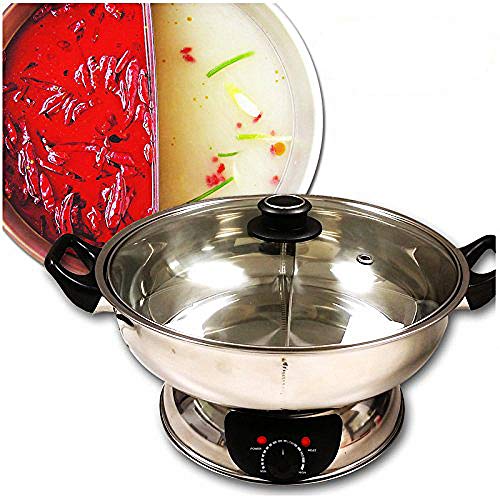 Sonya 5L Electric Dual-Sided Hot pot
- Powerful Performance & Quick Heating: With 1500W of…
- Stable & Safe Design: Features anti-skid feet that…
- Two Flavors, One Pot: Expertly designed internal divider…
 AORAN 6L Electric Hot Pot
- 🤣 6L Large Capacity Electric Hot Pot: Enjoy…
- 🤣 Divider Design for Versatile Cooking: The built-in…
- 🤣 Die-Cast Aluminum Body with Non-Stick Coating: This…
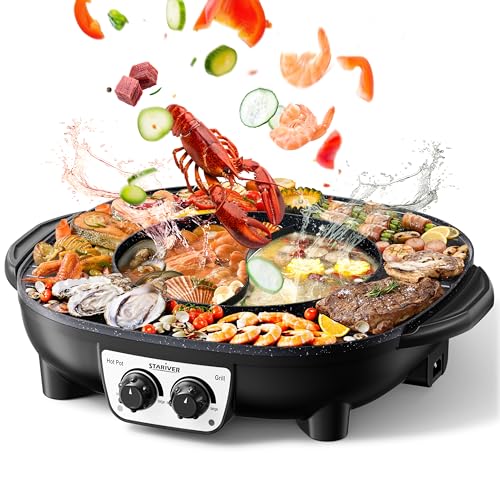 Stariver Hot Pot Electric with Grill 2
- [Fun 2-in-1 Cooking]
- [Powerful 1800W Fast-Heating]
- [Cook Anything You Crave]
| Product | Key specs | |
|---|---|---|
| Sonya 5L Electric Dual-Sided Hot pot | Powerful Performance & Quick Heating: With 1500W of… Stable & Safe Design: Features anti-skid feet that… Two Flavors, One Pot: Expertly designed internal divider… | Check price |
| AORAN 6L Electric Hot Pot | 🤣 6L Large Capacity Electric Hot Pot: Enjoy… 🤣 Divider Design for Versatile Cooking: The built-in… 🤣 Die-Cast Aluminum Body with Non-Stick Coating: This… | Check price |
| Stariver Hot Pot Electric with Grill 2 | [Fun 2-in-1 Cooking] [Powerful 1800W Fast-Heating] [Cook Anything You Crave] | Check price |
 Joydeem 6.3qt Electric Hot Pot with Divider Joydeem 6.3qt Electric Hot Pot with Divider | Dual-Flavor Divider 6.3QT Family-Size Capacity for Gatherings: With a generous… 1600W Fast Heating with Dual Heating Tubes: Joydeem… | Check price |
As an Amazon Associate we earn from qualifying purchases at no extra cost to you.
Choose by the way you’ll cook
There is no single best heat source for every table. Electric cookers are the simplest choice for most households: plug in, set the temperature, and keep the broth simmering without occupying a kitchen burner. Induction systems offer precise heat and versatile cookware, but require an induction-compatible pot and a suitable power outlet. Butane burners work without electricity and are easy to move, though you’ll need to manage fuel canisters and ventilation.
| Heat source | Typical home setup | Best for | Ownership trade-off |
|---|---|---|---|
| Electric hot pot | About 1,200–1,500 W; roughly 4–6 L | Regular meals, beginners, and households with a convenient outlet | Simple controls and steady heat; the appliance takes storage space and usually needs its own counter or table area |
| Induction cooktop and compatible pot | About 1,300–1,800 W; pot commonly 4–6 L | People who want to use the cooktop for other dishes, too | Fast, controllable heating; the pot must be induction-compatible, and the fan can be audible |
| Portable butane burner and pot | Often around 8,000–10,000 BTU/h; pot commonly 4–6 L | Outdoor dining, backup cooking, or places without a convenient outlet | Portable and not tied to a cord; requires fuel, careful canister handling, and good ventilation |
These are common ranges, not guarantees: check the individual appliance’s manual and the pot’s usable capacity. With electric and induction units, avoid running a high-wattage cooker on an overloaded circuit or an unsuitable extension cord. Use a butane burner only in a well-ventilated setting, on a stable, heat-resistant surface, and according to its instructions—not in an enclosed space.
Size the pot for the table, not just the guest count
For hot pot, the usable broth area matters more than the advertised maximum capacity. Ingredients occupy room, diners need space to reach the pot, and a divided vessel has less room in each section. As a practical starting point, look at 2–3 L for two people, 3–4 L for three or four, and 4–6 L for five or six. These are approximate planning ranges; appetite, side dishes, and how frequently you refill broth all affect the right size.
| Diners | Useful capacity range | What to consider |
|---|---|---|
| 2 | 2–3 L | A compact pot is easier to store; a larger one is useful if you want leftovers or two broths |
| 3–4 | 3–4 L | A good everyday size, but allow room around the table for plates and dipping sauces |
| 5–6 | 4–6 L | Favor a wide, stable pot with a long cord or a safely positioned burner; plan to top up broth in batches |
Check the pot’s diameter as well as its volume. A deep, narrow pot may hold plenty of broth but make it harder for several people to cook at once. For a divided pot, think of each side as a smaller cooking zone, not two full-size pots.
Divider or single broth?
A divider makes it possible to serve a spicy and mild broth, or accommodate different preferences, in the same meal. A fixed divider is stable and keeps the sections separated, but is harder to clean at the seam and limits what fits in each side. A removable insert is easier to wash and lets you switch between divided and open-pot cooking, although it can shift if it is poorly fitted. A single-basin pot is simpler, usually offers more uninterrupted space, and is the better choice if everyone wants the same broth.
Before buying a divided design, look for a seam that sits flush, enough depth on both sides, and instructions for removing or cleaning the divider. Broth can seep between sections if the pot is tipped or filled too high. Leave headroom and move the pot carefully, especially when it contains hot liquid.
Nonstick versus stainless steel cleanup
- Nonstick: Food is less likely to cling, which helps when broth reduces or ingredients stick to the base. The coating needs gentle treatment: use nonmetal utensils, avoid abrasive scrubbers, and follow the manufacturer’s cleaning instructions. Scratches, peeling, or a damaged coating are reasons to stop using the pot and check its care guidance.
- Stainless steel: It tolerates more vigorous cleaning and avoids a coated cooking surface. Starchy or sugary broth can stick if the pot boils dry, and food residue may take more soaking and scrubbing to remove. A removable pot is a major convenience for either material.
For either finish, let the pot cool before washing and avoid immersing an electric base or heating element. If the vessel is dishwasher-safe, confirm that in the manual rather than assuming it from the material. Spilled broth around an electric connector or burner can also make cleanup more involved, so keep the fill level below the marked maximum.
Which setup fits your situation?
| Your situation | Good place to start | Why |
|---|---|---|
| First hot pot; mostly two to four diners | Electric cooker, 3–4 L, removable pot | Easy heat control and a contained setup reduce the number of separate items to manage |
| Different broth preferences | Electric or induction setup with a divided pot | One cooking station serves two broths; check that each section has enough room |
| Already own induction cookware | Induction cooktop with a compatible stainless-steel pot | Can be a flexible option without buying a dedicated electric hot pot |
| Often cook outdoors or need a portable option | Butane burner with a stable, appropriately sized pot | No outlet is needed, but fuel storage, ventilation, and safe setup become part of the routine |
| Frequent meals for five or six | Wide 4–6 L pot and a heat source suited to your table and outlet | More usable surface helps diners cook at once; expect to replenish broth and ingredients |
Setup details that matter after the first meal
Before serving, place the cooker on a level, heat-resistant surface with clearance from walls, curtains, and other items. Route the cord so nobody can snag it, and keep raw ingredients, cooked food, and serving utensils organized separately. Bring the broth to temperature before guests begin cooking, then adjust the heat to maintain a simmer rather than a vigorous boil. A hard boil evaporates broth faster, splashes more, and can make delicate ingredients difficult to manage.
For cleanup, unplug the appliance and wait until it is cool. Remove the pot if designed to do so, soak stuck-on residue in warm water, and wipe the base only as the instructions allow. With butane, turn off the burner and let it cool before removing the canister; follow the burner’s instructions for checking, storing, and disposing of fuel. Never store a canister beside heat or leave a lit burner unattended.
Heating elements, coatings, and removable parts are the details most likely to shape long-term satisfaction. Check whether replacement lids or pots are available from the manufacturer, whether the cooking vessel lifts out without disturbing the base, and whether the warranty covers the parts you’re most concerned about. A simple, correctly sized setup with a cleanup routine you’ll actually follow is usually a better choice than a larger feature-heavy cooker that is difficult to store or wash.








Write Your Review
No reviews yet. Be the first to share your experience!