

The best hunting knives for field dressing are usually a 3.5- to 4.5-inch fixed blade with a secure wet-weather grip; choose a replaceable-blade folder when compact carry and a fresh cutting edge matter more than ruggedness.
Our top picks
 Smith & Wesson SWHRT9B 9in High Carbon
- 9 inch (22.9 centimeter) overall length with a…
- Blade is made of reliable 7Cr17MoV high carbon…
- Quick and easy access with the convenient belt…
 Mossy Oak Field Dressing Kit
- Mossy Oak 4-piece Camo Hunting Knife Set is…
- MOSSY OAK 4PCS Hunting Knife Set includes gut-hook…
- 8-1/4" CAPING KNIFE - This smaller fixed-blade caping…
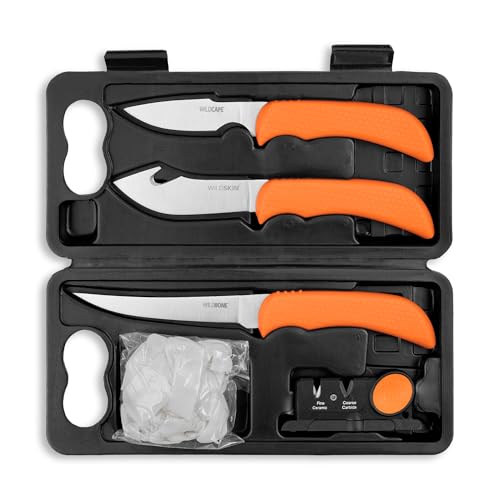 OUTDOOR EDGE WildLite
- This field processing set includes the six essential…
- This field dressing kit for deer and elk…
- Ergonomically shaped, high visibility blaze-orange TPR handles reduce…
| Product | Key specs | |
|---|---|---|
| Smith & Wesson SWHRT9B 9in High Carbon | 9 inch (22.9 centimeter) overall length with a… Blade is made of reliable 7Cr17MoV high carbon… Quick and easy access with the convenient belt… | Check price |
| Mossy Oak Field Dressing Kit | Mossy Oak 4-piece Camo Hunting Knife Set is… MOSSY OAK 4PCS Hunting Knife Set includes gut-hook… 8-1/4" CAPING KNIFE - This smaller fixed-blade caping… | Check price |
| OUTDOOR EDGE WildLite | This field processing set includes the six essential… This field dressing kit for deer and elk… Ergonomically shaped, high visibility blaze-orange TPR handles reduce… | Check price |
 Buck Knives 110 Folding Hunter Knife with Buck Knives 110 Folding Hunter Knife with | High-Quality Sharp Blade: The 3-3/4" 420HC stainless steel… Revolutionary Strength: The 110 Folding Hunter changed the… Multi-Use Pocket Knife: Our folding knife is made… | Check price |
As an Amazon Associate we earn from qualifying purchases at no extra cost to you.
Best hunting knives by field situation
| Field situation | Best knife type | Useful specification | Why it fits |
|---|---|---|---|
| One dependable knife for regular deer-sized game | Fixed blade | 3.5–4.5-inch blade, 0.12–0.17-inch thickness | Strong, easy to clean, and usable with cold or wet hands |
| Light pack, occasional hunting, or backup knife | Replaceable-blade folder | 2.75–3.5-inch blade, roughly 2.5–6 ounces | Very light and provides a consistently sharp edge |
| Wet coastal, rainy, or humid conditions | Stainless fixed blade | 420HC, 14C28N, or S30V steel; rubberized or textured handle | Better corrosion resistance and more reliable grip |
| Backcountry use beyond field dressing | Full-tang fixed blade | 4–5-inch blade, full tang, 7–12-ounce knife weight | Handles general camp work without relying on a folding mechanism |
| Several animals or limited sharpening equipment | Replaceable-blade system | At least 6–12 spare blades in a sealed container | Removes sharpening downtime, but increases consumable cost |
Our leading picks
Best all-around fixed blade: Buck 119 Special
The Buck 119 Special remains a practical choice for hunters who want a proven, full-size fixed blade. Its 6-inch clip-point blade is longer than necessary for many field-dressing tasks, but the broad cutting area and classic handle suit hunters who also want a general camp knife. The 420HC stainless steel is relatively easy to sharpen and offers useful corrosion resistance when cleaned promptly.
Its limitation is size. A 6-inch blade can feel cumbersome around the abdominal cavity, and the polished handle is less confidence-inspiring when covered with blood or rain than a heavily textured rubber handle. Expect a general market price of roughly $50–$80, depending on the sheath and handle version.
Best rugged compact fixed blade: ESEE-4
The ESEE-4 is a strong, compact fixed blade with a 4-inch 1095 carbon-steel blade and full-tang construction. It is well suited to hunters who want one knife for field dressing, camp chores, and hard-use tasks. The handle scales and exposed construction provide a positive grip, while the moderate blade length offers better control than a large hunting knife.
1095 is easy to sharpen and tough, but it is not stainless. Blood, moisture, and acidic residue can produce discoloration or rust if left on the blade. Wipe it dry after use and apply a thin food-safe or manufacturer-approved protective coating before storage. Its typical market range is about $80–$120. Choose the stainless version where available if corrosion prevention is a recurring problem, though the exact steel and price depend on the model.
Best for corrosion resistance and refined cutting: Benchmade 162 Bushcrafter
The Benchmade 162 Bushcrafter uses a short, stout S30V stainless-steel blade and a full-tang design. S30V holds an edge well and resists corrosion better than common carbon steels, making it attractive for damp climates and hunters who do not want to sharpen during a trip. Its approximately 4.2-inch blade is a useful compromise between control and general utility.
Edge retention comes with a trade-off: S30V generally takes more time and the right abrasive to sharpen than 420HC or 1095. It is also a comparatively expensive choice, commonly falling around $180–$250. Buy it for long-term ownership and corrosion resistance, not because a premium steel eliminates cleaning.
Best lightweight replaceable-blade folder: Havalon Piranta
The Havalon Piranta is designed around thin replaceable blades rather than long-term edge maintenance. Its approximately 2.75-inch blade and very low weight make it easy to carry as a primary knife for smaller game or as a backup. When the edge becomes dull or contaminated, you replace the blade instead of stopping to sharpen it.
This design is excellent for precise skinning and light cutting, but the blade is more delicate than a conventional fixed blade. Do not twist it, pry with it, cut bone, or use it for splitting joints. Replacement blades are an ongoing cost, and the locking folder must be cleaned carefully around its pivot. A realistic general price is $35–$60 for the knife, with spare blades commonly adding about $10–$20 per pack.
Best replaceable-blade compromise: Outdoor Edge RazorLite
The Outdoor Edge RazorLite combines a folding handle with replaceable blades in sizes commonly around 3.4 inches. Compared with an ultra-light surgical-style folder, it usually feels more substantial in the hand and offers a broader grip area. It is a sensible choice for hunters who prioritize a fresh edge for every animal but still want a pocket-sized tool.
As with any folder, the pivot and locking area can collect hair, fat, and grit. Rinse and dry it according to the manufacturer’s instructions, then use only a small amount of suitable lubricant where specified. Do not assume that a stainless replaceable blade is rust-proof. Typical market prices are approximately $35–$70, excluding recurring replacement blades.
Fixed blade versus folding blade
A fixed blade wins on reliability. There is no pivot to jam, no lock to depend on, and fewer crevices for tissue to collect. A full-tang knife is also better for occasional camp work and awkward cuts where the handle may be loaded sideways. Its disadvantages are greater sheath bulk and the need to maintain one edge through the entire job.
A folding or replaceable-blade knife wins on portability and edge consistency. It takes less room in a pack, and replacing a dull blade can be faster than sharpening. However, a folding knife is not automatically safer: a contaminated pivot, incomplete lock engagement, or slippery handle can create problems. Keep the blade pointed away from your supporting hand and verify the lock before cutting.
Steel and edge retention: what matters in practice
- 420HC: A forgiving stainless steel that is easy to sharpen and sufficiently corrosion-resistant for most hunting trips when cleaned promptly. It is a good ownership choice for people who maintain their knife with basic equipment.
- 14C28N: A stainless steel often used in practical outdoor knives. It offers a useful balance of toughness, corrosion resistance, and sharpening ease.
- S30V: Typically offers stronger edge retention and corrosion resistance than entry-level stainless steels, but sharpening requires better technique and abrasives.
- 1095 carbon steel: Tough and simple to sharpen, but it needs immediate drying and periodic protective treatment to avoid rust.
- Replaceable blades: Usually provide the sharpest working edge with the least maintenance, but blades are consumables and may be too thin for forceful work.
For field dressing, geometry often matters as much as the steel name. A thin, controlled edge cuts hide and connective tissue efficiently, while an overly thick blade can wedge through cuts. A drop point gives a useful balance of belly and tip protection; a clip point offers precision but exposes more delicate tip area.
Grip and sheath details that listings often miss
Look for a handle that remains secure when wet, greasy, or used with gloves. Textured rubber, molded synthetic scales, and pronounced finger indexing generally provide more control than smooth polished wood or metal. Avoid deep finger grooves that lock your hand into one position; they can make changing grip difficult during detailed work.
The sheath should retain the knife when inverted, allow drainage, and permit one-handed access without placing fingers near the edge. Kydex and molded polymer sheaths dry quickly and are easy to rinse. Leather can be comfortable and quiet, but it retains moisture and requires more care around blood and rain. Check whether the belt loop fits your belt width and whether the sheath carries comfortably when sitting, climbing, or wearing a pack hip belt.
A practical ownership and maintenance routine
- Before the hunt: Check edge sharpness, sheath retention, handle fasteners, and any folding lock. Pack a small sharpener or enough replacement blades for the expected use.
- During field dressing: Wipe the blade frequently rather than allowing blood and fat to dry. Use controlled cuts and avoid contact with bone whenever possible.
- After use: Rinse away organic residue with clean water, wash as appropriate for the handle and sheath, and dry every surface. Do not store a wet knife inside its sheath.
- Before storage: Apply a very thin protective film to carbon steel and inspect the edge under good light. Clean folder pivots without forcing contaminated fluid deeper into the mechanism.
The parts that usually wear first are the edge, sheath retention surfaces, handle fasteners, and folding pivots. A fixed blade may cost more initially than a replaceable folder but has fewer recurring parts. Conversely, a replaceable system can be economical for frequent users if it prevents sharpening equipment purchases and reduces time spent restoring an edge.
Final buying decision
Choose a 3.5- to 4.5-inch stainless fixed blade with a textured handle if you want the best balance of durability, cleaning, and control. Choose a 1095 full-tang knife when toughness and easy field sharpening matter more than rust resistance. Choose a Havalon Piranta or Outdoor Edge RazorLite when low weight and a fresh edge are your priorities, provided you carry spare blades and avoid prying. For most hunters buying one dependable tool, a compact fixed blade is the safest default; for occasional or minimalist use, a replaceable-blade folder is the more convenient specialist.








Write Your Review
No reviews yet. Be the first to share your experience!