
Our Short List of 3

- Best for: Fish counters and processors standardizing one knife across every station
- Blade length: 8 inches
- Blade material: DEXSTEEL high-carbon steel
- Blade edge: Plain
- Construction: Stamped
- Best for: Restaurant lines and market staff working long shifts where low weight reduces fatigue
- Blade length: 8 inches
- Blade material: Stainless steel
- Blade type: Flexible, straight edge
- Handle material: Fibrox thermoplastic rubber, black
- Best for: Spare, training, and backup knives that a commercial operation buys in quantity
- Blade length: 8 inches
- Blade material: High-carbon stainless steel
- Blade edge: Plain
- Handle material: Polypropylene, white
All 3 Picks at a Glance
| Product | Specs | Action |
|---|---|---|
| Dexter-Russell S133-8 Sani-Safe Fillet Knife |
| Check price on Amazon |
| Victorinox Fibrox Pro 8-Inch Fillet Knife |
| Check price on Amazon |
| Dexter-Russell P94813 Narrow Fillet Knife |
| Check price on Amazon |
Key takeaways
- Three commercial fillet knives for daily fish processing compared on blade flex, steel, wet grip and sanitation, with picks for counters and crews.
Buying a fillet knife for commercial work is not really a decision about sharpness out of the box. Almost every professional blade arrives sharp. The real decision is what the knife is like on day ninety: whether the edge still comes back after a few passes on a steel, whether the handle stays put in a wet, slime-covered hand, and whether the blade has pitted or stained after weeks of salt, blood, and wash water. A knife that fails any of those tests slows the whole line down.
This guide serves fish market counters, restaurant kitchens breaking down whole fish in-house, dockside processors, and small seafood operations that fillet every day. The three knives below were chosen from the blade steel, flex, handle material, and certifications printed on their own Amazon listings, and each one is a working pattern sold for professional fish processing rather than a recreational fishing knife dressed up with a sheath and tackle branding.
Quick Picks
As an Amazon Associate we earn from qualifying purchases
| Product | Best for | Key spec from title |
|---|---|---|
| Dexter-Russell S133-8 Sani-Safe Fillet Knife | A fish counter that wants one standard knife at every station | 8-inch DEXSTEEL high-carbon blade |
| Victorinox Fibrox Pro 8-Inch Fillet Knife | Long shifts where a light knife reduces hand fatigue | 8-inch flexible stainless blade |
| Dexter-Russell P94813 Narrow Fillet Knife | Spare and training knives bought in quantity | 8-inch narrow high-carbon stainless blade |
How to Choose
Blade Length and Flex
Most commercial filleting settles around an 8-inch blade, and the three knives here all sit at that length for a reason. It is long enough to take a side of salmon or a large flatfish in smooth strokes, yet short enough to steer around the rib cage of smaller fish without the tip wandering. Flex matters as much as length. A flexible blade bends over bones and follows the frame, lifting flesh cleanly, while a stiff blade suits heavy skinning and portioning. Match the flex to your dominant work: mixed whole-fish processing usually rewards flexibility, because the blade has to change direction constantly.
Steel Type and Corrosion Resistance in Wet Work
Commercial fillet knives live in water, salt, and fish blood, so steel choice decides how much maintenance the knife demands. High-carbon stainless blends, like the DEXSTEEL and 400-series steels in the Dexter knives below, take a keen edge quickly and resist staining, but they still want a rinse and a dry after each shift. Softer stainless, like the Victorinox blade, shrugs off corrosion with less attention and tolerates a busier wash routine. Harder is not automatically better here. A steel that hones back in seconds on a steel often beats a harder steel that needs a stone session midweek.
Handle Grip and Sanitation
A fillet station is a wet, greasy place, and the handle is where commercial knives separate themselves from home models. Textured polypropylene and rubberized handles keep their grip when hands are coated in slime, and molded finger points stop the hand sliding toward the edge during a long pull cut. Sanitation matters just as much. Handles sealed to the blade leave no gap where fish residue collects, and NSF-certified patterns are built to survive commercial wash and sanitizer routines. Bright or white handles also show residue clearly, which makes end-of-shift cleaning checks faster and more honest.
Sharpening and Replacement Economics
At commercial volume, a fillet knife is a consumable with a long life, not a lifetime heirloom, so think in cost per month of service. The blade should restore its edge with a honing steel between fish and take a full sharpening on a stone or belt without drama. Stamped blades in softer steel sharpen fast and forgive rough treatment, which is why they dominate processing lines. It also pays to standardize on one pattern: crews sharpen and store identical knives the same way, spares are interchangeable, and reordering is a single line item rather than a research project.
The 3 Best Options
Dexter-Russell S133-8 Sani-Safe Fillet Knife
- Best for: Fish counters and processors standardizing one knife across every station
- Blade length: 8 inches
- Blade material: DEXSTEEL high-carbon steel
- Blade edge: Plain
- Construction: Stamped
Fish counters and processors standardizing one knife across every station
The listing is for the S133-8 variant with sheath packaging, so confirm the configuration shown matches what your supplier stocks before reordering in bulk
The S133-8 is the pattern many American fish counters treat as the default, and its listing explains why. The 8-inch blade is ground from DEXSTEEL high-carbon steel, a stain-free alloy that takes a working edge quickly and holds it through a full case of fish. Its Sani-Safe handle is textured polypropylene sealed to the blade, so there is no crevice at the junction for residue to lodge in, and the knife carries NSF certification for food service use. For an operation that wants every station running the same tool, this is the knife to standardize on.
Victorinox Fibrox Pro 8-Inch Fillet Knife
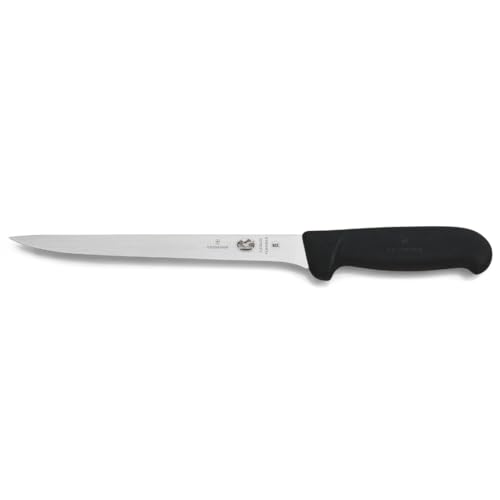
- Best for: Restaurant lines and market staff working long shifts where low weight reduces fatigue
- Blade length: 8 inches
- Blade material: Stainless steel
- Blade type: Flexible, straight edge
- Handle material: Fibrox thermoplastic rubber, black
Restaurant lines and market staff working long shifts where low weight reduces fatigue
No sheath is included in the listing, so budget for blade guards if the knife will live in a shared drawer or roll
Victorinox built its professional reputation on stamped blades that ask very little of the person maintaining them, and this fillet knife follows the same formula. The 8-inch blade is flexible with a straight edge, so it lies flat against the board for skinning and bends over the frame during filleting. At 3.2 ounces it is the lightest knife in this guide, which adds up over hundreds of fish in a shift. The Fibrox handle is a textured thermoplastic rubber that stays grippy when wet, and the knife is NSF approved for professional kitchen use.
Dexter-Russell P94813 Narrow Fillet Knife
- Best for: Spare, training, and backup knives that a commercial operation buys in quantity
- Blade length: 8 inches
- Blade material: High-carbon stainless steel
- Blade edge: Plain
- Handle material: Polypropylene, white
Spare, training, and backup knives that a commercial operation buys in quantity
The listing states the knife is not dishwasher safe, so a hand-wash routine has to be part of the plan from day one
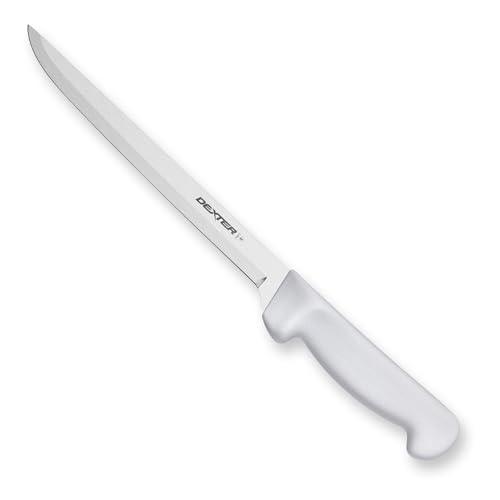
The P94813 comes from the Dexter-Russell Basics line, the value range the company sells for high-turnover commercial work. Its 8-inch narrow blade is made from high-carbon stainless steel and ground thin, which makes it easy to steer through smaller fish and detail trimming where a wider blade drags. The white polypropylene handle is slip resistant and shows residue clearly at cleanup. Because it is the simplest knife in this guide, it suits the roles where knives get lost, loaned, or retired early: spares for a busy counter, training knives for new staff, and backup blades kept at a second station.
Which One Fits Your Situation
A Fish Counter Processing Cases All Day
Standardize on the Dexter-Russell S133-8. When several people fillet side by side, identical knives mean one sharpening routine, one storage habit, and no adjustment when a cutter picks up a different station’s tool. Its sealed Sani-Safe handle and NSF certification fit a health-inspected counter, and the DEXSTEEL blade hones back quickly between cases, which keeps the line moving through a full delivery.
A Restaurant Kitchen Breaking Down Whole Fish In-House
Choose the Victorinox Fibrox Pro. A kitchen that fillets a few whole fish per service needs flexibility and low weight more than brute durability, and this knife delivers both. The straight, flexible edge handles skinning portions neatly at the board, the light body will not tire a cook who is also doing every other prep task, and the Fibrox grip stays secure during a quick rinse-and-cut workflow.
A High-Turnover Operation That Burns Through Knives
Stock the Dexter-Russell P94813 as your working spare. In markets, food trucks, and seasonal processing setups, knives walk away, get dropped, and get retired early, so the smart move is a capable blade bought in quantity without a second thought. The narrow profile handles everyday fish well, and keeping a drawer of identical spares means a dull or missing knife never stops the station during a rush.
A Buyer Setting Up a New Seafood Program
Start with the S133-8 as the house standard and add one Victorinox for the person doing the finest work. Standardizing early avoids the mixed drawer problem, where every knife sharpens and handles differently. The Dexter covers daily volume, the lighter Victorinox suits detail filleting and long shifts, and both are NSF-listed patterns that will satisfy an inspector while the program finds its feet.
Common Mistakes
- Buying recreational fishing knives for a commercial station, then discovering the handles are not sealed or certified for food service use.
- Choosing the longest blade on the shelf when most of the catch is small fish, which makes rib work slower and less accurate.
- Running high-carbon blades through a commercial dishwasher every shift and blaming the steel when edges and handles degrade.
- Mixing several knife patterns in one drawer, so staff sharpen each one differently and nobody trusts the edge.
- Skipping blade guards on sheath-free knives, which chips edges in storage and creates a hazard in a busy drawer.
Frequently Asked Questions
How often should a commercial fillet knife be sharpened?
Hone on a steel between fish or at least several times per shift to keep the edge aligned, and schedule a full sharpening on a stone or belt whenever honing stops restoring the bite. At daily processing volume, most stamped professional blades need that full sharpening weekly, though the exact interval depends on species, board surface, and how much skinning the knife does.
Is an 8-inch blade right for every fish on a commercial line?
It covers the widest range, from medium round fish to sides of salmon, which is why all three knives in this guide sit at that length. Very small fish are faster with a shorter blade, and very large fish or heavy skinning may justify a longer, stiffer knife. Most counters run an 8-inch standard and add specialty lengths only when the catch demands it.
Can these knives go through a commercial dishwasher?
It depends on the model, and the listing is the authority. The Dexter-Russell S133-8 listing states it is dishwasher safe, while the P94813 listing states it is not. Even where a knife tolerates machine washing, high heat and detergent dull edges faster, so most operations hand wash fillet knives, dry them immediately, and save the dishwasher for less critical tools.
What does NSF certification mean on a fillet knife?
NSF certification means the knife’s materials and construction meet commercial food equipment sanitation standards: surfaces that clean easily, a handle sealed to the blade so residue cannot collect at the joint, and materials that withstand commercial washing and sanitizers. Many health inspectors and corporate buyers look for it, so certified patterns simplify compliance for a new operation.
More from Amazon
Programs that pair well with the guide above. Offers and eligibility are set by Amazon and may change.
Set up recurring deliveries of everyday items on eligible products. Terms and savings are set by Amazon.
Explore Subscribe & SaveCollect the home and kitchen items you want in one registry that guests can shop from.
Create a wedding registryFree shipping on eligible items, Prime Video and more. Eligible new members can start with a free trial.
Start a Prime free trialAudiobooks and podcasts to listen to on the go. Eligible new members can start with a free trial.
Try Audible freeAs an Amazon Associate we earn from qualifying purchases.
Write Your Review
No reviews yet. Be the first to share your experience!