
Key takeaways
- Compare the 3 best bow knives for bow hunting: fixed blades for field dressing, camp chores and treestand carry, with sheaths, grips and steels explained.
In this guide, ‘bow knife’ means a fixed-blade knife carried while bow hunting: the blade on a hunter’s belt or pack for field dressing, cutting cord and rope, trimming shooting lanes, and handling camp chores between sits. A bow hunter already carries a bow, arrows, a release, and often a pack, so the knife has to earn its place by being light enough to forget, tough enough to work through hide and bone, and simple enough to clean in the field.


This guide compares three fixed blades that cover the usual bow-hunting jobs. The Gerber StrongArm is the tough all-rounder for camp and field work, the Buck 119 Special is the classic hunting blade for field dressing, and the Morakniv Companion HeavyDuty Stainless is the light, low-cost belt knife that is easy to keep sharp. Treestand hunters, backcountry hunters, and hunters on a budget will each find a fit below.
Quick Picks
As an Amazon Associate we earn from qualifying purchases.
| Product | Best for | Key spec from title |
|---|---|---|
| Gerber StrongArm Fixed Blade Knife, Plain Edge, Black | All-round bow-hunting carry | Full tang 420HC steel blade, 4.8 inch |
| Buck Knives 119 Special Fixed Blade Hunting Knife | Classic field dressing | 6 inch clip point blade, 420HC stainless steel |
| Morakniv Companion Heavy-Duty Stainless Steel Fixed-Blade Knife | Light, low-cost belt knife | 4.1 inch stainless steel blade with sheath |
How to Choose
Blade Length and Shape
Blade length decides what the knife does well. A blade around four to five inches handles most bow-hunting jobs, from cutting rope and cord to opening a chest cavity and trimming a shooting lane, without feeling clumsy in a gloved hand. Longer blades near six inches give more reach for field dressing large game, but they ask for more care around fingers and clothing. A drop point suits general work because the curved tip resists puncturing hide by accident, while a clip point gives a finer tip for detail cuts and piercing. Choose the shape that matches the job you do most, not the longest blade you can carry.
Steel and Edge Holding
Steel decides how long the blade stays sharp and how much care it needs after a wet hunt. Stainless steels such as 420HC and 12C27 hold up well against rust from rain, blood, and morning dew, and they sharpen with a basic stone or rod at camp. They give up some edge holding compared with harder premium steels, so expect to touch up the edge during a long weekend rather than once a season. Carbon steel can hold a finer edge, but it needs drying and a light coat of oil after use, or it will stain and rust. For a knife that rides on a belt through all weather, stainless is the lower-maintenance choice.
Handle Grip and Safety
A hunting knife has to stay in the hand when it is wet, cold, or slick. Look for a handle with texture, a shaped palm swell, and a guard or finger choil that keeps fingers off the edge when you push through tough material. Rubberized grips hold well with gloves and in rain, while smooth phenolic or polished wood handles look classic but can turn slippery when coated in blood or fat. Handle size matters as well: a grip that fills the hand gives control for long cuts, while a slim grip suits fine work but can tire the hand. Hold the knife in mind for the conditions you hunt in, and pick the grip that stays put.
Sheath and Carry
The sheath decides how the knife rides and how fast you can reach it. A belt sheath should hold the knife firmly, keep the edge covered, and let you draw and re-sheath with one hand while wearing gloves. Leather sheaths are quiet and classic, and they suit treestand hunting where silence matters, but they need drying after wet days. Molded plastic and nylon sheaths often add belt clips, MOLLE mounts, or horizontal carry, which helps when a pack hip belt blocks a vertical sheath. Check that the sheath fits your belt width and your carry side before the season opens, and practice the draw at home.
The 3 Best Options
1. Gerber StrongArm Fixed Blade Knife, Plain Edge, Black
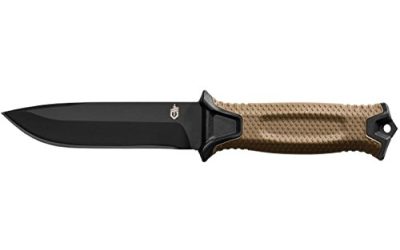
The StrongArm is the workhorse of this group, built around a full tang 420HC blade that runs through a rubberized diamond-texture handle. The 4.8-inch blade is long enough for camp chores and field dressing, while the fine edge slices cleanly through rope, cord, and hide. A ceramic coating helps the blade resist corrosion after wet days in the field, and the striking pommel gives a hard surface for camp tasks. The multi-mount sheath carries vertically on a belt, horizontally, or on MOLLE webbing, so it rides where your pack allows. Made in the USA, it suits bow hunters who want one tough knife for the whole season.
Specs
- Full tang 420HC stainless steel blade with ceramic coating
- 4.8-inch blade; 9.8-inch overall length
- Rubberized diamond-texture grip with striking pommel
- Multi-mount sheath for belt, horizontal, or MOLLE carry
- Made in the USA; knife weight 7.2 oz
Best for: Bow hunters who want one tough all-round knife for camp chores and field dressing.
Watch out for: The 4.8-inch blade is long for fine detail work, and the serrated version is a separate listing, so confirm the fine edge when ordering.
ASIN: B0CGRM89VW
2. Buck Knives 119 Special Fixed Blade Hunting Knife
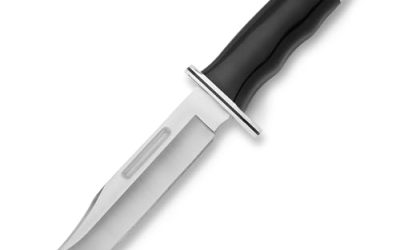
The 119 Special has been a hunting knife for decades, and its shape still fits the job: a 6-inch clip point blade that reaches through a chest cavity, slices hide, and handles large game. The full tang 420HC stainless steel blade holds a working edge and sharpens with a basic stone, while the black phenolic handle gives a smooth, classic grip. A leather sheath is included, and the knife is made in the USA. At 7.5 ounces it rides on a belt through a long sit without dragging. This is the pick for hunters who dress game in the field and value a proven shape.
Specs
- 6-inch clip point blade in 420HC stainless steel
- Full tang design with black phenolic handle
- Leather sheath included
- Made in the USA; 7.5 oz
- Model 0119BKS-B
Best for: Hunters who dress large game in the field and want a classic, proven blade shape.
Watch out for: The 6-inch blade and smooth handle suit open work better than fine detail cuts, so pair it with a smaller blade if you do a lot of close work.
ASIN: B000EHWWJQ
3. Morakniv Companion Heavy-Duty Stainless Steel Fixed-Blade Knife
The Companion HeavyDuty Stainless is the lightest knife here, and the easiest to keep sharp. Its 4.1-inch Sandvik stainless steel blade uses a Scandi grind that sharpens on a flat stone, and the thicker 3.2 mm blade stands up to hard use better than the standard Companion. The larger handle has a finger guard and a friction grip that holds well with gloves, and the plastic sheath clips to a belt for quick access. Made in Mora, Sweden, it costs far less than the other two picks while covering the same jobs: rope, cord, hide, and camp chores. It is the sensible choice for a first bow-hunting knife.
Specs
- 4.1-inch Sandvik stainless steel blade with Scandi grind
- Thicker 3.2 mm blade; larger handle with finger guard
- Friction grip handle
- Plastic sheath with belt clip included
- Made in Mora, Sweden
Best for: Bow hunters who want a light, low-cost belt knife that is simple to sharpen.
Watch out for: The stainless HeavyDuty is ASIN B07GM5Y7FJ; the carbon-steel HeavyDuty is a different listing, so check the listing title before ordering.
ASIN: B07GM5Y7FJ
Which One Fits Your Situation
Treestand Hunter Who Wants One Knife for the Season
The StrongArm fits a treestand hunter who wants one knife that does everything: cutting rope, trimming lanes, and dressing game at the base of the tree. Its sheath carries quietly on a belt, the grip holds with cold hands, and the 4.8-inch blade handles camp chores without feeling oversized. If you hunt from a fixed stand and carry a pack, the multi-mount sheath lets the knife ride where your gear allows.
Backcountry Bow Hunter Counting Every Ounce
The Companion HeavyDuty Stainless suits a backcountry hunter who walks miles and counts weight. At 4.1 inches it is the shortest blade here, and the plastic sheath adds almost nothing to a pack. The stainless blade shrugs off rain and dew, the Scandi grind sharpens on a small flat stone at camp, and the finger guard keeps cold hands safe. It covers rope, hide, and camp chores while leaving room for the gear that matters more.
Hunter Who Dresses Large Game in the Field
The Buck 119 Special fits a hunter who dresses deer or larger game where it falls. The 6-inch clip point reaches through a chest cavity and slices hide in long, smooth cuts, and the full tang build stands up to twisting through joints. The leather sheath rides quietly on a belt, and the classic shape has dressed game for decades. Choose this one when field dressing is the main job and a longer blade earns its carry weight.
New Bow Hunter on a Tight Budget
The Companion HeavyDuty Stainless is the right call for a new bow hunter who needs a solid knife without spending much. It covers the same daily jobs as the other two picks, sharpens with a basic stone, and rides in a belt sheath that costs nothing extra to set up. Spend the money you save on arrows, broadheads, or a better release, and upgrade the knife later once you know which blade shape and handle you prefer.
Common Mistakes
- Buying the longest blade available: a 6-inch blade is a poor fit for fine work, and a shorter blade often does the same jobs with more control.
- Ignoring the sheath: a knife that rides loose, rattles, or needs two hands to draw will stay in the pack when you need it most.
- Choosing carbon steel for wet hunts: carbon blades need drying and oil after use, while stainless blades forgive a damp day in the field.
- Skipping sharpening practice: a dull knife is harder to control than a sharp one, so learn the edge on a stone before the season opens.
- Carrying the knife where a pack belt blocks it: check that the sheath clears your hip belt and sits on your strong side before you head out.
Frequently Asked Questions
What is a bow knife?
A bow knife is a fixed-blade knife carried while bow hunting: the blade on a hunter’s belt or pack for field dressing, cutting rope and cord, trimming shooting lanes, and handling camp chores. It is not a special blade shape. It is a hunting knife picked for bow season, where the bow takes both hands and the knife must be quick to reach and tough enough for hide and bone.
What blade length works best for bow hunting?
A blade of four to five inches covers most bow-hunting jobs, from cutting rope to dressing deer, while staying easy to control with gloves on. A six-inch blade gives more reach for large game but asks for more care in close work. Shorter blades under four inches suit fine detail cuts but struggle with long slicing through hide. Most bow hunters are best served by a blade near five inches.
Fixed blade or folding knife for bow hunting?
A fixed blade is the better choice for bow hunting. It has no pivot to jam with blood, dirt, or cold, it opens with one pull from the sheath, and it cleans fast after field work. A folding knife packs smaller and suits a pocket, but the joint needs care after dressing game. Carry a fixed blade on your belt and keep a folder in the pack as a spare.
How do I care for a hunting knife after field dressing?
Wash the blade, dry it fully, and wipe the handle clean before sheathing it. Blood and moisture left on steel will stain the edge, so clean the knife the same day. Touch up the edge with a stone or rod, check the sheath for grit, and store the knife dry outside its sheath. A few minutes of care keeps the blade ready for the next sit.
More from Amazon
Programs that pair well with the guide above. Offers and eligibility are set by Amazon and may change.
Set up recurring deliveries of everyday items on eligible products. Terms and savings are set by Amazon.
Explore Subscribe & SaveCollect the home and kitchen items you want in one registry that guests can shop from.
Create a wedding registryFree shipping on eligible items, Prime Video and more. Eligible new members can start with a free trial.
Start a Prime free trialAudiobooks and podcasts to listen to on the go. Eligible new members can start with a free trial.
Try Audible freeAs an Amazon Associate we earn from qualifying purchases.
Write Your Review
No reviews yet. Be the first to share your experience!