
Key takeaways
- Find the best prime rib knife for clean, even slices. Compare three long carving knives for holiday roasts, from a 12-inch Granton slicer to a forged classic.
A prime rib roast deserves a knife that can cross it in one smooth draw. Short blades force a sawing motion, and sawing tears the crust, shreds the pink center, and leaves ragged slices on the platter. The right carving knife is long, narrow, and thin enough to glide through a thick roast without dragging, so each slice lands clean and even. That single quality matters more than brand, handle material, or any accessory in the box.

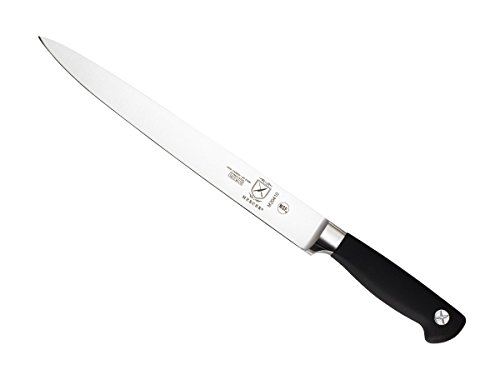
This guide covers three long slicing and carving knives that suit prime rib, from a 12-inch Granton slicer built for wet, juicy cuts to a 14-inch slicer for the widest roasts and a forged 10-inch carving knife for cooks who want a classic feel. Each one is a single long blade made for slicing roasts, and each brings a different balance of length, steel, and handle. Read on to see which one fits the size of your roast and the way you like to carve.
Quick Picks
As an Amazon Associate we earn from qualifying purchases.
| Product | Best for | Key spec from title |
|---|---|---|
| Victorinox Swiss Army Cutlery Fibrox Pro Slicing Knife, Granton Blade, 12-Inch | Best overall | 12-inch Granton blade |
| Mercer Culinary M13914 Millennia Black Handle, 14-Inch, Slicer | Widest roasts | 14-inch blade |
| Mercer Culinary M20410 Genesis 10-Inch Carving Knife | Classic forged feel | 10-inch blade |
How to Choose
Blade Length
Prime rib roasts are wide, so blade length decides whether you can finish a slice in one stroke. An 11- or 12-inch blade crosses most rib roasts without stopping, while a 14-inch blade suits the largest bone-in roasts and whole packers. A 10-inch blade still works for smaller boneless roasts and gives more control at the table, but it asks for a second stroke on wide cuts. Measure the widest part of the roast you usually cook, then choose a blade at least that long. Length matters more than any other feature here, because a short blade is the main reason slices come out uneven.
Edge Style
A Granton edge has shallow hollows along the blade that break the suction between wet meat and flat steel, so thin slices fall away instead of clinging and folding. It helps most on juicy prime rib, where the cut face is wet and the slices are thin. A plain edge gives a smooth, uninterrupted cut and is simpler to hone, which suits cooks who sharpen their own knives. A scalloped edge cuts through crust well but leaves a wavier face on the meat. For prime rib, a Granton or plain edge both work, so pick the edge you are comfortable keeping sharp rather than chasing a feature you will not maintain.
Steel and Construction
Stamped blades are cut from a sheet of steel, so they run light and thin, which helps a long slicer glide without tiring your wrist. Forged blades are shaped from a single piece of steel, so they feel heavier and more solid in the hand, and many cooks prefer that balance at the table. High-carbon stainless steel holds an edge well and resists rust, which is the practical combination for a knife that sees holiday use and then sits in a drawer. Full tang construction, where the steel runs through the handle, adds strength and balance. Either construction works for prime rib, so weigh the knife in your hand if you can and choose the feel you trust.
Handle and Grip
Carving prime rib means handling a hot roast with greasy hands, so the handle matters as much as the blade. Textured rubber and Santoprene handles stay grippy when wet, while smooth hardwood looks handsome but can slip once juices run down the board. A handle with a finger guard keeps your hand from sliding toward the edge during a long draw. Balance matters too: a knife that feels heavy toward the handle is easier to steer through a thick roast than one that feels heavy toward the tip. If you carve at the table in front of guests, a secure grip also keeps the whole performance calm and safe.
The 3 Best Options
Victorinox Swiss Army Cutlery Fibrox Pro Slicing Knife, Granton Blade, 12-Inch
The Victorinox Fibrox Pro is the slicer most kitchens reach for, and prime rib is the job it was built around. Its 12-inch Granton blade is long enough to cross a wide rib roast in one draw, and the hollow-ground scallops along the blade help each slice release instead of clinging to the steel. The textured Fibrox Pro handle stays secure when your hands are slick with juices, and the stamped blade keeps the knife light enough to steer through a thick roast without tiring your wrist. It is a plain-looking tool with no sheath in the box, so plan on a blade guard or a magnetic strip for storage.
Specs
- Blade length: 12 inches
- Overall length: 18 inches
- Blade material: high-carbon stainless steel
- Handle material: thermoplastic rubber
- Construction: stamped
- Edge: Granton blade
Best for: Cooks who want one dedicated slicer for holiday roasts and large cuts.
Watch out for: No sheath is included, so the 12-inch blade needs a guard or safe storage.
Mercer Culinary M13914 Millennia Black Handle, 14-Inch, Slicer
The Mercer Culinary Millennia is the pick for the widest roasts, because its 14-inch blade crosses a bone-in prime rib in one stroke where a 12-inch blade would need a second pass. The one-piece, high-carbon Japanese steel blade is thin and light at 7.2 ounces, so it moves through a hot roast rather than pushing the meat around. The Santoprene handle has molded finger points and a guard that keep your grip steady when the board is slick. It is a long knife that needs a large board and a guard for storage, and the plain edge asks for regular honing to stay keen.
Specs
- Blade length: 14 inches
- Item weight: 7.2 ounces
- Blade material: high-carbon steel
- Handle material: Santoprene
- Blade edge: plain
- Model number: M13914
Best for: Cooks carving the widest bone-in roasts in a single stroke.
Watch out for: The 14-inch blade needs a large board and a blade guard for storage.
Mercer Culinary M20410 Genesis 10-Inch Carving Knife
The Mercer Culinary Genesis is the classic forged carving knife in this roundup, and it suits cooks who prefer a solid, balanced blade at the table. Mercer describes the 10-inch blade as precision-forged high-carbon German steel with a full tang and a taper-ground edge, and the ergonomic Santoprene handle gives a secure grip when carving a hot roast. Ten inches is shorter than the other two picks, so it fits smaller boneless roasts best and gives more control for careful, thin slices. It is the most traditional feeling knife here, with a weight and balance that reward a slow, deliberate carving stroke.
Specs
- Blade length: 10 inches
- Model number: M20410
- Brand: Mercer Culinary
- Item type: carving knife
Best for: Cooks who want a forged, traditional carving knife for smaller roasts.
Watch out for: At 10 inches it is shorter than the other picks, so wide bone-in roasts need a second stroke.
Which One Fits Your Situation
You Host One Big Holiday Dinner
Choose the Victorinox Fibrox Pro. Its 12-inch Granton blade crosses a standard rib roast in one draw, and the textured handle stays secure when your hands are slick. It is a single knife with nothing extra to learn, so you can focus on the roast and your guests instead of the tool. Add a blade guard for storage, since none comes in the box.
You Carve Wide Bone-In Roasts
Choose the Mercer Millennia 14-inch slicer. The extra length lets you start at the far edge of a bone-in roast and finish in one clean stroke, which keeps slices even and the crust intact. Its light weight helps on long draws, and the Santoprene handle holds steady on a slick board. Make sure your board and storage can fit a 14-inch blade.
You Want a Classic Knife for the Table
Choose the Mercer Genesis 10-inch carving knife. Its forged build and full tang give a solid, traditional feel, and the shorter blade gives more control for thin, careful slices at the table. It suits smaller boneless roasts best, where length matters less than balance. Pair it with a carving fork you already own to steady the roast.
You Carve Roasts All Year
Choose the Victorinox for everyday use and keep the Millennia for the largest roasts. The Victorinox handles turkey, ham, and prime rib with one light, easy-to-hone blade, while the 14-inch Millennia earns its place when a roast is too wide for a single stroke. Together they cover every roast you are likely to cook, without a drawer full of single-use tools.
Common Mistakes
- Choosing a blade shorter than the widest part of the roast, which forces a sawing motion.
- Carving the roast straight from the oven without a rest, so juices run onto the board.
- Slicing on a stone or glass surface that dulls the edge.
- Using a chef’s knife for a wide roast instead of a long, narrow slicer.
- Storing a long blade loose in a drawer without a guard or sheath.
Frequently Asked Questions
How long should a prime rib knife be?
Eleven to twelve inches suits most rib roasts, since the blade can cross the widest part in one stroke. A 14-inch blade helps with the largest bone-in roasts, while a 10-inch blade works for smaller boneless roasts and gives more control at the table. Measure the roast you usually cook and choose a blade at least that long.
Is a Granton edge better for prime rib?
A Granton edge helps on juicy prime rib because the shallow hollows break the suction between wet meat and flat steel, so thin slices release instead of clinging. A plain edge still cuts well and is simpler to hone, so it suits cooks who sharpen their own knives. Either edge works, so choose the one you are comfortable keeping sharp.
Should I carve prime rib at the table or in the kitchen?
Either works, but the kitchen gives you more room and a stable board, which helps with a wide roast. Carving at the table looks impressive and keeps slices warm, yet it asks for a steady hand and a secure grip. If you carve at the table, use a long blade, a sturdy board, and a fork to steady the roast.
How do I keep a carving knife sharp?
Hone the edge with a steel before each use, which realigns the edge without removing steel. Sharpen it on a whetstone or with a professional service when honing no longer restores the bite. Wash the knife by hand and dry it right away, and store it in a guard, on a magnetic strip, or in a block slot that fits its length.
More from Amazon
Programs that pair well with the guide above. Offers and eligibility are set by Amazon and may change.
Set up recurring deliveries of everyday items on eligible products. Terms and savings are set by Amazon.
Explore Subscribe & SaveCollect the home and kitchen items you want in one registry that guests can shop from.
Create a wedding registryFree shipping on eligible items, Prime Video and more. Eligible new members can start with a free trial.
Start a Prime free trialAudiobooks and podcasts to listen to on the go. Eligible new members can start with a free trial.
Try Audible freeAs an Amazon Associate we earn from qualifying purchases.
Write Your Review
No reviews yet. Be the first to share your experience!