

Our Top Picks
A stainless 20 quart pot with a lid is the practical default for big batches of soup, with a layered base worth looking for if your soups tend to scorch. All ten listings say 20 quarts, so the real differences are material, lid, handles and stove support. This guide covers ten Amazon listings, from tri-ply stainless to thick aluminum, and one sauce pot flagged as a runner-up. Everything below comes from the listing titles and published details, so use it to build a shortlist before opening the full page.
Short list by use
As an Amazon Associate we earn from qualifying purchases at no extra cost to you.




- Induction kitchens: look first at HOMICHEF, P&P CHEF, NutriChef, STOCKPOT and EWFEN, which all state induction in the title.
- Layered base: the tri-ply P&P CHEF and EWFEN listings.
- Glass lid for watching a simmer: the visible-lid P&P CHEF and EWFEN pots.
- Gas or electric utility pots: the two Winco aluminum options.
- Large events: Cooks Standard, described for catering and boils.
All ten compared
| Model | Key point from the title | Best for |
|---|---|---|
| HOMICHEF 20 Quart | Polished stainless, nickel free, induction | Plain stainless soup pot |
| MICHELANGELO 20 Quart | Stainless, ergonomic handle, all stoves | Comfortable lifting |
| P&P CHEF 20 QT Tri-Ply | Tri-ply bottom, induction, dishwasher safe | Layered base |
| NutriChef 20 Quart | Stainless lid, induction, gas and electric | Mixed stove homes |
| STOCKPOT 20 Quart | Stainless, oven safe, induction | Oven-finished stews |
| P&P CHEF 20 Quart (visible lid) | Measuring markings, glass lid, dishwasher safe | Monitoring a simmer |
| EWFEN Tri-Ply 20 Quart | Tri-ply, visible lid, double handle | Pasta in volume |
| Winco Aluminum Stock Pot | Thick walls, riveted handles, wide base | Gas and electric batch cooking |
| Winco Elemental Sauce Pot | Aluminum 20 qt sauce pot (not a stock pot) | Sauces and chili |
| Cooks Standard 20 Quart | Deep jumbo stainless, lid | Catering, boils |
Each pot, one by one
HOMICHEF Commercial Grade 20 Quart Stock Pot
The title describes a 20 quart polished stainless pot with a lid, labeled nickel free and heavy duty, with induction compatibility. “Commercial grade” is the seller’s wording, not a certification, so look at the gauge or base construction on the product page. It reads like a plain, single-purpose pot for soup, stock and big pasta boils. Ask whether the lid is stainless or glass and whether the handles are riveted or welded, since neither detail is in the title.
- Pro: Stainless construction with lid included per the title
- Pro: Induction compatibility stated
- Con: Base thickness is not given in the title
- Con: “Commercial grade” is a marketing term that deserves a closer look at specs
Who it’s for: Home cooks who want a straightforward stainless 20 quart pot and will verify the base details.
MICHELANGELO 20 Quart Stainless Steel Stock Pot
This listing pairs a 20 quart capacity with a lid and what it calls an ergonomic handle, and says it suits all stoves. The wording does not mention tri-ply, encapsulated bases or dishwasher use, so that information has to come from the seller’s page. Handles matter on a pot this size because a full one is heavy to lift. Because the construction is not described, compare it with the tri-ply options before treating it as an equal.
- Pro: Lid included and “all stoves” wording in the title
- Pro: Handle design is highlighted as a feature
- Con: Title gives no construction detail such as layers in the base
- Con: Check how the lid fits, since it is not described
Who it’s for: Cooks who prioritize handle comfort and want a no-frills stainless option.
P&P CHEF 20 QT Tri-Ply Stainless Stock Pot (Canning Stockpot)
The title names a tri-ply bottom, induction compatibility, heavy-duty build and dishwasher safe wording, and also calls it a large canning stockpot. Do not assume that means it is suitable for any canning method. Home canning has strict guidance on equipment and processing, so follow the instructions from a recognized canning authority and the pot’s own manual. For soup and stock it is a straightforward 20 quart option.
- Pro: Tri-ply bottom per the title, which is aimed at more even heating
- Pro: Induction and dishwasher safe wording
- Con: “Canning” in the title is a use claim to verify, not assume
- Con: Tri-ply is stated for the bottom only, so check the sidewall construction
Who it’s for: Soup and stock makers who want a layered base and induction support.
NutriChef 20 Quart Heavy-Duty Stockpot
NutriChef’s listing says the pot has a stainless lid and works on induction, gas and electric cooktops, with soups and stews named as the main use. It does not mention the base type, handle style or dishwasher use, so those are open questions on the product page. The multiple-cooktop wording is clear and useful if you have more than one heat source. Check the listed weight and base diameter, since a pot this size can overhang a smaller burner, and confirm the lid sits snugly.
- Pro: Clear induction, gas and electric compatibility statement
- Pro: Stainless lid is stated in the title
- Con: Pot material and base construction are not spelled out in the title
- Con: Handle details are missing from the listing text
Who it’s for: Buyers who switch between stoves or may move to induction later.
STOCKPOT 20 Quart Soup Pot with Lid
The brand name on this listing is simply “STOCKPOT”, so it is easy to confuse with the general category. The title says stainless steel, heavy duty, induction and oven safe, and for commercial and home use. The title also contains garbled dash characters, a hint that the listing text should be read carefully before you buy. Ask the seller for the stated oven limit on the lid and handles, not only the pot body.
- Pro: Oven safe and induction wording in the title
- Pro: Positioned for pasta, soup and stew
- Con: Generic brand name makes it harder to compare warranty and support
- Con: Oven temperature limit is not given in the title
Who it’s for: Cooks who want to finish a braise or stew in the oven and will confirm the temperature limit first.
P&P CHEF 20 Quart Stock Pot with Visible Lid and Measuring Markings
This second P&P CHEF listing differs from the tri-ply one in two ways highlighted in its title: a visible (glass) lid and measuring markings. It lists induction, gas and electric use and dishwasher safe wording. Markings inside the pot can be handy for stock ratios, although a printed scale is only a rough guide. Wash the glass lid gently and by hand if the manual recommends it, because the rim can chip if knocked against a faucet.
- Pro: Visible lid lets you check a simmer without lifting it
- Pro: Measuring markings help with water and stock volumes
- Con: Glass lids often have a lower heat limit than the pot, so check the manual
- Con: Marking accuracy is not stated
Who it’s for: Soup cooks who like to monitor simmering and portion by volume.
EWFEN Tri-Ply Stainless 20 Quart Stock Pot
The brand is listed as EWFEN, though the title itself starts with the product description. It describes a tri-ply stainless pot with a visible lid, double handle and induction use, dishwasher safe, for pasta, soup and spaghetti. Double handles can feel more secure when lifting a heavy pot to drain pasta. The spaghetti mention points to pasta use; check whether a pasta insert is included, since the title does not say. Compare it directly with the P&P CHEF tri-ply listing.
- Pro: Tri-ply construction named in the title
- Pro: Double handle design for lifting
- Con: Brand is not shown in the title, so confirm the seller and return terms
- Con: Check whether the layering runs up the walls or only the base
Who it’s for: Households that boil pasta in volume and want a secure grip.
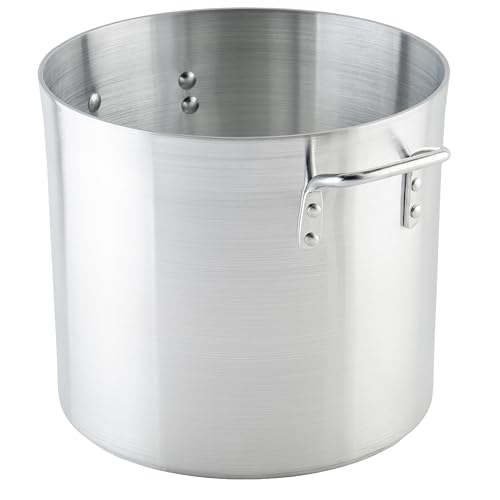
Winco 20 Quart Aluminum Heavy-Duty Stock Pot
This is a different material from the stainless pots above: the title describes an aluminum stock pot with thick walls, riveted handles and a wide base. A lid is not mentioned, so check the listing for whether one is included. Induction compatibility is not stated, and aluminum on its own does not work on induction, so this one is best matched to gas or electric coils. Lighter aluminum is easier to lift when full, but it dents more easily than thick stainless, so handle it with a little care.
- Pro: Thick-wall aluminum and riveted handles per the title
- Pro: Wide base noted for batch cooking
- Con: No induction claim in the title
- Con: Lid is not mentioned, so confirm what ships
Who it’s for: Gas or electric cooks and caterers who want a utility pot for stock and broth.
Winco 20 Quart Elemental Aluminum Sauce Pot (Runner-Up)
This is a sauce pot, not a stock pot, so its shape and proportions may differ from the others here. It is listed because the capacity is 20 quarts and the title mentions sauces, soups, stocks and batch cooking. Treat it as a runner-up and compare the diameter and height on the listing. As with the other Winco item, induction is not mentioned. Measure the pot’s diameter against your burner before settling on a sauce-pot shape for stock.
- Pro: 20 quart capacity in a simple aluminum build
- Pro: Aluminum build suits gas and electric use
- Con: Not a stock pot by name, so proportions may be wider and shallower
- Con: No induction mention in the title
Who it’s for: Cooks who want a large pot for sauces or chili and can accept a different shape.
Cooks Standard 20 Quart Commercial Grade Stock Pot
The title calls this a jumbo, deep stainless pot with a lid, built for batch cooking, broth, lobster boils and catering. It does not state induction compatibility, so check the base. The “commercial grade” phrase is again a seller descriptor. It reads as a pot for large events more than a weeknight soup. Check the construction notes on the product page before comparing it with the tri-ply stainless listings. Boil-over is easy with a deep pot, so leave extra headroom.
- Pro: Deep jumbo design with lid per the title
- Pro: Intended uses include broth and catering
- Con: Induction is not stated in the title
- Con: Sits at the top of the listing set in price, so value depends on the construction details
Who it’s for: People who regularly cook for big groups or boil seafood outdoors.
How we picked these
We read each listing title and its published specifications, then sorted pots by material, lid, stovetop claims and construction details. Where a title is thin, we say what is missing instead of filling it in from memory. Our basis is published specifications, manufacturer documentation and buyer reviews. Nobody on the team used or measured these units. The notes are a buying checklist, not a performance ranking. Where a title is silent, we say “check the listing”.
Choosing a 20 quart pot for large batches
Fill line and weight math
Plan to fill the pot to about 75 percent. That is roughly 15 quarts, or 60 cups, of soup. Water weighs a little over 8 pounds per gallon, so a pot holding five gallons of liquid is already past 40 pounds before the pot itself. Check that your stove and your wrists can handle it, and keep a small pot nearby for ladling instead of lifting. Here is a worked example: a 20 quart pot filled to 15 quarts yields about 60 one-cup servings, which is enough for a freezer stash of a dozen five-cup containers. If you plan a bigger crowd than that, you need a second pot, not a fuller one.
Material and base
Stainless steel is the common choice because it does not react with tomatoes or wine. A tri-ply or encapsulated base spreads heat to reduce scorching. Aluminum heats quickly and is lighter, but works on induction only if the listing says so. Match the pot to the stove you own.
Lid, handles and burner fit
Riveted or welded handles are less likely to loosen over time than screwed ones. A glass lid is convenient but may have a lower heat limit. Finally, compare the pot’s base diameter to the burner: an oversized base can heat unevenly, while a small burner under a huge pot struggles to bring liquid to a simmer.
Common mistakes with big pots
Buyers often forget that a 20 quart pot will not fit a small sink, dishwasher or pantry shelf, so measure the places it will go. Others assume “commercial grade” is a guarantee. It is a label. Filling to the brim, then trying to carry it, is another common error. Canning claims in titles also deserve caution, because safe canning depends on following published guidance from a recognized authority.
Verdict
For most cooks, the best stock pots for large batch soup are the stainless 20 quart models with a layered base and a lid, such as the tri-ply P&P CHEF or EWFEN listings. Choose the Winco aluminum pots for gas or electric utility use, and Cooks Standard if you cook for crowds. Whichever you pick, confirm the base diameter and induction status first. If baked beans are on your menu instead, see our bean pot guide.
Related guides
- How To Clean Copper Cookware Without Damaging Tin Lining
- How To Season A Carbon Steel Wok Step By Step
- Carbon Steel Woks For Gas Stoves 14 Inch
Frequently asked questions
How much soup does a 20 quart stock pot make?
A 20 quart pot holds 80 cups when brimful, but you should fill it to roughly three-quarters or less. That leaves about 15 quarts, or 60 cups, for simmering without boil-overs. Servings depend on bowl size, but dozens of portions are realistic for a party or a long meal-prep session, with plenty left to freeze in smaller containers.
Will a 20 quart pot fit on a home stove?
Not always comfortably. Many 20 quart pots have a base wider than a standard home burner, so compare the listed base diameter to your burner size. Weight also matters, because a nearly full pot of liquid can approach 40 pounds, and glass cooktops often have their own weight guidance in the manual.
Do aluminum stock pots work on induction?
Aluminum alone is not magnetic, so a plain aluminum pot generally will not work on an induction hob. Only choose one if the listing explicitly says it has an induction-ready base. The two Winco listings here do not make that claim, so they are better matched to gas or electric stoves.
Are stainless pots with ‘tri-ply’ bases better?
A multi-layer base is designed to spread heat more evenly and reduce hot spots, which helps with sticky soups. It is not a guarantee, and a thin pot with a layered disc can still scorch if left on high heat. Read the product page for where the layers sit and how thick the base is.
How should a big batch of soup be cooled safely?
General food-safety guidance suggests dividing hot soup into shallow containers so it cools faster, then refrigerating promptly. Sitting a large pot on the counter slows cooling. An ice bath in the sink can also help. Follow your local food-safety authority’s advice for time and temperature limits, and keep the lid off while the steam escapes.


Write Your Review
No reviews yet. Be the first to share your experience!