

Key takeaways
- DEMMEX Turkish Greek Arabic Armenian Coffee Pot.
- Material : 1mm Thick Copper, Wooden Handle
- Food-safe tin-lined interior
Best Turkish Coffee Pots for Rich, Foamy Coffee
For most home cooks, the best Turkish coffee pots are small, long-handled copper or stainless-steel cezves sized for the number of cups you make; choose copper for responsive heat control, stainless steel for easier upkeep, and a flat-bottom model that matches your stovetop.
Compare the main choices
Turkish coffee pots—also called cezves or ibriks—are designed to heat finely ground coffee with water in a narrow vessel. The pot’s shape helps foam rise, but capacity, burner fit, and how easily you can pour matter just as much. The figures below are typical ranges for common home models, not specifications for every pot in a category.
Our top picks
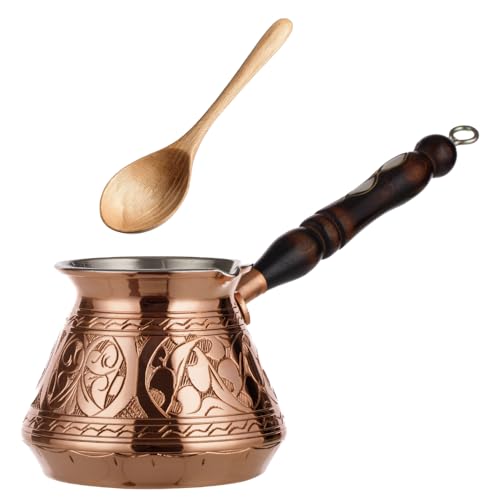 DEMMEX 1mm Thick Copper Turkish Coffee Pot
- DEMMEX Turkish Greek Arabic Armenian Coffee Pot.
- Material : 1mm Thick Copper, Wooden Handle
- Food-safe tin-lined interior
 Quality Turkish Coffee Pot
- Forget rusting copper pots
- Designed for convenience, this Turkish coffee pot works…
- Show off your new Greek briki coffee pot…
 DEMMEX Copper Turkish Greek Arabic Coffee Pot
- DEMMEX Turkish Greek Arabic Armenian Coffee Pot.
- Material : 1mm Thick Copper, Wooden Handle
- Food-safe tin-lined interior
| Product | Key specs | |
|---|---|---|
| DEMMEX 1mm Thick Copper Turkish Coffee Pot | DEMMEX Turkish Greek Arabic Armenian Coffee Pot. Material : 1mm Thick Copper, Wooden Handle Food-safe tin-lined interior | Check price |
| Quality Turkish Coffee Pot | Forget rusting copper pots Designed for convenience, this Turkish coffee pot works… Show off your new Greek briki coffee pot… | Check price |
| DEMMEX Copper Turkish Greek Arabic Coffee Pot | DEMMEX Turkish Greek Arabic Armenian Coffee Pot. Material : 1mm Thick Copper, Wooden Handle Food-safe tin-lined interior | Check price |
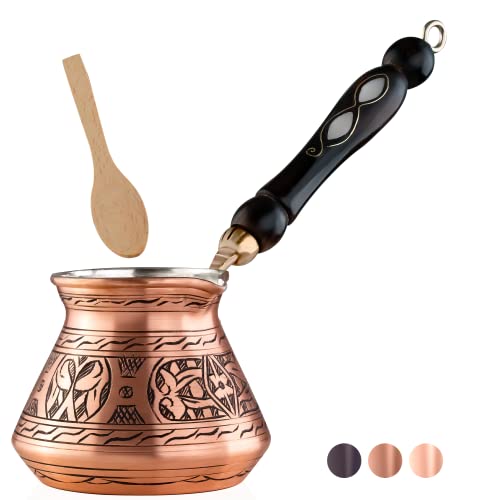 BCS 12 oz Handmade Copper Turkish Coffee BCS 12 oz Handmade Copper Turkish Coffee | Handmade in Turkey from a solid 1 mm-thick… The copper body conducts heat quickly and evenly,… 12 OZ CAPACITY, BREWS UP TO 4 CUPS:… | Check price |
As an Amazon Associate we earn from qualifying purchases at no extra cost to you.
| Pot type | Typical capacity | Common material | Best fit | Main trade-off |
|---|---|---|---|---|
| Small single-cup cezve | 100–150 ml | Copper, stainless steel | One small serving; precise foam control | Little room for error if filled too high |
| Two-cup cezve | 200–300 ml | Copper, stainless steel, brass | Daily use for one or two people | May not sit securely on a large burner |
| Three- to four-cup cezve | 350–500 ml | Copper, stainless steel | Making several small servings together | Foam can rise quickly; needs close attention |
| Electric cezve | 250–500 ml | Usually stainless steel or coated metal | Homes without a suitable stovetop burner | Uses counter space and depends on an outlet |
Capacity labels usually refer to small Turkish coffee servings, not standard mugs. A traditional serving is often around 60–90 ml, though cup sizes vary. Check the maker’s stated capacity in milliliters, and leave headroom: the coffee foam expands as the brew heats.
Choose by how you’ll use it
- One cup at a time: Pick a 100–150 ml pot. A smaller batch is easier to monitor and pour without spilling.
- Regular coffee for two: A 200–300 ml cezve is a useful everyday size. It can make two small servings while leaving room for foam.
- Several servings at once: Consider a 350–500 ml pot, but confirm that its base fits your burner. A wide flame around the sides can scorch the coffee and handle.
- Low-maintenance routine: Choose stainless steel if you want a durable, generally simple-to-clean surface and don’t want to polish copper.
- Fine control over gentle heating: Copper heats quickly and responds promptly when you lower the flame. It takes more care, and many copper pots have a tin lining that must not be scrubbed through.
- Electric or induction cooking: Check compatibility before buying. Many traditional copper cezves do not work on induction unless they have a magnetic base or are used with an induction interface disc.
Material, handle, and pouring: what to inspect
Copper: responsive, but check the lining
Copper transfers heat quickly, which can help when you need to reduce the heat as foam rises. Traditional copper pots may be lined with tin or stainless steel; the lining is the food-contact surface, so inspect the product description rather than assuming every copper interior is the same. Avoid metal utensils and abrasive scouring pads on a tin lining. If it is worn through, discontinue use until it is professionally relined or replaced.
Stainless steel: practical for frequent use
Stainless steel usually needs less special care and is a sensible choice for daily brewing. It may heat less evenly than a well-made copper pot, depending on its construction and base. Look for a stable, flat bottom and a narrow neck that still leaves enough room to stir. Stainless steel alone does not guarantee induction compatibility; the base must be magnetic.
Brass and decorative models: verify the interior
Brass cezves are often chosen for their traditional appearance, but construction varies. Confirm that the interior is suitable for food contact and identify its lining before use. Decorative engraving does not tell you how the pot performs on a burner or whether its handle stays cool.
Handle comfort and pouring control
A long handle keeps your hand farther from the heat, but it should also feel balanced when the pot is partly full. Look for a secure attachment, a comfortable grip, and enough clearance from the burner. A defined spout can make it easier to divide foam and coffee between small cups; a rounded rim may pour less precisely. If possible, assess the pot’s filled weight and handle angle, especially if you plan to make multiple servings.
Stovetop compatibility is a fit question, not just a material question
On gas, a small flame that stays beneath the base is usually easier to control than a flame that climbs the sides. On electric coil or glass-ceramic cooktops, check that the base sits flat and is large enough to make steady contact. A tiny cezve can be unstable on a large element, while a very wide base can slow the gentle heating that suits Turkish coffee.
For induction, look for explicit induction compatibility or a magnetic base. If using an interface disc, follow both manufacturers’ instructions: it adds another hot surface and can make heating slower. A compatible base does not automatically make a pot ideal; a stable fit and controllable heat still matter.
How to get useful capacity without overflow
As a practical starting point, measure water by the cup you intend to serve, then leave clear space at the top of the cezve. For example, two 70 ml servings require 140 ml of water before coffee is added. A 200–300 ml pot gives that batch more headroom than a 150 ml pot. The exact amount of room needed depends on the pot’s shape and heat level, so avoid filling to the rim.
Add finely ground coffee to cold water and stir before heating. Warm it gradually, watching closely as foam rises; remove the pot from the heat before it boils over. Pouring a little foam into each cup first and then distributing the coffee can help keep servings more even. A larger pot is not automatically better for a small batch: too much unused space can make foam harder to manage.
Care that helps the pot last
- Let the pot cool before washing, and use warm water with a soft sponge.
- Do not leave brewed coffee or water sitting in the pot for long periods.
- Dry the exterior after washing, particularly on copper or brass, to limit water marks and tarnish.
- Avoid abrasive cleaners and metal utensils on lined interiors; follow the maker’s care instructions for the specific lining.
- Check the handle joint periodically for looseness. Stop using the pot if the handle shifts or the lining is damaged.
Copper’s exterior may darken or tarnish with use; that is a cosmetic change and can be managed with a suitable polish, kept away from the food-contact interior. The more important wear points are a thinning lining, a loose handle, a warped base, or damage that makes the pot unstable on the burner.
Bottom line
Choose a small copper cezve if you value responsive heating and don’t mind careful cleaning; choose stainless steel for an easier everyday routine. Match capacity to the number of small cups you actually serve, then verify the base fits your cooktop and the handle gives you control while pouring. Those practical checks matter more than decorative details when choosing among the best Turkish coffee pots.








Write Your Review
No reviews yet. Be the first to share your experience!