

Best Moroccan Tagine Pots
The best Moroccan tagine pot depends on your hob and cooking habits: choose a glazed ceramic tagine for easy everyday cooking, an unglazed clay tagine for traditional low-and-slow flavor, or a cast iron tagine for the strongest stovetop compatibility and heat retention.
A tagine has two parts: a shallow base for cooking and a tall, conical lid that returns condensed steam to the food. The shape is useful, but the material determines whether the pot can safely sit on your burner, how much preparation it needs, and how forgiving it is when temperatures change.
Our top picks
 Culivora Moroccan Tagine for Cooking: Enameled Cast
- Slow-Simmered Perfection: Our Moroccan tagine features a signature…
- Upgraded Cast Iron Tagine: Say goodbye to fragile…
- Wholesome Meals, Rich Flavors: The enameled cast iron…
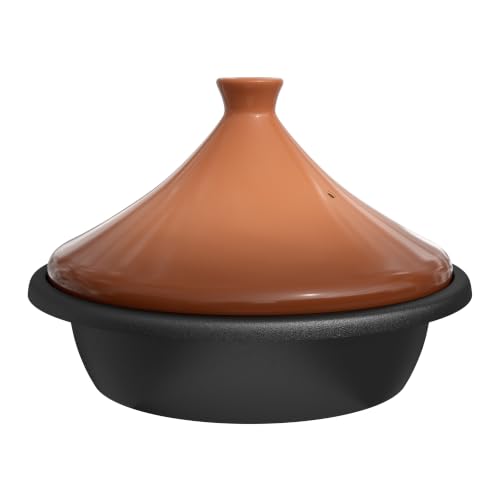 Kook Moroccan Tagine
- One Pot Wonder: The tagine is legendary for…
- Moist & Tender: This dish is shaped with…
- Enameled Cast Iron: Unlike clay versions, this durable…
 Kook Moroccan Tagine
- One Pot Wonder: The tagine is legendary for…
- Moist & Tender: This dish is shaped with…
- Enameled Cast Iron: Unlike clay versions, this durable…
| Product | Key specs | |
|---|---|---|
| Culivora Moroccan Tagine for Cooking: Enameled Cast | Slow-Simmered Perfection: Our Moroccan tagine features a signature… Upgraded Cast Iron Tagine: Say goodbye to fragile… Wholesome Meals, Rich Flavors: The enameled cast iron… | Check price |
| Kook Moroccan Tagine | One Pot Wonder: The tagine is legendary for… Moist & Tender: This dish is shaped with… Enameled Cast Iron: Unlike clay versions, this durable… | Check price |
| Kook Moroccan Tagine | One Pot Wonder: The tagine is legendary for… Moist & Tender: This dish is shaped with… Enameled Cast Iron: Unlike clay versions, this durable… | Check price |
 Kook Moroccan Tagine Kook Moroccan Tagine | One Pot Wonder: The tagine is legendary for… Moist & Tender: This dish is shaped with… Enameled Cast Iron: Unlike clay versions, this durable… | Check price |
As an Amazon Associate we earn from qualifying purchases at no extra cost to you.
Best tagine pots by situation
| Cooking situation | Best choice | Why | Main compromise |
|---|---|---|---|
| First tagine or frequent weeknight use | Glazed ceramic | Low-maintenance surface and good moisture retention | Usually needs a diffuser on gas or electric heat |
| Traditional cooking on a gas flame | Unglazed clay | Excellent gentle heat and porous, traditional construction | Needs soaking, seasoning, and careful temperature changes |
| Induction or high-temperature versatility | Cast iron | Strong heat retention and better compatibility with modern hobs | Heavy, slower to cool, and more expensive |
| Small kitchen or cooking for two | 25–27 cm ceramic or clay | Usually provides about 1.5–2.0 litres without using much storage space | Not large enough for substantial leftovers |
| Family meals and batch cooking | 30–33 cm cast iron or ceramic | Typically holds about 3.0–4.5 litres | Needs a large burner and more cupboard space |
Glazed ceramic tagines: the easiest all-rounder
Glazed ceramic is the most practical choice for many cooks. The non-porous cooking surface resists absorbing oil, spices, and strong aromas, so it is easier to clean than unglazed clay. It also gives the tagine a decorative finish that can go from kitchen to table.
Typical glazed ceramic models measure 25–30 cm across and hold roughly 1.5–3 litres. A 27 cm model is generally suitable for two to three servings; a 30 cm model is more useful for four people, depending on how much sauce and couscous you serve alongside it. Ceramic walls spread heat gently, which helps onions, meat, and vegetables cook without aggressive bubbling.
The important limitation is thermal shock. A decorative ceramic tagine may be intended only for serving or oven use, not direct stovetop cooking. Look for explicit instructions that permit hob use. Even then, use low to medium heat, place the pot on a diffuser if recommended, and never put a cold ceramic pot on a hot burner.
Emile Henry makes glazed ceramic cookware designed for direct heat and oven use, but compatibility still varies by product line and cooktop. Check the current manufacturer instructions rather than assuming that every ceramic tagine is suitable for a gas flame, electric coil, glass hob, or induction.
Unglazed clay tagines: traditional, but less forgiving
Unglazed clay is the traditional option and is particularly appealing if you enjoy slow cooking over a low gas flame. The porous material warms gradually and retains a modest amount of moisture. It is well suited to lamb, chicken, vegetables, and legumes cooked with spices and a relatively small quantity of liquid.
Capacity commonly ranges from about 1.5 litres in a 25 cm pot to 3 litres or more in a 30–33 cm pot. Clay tagines can be lighter than cast iron, but they are more vulnerable to cracking. Do not move one directly from a refrigerator to a hot burner, pour cold liquid into a hot base, or place a hot pot on a cold stone or wet countertop.
Many unglazed clay pots benefit from initial soaking and seasoning. Follow the maker’s method; a common approach is to soak the base and lid in water for several hours, dry them fully, coat the cooking surface lightly with oil, and warm the pot gradually. Some makers recommend a low oven rather than a stovetop for the first seasoning. This process helps condition the clay, but it cannot make a decorative, non-stovetop pot safe for direct heat.
Unglazed clay is usually hand-wash only. Avoid detergent if the manufacturer says the porous surface may absorb it, and allow the pot to dry completely before storage. A musty smell, persistent dampness, or dark mold-like spotting indicates that it was stored before fully drying.
Cast iron tagines: the most versatile modern option
Cast iron is the strongest choice when compatibility matters more than low weight. A cast iron base can work on gas, electric, and many induction hobs, while the lid may be cast iron, enamelled cast iron, or ceramic. Always verify that the complete product—not just the base—is rated for your cooktop and oven.
Expect a 27–30 cm cast iron tagine to weigh approximately 4–7 kg, compared with roughly 2–4 kg for a similar ceramic model. The extra mass stabilizes the temperature when cold ingredients are added and makes browning easier. It also means the pot stays hot for a long time and can damage a glass cooktop if dragged across it.
Enamelled cast iron generally needs less maintenance because the cooking surface does not require repeated oil seasoning. Bare cast iron needs a thin layer of cooking oil after washing and thorough drying to limit rust. In either case, avoid sudden cooling and do not heat an empty cast iron tagine at maximum power.
Le Creuset and Staub produce established cast iron cookware, although their tagine-shaped products and regional availability can change. If choosing one, evaluate the lid seal, base diameter, stated induction compatibility, and replacement-lid availability—not just the brand name.
Head-to-head comparison
| Feature | Glazed ceramic | Unglazed clay | Cast iron |
|---|---|---|---|
| Typical useful capacity | 1.5–3.5 L | 1.5–3.0 L | 2.0–4.5 L |
| Typical 27–30 cm weight | 2–4 kg | 2–3.5 kg | 4–7 kg |
| Direct gas flame | Only if explicitly approved; diffuser often advised | Often suitable with low gradual heat | Generally suitable |
| Electric coil or glass hob | Usually requires a diffuser and approved design | Use only if the maker permits it | Usually suitable; lift rather than slide |
| Induction | Not compatible unless it has a magnetic induction base | Not compatible unless specially constructed | Usually compatible |
| Seasoning | Usually none beyond washing | Often required before first use | Required for bare iron; not normally for enamel |
| Cleaning | Warm water and mild detergent if approved | Usually gentle hand-washing and complete drying | Hand-wash; dry immediately |
| Typical market price | About $45–$160 | About $35–$120 | About $100–$300 |
How large should your tagine be?
Capacity claims can be misleading because a conical lid adds visual height without providing usable cooking space. Size the pot by the diameter of the base and the number of servings:
- 25–27 cm base: approximately 1.5–2 litres, suitable for one or two people.
- 28–30 cm base: approximately 2–3 litres, suitable for two to four people.
- 31–33 cm base: approximately 3–4.5 litres, suitable for four to six people.
Do not fill the base to its rim. Leave room for bubbling and keep ingredients below the lid’s lower edge. As a practical example, if four people each eat 350 ml of stew, the meal requires 1.4 litres before allowing for evaporation or leftovers. A tagine rated at 1.5 litres would be too tight; a 2.5–3 litre model gives more useful headroom.
Diffusers, burners, and heat safety
A diffuser is a flat metal plate placed between the burner and the tagine. It spreads concentrated heat, reducing hot spots beneath ceramic or clay. It is especially useful on gas burners with a small central flame or on electric hobs that cycle sharply between temperatures.
Use a diffuser when the manufacturer recommends one, but do not treat it as a universal safety guarantee. It cannot correct a pot that is intended only for serving. For glass cooktops, choose a smooth, stable base and lift the tagine rather than sliding it. For induction, the base must contain magnetic material; a diffuser placed on an induction ring may not make a non-magnetic clay or ceramic pot work reliably.
Begin on low heat for 5–10 minutes, then increase only as needed. Most tagine cooking should be a quiet simmer rather than a vigorous boil. Add warm liquid instead of refrigerator-cold stock, and allow the pot to cool naturally before washing.
Ownership mistakes that shorten a tagine’s life
- Buying a decorative ceramic tagine for direct flame cooking.
- Using high heat to “preheat” clay or ceramic.
- Leaving a clay tagine wet in a closed cupboard.
- Using metal utensils that scratch enamelled surfaces.
- Putting a hot tagine under cold water.
- Ignoring the base diameter when checking whether it fits a burner or storage shelf.
For the lowest-maintenance purchase, choose a manufacturer-approved glazed ceramic model. For the most traditional experience, select unglazed clay and accept the slower setup and stricter heat discipline. If you cook tagines weekly, use induction, or want one pot that can brown ingredients and hold heat, cast iron is usually the strongest long-term choice.








Write Your Review
No reviews yet. Be the first to share your experience!