

The best tin lined copper cookware is a thick, traditionally made copper pan with a sound tin lining, chosen for gentle heat control rather than maximum-heat durability. It is particularly good for sauces, custards, caramel, fish, vegetables, and other foods that benefit from rapid temperature changes—but stainless-lined copper is usually the better choice for searing, broiling, and frequent high-heat cooking.
Our top picks
 Pure cooper Cookware Set 10 Piece Set
- This 10-piece cookware set is crafted from pure…
- Includes a copper sauce pan set, copper kadhai…
- Each piece features sturdy brass handles that provide…
 GreenPan x Bobby Flay 8 Piece Copper
- BOBBY FLAY x GREENPAN: Legendary chef Bobby Flay…
- The stunning exterior heats quickly, the aluminum base…
- 8” Copper Clad Frypan, 10” Copper Clad Frypan,…
 Viking 3-Ply Pots and Pans Set
- This pot and pan set includes 8 inch…
- Our copper cook ware sets feature a hammered…
- Our cookware features ergonomic handles for control around…
| Product | Key specs | |
|---|---|---|
| Pure cooper Cookware Set 10 Piece Set | This 10-piece cookware set is crafted from pure… Includes a copper sauce pan set, copper kadhai… Each piece features sturdy brass handles that provide… | Check price |
| GreenPan x Bobby Flay 8 Piece Copper | BOBBY FLAY x GREENPAN: Legendary chef Bobby Flay… The stunning exterior heats quickly, the aluminum base… 8” Copper Clad Frypan, 10” Copper Clad Frypan,… | Check price |
| Viking 3-Ply Pots and Pans Set | This pot and pan set includes 8 inch… Our copper cook ware sets feature a hammered… Our cookware features ergonomic handles for control around… | Check price |
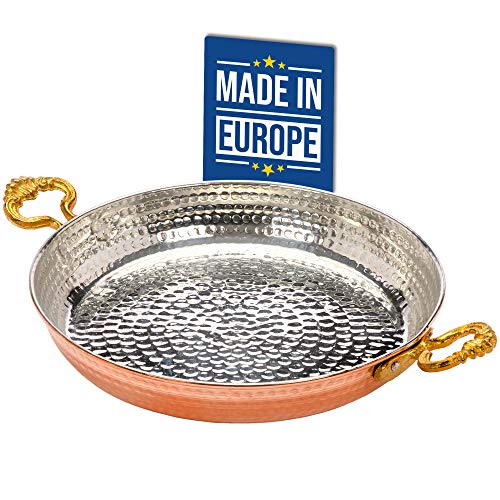 Crystalia 7 Inches Authentic Hammered Copper Pan | CRYSTALIA copper pans are made with high-quality real… AUTHENTIC HANDMADE COPPER 7” SKILLET: Fancy Ottoman style… This handmade double-handled copper pan is made of… | Check price |
As an Amazon Associate we earn from qualifying purchases at no extra cost to you.
Best tin lined copper cookware by cooking situation
| Cooking situation | Best choice | Useful specification | Why it fits | Main limitation |
|---|---|---|---|---|
| Sauces, custards, reductions | Small tin-lined copper saucepan | 1.5–2.5 qt; 2–2.5 mm copper | Fast, precise response when heat is adjusted | Small capacity and delicate lining |
| Everyday family cooking | Medium saucepan or sauté pan | 2.5–4 qt; 2–2.5 mm copper | Useful balance of control and capacity | Too much heat can damage tin |
| Jams, preserves, and confectionery | Wide copper preserving pan | 4–8 qt; broad base; 1.5–2 mm copper | Large evaporation surface and responsive heat | Acidic mixtures require careful lining inspection |
| Low-temperature frying and omelets | Tin-lined copper frying pan | 9–11 in; 2–2.5 mm copper | Excellent control for eggs and delicate foods | Do not preheat it empty over high heat |
| High-heat searing or oven finishing | Stainless-lined copper or clad stainless steel | 10–12 in; oven rating confirmed by maker | More tolerant of intense heat and abrasion | Usually less traditional and sometimes less responsive |
Why choose tin-lined copper?
Copper conducts heat much more efficiently than stainless steel or cast iron. That does not simply mean “hotter.” Its more important advantage is that heat spreads quickly across the base and sidewalls, while the pan responds promptly when the burner is turned down. A tin lining separates food from reactive copper and provides a naturally nonstick-like surface when properly seasoned and used with moderate heat.
This combination is especially valuable when a few seconds of excess heat can split a butter sauce, scorch sugar, overcook a custard, or toughen a delicate protein. Copper also cools relatively quickly once removed from the burner, so it gives the cook more control than a heavy pan that continues releasing stored heat.
The trade-off is that tin melts at approximately 450°F (232°C). A pan may tolerate brief excursions differently depending on its construction, but that melting point is a practical warning: tin-lined copper is not intended for aggressive empty preheating, high-temperature searing, or broiling.
Thickness matters more than appearance
Copper thickness is normally stated in millimeters. Very thin decorative copper may look impressive but heat less evenly and can deform more easily. For cookware intended for regular use, approximately 2 mm is a sensible minimum; 2.5 mm or more offers greater stability and evenness, though it also adds weight and cost.
- 1–1.5 mm: lighter and often less expensive, suitable for occasional use or wide preserving pans where quick response is useful.
- 2–2.5 mm: the best general-purpose range for saucepans, sauté pans, and frying pans.
- 3 mm and above: very substantial and stable, but heavy, expensive, and not automatically better for every recipe.
Judge thickness alongside construction quality. A pan should sit flat, have a firmly attached handle, and show an even lining without exposed copper, deep pits, or loose areas. A rolled rim is useful because it reduces sharp edges and can make pouring cleaner. Riveted handles are traditional and durable, although food can collect around rivet heads; welded or otherwise sealed designs are easier to clean if their construction is sound.
Traditional makers and what to look for
Established European copper cookware makers such as Mauviel 1830, de Buyer, Matfer Bourgeat, and Ruffoni have long offered copper cookware in various constructions and linings. Product ranges change, so check the individual pan rather than assuming every copper item from a brand is tin lined. Some collections use stainless steel, while others are decorative and not intended for stovetop cooking.
For a purchase decision, prioritize the stated copper thickness, lining material, cooking-surface diameter, handle construction, compatible cooktop, and whether the maker supports retinning. A reputable retinning route can matter more than a small difference in polish or decoration.
Tin lining versus stainless-steel lining
| Feature | Tin-lined copper | Stainless-lined copper |
|---|---|---|
| Heat response | Excellent; copper remains highly responsive | Excellent; copper remains highly responsive |
| Maximum-heat tolerance | Limited by tin, roughly 450°F/232°C | Much more tolerant, subject to maker’s oven rating |
| Surface feel | Smooth and somewhat forgiving for delicate foods | Harder and more abrasion resistant |
| Metal utensils | Use cautiously; sharp edges can scratch or gouge tin | Generally more tolerant |
| Maintenance | May require professional retinning | No routine retinning, though it can still be damaged |
| Best use | Controlled, delicate, low-to-medium heat cooking | Broader everyday and high-heat use |
Retinning: the ownership cost people overlook
Tin gradually wears through at the cooking surface, especially in the center where utensils and heat are concentrated. It can also become thin or patchy after years of use. Retinning is not a routine annual task for most home cooks; a carefully used pan may go many years before needing it. Frequency depends on heat, utensils, cleaning, and how often the pan is used.
Stop using the pan for food when copper is visible through a worn area, when the lining is blistered or lifting, or when deep scratches expose the copper beneath. A small amount of discoloration is not the same as dangerous wear, but exposed copper should be assessed rather than ignored.
Professional retinning usually involves removing the old lining, preparing the copper, applying molten tin, and smoothing the surface. General market pricing varies by diameter, depth, handle design, shipping, and regional labor, but a useful planning range is roughly $75–$200 for a small or medium pan and $150–$350 or more for a large or complicated piece. Before buying, confirm that a qualified retinner will accept that pan and that the expected service cost makes sense compared with replacement.
Care limits that prevent most damage
- Use low to medium heat for most cooking. Copper transfers heat efficiently, so the setting needed may be lower than with stainless steel.
- Never leave an empty tin-lined pan over a strong burner. Add food, liquid, fat, or water before substantial heating.
- Do not place tin-lined cookware under a broiler or expose it to a very hot oven unless the manufacturer specifically permits it.
- Use wood, silicone, or smooth-edged plastic utensils. Avoid stabbing, scraping, or chopping in the pan.
- Let the pan cool before washing. A sudden cold-water shock can stress the copper and lining.
- Hand-wash with warm water and mild dish soap. Avoid abrasive powders, steel wool, harsh scouring pads, and automatic dishwashers.
- Do not polish the interior. Exterior copper polish should be kept away from the cooking surface and rinsed according to its instructions.
- Dry thoroughly, especially around rivets and the rim, before storing.
Acidic foods such as tomatoes, wine, citrus, and vinegar are commonly cooked in sound tin-lined pans, but do not leave them stored in the pan for extended periods. Salt should be dissolved in liquid rather than rubbed onto a dry lining. If a recipe requires prolonged boiling, intense reduction, or unattended high heat, a stainless-lined or stainless-steel pan is the safer practical choice.
A simple decision rule before buying
| Your priority | Recommendation |
|---|---|
| You make sauces, custards, caramel, and delicate vegetables several times a week | Buy a 2–2.5 mm tin-lined saucepan or sauté pan |
| You want one pan for steaks, stir-frying, roasting, and sauces | Choose stainless-lined copper or another high-heat material |
| You are new to copper and want low maintenance | Start with one medium tin-lined saucepan, not a full set |
| You have limited storage or a glass cooktop | Choose a 2–3 qt pan with a flat base and secure hanging or nesting solution |
| You cook large batches of preserves | Choose a wide preserving pan, while accepting that its lining may wear sooner |
Bottom line
Choose the best tin lined copper cookware when precise, gentle heat control matters more than maximum durability. A well-made 2–2.5 mm saucepan is the strongest first purchase for most cooks: it handles sauces, custards, reductions, grains, and vegetables while keeping the benefits of copper manageable. Add a frying or preserving pan only when your cooking justifies its care requirements. If your routine centers on high heat, metal utensils, oven finishing, or minimal maintenance, stainless-lined copper will be the more practical long-term choice.




Write Your Review
No reviews yet. Be the first to share your experience!