

The best croissant cutter set for home baking is a stainless-steel triangle cutter with a 4–5 inch base, a 9–10 inch height, and at least three size options, because it gives beginners consistent portions without taking much storage space.
For most home bakers, a nested set of plain triangular cutters is a better buy than a single oversized cutter or a pastry wheel. The triangles create repeatable dough pieces, leave less room for guesswork, and can be pressed through chilled laminated dough without dragging the layers out of shape.
Our top picks
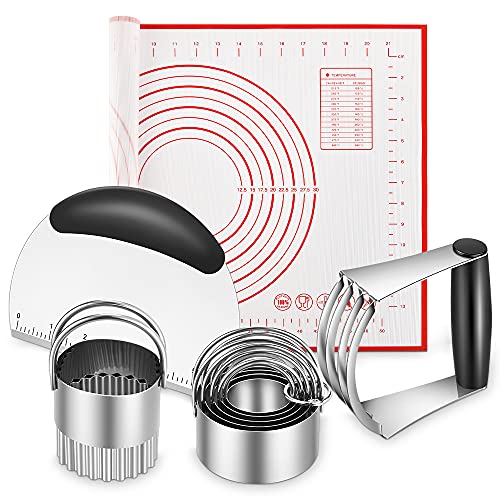 Pastry Cutter
- Baking & Pastry Tool Set: Pastry Cutter, Biscuit…
- Heavy Duty & Non-Slip: Perfect Pastry Blender Stainless…
- Premium Material: Made of Stainless steel, silicone and…
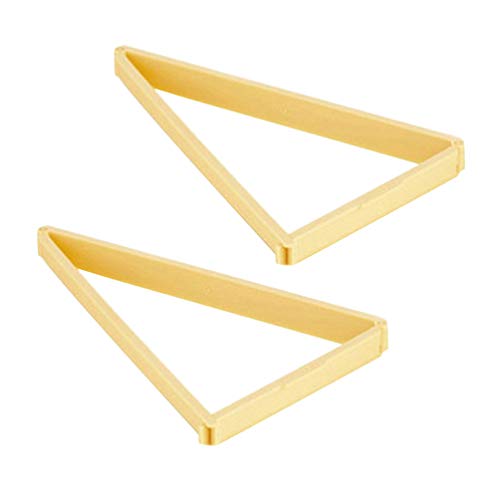 OSALADI Croissant Cutter Triangle Triangle Dough Cutter
- Triangle Shaping Control: This croissant cutter triangle helps…
- Food-Safe Material Use: Made from food-safe material, this…
- Easy Handling and Cleaning: with a size of…
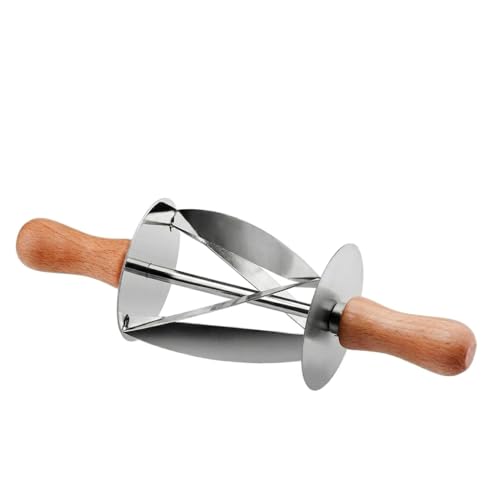 Stainless Steel Croissant Cutter Roller with Ergonomic
- 【Effortless Croissant Shaping】 Master the art of French…
- 【Premium Food-Grade Stainless Steel】 Engineered for long-lasting durability,…
- 【Ergonomic Modern Wooden Handle】 Combining industrial strength with…
| Product | Key specs | |
|---|---|---|
| Pastry Cutter | Baking & Pastry Tool Set: Pastry Cutter, Biscuit… Heavy Duty & Non-Slip: Perfect Pastry Blender Stainless… Premium Material: Made of Stainless steel, silicone and… | Check price |
| OSALADI Croissant Cutter Triangle Triangle Dough Cutter | Triangle Shaping Control: This croissant cutter triangle helps… Food-Safe Material Use: Made from food-safe material, this… Easy Handling and Cleaning: with a size of… | Check price |
| Stainless Steel Croissant Cutter Roller with Ergonomic | 【Effortless Croissant Shaping】 Master the art of French… 【Premium Food-Grade Stainless Steel】 Engineered for long-lasting durability,… 【Ergonomic Modern Wooden Handle】 Combining industrial strength with… | Check price |
 Croissant Cutter Mold Croissant Cutter Mold | Package Included: 1pc x Dough Cutter Made of premium material, durable and safe for… Croissant Cutter: Ideal for making homemade croissants, assemble… | Check price |
As an Amazon Associate we earn from qualifying purchases at no extra cost to you.
Best croissant cutter sets by baking situation
| Best for | Recommended set type | Useful cutter sizes | Typical market range | Main advantage |
|---|---|---|---|---|
| Occasional beginner | Three-piece stainless-steel triangle set | 3, 4, and 5-inch bases | $10–$20 | Simple sizing and easy storage |
| Regular home baker | Five-piece nested set with pointed ends | 2.5–6-inch bases | $18–$35 | Produces mini, standard, and large croissants |
| Large family batches | Wide stainless-steel cutters or a pastry-wheel system | 5–8-inch bases | $25–$50 | Fast cutting across large dough sheets |
| Small kitchen | Nested cutters with a hanging ring or storage case | 3–5-inch bases | $12–$30 | Several sizes in roughly one utensil footprint |
| Most precise portioning | Rigid open triangles with marked dimensions | 4–5-inch base, 9–10-inch height | $15–$35 | Repeatable width and predictable rolling length |
What to look for before buying
1. Shape: triangles are usually better than wheels
A true croissant cutter should form an elongated triangle, not simply cut circles or short wedges. A triangle with a broad base and long point gives the dough enough length to create the characteristic spiral when rolled.
Rigid triangle cutters are the easiest option for consistent results. You place the cutter on the dough, press down, and lift it away. A pastry wheel can be quicker, particularly for a large sheet, but it requires more control. If the wheel angle changes between cuts, the bases vary and the finished croissants will proof at different speeds.
Look for slightly concave sides or a clearly tapered profile. Completely straight-sided triangles can work, but they may produce a squat shape unless the dough is rolled into a long, narrow sheet.
2. Size options and finished yield
A useful home set should offer at least three sizes. A 3-inch base is suitable for mini croissants, a 4–5-inch base is close to a standard home-baking size, and a 6-inch-or-larger base is better for substantial breakfast pastries.
Size is best judged by the dough sheet rather than the cutter alone. For a standard cutter with a 5-inch base and 10-inch height, allow around 12 inches of dough width so that you can place triangles in alternating directions with a small gap between them. A sheet measuring approximately 12 by 24 inches may produce around 8–10 standard triangles, depending on the exact nesting pattern and trimming waste.
Do not choose a large cutter simply because it produces larger croissants. Bigger pieces require more filling, more proofing space, and longer baking. They also make uneven rolling more obvious.
3. Dough clearance matters more than advertised sharpness
Laminated dough is thicker and more delicate than ordinary pie dough. The cutter should have enough interior clearance that butter layers do not smear against a bulky frame or handle. Open-sided cutters are especially easy to lift away from cold dough.
A practical clearance check is the cutter height. A flat metal triangle approximately 1–2 inches tall gives your fingers room to lift it without scraping the dough. Very shallow stamped pieces can be difficult to grip, while deep plastic frames may compress the dough at the edges.
Choose a design that can cut dough at about 4–6 millimeters thick without requiring you to twist. Twisting is a common cause of sealed or distorted edges.
4. Edge sharpness should be controlled, not razor-like
The cutting edge needs to be firm and defined, but it should not be dangerously sharp. A thin, rigid stainless-steel edge cuts through chilled dough cleanly and leaves a clear outline. A heavily rounded edge may require rocking or repeated pressure, which warms the butter layers.
For home use, a smooth pressed or rolled edge is preferable to a serrated edge. Serrations may grip soft dough, but they can tear laminated layers and make the cut line harder to release. Plastic can be perfectly serviceable for occasional use, although it is more likely to flex when cutting a cold sheet.
Head-to-head: the main cutter designs
Nested rigid triangle sets
These are the best all-purpose choice. Multiple sizes nest together, the fixed shape encourages uniform portions, and there is no moving mechanism to clog with butter. Stainless steel is generally the strongest material for long-term use.
The compromise is speed. You must cut each triangle individually, and a small set may not include a guide for spacing them across the dough.
Adjustable croissant cutters
An adjustable cutter can change the triangle width or cutting angle, making it useful when you bake different batch sizes. It can reduce the need for several separate tools.
However, hinges, sliders, and locking screws are the first parts likely to accumulate dried dough or loosen. An adjustable tool is worthwhile for frequent bakers, but a fixed cutter is usually more consistent for beginners.
Pastry-wheel systems
A wheel system is fastest for a large production-style sheet. Some designs combine a straight cutter with a fluted wheel so you can mark triangle edges in a continuous motion.
These tools need more technique. The wheel must stay perpendicular to the dough, and the cutting pressure must remain steady. They also require more cleaning around the axle, so they are less convenient if you bake only a few croissants at a time.
Plastic and silicone cutters
Plastic cutters are lightweight, inexpensive, and gentle on nonstick work surfaces. They are a reasonable choice for occasional baking, particularly if the edges are reinforced.
Silicone is flexible, which makes release easy, but that same flexibility can produce different triangle dimensions when you press at an angle. Avoid thin, floppy designs if consistent sizing is your main objective.
How consistently can a set produce even croissants?
A cutter improves consistency, but it cannot correct uneven dough. Start with a rectangle whose thickness varies by no more than about 1 millimeter from one side to the other. Roll the dough to the target dimensions, trim the four edges with a straight scraper or knife, and then cut the triangles with the same orientation each time.
For a simple consistency check, weigh three unfilled triangles after cutting. If one weighs 20 grams and another weighs 28 grams, the difference is large enough to affect proofing and baking. A useful home target is to keep pieces within roughly 5–10 percent of the intended weight. For a 25-gram mini piece, that means approximately 23–28 grams; for a 70-gram standard piece, aim for about 63–77 grams.
Use the cutter as a sizing guide, not as a substitute for a scale. The most even batch comes from matching triangle dimensions, dough thickness, and final rolled length.
Ownership details that affect the best choice
- Material: Stainless steel resists bending and usually lasts longer than thin plastic. Look for a smooth, seam-free surface.
- Cleaning: Wash butter and flour off soon after use. Dried dough can collect along folded or welded edges.
- Dishwasher use: Follow the maker’s instructions. Hand washing is safer for unfinished metal, painted surfaces, and adjustable mechanisms.
- Storage: Nested shapes should be dried completely before stacking. Trapped moisture can cause staining or corrosion on lower-quality metal.
- What wears first: Plastic edges may round over or warp; adjustable joints may loosen; poorly finished metal may develop rough spots that catch dough.
- Common mistake: Pressing down and twisting. Use a firm vertical press, lift the cutter, and separate the triangle with a bench scraper if needed.
Our buying verdict
Choose a three-piece stainless-steel triangle set if you bake croissants occasionally and want the lowest-cost, least complicated option. Choose a five-piece nested set if you want one tool for mini pastries, standard breakfast croissants, and larger filled versions. For frequent large batches, a pastry-wheel system earns its extra cost through speed, but it demands more attention to alignment.
The most balanced specification is a rigid stainless-steel set with 3-, 4-, and 5-inch base options, approximately 9–10-inch standard-triangle height, a smooth non-serrated edge, and nesting storage. That combination gives adequate dough clearance, reliable portion control, and enough flexibility for most home recipes without filling a kitchen drawer with specialized tools.
Frequently asked questions
Can a pizza cutter replace a croissant cutter?
It can cut straight lines, but it cannot maintain identical triangle angles as easily. A ruler and pizza wheel can work for experienced bakers, while a rigid triangle cutter is more dependable for repeatable sizing.
Should croissant cutters be sharp enough to cut parchment?
No. The edge should cut chilled dough cleanly without requiring sawing, but an extremely sharp exposed edge is unnecessary and harder to store safely. Edge rigidity and a clean vertical cut matter more than razor sharpness.
What is the best size for ordinary home croissants?
A triangle with a base of about 4–5 inches and a height of roughly 9–10 inches is a practical starting point. Confirm the recipe’s target dough weight, since some formulas are designed for smaller or larger portions.








Write Your Review
No reviews yet. Be the first to share your experience!