

The best tagine pot for Moroccan cooking is a glazed clay tagine for traditional stovetop use, but ceramic, cast iron, and stainless-steel models can be better choices when you need induction compatibility, low maintenance, or greater durability.
Our top picks
 Culivora Moroccan Tagine for Cooking: Enameled Cast
- Slow-Simmered Perfection: Our Moroccan tagine features a signature…
- Upgraded Cast Iron Tagine: Say goodbye to fragile…
- Wholesome Meals, Rich Flavors: The enameled cast iron…
 Kook Moroccan Tagine
- One Pot Wonder: The tagine is legendary for…
- Moist & Tender: This dish is shaped with…
- Enameled Cast Iron: Unlike clay versions, this durable…
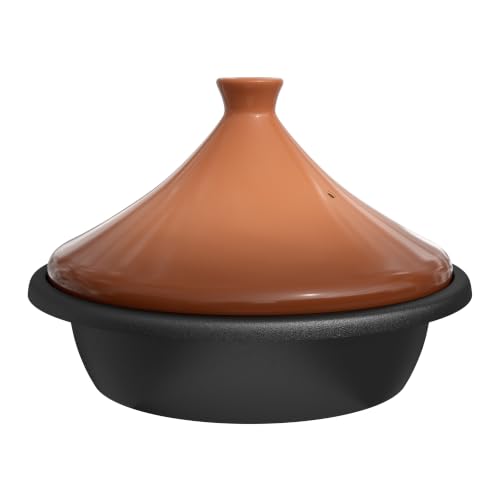 Kook Moroccan Tagine
- One Pot Wonder: The tagine is legendary for…
- Moist & Tender: This dish is shaped with…
- Enameled Cast Iron: Unlike clay versions, this durable…
| Product | Key specs | |
|---|---|---|
| Culivora Moroccan Tagine for Cooking: Enameled Cast | Slow-Simmered Perfection: Our Moroccan tagine features a signature… Upgraded Cast Iron Tagine: Say goodbye to fragile… Wholesome Meals, Rich Flavors: The enameled cast iron… | Check price |
| Kook Moroccan Tagine | One Pot Wonder: The tagine is legendary for… Moist & Tender: This dish is shaped with… Enameled Cast Iron: Unlike clay versions, this durable… | Check price |
| Kook Moroccan Tagine | One Pot Wonder: The tagine is legendary for… Moist & Tender: This dish is shaped with… Enameled Cast Iron: Unlike clay versions, this durable… | Check price |
 Kook Moroccan Tagine Kook Moroccan Tagine | One Pot Wonder: The tagine is legendary for… Moist & Tender: This dish is shaped with… Enameled Cast Iron: Unlike clay versions, this durable… | Check price |
As an Amazon Associate we earn from qualifying purchases at no extra cost to you.
Quick recommendation by cooking situation
| Your situation | Best material | Why it fits | Main compromise |
|---|---|---|---|
| Traditional Moroccan-style cooking on gas or electric | Glazed clay | Gentle, moist cooking and classic serving presentation | Usually needs gradual heating and careful cleaning |
| Frequent use with an easy-clean preference | Glazed ceramic | Nonporous surface and consistent low-to-medium heat | Many models are not suitable for direct stovetop heat |
| Induction cooking or high durability | Cast iron | Excellent heat retention and broad cooktop compatibility | Heavy, slower to heat, and potentially prone to rust |
| Maximum practicality and fast weeknight cooking | Stainless steel | Light, durable, and commonly compatible with all cooktops | Less distinctive heat behavior and weaker moisture retention |
| First tagine with limited storage space | Small glazed ceramic or clay | Typically 8-10 inches wide and suitable for 1-2 portions | Small cooking surface limits browning and leftovers |
What to look for before buying
Do not choose by the cone shape alone. A useful tagine needs a flat cooking base, a well-fitting lid, a size that matches your household, and explicit heat-compatibility instructions. The most important question is whether the base can sit directly on your cooktop. Decorative clay and ceramic tagines may be designed only for serving, while cooking models are made with heat-resistant clay or a reinforced base.
Capacity labels are inconsistent, so compare the base diameter as well as the advertised volume. A 10-inch tagine generally suits one or two generous portions, a 12-inch model suits two to four portions, and a 14-inch model can accommodate approximately four to six portions if the base is deep enough. The sloping lid takes up vertical space but does not add much usable capacity.
Clay, ceramic, cast iron, and stainless steel compared
| Material | Typical useful capacity | Heat compatibility | Seasoning | Cleaning and care | Typical weight at 12 inches |
|---|---|---|---|---|---|
| Glazed clay | 1.5-3.5 quarts | Gas and electric with gradual heating; induction usually requires a diffuser | Usually no oil seasoning; some unglazed bases may need soaking or conditioning | Hand-wash; avoid thermal shock and harsh detergents | 4-7 pounds |
| Glazed ceramic | 1.5-3.5 quarts | Oven-safe models are common; direct stovetop use must be specifically approved | None | Easy to wipe clean; inspect glaze for chips | 4-6 pounds |
| Cast iron | 2-4 quarts | Gas, electric, and induction; oven-safe when the lid and handles permit | Bare iron needs seasoning; enamel-coated iron does not | Hand-wash and dry promptly; avoid abrasive tools on enamel | 10-16 pounds |
| Stainless steel | 2-4 quarts | Usually all cooktops, including induction if the base is magnetic | None, although a small amount of oil helps reduce sticking | Generally dishwasher-tolerant; discoloration can be polished away | 3-6 pounds |
Glazed clay: the traditional choice
Glazed clay is the strongest choice when your priority is the traditional cooking method. The thick base heats relatively gently, while the conical lid encourages steam to condense and return to the food. This makes it well suited to lamb, chicken, vegetables, dried fruit, and slow-cooked sauces.
Its weakness is thermal shock. Moving a cold clay pot onto a hot burner, placing a hot pot on a cold stone surface, or adding cold liquid to a very hot base can cause cracking. Start on low heat, increase gradually, and use a heat diffuser if the manufacturer recommends one. Clay also browns meat less aggressively than metal, so you may need to brown ingredients separately or accept a softer, more braised result.
Choose a cooking-grade model with clear instructions for direct heat. A brightly painted tagine intended for table presentation is not automatically safe for cooking.
Glazed ceramic: easiest for low-maintenance cooking
Ceramic tagines offer the traditional silhouette with a smooth, nonporous interior. They are often the easiest option to clean because sauce residue does not readily penetrate a glazed surface. Ceramic is also effective in the oven, where moderate heat gives you steady cooking without constant burner adjustment.
Compatibility varies more than many buyers expect. Some ceramic tagines are oven-only, some can be used on gas or electric burners, and relatively few are approved for induction without an adapter. Check the base, the lid knob, and the maximum temperature rather than relying on the word “ceramic.” Avoid rapid temperature changes, even when the pot is marketed as oven-safe.
Cast iron: the durable, induction-friendly alternative
Cast iron is the practical answer for cooks who want a tagine that can move from stovetop to oven and work on induction. It retains heat exceptionally well, which is useful for browning meat before adding onions, spices, and liquid. Enamel-coated versions are especially convenient because they do not require regular seasoning.
The trade-off is weight. A 12-inch cast-iron tagine can weigh roughly twice as much as a clay or stainless-steel equivalent before food is added. That matters when lifting it from a low oven or washing it in a small sink. Bare cast iron requires a thin oil coating after washing and must be dried thoroughly; otherwise the rim or exposed cooking surface may rust. Enamel can chip if the pot is knocked against a hard sink, so use wooden or silicone utensils.
Stainless steel: best for speed and convenience
Stainless steel tagines are usually the least fragile and easiest to store. They heat faster than clay and cast iron, respond quickly when you lower the burner, and are often suitable for induction. They are a good fit for weeknight meals when you want tagine-shaped cookware without special handling.
However, stainless steel does not naturally provide the same slow, enclosed cooking behavior as thick clay. Look for a heavy, multi-layer base rather than a very thin single sheet. A core of aluminum or copper improves heat distribution, while a magnetic stainless outer layer enables induction. Stainless steel also benefits from preheating over moderate heat and using enough oil before browning, since an overly hot empty pan can make food stick.
Size: match the pot to the meal
For one or two people, a 10-inch base with about 1.5-2 quarts of usable capacity is usually more manageable than a large family pot. For two to four people, choose approximately 12 inches and 2.5-3 quarts. A 14-inch model is useful for four to six portions, but it needs a large burner, more storage space, and a flat surface that can support its full base.
A simple serving estimate helps prevent buying too small. If each person needs about 1.5 cups of finished stew and you want 25 percent extra for evaporation and leftovers, four servings require approximately 7.5 cups, or 1.9 quarts, of finished food. Because ingredients need room to sit below the lid, a 2.5-3-quart tagine is a safer choice than a 2-quart model.
Seasoning, cleaning, and ownership realities
- Clay: Follow the maker’s first-use instructions. If soaking is recommended, soak only as directed, then dry fully. Wash by hand with warm water and a soft sponge. Never transfer a hot clay base directly to a cold countertop.
- Ceramic: Let the pot cool before washing. Avoid metal scouring pads, which can scratch glaze and make future cleaning harder. Check periodically for hairline cracks or loose lid knobs.
- Bare cast iron: Wash without prolonged soaking, dry over low heat, and apply a very thin film of cooking oil. Excess oil becomes sticky, so more is not better.
- Enamelled cast iron: No seasoning is required. Soak stuck-on food after cooling, and avoid thermal shock and abrasive powders.
- Stainless steel: Dishwasher use depends on the manufacturer, but hand-washing helps preserve the finish. White vinegar diluted with water can help remove mineral film; do not use chlorine bleach.
Common mistakes to avoid
- Using a decorative serving tagine on a burner without checking its construction.
- Putting a cold clay or ceramic pot onto high heat.
- Overfilling the base, which prevents even cooking and can force sauce under the lid.
- Expecting a tagine to brown a large quantity of meat as efficiently as a wide metal skillet.
- Ignoring the lid height when measuring a cupboard shelf.
- Choosing a heavy cast-iron model without checking whether the cooktop grate or shelf can support it.
Final verdict
Choose glazed clay if authentic Moroccan-style cooking and presentation matter most and you are comfortable with gradual heating. Choose glazed ceramic for a gentler, easier-cleaning oven option, cast iron for induction and long-term durability, or stainless steel for fast, low-fuss everyday use. For most households, a 12-inch, 2.5-3-quart model is the most versatile size: large enough for a family meal, but not so large that heat control, storage, and cleaning become difficult.








Write Your Review
No reviews yet. Be the first to share your experience!