

Best Karahi Pot for Pakistani Cooking
The best karahi pot for Pakistani cooking is usually a 3.5- to 5-liter stainless steel karahi with a rounded base and sturdy side handles; choose cast iron for maximum heat retention and aluminum for the lightest, fastest-heating option.
Quick Recommendation by Cooking Situation
| Cooking situation | Best choice | Recommended capacity | Why it fits |
|---|---|---|---|
| Regular family cooking | Stainless steel | 4–5 liters | Durable, moderately responsive, easy to clean, and suitable for curries, karahi, and frying |
| High-heat bhuna or frequent entertaining | Cast iron | 4–6 liters | Holds heat well when adding meat, tomatoes, or onions in large batches |
| Small kitchen or occasional use | Aluminum | 2.5–3.5 liters | Lightweight, affordable, and quick to heat |
| Induction stovetop | Magnetic stainless steel or cast iron | 3.5–5 liters | Works with induction when the base is magnetic and flat enough for the cooktop |
Stainless Steel vs Cast Iron vs Aluminum
Stainless steel: the best all-rounder
Stainless steel is the safest recommendation for most households. A good karahi has a rounded cooking bowl, a thick base, and two heat-resistant side handles. Stainless steel itself does not conduct heat as quickly as aluminum, so a layered base containing aluminum or copper improves heat distribution and reduces hot spots.
Our top picks
 RAYHANA Qabili Pilaf Pot
- The only Pilaf Pot with verified safety
- Designed in the classic shape of a traditional…
- Built to last with a high-quality multi-layer European…
 Aluminum Biryani Pot with Lid
- Designed for Traditional Dum Biryani 24cm biryani pot…
- Aluminum Construction for Fast Heat Response Lightweight aluminum…
- 5 Quart Deep Capacity for Family-Size Meals Perfect…
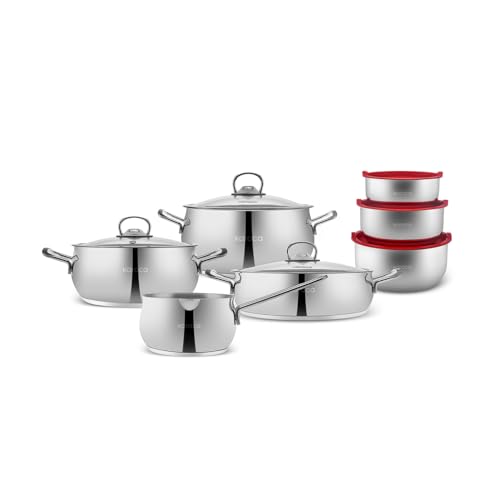 Karaca Stainless Steel Cookware Set 13-Piece
- Complete Cookware Set: This versatile cookware set includes…
- Material: Crafted from stainless steel, this cookware set…
- Induction Compatible: Our cookware set except the storage…
As an Amazon Associate we earn from qualifying purchases at no extra cost to you.
Its main advantage is ownership convenience. Stainless steel does not need seasoning, tolerates acidic ingredients such as tomatoes and tamarind, and can usually be scrubbed more vigorously than cast iron. It is also less likely to retain the smell of spices after washing.
Heat response is moderate. It heats more slowly than thin aluminum but cools faster than cast iron, giving you better control when a masala begins to catch. Look for a base around 3–6 mm thick. A very thin stainless steel bowl may warp or scorch food over a strong burner.
Cast iron: the choice for heat retention
Cast iron is excellent for cooking large quantities of chicken karahi, mutton, qeema, and thick gravies. It takes longer to heat, but once hot it stays hot when cold ingredients are added. That helps maintain vigorous frying while onions, meat, or tomatoes release moisture.
The trade-off is weight. A 4-liter cast-iron karahi may weigh approximately 4.5–7 kg before food is added, compared with roughly 1.2–2.5 kg for a similar aluminum model. Two strong handles are essential because lifting a full pot with one long handle can be awkward and unsafe.
Uncoated cast iron must be dried immediately and lightly oiled to reduce rust. Acidic tomato-based dishes can gradually affect a weak seasoning layer, particularly if they simmer for a long time. Enameled cast iron avoids seasoning and rust concerns, but it is usually heavier and more expensive, and its enamel can chip if knocked against a hard surface.
Aluminum: quick, light, and budget-friendly
Aluminum heats rapidly and responds quickly when you lower the flame. This makes it useful for frying spices, reducing a masala, and cooking in kitchens where a heavy pot is inconvenient. A 3-liter aluminum karahi commonly weighs about 0.8–1.5 kg, depending on thickness and handle construction.
Thin aluminum is the least forgiving option. It can develop hot spots, discolor, dent, or warp if heated empty over a powerful burner. Choose a heavier-gauge body or a reinforced base rather than the thinnest inexpensive bowl.
Uncoated aluminum can react with strongly acidic or salty food during prolonged cooking, causing discoloration and sometimes a metallic taste. Anodized aluminum offers a harder surface, but use only utensils recommended by the manufacturer. Avoid storing tomato-based karahi overnight in any bare aluminum pot.
Capacity: Choose for the Food, Not the Rim
Manufacturers often describe capacity to the brim. In practice, a karahi should not be filled completely because bubbling oil, stirring, and the rounded sides need room. A useful working capacity is about 70–75% of the advertised volume.
| Advertised capacity | Practical working volume | Approximate serving use | Typical diameter |
|---|---|---|---|
| 2.5 liters | 1.8 liters | 1–2 people | 25–28 cm |
| 3.5 liters | 2.5 liters | 2–4 people | 28–30 cm |
| 5 liters | 3.5–3.8 liters | 4–6 people | 30–34 cm |
| 7 liters | 4.9–5.2 liters | 6–8 people or batch cooking | 34–38 cm |
For a typical family of four, a 4- to 5-liter karahi is more versatile than a 2-liter model. It can hold a substantial chicken karahi without crowding the meat, while remaining manageable on a standard domestic burner. If your stove has a small grate, check the base diameter before buying: a very wide karahi may sit unevenly even when its advertised capacity looks suitable.
Why the Rounded Shape Matters
A traditional karahi has sloping, rounded sides rather than a vertical saucepan profile. The shape concentrates oil and liquid toward the lower center, making it easier to fry whole spices and bhun a masala with a spoon or spatula. The sloped wall also gives you more surface area for stirring meat without crushing it.
There is a practical compromise. A deeply rounded bowl works well on a gas flame but may have a small contact area on an electric or induction stovetop. For those cookers, choose a karahi with a rounded interior and a broad, flat, magnetic base. Avoid a completely spherical bottom unless you also have a stable burner ring designed for it.
Handles, Lid, and Stovetop Compatibility
- Handles: Prefer two riveted or securely welded side handles with enough clearance for oven gloves. Short handles stay cooler than a long metal loop positioned directly over the flame.
- Lid: A fitted lid is useful for simmering meat and keeping splatter contained. A glass lid makes it easier to monitor liquid, while stainless steel is more resistant to breakage.
- Gas: All three materials work, but the flame should remain under the base rather than climbing the sidewalls.
- Electric coil and ceramic: A stable, reasonably flat base matters more than a perfectly traditional rounded bottom. Lift rather than slide a heavy cast-iron karahi across glass.
- Induction: Test the base with a magnet before buying. Bare aluminum will not work unless it has a magnetic plate. Cast iron works magnetically, but its rough underside can scratch glass cooktops.
- Oven use: Confirm the temperature rating of handles, coatings, and lids. Bakelite or silicone handles may not be oven-safe even when the metal bowl is.
Heat Response: Which Material Suits Your Technique?
| Material | Approximate heat response | Heat retention | Best use |
|---|---|---|---|
| Aluminum | Fast; changes noticeably within a short time after adjusting the flame | Low to moderate | Quick frying, small portions, and cooks who adjust heat frequently |
| Stainless steel with thick or layered base | Moderate | Moderate | General-purpose cooking and controlled masala reduction |
| Cast iron | Slow to preheat | High | Large batches, searing, and steady high-temperature cooking |
For bhuna cooking, preheat gradually rather than placing an empty cast-iron or thin aluminum karahi over maximum heat. Add oil once the vessel is warm, then reduce the flame if spices darken too quickly. This protects the pot and gives onions and spices time to brown rather than burn.
Durability and Maintenance Realities
The first parts to fail are often not the cooking bowl but the handles, rivets, lid knob, or nonstick coating. Before purchase, inspect whether the handles wobble, whether rivet heads are flush, and whether the base is visibly distorted. A slightly heavier vessel usually indicates more metal and better resistance to warping, although weight alone does not prove quality.
- Stainless steel: Soak stuck food, then use a non-abrasive scrubber. White vinegar diluted with water can help with mineral marks. Avoid repeatedly heating it empty.
- Cast iron: Wash with hot water and a small amount of mild detergent, dry over low heat, and apply a thin film of cooking oil. Never store it while damp.
- Aluminum: Use moderate heat, avoid harsh alkaline cleaners, and do not leave acidic curry in the pot for storage. Check frequently for dents that make the vessel unstable.
As a simple ownership calculation, a $60 karahi used twice weekly for five years provides about 520 cooking sessions, or approximately $0.12 per use before energy costs. A cheaper pot that warps after a year may cost more over time if it must be replaced repeatedly. The best karahi pot for Pakistani cooking is therefore the one whose capacity, base, and maintenance requirements match how often you actually cook.
Final Verdict
Choose a 4- to 5-liter stainless steel karahi with a thick magnetic base if you want one dependable pot for most Pakistani dishes and stovetops. Choose a 4- to 6-liter cast-iron model when heat retention and large-batch cooking matter more than weight and maintenance. Choose a 2.5- to 3.5-liter heavy-gauge aluminum karahi when low cost, fast heating, and easy lifting are your priorities.








Write Your Review
No reviews yet. Be the first to share your experience!