

The best ceramic pie dish for baking is the Emile Henry Modern Classics Pie Dish for even heat retention and dependable crust browning, while Le Creuset’s Heritage Pie Dish is the better premium choice and a stoneware dish with a 10-inch interior is the better option for deep, generously filled pies.
Ceramic pie dishes are not interchangeable: the clay body, interior diameter, rim shape, and glazing all affect how quickly a crust browns, how much filling fits, and how easily the dish moves from oven to table. The right choice depends on whether you bake shallow fruit pies, deep-dish savory pies, custard pies, or frozen pies.
Our top picks
 MORA Ceramic Pie Pan for Baking
- IT’S TIME TO HIT PAUSE AND BAKE: This…
- Our pan is designed with you in mind…
- CERAMIC WITH 20% STRONGER PALADIN CLAY: Only we…
 MORA Ceramic Pie Pan for Baking
- IT’S TIME TO HIT PAUSE AND BAKE: This…
- Our pan is designed with you in mind…
- CERAMIC WITH 20% STRONGER PALADIN CLAY: Only we…
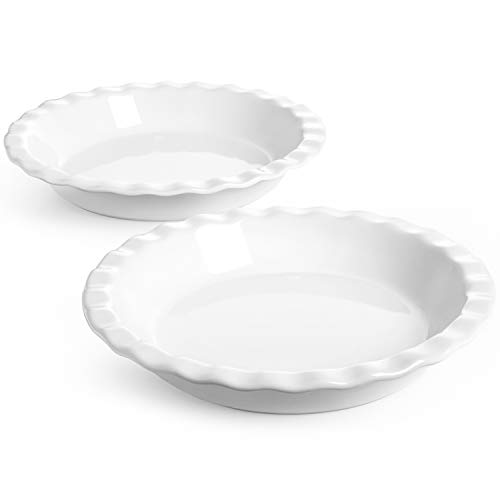 LE TAUCI Ceramic Pie Pans for Baking
- A Versatile Dish You Worth It: 9 inch…
- Wave Edge Design: Whether you’re making a quiche…
- Ceramics Is A Healthier Choice Than Metal Bakeware:…
| Product | Key specs | |
|---|---|---|
| MORA Ceramic Pie Pan for Baking | IT’S TIME TO HIT PAUSE AND BAKE: This… Our pan is designed with you in mind… CERAMIC WITH 20% STRONGER PALADIN CLAY: Only we… | Check price |
| MORA Ceramic Pie Pan for Baking | IT’S TIME TO HIT PAUSE AND BAKE: This… Our pan is designed with you in mind… CERAMIC WITH 20% STRONGER PALADIN CLAY: Only we… | Check price |
| LE TAUCI Ceramic Pie Pans for Baking | A Versatile Dish You Worth It: 9 inch… Wave Edge Design: Whether you’re making a quiche… Ceramics Is A Healthier Choice Than Metal Bakeware:… | Check price |
 Yamteck 10×2in Deep Ceramic Pie Pan with Yamteck 10×2in Deep Ceramic Pie Pan with | 【HEALTHY FIRST: Premium Lead & Cadmium-Free Ceramic】Made from… 【Secure Dual Handles - Ergonomic & Heat-Proof Grip】Featuring… 【Deep 2-Inch Design - Perfect for Pies &… | Check price |
As an Amazon Associate we earn from qualifying purchases at no extra cost to you.
Best ceramic pie dishes by baking situation
- Best overall: Emile Henry Modern Classics Pie Dish, approximately 9 inches across and about 2 inches deep.
- Best premium option: Le Creuset Heritage Pie Dish, a thick glazed stoneware dish with strong heat retention and a broad fluted rim.
- Best for deep-dish pies: A 10-inch glazed stoneware pie dish measuring roughly 2 1/2 inches deep.
- Best for frequent family baking: A dishwasher-safe 9-inch stoneware dish with a simple, unpainted rim and an interior diameter close to 8 1/2 inches.
- Best for custard and quiche: A lighter, smooth-sided ceramic dish with an interior diameter of 8 to 8 1/2 inches, which helps a thick filling set without requiring an oversized crust.
Head-to-head comparison
The table below compares the specifications that matter more than decorative color. Dimensions vary slightly by production run, so use them as practical buying ranges rather than precision engineering measurements.
| Dish type or model | Typical interior diameter | Typical depth | Approximate capacity | Heat behavior | Dishwasher safety | Best use |
|---|---|---|---|---|---|---|
| Emile Henry Modern Classics Pie Dish | 8 1/2 to 9 inches | About 2 inches | 5 to 6 cups | Thick ceramic; steady, even heating | Generally dishwasher-safe | Standard fruit and cream pies |
| Le Creuset Heritage Pie Dish | About 9 inches | About 2 inches | 5 to 6 cups | Dense stoneware; excellent heat retention | Generally dishwasher-safe | Regular baking and serving |
| 10-inch deep stoneware dish | 9 1/2 to 10 inches | 2 1/4 to 2 1/2 inches | 7 to 8 cups | Slow to heat; holds heat for a long time | Usually, but check the maker’s instructions | Deep-dish apple, chicken, and pot pies |
| Lightweight glazed ceramic dish | 8 to 8 1/2 inches | 1 1/2 to 2 inches | 4 1/2 to 5 1/2 cups | Heats more quickly; less residual cooking | Often dishwasher-safe | Custard pies and quiche |
| Decorative fluted stoneware dish | 8 to 9 inches | About 2 inches | 5 to 6 cups | Moderate to high heat retention | Varies by glaze and decoration | Table presentation and occasional baking |
Emile Henry Modern Classics: best balance for most pies
Emile Henry’s ceramic pie dish is a strong all-purpose choice because its relatively thick ceramic body heats gradually and stays hot after the oven temperature drops. That behavior is useful for fruit pies: the bottom crust has time to firm while the filling continues cooking evenly.
Its fluted rim gives a rolled crust something to grip, and the glazed interior releases baked filling more easily than unglazed clay. The dish is also attractive enough to serve from, reducing the need to transfer a fragile pie to another plate.
Choose this style for 9-inch recipes written for a conventional pie plate. Be aware that the interior diameter may be slightly smaller than the outside diameter. A recipe calling for a 9-inch pie plate usually refers to the inside measurement, so check the usable interior before filling it to the rim.
Le Creuset Heritage: best premium stoneware option
The Le Creuset Heritage Pie Dish is aimed at buyers who want a substantial, presentation-ready dish for frequent baking. Its dense stoneware construction retains heat well, which supports crisp edges and a thoroughly heated filling. The broad rim is helpful when crimping dough or carrying a hot pie with oven mitts.
This type of dish is especially well suited to apple, cherry, pumpkin, and chicken pot pies. It is less ideal when you want the fastest possible browning, because thick stoneware takes longer to come up to temperature than a thin metal pan. For a particularly pale bottom crust, preheat a baking sheet and place the ceramic dish on it; the hot sheet supplies additional heat from below.
The trade-off is weight. A full 9-inch stoneware pie can weigh several pounds before serving utensils are added. Make sure your oven rack is fully extended and supported before removing it.
Why ceramic changes crust browning
Ceramic and stoneware conduct heat more slowly than aluminum or steel. That can produce an evenly baked crust, but it also means the bottom may brown later. Three factors make the biggest difference:
- Dish thickness: Thick stoneware holds heat impressively but needs a longer preheat. Thin ceramic responds faster and is easier to use for custard-based pies.
- Interior color: A pale or white interior makes it easier to inspect browning around the sides. A dark glaze can make a baked crust appear less browned than it is.
- Contact with the rack: A ceramic dish sitting directly on a fully preheated rack browns more predictably than one placed on a cold sheet pan.
For a double-crust fruit pie, bake according to the recipe but consider adding 5 to 10 minutes if the bottom remains pale and the filling is already hot. For custard pies, avoid extending the bake solely to darken the crust; the filling can overcook while the rim continues browning. A pre-baked crust or a metal baking sheet underneath is usually the better adjustment.
Interior diameter matters more than the label
A dish described as “9-inch” may measure 9 inches across the outside rim while providing only 8 1/2 inches of usable interior space. That difference changes capacity by more than many shoppers expect.
For a rough comparison, a standard 9-inch pie dish holding about 5 1/2 cups has enough room for most pastry recipes. A 10-inch deep-dish model holding 7 1/2 cups provides approximately 36% more filling capacity. That extra space is valuable for tall apple pies or savory fillings, but a standard recipe may look shallow in it and cook faster at the edges.
If you are replacing an existing pan, measure three points: the inside width from rim to rim, the depth from the base to the top edge, and the distance between the outer rim and the actual baking surface. Match the interior measurements, not the marketing diameter.
Decision matrix: which ceramic pie dish fits your kitchen?
| Your situation | Look for | Recommended direction | Why |
|---|---|---|---|
| Occasional baker with limited storage | 9-inch size, moderate depth, serving-friendly rim | Emile Henry or similar standard stoneware | Handles common recipes without taking up deep cabinet space |
| Weekly fruit-pie baker | Thick body, durable glaze, broad rim | Emile Henry or Le Creuset | Better heat retention and easier handling over repeated use |
| Deep-dish and pot-pie cook | 10-inch interior and at least 2 1/4-inch depth | Deep glazed stoneware | Reduces overflow from generous fillings |
| Custard, pumpkin, or quiche specialist | Smooth interior and moderate depth | Lightweight 8- to 9-inch ceramic | Helps the center cook before the rim becomes too dark |
| Mostly dishwasher user | Plain glazed surface and explicit dishwasher approval | Dishwasher-safe stoneware | Fewer grooves and painted details to protect during cleaning |
Dishwasher safety and long-term ownership
Many modern glazed ceramic pie dishes are dishwasher-safe, but “dishwasher-safe” does not mean immune to every form of wear. Repeated detergent exposure can gradually dull decorative finishes, and tight contact with plates or cookware can chip the rim. Hand-wash dishes with metallic trim, hand-painted decoration, or an unglazed decorative edge unless the manufacturer specifically approves machine cleaning.
The rim is usually the first area to show damage because it contacts oven racks, sink surfaces, and serving knives. Do not cut directly into the pie with a metal knife if preserving the glaze matters. Silicone or nylon serving tools reduce scratching, although they may not cut through a crisp crust as neatly.
Never move a very cold ceramic dish directly into a fully heated oven unless the manufacturer says it is designed for that use. Thermal shock can crack even high-quality stoneware. Likewise, place a hot dish on a dry trivet rather than a wet countertop, and allow it to cool before washing.
How to get better results from any ceramic pie dish
- Check the interior size. Confirm that the dish matches the recipe’s usable diameter and depth.
- Preheat completely. Give the oven time to reach temperature; ceramic absorbs heat and can make a rushed bake less predictable.
- Use a preheated sheet pan when the bottom crust matters. This adds direct heat beneath the ceramic without changing the filling recipe.
- Shield the rim if needed. A foil ring or reusable pie shield prevents the exposed edge from browning before the center is finished.
- Cool before cleaning. Let the dish come down gradually to reduce thermal stress and protect the glaze.
For most households, a 9-inch glazed ceramic dish with a 5- to 6-cup capacity is the safest purchase: it fits standard recipes, retains enough heat for a well-set filling, and serves directly at the table. Choose a heavier Emile Henry or Le Creuset style when crust consistency and durability matter most; choose a deeper 10-inch stoneware dish when generous fillings are the priority.








Write Your Review
No reviews yet. Be the first to share your experience!