
Our Short List of 3
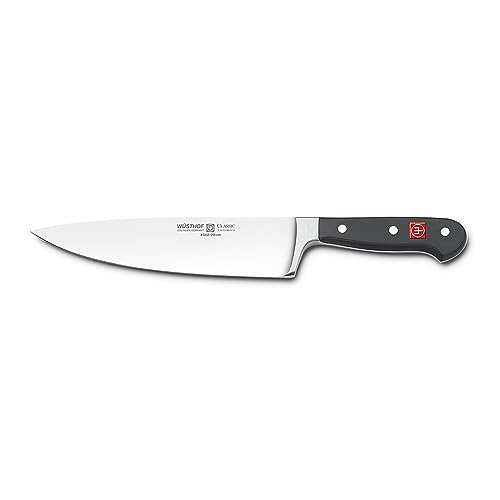
- Best for: A single do-everything knife for a home kitchen
- Blade length: 8 inches
- Model: 4582-7/20
- Construction: Forged from a single piece of high carbon stainless steel
- Rockwell hardness: 58 HRC

- Best for: Cooks who want forged steel with a shaped, palm-filling grip
- Blade length: 8 inches
- Model: 1040330120
- Construction: Forged from a single block of high carbon stainless steel
- Rockwell hardness: 58 HRC

- Best for: Homes that bake or buy crusty bread every week
- Blade length: 9 inches
- Model: 4152
- Edge: Double-serrated
- Construction: Forged
All 5 Picks at a Glance
| Product | Specs | Action |
|---|---|---|
| WÜSTHOF Classic 8 Inch Chef’s Knife |
| Check price on Amazon |
| WÜSTHOF Classic Ikon 8 Inch Chef’s Knife |
| Check price on Amazon |
| WÜSTHOF Classic 9 Inch Double Serrated Bread Knife |
| Check price on Amazon |
 WÜSTHOF Classic 3.5 Inch Paring Knife |
| Check price on Amazon |
 WÜSTHOF Gourmet 3 Inch Paring Knife |
| Check price on Amazon |
Key takeaways
- Five individual Wusthof knives compared by line and job: Classic and Classic Ikon chef's knives, a double-serrated bread knife and two paring knives.
Buying a Wusthof knife is really two decisions wearing one label. First you pick a line, because Classic, Classic Ikon and Gourmet knives leave the same Solingen factory with different construction, different steel hardness and very different weight in the hand. Then you pick the blade shape that matches the work you actually do every week. Get the line wrong and even the right shape feels off; get the shape wrong and the finest forged steel sits in the drawer.
This roundup is for home cooks who want to buy Wusthof one knife at a time rather than in a block set. Every pick below is a single knife sold on Amazon, chosen from the name, model number and specifications printed on its product page, and the five cover the three jobs a kitchen asks for daily: board work, bread and small in-hand tasks.
Quick Picks
As an Amazon Associate we earn from qualifying purchases
| Product | Best for | Key spec from title |
|---|---|---|
| WÜSTHOF Classic 8 Inch Chef’s Knife | The one-knife kitchen | Forged blade, 58 HRC, 8-inch edge |
| WÜSTHOF Classic Ikon 8 Inch Chef’s Knife | Cooks who prize balance and grip comfort | Double bolster, contoured handle |
| WÜSTHOF Classic 9 Inch Double Serrated Bread Knife | Crusty loaves and sandwich prep | Double-serrated edge, 9-inch blade |
| WÜSTHOF Classic 3.5 Inch Paring Knife | Forged precision for small jobs | Forged blade, 58 HRC, 3.5-inch edge |
| WÜSTHOF Gourmet 3 Inch Paring Knife | A light second knife for detail work | Laser-cut blade, 56 HRC, 3-inch edge |
How to Choose
Forged or laser-cut decides weight and feel
Wusthof builds its Classic and Classic Ikon blades by forging a single piece of steel, a process the maker counts at more than forty steps, while Gourmet blades are laser-cut from sheet steel in far fewer steps. Forging adds a bolster and real heft, which helps the knife push through dense squash and root vegetables with less effort from your arm. Laser-cut blades skip the bolster, so they feel quicker and lighter during long sessions of slicing. Neither method is a defect or a shortcut; they are two answers to the same question. Decide by picking up your current knife and noticing whether you wish it were heavier or lighter mid-task.
Read the hardness number before the marketing words
Every Wusthof listing states a Rockwell hardness, and that number predicts daily behavior better than any adjective on the page. Classic and Classic Ikon blades are tempered to 58 HRC, so the edge resists rolling and stays aligned longer between sharpenings, though it asks a little more patience on a stone. Gourmet blades sit at 56 HRC, which makes them slightly softer, quicker to bring back on a honing steel and a bit more forgiving of rough board habits. If you hone weekly and sharpen rarely, the harder forged edge suits you. If you would rather touch up often and sharpen fast, the softer Gourmet steel is the honest match.
Match blade length to your board and your hands
An 8-inch chef’s knife is the default because it rocks smoothly, keeps knuckles clear of the board and still turns without catching on a standard cutting board. Cooks with small hands or a crowded counter sometimes do better with a 6-inch blade, but no shorter chef’s knife appears here because Wusthof’s 8-inch listings are the ones with complete specifications on Amazon. Paring knives split the other way: 3.5 inches gives leverage for trimming and peeling in the hand, while 3 inches stays nimble for hulling, segmenting and garnish work. Measure your board before ordering; a 9-inch bread knife needs room to travel.
Handles are a safety spec, not a style choice
The Classic line uses a straight synthetic handle pinned with three rivets, a shape that stays predictable when your hands are wet or greasy. Classic Ikon swaps that for a contoured handle with a double bolster, which fills the palm and shifts the balance point, suiting cooks who use a relaxed grip through long prep. Gourmet handles are synthetic as well, lighter and simpler, with the same riveted construction. All three resist fading, heat and impact according to their listings, and all three are hand-wash only. If you can, match the handle family to the knife you already reach for without thinking.
The 5 Best Options
WÜSTHOF Classic 8 Inch Chef’s Knife
- Best for: A single do-everything knife for a home kitchen
- Blade length: 8 inches
- Model: 4582-7/20
- Construction: Forged from a single piece of high carbon stainless steel
- Rockwell hardness: 58 HRC
A single do-everything knife for a home kitchen
The forged weight tires smaller hands during long prep; confirm the 8-inch size suits your board before ordering.
If a kitchen gets one Wusthof, this is the one most buyers mean. The Classic chef’s knife is forged from a single piece of high carbon stainless steel with a full tang and the line’s familiar triple-riveted handle, so it carries enough weight to work through a chicken or a butternut squash without feeling like a cleaver. Its 8-inch edge covers rocking herbs, slicing onions and portioning meat in one tool. Choose it as the anchor purchase, then add specialty blades around it later instead of replacing it.
WÜSTHOF Classic Ikon 8 Inch Chef’s Knife
- Best for: Cooks who want forged steel with a shaped, palm-filling grip
- Blade length: 8 inches
- Model: 1040330120
- Construction: Forged from a single block of high carbon stainless steel
- Rockwell hardness: 58 HRC
Cooks who want forged steel with a shaped, palm-filling grip
The contoured handle locks in one grip style; cooks who choke far up on the blade may prefer the straighter Classic handle.
The Classic Ikon keeps the same forged 58 HRC steel as the Classic and changes everything your hand notices. A double bolster gives the knife professional-style heft at both ends of the handle, and the contoured black grip fills the palm instead of presenting flat sides. Cooks who find the standard Classic handle blocky, or who prep for an hour at a stretch, usually land here. It performs the same jobs as its sibling, so the decision between them is honestly about grip shape and balance rather than cutting ability.
WÜSTHOF Classic 9 Inch Double Serrated Bread Knife
- Best for: Homes that bake or buy crusty bread every week
- Blade length: 9 inches
- Model: 4152
- Edge: Double-serrated
- Construction: Forged
Homes that bake or buy crusty bread every week
Serrated edges cannot be maintained with a standard honing steel; plan on specialist sharpening when it finally dulls.
A chef’s knife crushes a good loaf; this blade exists so you stop doing that. The Classic bread knife carries serrations within its serrations, a double-serrated edge that bites through crackling crust and then draws through the soft interior without tearing it. At 9 inches it spans wide sandwich loaves and rustic boules in a single stroke, and the forged Classic construction means it shares the handle and steel of the line’s chef’s knife. It also earns its keep on tomatoes, melons and roasted meats with crisped skin.
WÜSTHOF Classic 3.5 Inch Paring Knife
- Best for: In-hand peeling, trimming and garnish work with forged durability
- Blade length: 3.5 inches
- Construction: Forged
- Rockwell hardness: 58 HRC
- Handle length: 3.5 inches
In-hand peeling, trimming and garnish work with forged durability
It is a specialist, not a starter knife; bought alone it will not handle board work, so budget for a chef’s knife as well.
Small work punishes a big blade, and this is the forged answer to it. The 3.5-inch paring knife handles peeling, trimming fat, deveining shrimp and cutting garnishes in the hand, where an 8-inch chef’s knife becomes clumsy and risky. Because it is a true Classic, the blade is forged and tempered to 58 HRC with the same steel as the line’s larger knives, so it holds an edge through daily detail work instead of needing constant touch-ups. Pair it with either chef’s knife above and most home prep is covered.
WÜSTHOF Gourmet 3 Inch Paring Knife
- Best for: A light, easy-handling paring knife for everyday detail tasks
- Blade length: 3 inches
- Model: 1025048208
- Construction: Laser-cut (non-forged)
- Rockwell hardness: 56 HRC
A light, easy-handling paring knife for everyday detail tasks
The softer 56 HRC edge needs honing more often than the forged Classic paring knife; keep a steel within reach.
The Gourmet paring knife is the lighter, simpler route into the brand for small jobs. Its blade is laser-cut rather than forged and tempered to 56 HRC, which makes it quick to hone back to sharp and easy to steer around strawberries, citrus segments and cheese. There is no bolster and little weight to manage, so younger or less confident cooks often find it less intimidating than the forged Classic paring knife. As a second small knife in a busy kitchen, or a first Wusthof for someone building up gradually, it makes a sensible case.
Which One Fits Your Situation
You are buying your first and only Wusthof
Start with the Classic 8 Inch Chef’s Knife and stop there for now. It covers the widest range of daily work, its forged build holds up for years, and every later purchase can be judged against it. Add the bread knife or a paring knife only when a real task keeps annoying you.
Your hands ache during long prep sessions
Look at the Classic Ikon 8 Inch Chef’s Knife first. The contoured handle and double bolster change how the weight sits in your palm, which matters more over an hour of chopping than any steel specification. If the ache comes from sheer weight instead, the lighter Gourmet paring knife shows how the laser-cut line feels before you commit to a bigger blade.
Bread day is a weekly event at your house
The Classic 9 Inch Double Serrated Bread Knife is the specialist your loaves have been missing. Its double-serrated edge starts cuts on hard crust without skating and finishes soft interiors without shredding them. Keep your chef’s knife for everything else and let each blade do the work its edge was shaped for.
You keep reaching for the big knife to peel and trim
Either paring knife fixes that habit; the choice is about upkeep. Pick the Classic 3.5 Inch Paring Knife if you want forged steel that holds an edge longer, or the Gourmet 3 Inch Paring Knife if you prefer a lighter blade you can hone back quickly. Both are safer than a chef’s knife for in-hand work.
Common Mistakes
- Buying a block set when only two of its slots match the cooking you actually do, then never using the rest.
- Comparing Wusthof lines by name alone and missing that Classic is forged at 58 HRC while Gourmet is laser-cut at 56 HRC.
- Running any of these knives through a dishwasher, which dulls the edge and damages the handle despite the steel being stainless.
- Honing a serrated bread knife on a standard steel, which does nothing for its teeth and can damage the rod.
- Storing loose knives in a drawer, where edges knock against other tools and hands reach in blind.
Frequently Asked Questions
What is the real difference between Wusthof Classic and Gourmet?
Construction and hardness. Classic knives are forged from a single piece of steel and tempered to 58 HRC, giving them a bolster, more weight and a longer-lasting edge. Gourmet knives are laser-cut from sheet steel at 56 HRC, so they are lighter, simpler and quicker to hone, with no bolster. Both lines are made in Solingen, Germany.
Is the Classic Ikon worth choosing over the regular Classic?
Only if the handle decides it for you. Both chef’s knives use forged steel at 58 HRC with an 8-inch blade, so cutting performance is closely matched. The Ikon adds a double bolster and a contoured grip that many cooks find more comfortable over long sessions. If the standard Classic handle already feels natural, there is little reason to switch.
How should these knives be washed and stored?
Wash each knife by hand in warm water, dry it straight away with a towel and put it back in a block, on a magnetic strip or in a blade guard. Dishwashers knock edges against racks and expose handles to harsh cycles. A honing steel used regularly keeps straight edges aligned between sharpenings.
Can the double-serrated bread knife be sharpened at home?
Not with the tools most kitchens own. A honing steel cannot reach between serrations, and a flat stone only touches the teeth unevenly. Wusthof’s double-serrated edge is designed to stay effective for a long time, and when it finally fades, a professional sharpener with the right equipment is the practical route.
More from Amazon
Programs that pair well with the guide above. Offers and eligibility are set by Amazon and may change.
Set up recurring deliveries of everyday items on eligible products. Terms and savings are set by Amazon.
Explore Subscribe & SaveCollect the home and kitchen items you want in one registry that guests can shop from.
Create a wedding registryFree shipping on eligible items, Prime Video and more. Eligible new members can start with a free trial.
Start a Prime free trialAudiobooks and podcasts to listen to on the go. Eligible new members can start with a free trial.
Try Audible freeAs an Amazon Associate we earn from qualifying purchases.
Write Your Review
No reviews yet. Be the first to share your experience!