
Key takeaways
- Our best versatile knife 2 guide compares four all-purpose kitchen knives on blade steel, handle comfort, and everyday cutting to help you choose well.
A single good knife handles most of what a home kitchen asks for, from dicing onions and slicing tomatoes to trimming meat and chopping herbs. The decision facing most buyers is not whether to own a versatile knife, but which one earns the main slot in the block when several strong designs compete for it. Blade steel, handle comfort, and edge geometry all shape how a knife feels after twenty minutes of prep, not just in the first minute.

This guide compares four all-purpose kitchen knives chosen from the details printed on their Amazon pages, so you can match a blade to your cooking habits and your hand. It suits home cooks who want one dependable knife for daily meals, as well as buyers replacing a tired blade that has lost its edge. As an Amazon Associate we earn from qualifying purchases.
Quick Picks
Our Short List of 3
- Best for: Home cooks who want one dependable knife for daily prep.
- Blade material: high-carbon stainless steel
- Blade length: 8 inches
- Handle: Fibrox non-slip handle
- Construction: stamped
- Best for: Cooks who chop for long stretches and need a comfortable grip.
- Blade material: high-carbon Japanese steel
- Blade length: 8 inches
- Handle: Santoprene handle
- Construction: stamped

- Best for: Buyers who want a German knife with a balanced, secure feel.
- Blade material: high-carbon stainless steel
- Blade length: 8 inches
- Construction: laser-cut, full tang
- Handle: POM handle with three rivets
All 4 Picks at a Glance
| Product | Specs | Action |
|---|---|---|
| Victorinox Fibrox Pro 8-Inch Chef’s Knife |
| Check price on Amazon |
| Mercer Culinary Millennia 8-Inch Chef’s Knife |
| Check price on Amazon |
| WUSTHOF Gourmet 8-Inch Chef’s Knife |
| Check price on Amazon |
 Tojiro DP Gyuto 210mm |
| Check price on Amazon |
How to Choose
Blade Steel and Hardness
Steel decides how long an edge lasts and how much care sharpening demands. Softer German-style stainless sharpens easily and forgives rough handling, while harder Japanese steel holds a keen edge longer but chips more readily if it meets bone or a frozen block. Look at the steel name and hardness figure on the listing rather than trusting a photo. A home cook who sharpens rarely should favor a steel that tolerates a steel rod and a quick hone, while a cook who enjoys maintenance can choose a harder blade and keep it tuned with a whetstone. When in doubt, choose the steel that matches your sharpening habits rather than the hardest one.
Blade Length and Profile
An 8-inch blade suits most home kitchens because it spans a large onion in one stroke yet still turns neatly around a small cutting board. Longer blades cover a roast or a melon in fewer passes, but they feel unwieldy in tight spaces and demand more storage. The profile matters too: a curved belly rocks through herbs, while a flatter edge suits push cuts through vegetables. Measure your board before choosing, since a blade longer than the board forces awkward angles and slows every cut. A blade that matches the board also stores more easily, since it fits the block slot or the magnetic strip without overhang.
Handle Comfort and Grip
A handle that fits your hand matters more than any steel specification, because discomfort appears long before dullness does. Textured, slip-resistant grips help when hands are wet, and a balanced handle keeps the blade from tipping forward or dragging backward. Check the handle material and shape on the listing, and think about whether you grip with a pinch hold or a full handle hold. Heavier handles suit cooks who like weight doing the work, while lighter handles favor quick, repetitive chopping. A handle with a slight palm swell fills the hand without forcing the fingers, and a textured surface keeps the grip secure when cutting wet produce.
Care, Cleaning, and Storage
Knives last longest when cleaning and storage match the maker’s instructions. Some blades tolerate a dishwasher, while others demand hand washing and immediate drying to protect the edge and handle. A blade guard, a magnetic strip, or a slotted block keeps the edge away from other utensils that dull it. Before buying, read the care notes on the listing and decide whether the routine fits your kitchen habits, since a knife that needs more care than you will give it loses its edge far sooner than the listing suggests.
The 4 Best Options
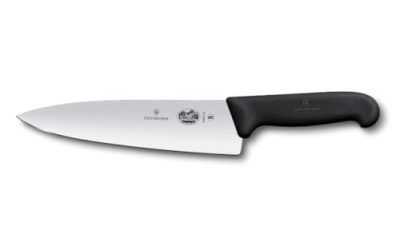
Victorinox Fibrox Pro 8-Inch Chef’s Knife
- Best for: Home cooks who want one dependable knife for daily prep.
- Blade material: high-carbon stainless steel
- Blade length: 8 inches
- Handle: Fibrox non-slip handle
- Construction: stamped
Home cooks who want one dependable knife for daily prep.
The stamped blade needs regular honing to keep its edge keen.
The Fibrox Pro earns its place as a kitchen workhorse by doing ordinary jobs well day after day. Its 8-inch blade moves through onions, peppers, and chicken breasts without drama, and the textured Fibrox handle stays secure when hands are damp from washing produce. This is the knife for a cook who wants a reliable daily tool rather than a showpiece, and its straightforward stamped construction keeps the blade light enough for long prep sessions without tiring the wrist. The blade resists stains and holds an edge through a week of dinners, and its length gives enough reach for a large melon.
Watch out for: The stamped blade needs regular honing to keep its edge keen.
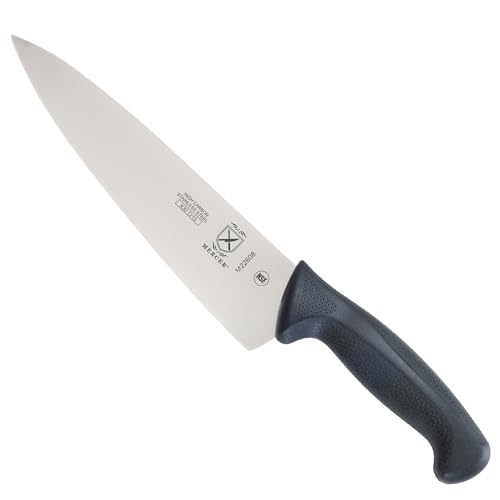
Mercer Culinary Millennia 8-Inch Chef’s Knife
- Best for: Cooks who chop for long stretches and need a comfortable grip.
- Blade material: high-carbon Japanese steel
- Blade length: 8 inches
- Handle: Santoprene handle
- Construction: stamped
Cooks who chop for long stretches and need a comfortable grip.
Hand washing is required, so it needs a minute of care after each use.
Mercer built the Millennia for culinary students and working kitchens, and that purpose shows in its comfortable, sure grip. The Santoprene handle cushions the palm during long chopping sessions, while the high-carbon Japanese steel blade takes a sharp edge and holds it through a full dinner prep. It suits a buyer who values comfort over ceremony and wants a knife that feels like an extension of the hand rather than a tool to fight with. The blade arrives sharp enough to slice a ripe tomato without pressure, and the NSF certification signals a design built for professional kitchens.
Watch out for: Hand washing is required, so it needs a minute of care after each use.
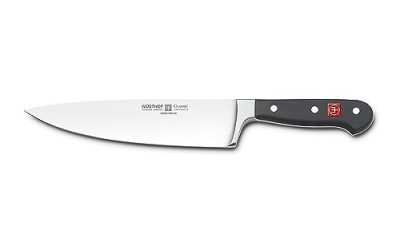
WUSTHOF Gourmet 8-Inch Chef’s Knife
- Best for: Buyers who want a German knife with a balanced, secure feel.
- Blade material: high-carbon stainless steel
- Blade length: 8 inches
- Construction: laser-cut, full tang
- Handle: POM handle with three rivets
Buyers who want a German knife with a balanced, secure feel.
The handle needs hand washing to keep its finish looking its best.
The Gourmet line brings Wusthof’s Solingen steel to cooks who want German engineering without the forged price. Its laser-cut blade runs full tang through a molded handle secured with three rivets, giving a balanced feel that suits rocking cuts and steady slicing alike. The edge arrives ground to a fine angle that bites into tomato skins and herbs cleanly, and the handle includes a small guard that keeps fingers clear of the blade during fast work. The laser-cut blade keeps a consistent thickness from heel to tip, so cuts stay even across the full length.
Watch out for: The handle needs hand washing to keep its finish looking its best.
Tojiro DP Gyuto 210mm
- Best for: Cooks who want a very sharp edge that holds through heavy use.
- Core steel: VG10 cobalt-alloy stainless
- Construction: 3-layer clad
- Blade length: 210 mm
- Hardness: around 60 HRC
Cooks who want a very sharp edge that holds through heavy use.
The hard steel can chip if the blade strikes bone or frozen food.
The Tojiro DP gyuto is the knife experienced cooks recommend to anyone curious about Japanese blades, and the specification sheet explains why. A VG10 cobalt-alloy core hardened to around 60 HRC sits between softer stainless layers, so the edge stays sharp far longer than softer Western steel. The 210 mm blade matches an 8-inch chef’s knife in reach, while the thin, flat profile pushes through produce with little resistance. It rewards a cook who treats it well and sharpens it properly. The bolster-less design lets the whole edge meet the board, so sharpening reaches every millimeter of the blade.
Watch out for: The hard steel can chip if the blade strikes bone or frozen food.
Which One Fits Your Situation
You Cook Daily and Want One Knife
The Victorinox Fibrox Pro suits a daily cook who needs a blade that works hard and asks little in return. Its dishwasher-safe construction and light stamped blade make it easy to use, clean, and store without a ritual. Choose it when the knife will see the board every day and you want reliability above all else.
You Chop for Long Sessions
The Mercer Millennia fits cooks who spend an hour or more prepping at a stretch. Its Santoprene handle cushions the grip and reduces fatigue, while the Japanese steel holds an edge through a full session. Pick it when comfort during long chopping matters more than a forged look. A cushioned grip and a light blade make the difference when the prep list runs long.
You Prefer German Craftsmanship
The Wusthof Gourmet appeals to buyers who trust Solingen steel and want a balanced, full-tang knife with a guarded handle. It suits a cook who likes a knife with some heft and a secure feel during rocking cuts. Choose it when German engineering and a classic shape matter to you.
You Want the Sharpest Edge
The Tojiro DP gyuto serves cooks who value sharpness above all and are willing to sharpen with a whetstone. Its VG10 core holds a fine edge through weeks of use, and the thin profile glides through vegetables. Pick it when you enjoy maintaining a blade and want Japanese cutting performance.
Common Mistakes
- Choosing a blade longer than your cutting board, which forces awkward angles on every cut.
- Picking a hard Japanese steel when you never sharpen, so the edge dulls and stays dull.
- Ignoring handle comfort, then discovering the knife hurts your hand halfway through dinner prep.
- Storing a good knife loose in a drawer, where other utensils nick and dull the edge.
- Washing a hand-wash knife in the dishwasher, which shortens the life of the handle and edge.
Frequently Asked Questions
What makes a kitchen knife versatile?
A versatile knife combines a mid-length blade, a comfortable handle, and steel that balances sharpness with easy care. An 8-inch blade covers most tasks, from dicing onions to slicing meat, without feeling unwieldy. The best choice depends on your hand size, your board, and how often you sharpen.
How do I keep a chef’s knife sharp?
Hone the edge with a steel rod before most uses, and sharpen it on a whetstone or with a professional service when honing no longer restores the bite. Store the blade in a guard, a block, or on a magnetic strip. Avoid cutting on glass, stone, or metal surfaces that dull the edge quickly.
Is a Japanese gyuto better than a German chef’s knife?
Neither is better for every cook. A gyuto holds a sharper edge longer and cuts with less resistance, but its harder steel can chip and needs whetstone care. A German knife sharpens more easily, tolerates rougher handling, and suits cooks who prefer a sturdier, heavier blade.
Should a versatile knife go in the dishwasher?
Only if the listing states dishwasher safety. Many knives, including several in this guide, need hand washing to protect the handle and edge. Even dishwasher-safe blades last longer with hand washing and immediate drying, so treat the dishwasher as a convenience rather than a default.
More from Amazon
Programs that pair well with the guide above. Offers and eligibility are set by Amazon and may change.
Set up recurring deliveries of everyday items on eligible products. Terms and savings are set by Amazon.
Explore Subscribe & SaveCollect the home and kitchen items you want in one registry that guests can shop from.
Create a wedding registryFree shipping on eligible items, Prime Video and more. Eligible new members can start with a free trial.
Start a Prime free trialAudiobooks and podcasts to listen to on the go. Eligible new members can start with a free trial.
Try Audible freeAs an Amazon Associate we earn from qualifying purchases.

Write Your Review
No reviews yet. Be the first to share your experience!