
Key takeaways
- Two Benchmade fixed-blade hunting knives compared on blade size, steel, and sheath, so you can pick the right field knife for dressing game this season.
A hunting knife earns its keep in the worst moments of a hunt, when the animal is down, the light is fading, and the work has to be done cleanly. Benchmade has built its reputation on fixed blades that hold an edge through that work and still feel controlled in cold, wet hands. The choice between its hunting models comes down to blade length, steel, and how the knife carries on a belt, and a wrong pick means a blade that is too long for fine work or too short for the job at hand.


This guide compares two Benchmade fixed-blade hunting knives sold on Amazon, both of them full-size field knives rather than folding everyday-carry models. One is the classic bushcraft-style field knife that has anchored Benchmade’s hunting line for years, and the other is a compact hunter built for precise work, so the pair covers the two ends of the fixed-blade hunting decision.
Quick Picks
As an Amazon Associate we earn from qualifying purchases
| Product | Best for | Key spec from title |
|---|---|---|
| Benchmade 162 Bushcrafter | All-round field and camp work | 4.43-inch blade, full tang |
| Benchmade Hidden Canyon Hunter 15017-1 | Precise dressing and caping work | 2.79-inch blade, compact fixed blade |
How to Choose
Blade length and the work it does
Blade length decides what a hunting knife can do well. A blade around four and a half inches handles the full range of field work, from opening the animal to splitting the breastbone, while a blade under three inches shines at the fine work of caping, detail cuts, and working around the face and legs. A long blade feels clumsy when the cut needs to be careful, and a short blade feels slow when the job needs power. Think about the game the buyer hunts most: deer-sized game suits the longer blade, while small game and careful caping suit the shorter one. The two knives in this guide sit at opposite ends of that choice on purpose.
Steel: edge holding versus ease of sharpening
Benchmade builds its hunting knives from premium stainless steels that hold an edge through a full field-dressing session, and the trade-off is always the same: a harder steel stays sharp longer but takes more effort to bring back on a stone. A hunter who sharpens at camp with a pocket stone will prefer a steel that responds quickly, while a hunter who sharpens at home on a proper setup can live with a harder steel that holds its edge longer. Check the steel on the exact Amazon listing before ordering, because Benchmade sells the same model name in different steels, and the steel is the single biggest factor in how the knife behaves in the field.
Handle grip in wet and cold hands
A hunting knife is used with cold, wet, sometimes bloody hands, so the handle matters as much as the blade. G10 is the standard choice because it stays grippy when wet and does not swell or crack, while stabilized wood looks better and feels warmer but needs more care. The handle should fill the hand without forcing the fingers into one grip, because field dressing asks for many different holds. A handle that is too slim twists under pressure, and one that is too fat tires the hand. Hold the knife in the grip the buyer will actually use, with gloves on if they hunt in gloves.
Sheath, carry, and keeping the edge safe
A fixed blade lives in its sheath, so the sheath is part of the knife. A leather sheath is quiet and traditional, and it rides comfortably on a belt all day, while a molded synthetic sheath holds the knife more firmly and shrugs off rain and blood. Either way, the knife should draw smoothly with one hand and lock in firmly enough that it cannot fall out when the hunter climbs or crawls. Check the belt loop or clip, because a sheath that rides too high digs into the ribs and one that rides too low bangs against the leg.
The 2 Best Options
Benchmade 162 Bushcrafter
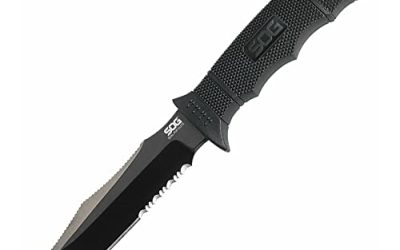
The 162 Bushcrafter is the classic Benchmade field knife, and it is the pick for a hunter who wants one fixed blade to do everything from dressing game to camp chores. Its four-and-a-half-inch blade is long enough for the heavy cuts and short enough to control, and the full tang runs the whole length of the handle, giving it the strength to split a breastbone or baton through a small branch. The G10 handle stays grippy when wet, and the leather sheath rides quietly on a belt. It is the only re-pick in this guide, carried over from the site’s general hunting-knives roundup as the benchmark for the rest.
Specs
- 4.43-inch blade
- 9.2 inches overall
- CPM-S30V stainless steel
- 7.72 oz weight
- G10 handle
- Full tang construction
- Leather sheath with D-ring
Best for: A hunter who wants one full-size fixed blade for dressing game and camp work.
Watch out for: The listing may show the 162 or the 162-1 variant, so confirm which variant the Amazon page lists before ordering. Confirm the listing shows a live offer, since this ASIN was pinned through a catalog mirror and has no direct Amazon crawl.
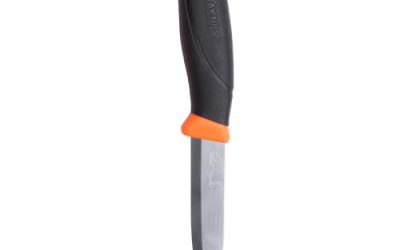
Benchmade Hidden Canyon Hunter 15017-1
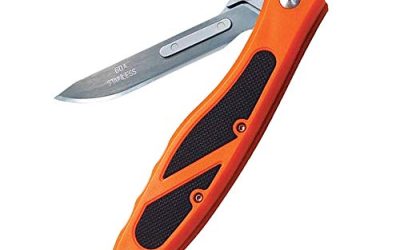
The Hidden Canyon Hunter is the compact end of Benchmade’s hunting line, built for the careful work that a long blade makes clumsy. Its blade sits under three inches, which gives the hunter precise control around the face, legs, and hide, and the knife is light enough to carry all day without noticing it on the belt. The orange G10 handle is easy to spot in grass or leaf litter, which matters when a small knife is set down in the field. It is a specialist rather than an all-rounder, and it earns its place next to the Bushcrafter for hunters who do fine work or who hunt smaller game.
Specs
- 2.79-inch blade
- 6.42 inches overall
- 3.11 oz weight
- Richlite and G10 handle
- Bolatron sheath
- Compact fixed-blade design
Best for: A hunter who needs precise control for dressing, caping, and fine cuts.
Watch out for: The blade steel for this exact listing is unresolved, because the S90V and S30V versions share the 15017 model number, so confirm the steel on the Amazon page before ordering and never assume it from the model name. Confirm the listing shows a live offer, since availability is through third-party sellers only.
Before You Buy: Fixed Blades, Sheaths, and Field Care
A fixed-blade hunting knife is a different tool from a folding knife, and the buyer should understand the differences before ordering. A fixed blade has no pivot, no lock, and nothing to fail, which is exactly why hunters trust it when the work is bloody and the light is going. The trade-off is that it must be carried in a sheath, and it cannot be slipped into a pocket the way a folder can. Check local rules on carrying a fixed blade, because some places restrict blade length or require the knife to be sheathed and out of sight, and a hunting knife that cannot legally travel to the field is useless.
Field care matters as much as the steel. A hunting knife should be cleaned and dried after every use, because blood is corrosive and a blade left dirty overnight will spot or rust, even a stainless one. A light coat of oil on the blade before storage keeps it ready, and the sheath should be dried separately, since a damp leather sheath will hold moisture against the steel. Sharpening is a skill worth learning properly: a steady angle on a stone, checked often, keeps a working edge far better than a hurried pass on a pull-through sharpener. A knife that is sharpened little and often stays sharp all season, while one that is left dull until it will not cut needs a full regrind.
The sheath deserves the same attention as the knife. A leather sheath should be kept clean and occasionally conditioned, and it should never be stored with a wet knife inside. A molded sheath should be checked for cracks and for grit in the retention mechanism, because a sheath that no longer holds the knife firmly is a safety problem. When the hunter sits, climbs, or crawls, the sheath should keep the blade covered and the edge away from the body. If the knife draws roughly or seats loosely, fix the sheath before the next hunt rather than trusting it in the field.
Finally, remember that a hunting knife is a working tool, not a display piece. The best knife in this guide is the one that fits the buyer’s hand, suits the game they hunt, and gets carried on every trip. A knife left at home because it is too heavy, too long, or too awkward to carry is worth less than a smaller knife that is always on the belt. Choose the size first, the steel second, and the looks last, and the knife will earn its place season after season.
Which One Fits Your Situation
You want one knife for everything in the field
Pick the 162 Bushcrafter. Its four-and-a-half-inch blade handles dressing, joint work, and camp chores, and the full tang gives it the strength for heavy cuts. It is the all-rounder of the pair, and it suits a hunter who wants a single fixed blade on every trip rather than a collection.
You do fine work and hunt smaller game
Pick the Hidden Canyon Hunter. Its short blade gives precise control for caping and detail cuts, and its light weight means it rides on the belt all day without being noticed. It is the specialist of the pair, and it suits a hunter who values control over reach in the field.
You hunt in wet, cold conditions
Pick the 162 Bushcrafter for its G10 handle, which stays grippy when wet and cold, and its full tang, which will not flex under a hard cut. Keep the blade clean and oiled after each use, and dry the leather sheath separately so moisture does not sit against the steel.
Common Mistakes
- Assuming the steel from the model name, when Benchmade sells the same model in different steels and the listing is the only reliable source.
- Buying a long blade for fine caping work, then finding it clumsy around the face and legs.
- Choosing a knife by looks instead of by hand fit, then discovering the handle twists under pressure.
- Storing a dirty blade in a damp sheath, which spots or rusts even stainless steel overnight.
- Trusting a loose sheath in the field instead of fixing the retention before the next hunt.
Frequently Asked Questions
What size blade is best for deer hunting?
A blade around four to four and a half inches suits deer-sized game, because it is long enough to open the animal and work through joints, yet short enough to control. Shorter blades under three inches excel at caping and fine work but feel slow on heavy cuts. If the budget allows only one, the longer blade is the more versatile choice.
Is CPM-S30V a good steel for a hunting knife?
Yes, it is one of the most popular hunting-knife steels because it holds an edge well and resists corrosion, which matters when the blade works in blood and rain. It takes more effort to sharpen than a softer steel, so a hunter who sharpens at camp may prefer something more forgiving. Always confirm the steel on the exact Amazon listing, since Benchmade sells the same model name in different steels.
Do I need a fixed blade, or will a folder do?
A fixed blade is stronger and simpler, with no pivot or lock to fail, which is why most hunters prefer one for field dressing. A folder is easier to carry in a pocket and legal in more places, but it is harder to clean and weaker under load. For dedicated hunting work, a fixed blade in a good sheath is the better tool, while a folder suits general camp carry.
How do I keep a hunting knife sharp in the field?
Sharpen little and often, with a steady angle on a small stone, rather than waiting until the blade will not cut. A pocket ceramic rod or a compact diamond stone fits in a pack and restores a working edge in minutes. Clean and dry the blade after each use, oil it lightly before storage, and never store a wet knife in its sheath overnight.
More from Amazon
Programs that pair well with the guide above. Offers and eligibility are set by Amazon and may change.
Set up recurring deliveries of everyday items on eligible products. Terms and savings are set by Amazon.
Explore Subscribe & SaveCollect the home and kitchen items you want in one registry that guests can shop from.
Create a wedding registryFree shipping on eligible items, Prime Video and more. Eligible new members can start with a free trial.
Start a Prime free trialAudiobooks and podcasts to listen to on the go. Eligible new members can start with a free trial.
Try Audible freeAs an Amazon Associate we earn from qualifying purchases.
Write Your Review
No reviews yet. Be the first to share your experience!