
Our Short List of 3
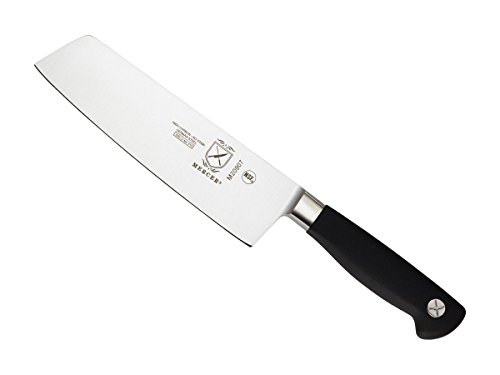
- Best for: First-time nakiri buyers and busy family kitchens that want a forgiving, grippy workhorse.
- Blade length: 7 inches
- Blade edge: Plain
- Steel: Forged high-carbon German stainless, per the listing
- Handle material: Santoprene, non-slip

- Best for: Cooks with a whetstone who want real Japanese sharpness without moving into premium lines.
- Blade length: 6.5 inches (165mm)
- Model: F-502
- Brand: Tojiro
- Type: Nakiri vegetable knife

- Best for: Cooks who want a light, one-piece knife that is simple to clean and hard to damage.
- Blade length: 7 inches
- Model: G-5
- Brand: Global
- Type: Vegetable knife (nakiri)
All 4 Picks at a Glance
| Product | Specs | Action |
|---|---|---|
| Mercer Culinary Genesis 7-Inch Nakiri M20907 |
| Check price on Amazon |
| Tojiro DP 6.5-Inch Nakiri F-502 |
| Check price on Amazon |
| Global G-5 7-Inch Vegetable Knife |
| Check price on Amazon |
 Shun Classic 6.5-Inch Nakiri DM0728 |
| Check price on Amazon |
Key takeaways
- Find a value nakiri that cuts cleanly without overspending: four picks compared on blade length, steel, handle and care from their Amazon listings.
A value nakiri purchase is really a decision about where your money should land: in the steel and the grind, or in decoration you will never feel in a cut. A nakiri is a single-purpose vegetable knife, so a costly handle inlay or a dramatic layered finish adds nothing when you are facing a board of onions, while a thin, well-ground blade at a modest specification quietly does the whole job. The trick is knowing which listed specifications predict clean cutting and which are decoration.
This guide is for home cooks who chop vegetables most days, cooks trying the nakiri shape for the first time without committing to a premium blade, and anyone replacing a wedging, heavy vegetable cleaver. Every pick below was selected from its Amazon listing name and stated specification, favouring sensible steel, honest handles, and care routines a home kitchen can actually keep.
Quick Picks
As an Amazon Associate we earn from qualifying purchases.
| Product | Best for | Key spec from title |
|---|---|---|
| Mercer Culinary Genesis 7-Inch Nakiri M20907 | First nakiri on a sensible budget | 7-inch blade, Santoprene handle |
| Tojiro DP 6.5-Inch Nakiri F-502 | Japanese sharpness for value seekers | 6.5-inch (165mm) blade |
| Global G-5 7-Inch Vegetable Knife | Light one-piece handling | 7-inch vegetable knife |
| Shun Classic 6.5-Inch Nakiri DM0728 | A step-up blade that still earns its keep | VG-MAX core, Damascus cladding |
How to Choose
Blade length and height
Most nakiri blades sit between six and a half and seven inches, and the difference is about board style rather than quality. A 165 millimetre blade suits smaller boards, smaller hands, and cooks who lift the knife fully for each push cut. A seven-inch blade covers long vegetables such as leeks, courgettes, and cabbage halves with fewer strokes. Height matters as much as length: a tall blade keeps your knuckles clear, guides tall piles of sliced produce, and gives you a flat surface for scooping cut vegetables into a pan. Check the listed blade length first, then picture your largest regular vegetable against it before choosing.
Steel and how it sharpens
Value nakiri steel falls into two camps. Forged German-style stainless, like the Mercer Genesis in this list, is tougher and more forgiving: it tolerates a steel honing rod, shrugs off the odd twist in a dense squash, and suits cooks who sharpen occasionally. Japanese blades such as the Tojiro DP and the Shun Classic use harder steel that takes a finer edge and keeps it longer, but asks for whetstone sharpening and a little more care around bones, frozen food, and hard rinds. Neither camp is wrong. Match the steel to the sharpening gear you already own and the routine you will honestly keep.
Handle shape and grip
The handle decides whether a nakiri feels nimble or tiring across a week of dinners. Western handles with soft-grip materials, such as the Santoprene listed on the Mercer, feel secure with wet hands and need no special grip. Japanese-style and D-shaped handles, like the Pakkawood on the Shun, reward a pinch grip and feel precise, but can divide opinion between left- and right-handed users. One-piece stainless handles, as on the Global, clean up beautifully and never loosen, though some cooks find bare metal slippery. If your prep involves wet vegetables for long stretches, grip security beats elegance every time.
Care routine and running costs
A value knife stops being value if its upkeep annoys you into neglecting it. All four picks here are hand wash knives in practice, whatever the listing implies, because dishwashers bang edges against racks and dull them quickly. Budget for the sharpening route at the same time as the knife: a basic combination whetstone serves the Japanese blades, while the German-style blade also accepts a honing steel for quick touch-ups. Storage matters too. A blade guard or magnetic strip protects a thin nakiri edge far better than a loose drawer, where one knock can chip the edge you paid for.
The 4 Best Options
Mercer Culinary Genesis 7-Inch Nakiri M20907
- Best for: First-time nakiri buyers and busy family kitchens that want a forgiving, grippy workhorse.
- Blade length: 7 inches
- Blade edge: Plain
- Steel: Forged high-carbon German stainless, per the listing
- Handle material: Santoprene, non-slip
First-time nakiri buyers and busy family kitchens that want a forgiving, grippy workhorse.
The listing recommends hand washing, so confirm you are happy to keep it out of the dishwasher before ordering.
This is the sensible first nakiri. The listing describes a seven-inch plain-edge blade in forged high-carbon German stainless steel with a Santoprene non-slip handle, a specification aimed at working kitchens rather than display. The steel is forgiving of imperfect technique, the handle stays grippy over a sink full of vegetables, and the size covers everything from onions to cabbage without feeling delicate. Cooks who are unsure whether the flat nakiri profile suits their cutting style can answer that question with this knife, then upgrade later knowing exactly what they want more of.
Tojiro DP 6.5-Inch Nakiri F-502
- Best for: Cooks with a whetstone who want real Japanese sharpness without moving into premium lines.
- Blade length: 6.5 inches (165mm)
- Model: F-502
- Brand: Tojiro
- Type: Nakiri vegetable knife
Cooks with a whetstone who want real Japanese sharpness without moving into premium lines.
Check the seller and the exact model code on the listing before ordering, because DP variants and sizes are easy to confuse.
The Tojiro DP is the value route into genuine Japanese cutting feel. Its 165 millimetre blade is the classic nakiri size, and the DP line is built around a hard stainless core intended to take and hold a fine edge for vegetable work. In practice that means cleaner cuts through onions and herbs, less wedging in dense produce, and longer gaps between sharpening sessions, balanced by a need for whetstone care and a little respect around hard squash skin and frozen food. For cooks who already own a stone and enjoy maintaining an edge, this is where value stops meaning basic.
Global G-5 7-Inch Vegetable Knife
- Best for: Cooks who want a light, one-piece knife that is simple to clean and hard to damage.
- Blade length: 7 inches
- Model: G-5
- Brand: Global
- Type: Vegetable knife (nakiri)
Cooks who want a light, one-piece knife that is simple to clean and hard to damage.
Confirm the handle feel suits you from the listing details, because an all-metal handle is a love-or-leave choice with wet hands.
Global’s G-5 is the one-piece answer to nakiri value: a seven-inch vegetable knife from a long-running Japanese line, with the brand’s characteristic all-stainless construction. The appeal is durability and hygiene. There are no handle scales to loosen, no seams to trap food, and the light, hollow-handled balance makes the blade feel quick during long prep sessions. It suits cooks who dislike maintaining wooden or composite handles and who want a knife that rinses clean and dries fast. The bare metal grip is the known compromise, so think about whether you usually work with wet or oily hands before choosing it.
Shun Classic 6.5-Inch Nakiri DM0728
- Best for: Vegetable-heavy cooks ready for a long-term blade with a finer edge than entry-level options.
- Blade length: 6.5 inches
- Blade material: VG-MAX core with Damascus steel cladding, per the listing
- Handle material: Pakkawood
- Blade edge: Plain
Vegetable-heavy cooks ready for a long-term blade with a finer edge than entry-level options.
The hard, fine edge needs whetstone maintenance and care around bones and frozen food, so check that routine fits your kitchen.
The Shun Classic sits at the top of this value list because its specification earns the step up rather than decorating it. The listing states a VG-MAX core with Damascus steel cladding, a 6.5-inch plain-edge blade, and a Pakkawood handle in black. That core steel is the working part: it supports a fine, durable edge for the push-cutting a nakiri is built for, while the cladding protects the core. The D-shaped handle favours a pinch grip and precise work. Buy it if vegetables are the centre of your cooking and you want one nakiri to keep for years.
Which One Fits Your Situation
You have never owned a nakiri
Start with the Mercer Culinary Genesis. Its forgiving steel and non-slip handle let you learn the flat-profile push cut without worrying about chipping a hard edge, and its seven-inch blade covers the full range of home vegetables. If the shape clicks, you will know exactly what a future upgrade should improve.
You already sharpen on a whetstone
Choose the Tojiro DP. Your existing stone unlocks the benefit of its harder Japanese steel, and the 165 millimetre size is the traditional nakiri format for good reason. It rewards the maintenance habit you already have instead of asking you to build a new one, which is where its value really sits.
You want the lowest-fuss ownership
Take the Global G-5. One-piece construction removes handle care from your life entirely, and the light balance suits cooks who prep frequently in short sessions. It is the pick for a busy kitchen where the knife gets used, rinsed, dried, and put away many times a day without ceremony.
Vegetables are most of what you cook
Step up to the Shun Classic. When a nakiri is your main knife rather than an experiment, edge quality and handle comfort repay you at every meal. Its finer edge and pinch-grip handle suit long boards of produce, and its specification is strong enough that you are unlikely to shop for a replacement soon.
Common Mistakes
- Judging a nakiri by its finish or layer count instead of blade length, steel type, and handle fit.
- Buying a hard Japanese blade while owning no way to sharpen it, then blaming the knife as it dulls.
- Using a nakiri on bones, frozen food, or hard rinds, which its thin, flat edge is not built for.
- Putting a thin-edged vegetable knife in the dishwasher, where the edge strikes racks and other cutlery.
- Choosing a seven-inch blade for a tiny board, or a short blade for constant cabbage and leek work.
Frequently Asked Questions
What does value mean in a nakiri knife?
Value means the specification you pay for shows up in the cut: suitable steel, a thin flat profile, and a handle you can hold securely, without paying extra for decoration. A nakiri has one job, vegetables, so money spent on edge quality and grind is never wasted, while ornate finishes add cost without improving a single slice.
Is a 6.5-inch or 7-inch nakiri better?
Neither is better in general. A 6.5-inch blade suits smaller boards, smaller hands, and cooks who lift the knife for each push cut. A seven-inch blade covers long vegetables in fewer strokes and feels steadier on big produce. Choose by your board size and your most common vegetables rather than by chasing the larger number.
Can a nakiri replace a chef’s knife?
For vegetable preparation, largely yes: the flat edge and tall blade handle chopping, slicing, and scooping produce very well. It does not replace a chef’s knife for meat, for rock chopping herbs with a curved belly, or for tasks needing a pointed tip. Most vegetable-heavy cooks end up using the nakiri daily and the chef’s knife as the general backup.
How should a nakiri be sharpened?
Use a whetstone for Japanese blades, keeping the flat profile flat: work the full length of the edge evenly so the profile does not develop a curve over time. German-style stainless also responds to a honing steel between sharpenings. Avoid pull-through gadgets with fixed angles that do not match the blade, because they remove metal unevenly.
More from Amazon
Programs that pair well with the guide above. Offers and eligibility are set by Amazon and may change.
Set up recurring deliveries of everyday items on eligible products. Terms and savings are set by Amazon.
Explore Subscribe & SaveCollect the home and kitchen items you want in one registry that guests can shop from.
Create a wedding registryFree shipping on eligible items, Prime Video and more. Eligible new members can start with a free trial.
Start a Prime free trialAudiobooks and podcasts to listen to on the go. Eligible new members can start with a free trial.
Try Audible freeAs an Amazon Associate we earn from qualifying purchases.
Write Your Review
No reviews yet. Be the first to share your experience!