
Key takeaways
- Best apocalypse knife 2 guide: compare blade steels, lengths, tangs, and sheaths to choose a tough fixed-blade survival knife for emergencies and camp use.
As an Amazon Associate we earn from qualifying purchases.
The search for the best apocalypse knife 2 usually starts with a simple question: if you could only carry one blade when everything else fails, which one would it be? An apocalypse knife is not a kitchen knife, a pocket folder, or a display piece. It is a large, fixed-blade survival knife built to cut, chop, split wood, prepare food, and keep working after days of hard use with little maintenance. This guide explains what actually matters in such a knife, compares the main design choices, and profiles several well-known models so you can pick one that fits your hands, your kit, and your local laws.
What Is an Apocalypse Knife?
The term sounds dramatic, but it describes a practical tool. An apocalypse knife is a full-tang, fixed-blade knife, usually with a blade between five and seven inches long, made from a tough steel that can survive batoning, prying, and chopping without snapping. It is the kind of blade people pack in a bug-out bag, a camp kit, or a vehicle emergency kit because it can do the work of several smaller tools.
Unlike a delicate slicing knife, a survival blade trades some cutting finesse for strength. The spine is thick, often close to five millimetres, so the blade can be struck with a wooden baton to split logs. The tip is sturdy rather than needle-thin, so it survives accidental contact with bone, knots, and hidden nails. The handle is shaped for a secure grip in wet, cold, or gloved hands, and the sheath holds the knife firmly while still allowing a fast, one-handed draw.
It is worth being honest about limits. No knife replaces an axe for felling trees, a saw for precise cuts, or a proper food-preparation knife for fine kitchen work. A good survival knife is a compromise tool: strong enough for heavy chores, handy enough for everyday cutting, and simple enough that there is almost nothing to break. Choose it for that role, and it will serve you well.
How to Choose an Apocalypse Knife
Blade Steel: Toughness First
Steel is the most important choice, and the trade-off is simple. Carbon steels such as 1095 and SK-5 are very tough and easy to sharpen in the field with a basic stone, but they rust if stored wet and need a wipe of oil after use. Stainless steels such as 420HC and VG-10 resist corrosion far better, which matters in damp climates or on a boat, but some budget stainless blades are harder to sharpen and may not hold an edge as long under heavy chopping.
Premium powdered steels such as CPM 3V offer an appealing middle ground: excellent toughness with better edge retention than basic carbon steel. They cost more, and they still need some care, but many experienced outdoors people consider them the best all-round choice for a single do-everything blade. Whatever steel you choose, check how the maker heat-treats it, because two knives in the same steel can behave very differently depending on the hardening process.
Blade Length and Shape
A blade of five to seven inches hits the sweet spot for a survival knife. Shorter blades are easier to carry and control for carving and food preparation, but they struggle with batoning and chopping. Longer blades chop better and reach deeper, but they add weight and can feel clumsy for fine work. If you plan to carry the knife on a belt all day, lean toward the shorter end of the range. If it will live mostly in a pack and come out for camp chores, a six-inch blade is a solid default.
Blade shape matters too. A clip point, with its swept tip, pierces well and is good for detail work. A drop point, with its convex curve down to the tip, is stronger and better for general camp use. A tanto point is very strong at the tip but harder to sharpen evenly. For most buyers, a drop point or a gentle clip point is the most versatile choice.
Full Tang and Handle
A full tang means the steel of the blade runs the full length of the handle in one piece. This is the single most important structural feature in a hard-use knife. Partial tangs and rat-tail tangs can loosen or snap under batoning and prying, which is exactly when you need the knife most. Look for handle scales pinned or bolted through the tang, with no wobble or gaps.
Handle material affects grip more than most people expect. Textured rubber compounds stay grippy when wet and absorb shock, but they can feel tiring during long carving sessions. Micarta and G10 are stable in all weather, resist moisture, and offer a firm grip without feeling sticky. Wood looks beautiful but needs more care and can swell or crack. Try to hold any knife before buying it if you can, because a handle that fits your hand size and grip style matters more than any specification on paper.
Sheath and Carry
A survival knife is only useful if you carry it, and the sheath decides whether you will. A good sheath retains the knife securely, even upside down, yet releases it with one hand. Hard plastic sheaths are durable, weatherproof, and easy to clean, while leather sheaths are quieter and age gracefully but need care to avoid trapping moisture against carbon steel. Nylon sheaths are light and versatile but can wear faster. Check that the belt attachment suits how you carry: a belt loop, a MOLLE-compatible mount, or a scout-style horizontal carry each suit different kits.
Weight and Balance
Most full-size survival knives weigh between seven and twelve ounces without the sheath. A heavier knife chops better but tires your arm and belt over a long day. Balance matters as much as weight: a knife balanced just ahead of the handle feels lively in the hand, while a blade-heavy knife feels powerful for chopping but clumsy for carving. There is no single right answer, so think about how you will actually use the knife most of the time.
Fixed Blade Versus Folding Knife
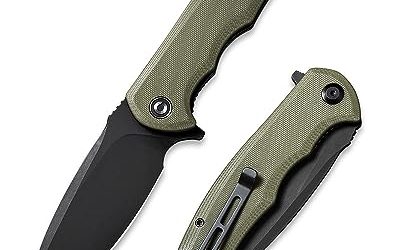
Some buyers wonder whether a strong folding knife could serve the same role. For everyday carry in town, a folder is convenient and discreet. For a survival or apocalypse scenario, a fixed blade wins on every point that matters: there is no pivot to loosen, no lock to fail, no dirt-clogged mechanism, and the blade can be cleaned and dried in seconds. A folder is a fine backup, but it should not be your only blade when reliability is the priority.
Comparison Table: Survival Knife Types
| Knife type | Typical blade | Best for | Main drawback |
|---|---|---|---|
| Heavy camp knife | 6 to 7 inches, thick spine | Batoning, chopping, shelter work | Heavy on the belt |
| General survival knife | 5 to 6 inches, drop point | All-round camp and emergency use | Jack of all trades, master of none |
| Bushcraft knife | 4 to 5 inches, scandi grind | Carving, feather sticks, fine work | Weak for chopping and splitting |
| Compact fixed blade | 3 to 4 inches | Backup blade, light kits | Too small for heavy chores |
| Large chopper | 7 to 10 inches | Clearing brush, heavy chopping | Awkward for detail work, heavy |
Use this table to narrow the field before you look at individual models. If you want one knife to do everything, start in the general survival row. If you already own a good camp knife, a compact fixed blade may be the better second purchase.
Four Well-Known Survival Knives Worth Considering
Cold Steel SRK
The SRK, short for Survival Rescue Knife, has been around for decades and remains one of the most recommended fixed blades for rough use. The standard version uses a six-inch SK-5 carbon steel blade about five millimetres thick, with a textured rubber handle and a hard Secure-Ex sheath. It is known for arriving sharp, for a secure grip in wet conditions, and for handling batoning and camp chores without complaint. The trade-offs are familiar for carbon steel: wipe it dry and oil it after wet use, and expect the blade coating to wear with heavy work. A premium version in CPM 3V steel is also made for buyers who want better edge retention and toughness.
KA-BAR Becker BK2 Campanion
The BK2 Campanion is a famously overbuilt camp knife with a five-and-a-quarter-inch blade made from 1095 Cro-Van steel, a quarter of an inch thick. That thickness makes it nearly indestructible for splitting wood and prying, though it also makes it heavy and less nimble for fine slicing. The handle is a comfortable, grippy design that works well with gloves, and the knife has a large following among bushcraft and camp users who value toughness above all else. Like all 1095 blades, it needs regular oiling to prevent rust.
Gerber StrongArm
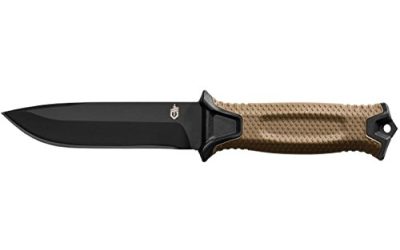
The Gerber StrongArm is a popular mid-size fixed blade with a 420HC stainless steel blade just under five inches long. Its strengths are corrosion resistance, a comfortable rubberised grip, and a versatile sheath that supports several carry positions, including vertical and horizontal belt carry. The 420HC steel is easy to sharpen and resists rust well, which suits users in wet climates or those who want low maintenance. Its main limitation is that the thinner blade and stainless steel do not chop as aggressively as the thicker carbon-steel knives above, so it suits general camp use better than heavy splitting work.
ESEE 6
The ESEE 6 is a six-and-a-half-inch fixed blade in 1095 carbon steel, built for hard use and backed by a famously generous warranty. It has a comfortable canvas Micarta handle, a sturdy moulded sheath, and a blade profile that balances chopping power with control for carving and food preparation. Owners often praise its balance and its ability to take a keen edge with a simple stone. As with other 1095 knives, corrosion care is essential, and the knife is heavier than the Gerber StrongArm, so it suits a pack or a dedicated belt rig rather than discreet carry.
Care and Maintenance
A survival knife only stays reliable if you maintain it. After use, wash the blade with warm water and mild soap, dry it completely, and apply a thin coat of mineral oil or a food-safe blade oil, especially on carbon steel. Never store a carbon steel knife in a damp leather sheath for weeks, because trapped moisture causes rust. Keep the edge touched up with a small sharpening stone or a ceramic rod, and learn to maintain a consistent angle rather than grinding aggressively. Check the sheath regularly for cracks, loose rivets, or worn retention, and replace it before it fails in the field. A few minutes of care after each trip will keep a good knife working for decades.
Legal and Safety Notes
Knife laws vary widely by country, state, and city, and a fixed blade that is legal in one place may be restricted in another. Some areas limit blade length, prohibit concealed carry of fixed blades, or ban certain knife types entirely. Check the rules where you live and where you travel before buying or carrying any survival knife, and transport it in a pack or a locked case when local rules require it. Treat every fixed blade with respect: cut away from your body, keep the edge sheathed when not in use, and never hand a knife to someone blade-first. A survival knife is a tool, and using it safely is part of owning it well.
Frequently Asked Questions
What blade length is best for an apocalypse knife?
For most people, a blade between five and six inches is the best compromise. It is long enough to baton small logs and chop light brush, yet short enough to control for carving and food preparation. Shorter blades are easier to carry, while longer blades chop better but add weight and bulk.
Is carbon steel or stainless steel better for a survival knife?
Carbon steel is tougher and easier to sharpen in the field, but it rusts if neglected. Stainless steel resists corrosion and needs less maintenance, but some stainless blades are harder to sharpen and may not hold up as well to heavy chopping. If you will maintain the knife regularly, carbon steel is often the stronger choice. If you want low maintenance in wet conditions, choose a good stainless steel.
Do I really need a full tang knife?
Yes, for a hard-use survival knife. A full tang runs the steel through the entire handle, which gives the knife its strength for batoning and prying. Partial tangs can loosen or break under exactly the kind of stress a survival knife is meant to handle, so they are a poor choice for this role.
Can one knife really handle chopping, carving, and food preparation?
One knife can do all three adequately, but not perfectly. A five to six inch fixed blade is the best compromise, handling camp chores, carving, and food preparation reasonably well. For heavy chopping, pair it with a small axe or saw. For fine kitchen work, a smaller blade will always be more precise.
How should I store a survival knife long term?
Clean and dry the blade completely, apply a thin coat of oil, and store the knife outside its sheath in a dry place. Storing a carbon steel blade inside a leather sheath traps moisture and causes rust. Check stored knives every few months, re-oil as needed, and keep the edge lightly protected so it stays ready for use.
Conclusion
The best apocalypse knife 2 is not the biggest, the most expensive, or the most dramatic blade you can find. It is the fixed-blade survival knife that matches your hands, your climate, and the work you expect it to do: a full tang, a tough steel, a blade of five to six inches, a secure handle, and a sheath you will actually carry. The Cold Steel SRK, KA-BAR Becker BK2, Gerber StrongArm, and ESEE 6 each take a different approach to that formula, and any of them can serve well if you understand their trade-offs and maintain them properly. Choose carefully, learn to sharpen and care for your blade, and check your local laws before you carry it. A well-chosen survival knife is a quiet investment in self-reliance, and it will be ready whenever you need it.
More from Amazon
Programs that pair well with the guide above. Offers and eligibility are set by Amazon and may change.
Set up recurring deliveries of everyday items on eligible products. Terms and savings are set by Amazon.
Explore Subscribe & SaveCollect the home and kitchen items you want in one registry that guests can shop from.
Create a wedding registryFree shipping on eligible items, Prime Video and more. Eligible new members can start with a free trial.
Start a Prime free trialAudiobooks and podcasts to listen to on the go. Eligible new members can start with a free trial.
Try Audible freeAs an Amazon Associate we earn from qualifying purchases.
Write Your Review
No reviews yet. Be the first to share your experience!