

The best tart pan with removable bottom for most home bakers is a 9-inch anodized-aluminum pan with a loose, well-fitted base, sharply defined fluted sides, and a metal thickness of roughly 1 mm or more.
That combination gives a useful balance of even baking, clean pastry release, manageable size, and enough rigidity to lift a finished tart without bending the rim. The right choice changes if you bake frequently, need dishwasher-safe cleanup, or usually make large fruit tarts.
Our top picks
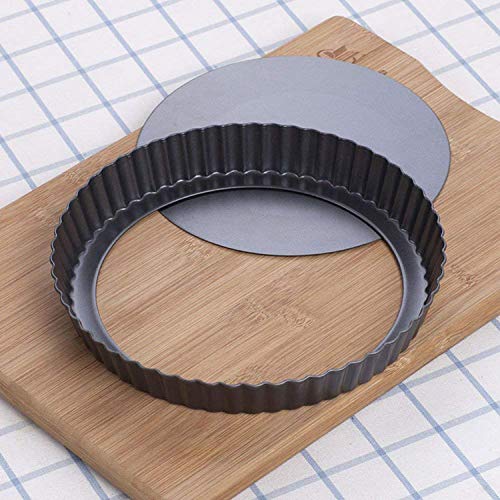 RICHSC-PAN Tart Pan
- 【HIGH QUALITY】: The RICHSC-PAN non-stick pan 9-inch detachable…
- 【DURABLE & RELIABLE DESIGN】: The fluted sides of…
- 【FIT FOR HOT & COLD】: The RICHSC-PAN tart…
 FIDZ PAN Tart Pan 9 Inch Removable
- ❖ Exceptional Quality: If you are looking for…
- ❖ No More Spilling: Tired of messy leakage…
- ❖ Enjoy Secure Baking: Keep your kitchen safe…
 Wilton Excelle Elite Non-Stick
- Dual Delight: Experience baking excellence with our versatile…
- Swift Clean-Up: Elevate your baking game with our…
- Release Perfection: Unlock your culinary creativity using our…
| Product | Key specs | |
|---|---|---|
| RICHSC-PAN Tart Pan | 【HIGH QUALITY】: The RICHSC-PAN non-stick pan 9-inch detachable… 【DURABLE & RELIABLE DESIGN】: The fluted sides of… 【FIT FOR HOT & COLD】: The RICHSC-PAN tart… | Check price |
| FIDZ PAN Tart Pan 9 Inch Removable | ❖ Exceptional Quality: If you are looking for… ❖ No More Spilling: Tired of messy leakage… ❖ Enjoy Secure Baking: Keep your kitchen safe… | Check price |
| Wilton Excelle Elite Non-Stick | Dual Delight: Experience baking excellence with our versatile… Swift Clean-Up: Elevate your baking game with our… Release Perfection: Unlock your culinary creativity using our… | Check price |
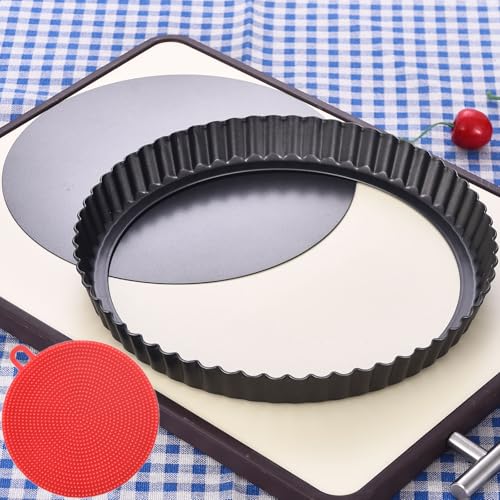 DATANYA Tart Pan 9 Inch Tart Pans DATANYA Tart Pan 9 Inch Tart Pans | 【DURABLE & RELIABLE TART PAN】The DATANTYA non-stick pan… 【REMOVABLE BOTTOM QUICHE PAN】9 inch tart pan with… 【LONG SERVICE TIME PIE PAN】Non-stick coating and removable… | Check price |
As an Amazon Associate we earn from qualifying purchases at no extra cost to you.
Best tart pans with removable bottoms at a glance
| Pan type or example | Typical diameter | Material | Release style | Best for | Typical market range |
|---|---|---|---|---|---|
| Anodized aluminum pan, such as Fat Daddio’s removable-bottom tart pan | 9 inches; 10 inches also common | Light-colored anodized aluminum | Loose removable base | Frequent baking and even browning | $15–$30 |
| Aluminized-steel pan, such as a USA Pan tart pan | 9 inches | Aluminized steel with nonstick coating | Removable base | Sturdy handling and reliable browning | $18–$35 |
| Nonstick steel tart pan, such as a Wilton removable-bottom pan | 9 inches; some sets include smaller sizes | Steel with nonstick coating | Removable base | Occasional baking and lower upfront cost | $10–$22 |
| Professional-style fluted metal pan | 8, 9, 10, or 11 inches | Tinned steel or heavy aluminum | Loose or fitted removable base | Classic pastry work and sharp edges | $20–$60 |
Dimensions and coatings can vary by product version, so check the manufacturer’s current specification before ordering. The figures above are useful comparison ranges rather than a guarantee for every pan in a brand’s line.
Why a 9-inch pan is the safest default
A 9-inch tart pan is large enough for a dessert serving roughly 6 to 8 people, yet small enough to fit comfortably in most ovens and refrigerators. It also works with many standard pastry recipes. A typical 9-inch pan has an interior area of about 63.6 square inches, while a 10-inch pan has about 78.5 square inches—approximately 23% more surface area.
That difference matters. If you pour the same amount of filling into a 10-inch pan, the tart will be shallower and may bake faster. To preserve the same filling depth, increase the recipe by about 1.23 times. For example, a filling that uses 400 ml of cream for a 9-inch tart would need approximately 490 ml for a 10-inch version.
- 8 inches: best for small households, individual experiments, and thicker tarts.
- 9 inches: the most versatile size for everyday recipes.
- 10 inches: better for entertaining, but it needs more pastry and filling.
- 11 inches or larger: useful for large gatherings, though the base becomes harder to support during transfer.
Head-to-head: aluminum, steel, and nonstick coatings
Anodized aluminum: best for frequent bakers
Anodized aluminum pans, including many Fat Daddio’s designs, are light, resist rust, and conduct heat efficiently. Their light-colored surface also makes it easier to judge pastry browning than with a very dark coating. They are particularly suitable for blind-baked shells and delicate shortcrust.
The trade-off is that aluminum can dent if stored under heavy cookware. Many anodized aluminum pans are not dishwasher-safe, and some have a less slick release than a new coated pan. Greasing the flutes and using a parchment round on the base can make release more consistent.
Aluminized steel: best for rigidity
Steel provides more stiffness than thin aluminum, which helps when lifting a full tart. A pan such as a USA Pan model may appeal to bakers who want a firm rim and a coated surface. Steel generally takes longer to heat than aluminum but can give a substantial, stable feel in the oven.
Look for a pan with a substantial rolled rim and a base that does not wobble. The removable disk should sit level rather than rocking inside the sidewall. A rigid pan is especially helpful for wet fillings, which can make pastry shells fragile.
Coated nonstick steel: easiest initial release
Nonstick pans, including common Wilton tart-pan designs, are convenient for occasional bakers. A sound coating reduces the need for aggressive greasing and helps pastry detach from both the base and the flutes.
Nonstick is not permanent. Scratching from knives, metal spatulas, abrasive cleaners, and stacked cookware can shorten its useful life. Once the coating begins to peel, flake, or expose the metal beneath, replacement is preferable to trying to restore it.
What makes a removable bottom reliable?
The removable base is the feature that separates a tart pan from an ordinary cake tin, but not every release mechanism works equally well. Before buying, inspect these details:
- Base fit: the disk should be loose enough to lift but not so loose that batter or liquid filling can seep through.
- Flatness: place the base on a counter and press each edge. It should not rock.
- Sidewall support: the rim should remain circular when lifted, even when the pastry shell is filled.
- Flute definition: moderately deep flutes produce a classic edge without creating thin, fragile pastry ridges.
- Base lip: a small projecting rim makes it easier to push the tart upward, but an oversized lip can complicate serving.
For quiche-like fillings or very liquid mixtures, a removable-bottom tart pan is not automatically leakproof. Set it on a baking sheet, chill the lined shell thoroughly, and use a recipe designed for a pastry crust. A removable base is intended primarily for easy unmolding, not for holding liquid without support.
Fluted edges: appearance versus practicality
Deep, narrow flutes create a more decorative edge, but they also require careful pastry pressing. If the grooves are too sharp or narrow, dough can become thin at the peaks and break during unmolding. Broad, clearly formed flutes are usually the better compromise for beginners.
For a dependable crust, roll the dough about 3 mm thick, press it into the corners without stretching, and trim the rim only after the dough has settled. Chill the lined pan for at least 20 to 30 minutes before baking. This reduces shrinkage and helps the dough hold the fluted profile.
Decision guide by baking situation
| Your situation | Choose | Why | Watch out for |
|---|---|---|---|
| First tart pan and occasional use | 9-inch coated steel | Usually affordable and easy to release | Hand-wash if the label requires it; protect the coating |
| Weekly pastry baking | 9-inch anodized aluminum or heavy aluminized steel | Better long-term value and consistent structure | Grease flutes and avoid metal utensils |
| Large fruit tart for gatherings | 10-inch heavy steel or aluminum | Provides about 23% more surface area than a 9-inch pan | Increase filling and pastry quantities |
| Limited cabinet space | 9-inch pan with a removable base | One size handles most recipes without a nesting set | Store the base inside the pan to prevent loss |
| Dishwasher is essential | Clearly labeled dishwasher-safe coated steel | Offers the simplest cleanup routine | Dishwasher heat and detergent may still reduce coating life |
Dishwasher safety and ownership costs
“Dishwasher-safe” means the pan can generally tolerate dishwasher cleaning; it does not mean the coating will last as long as it would with gentle hand washing. Strong detergent, high heat, and contact with other utensils gradually dull many nonstick finishes.
For the longest service life, let the pan cool, remove the base, wash with warm water and mild detergent, and dry both pieces completely. Do not use steel wool or abrasive powder. If the pan costs $20 and lasts five years with twelve uses per year, its approximate pan cost is only 33 cents per use. Replacing it after a few months because a knife scratched the coating is far more expensive than spending an extra minute washing it by hand.
How to use a removable-bottom tart pan without trouble
- Check the base before lining. Confirm that it is seated evenly and that the sidewall is not bent.
- Grease selectively. Apply a thin layer to the flutes and rim, even when the pan is nonstick.
- Dock or blind-bake as the recipe requires. Use parchment and pie weights rather than piercing excessively, which can let filling leak through.
- Cool fully before unmolding. Warm pastry is fragile; chilled pastry is firmer and easier to release.
- Place the base on a stable object. Set the pan on a jar or small can slightly narrower than the base, then lower the outer ring carefully.
- Support the tart underneath. Do not lift a filled tart by the crust edge alone.
Final verdict
Choose a 9-inch anodized-aluminum removable-bottom pan if you value frequent use, even baking, and a long-lasting uncoated surface. Choose a heavy aluminized-steel pan if rigidity and a firm, coated release are more important. Choose a budget nonstick steel pan for occasional tarts, provided you are willing to hand-wash it and avoid metal tools.
Whichever material you select, prioritize a level removable base, sturdy sidewalls, useful—not excessively sharp—flutes, and clearly stated cleaning instructions. Those construction details affect successful unmolding far more than a decorative finish or an extra size in the box.








Write Your Review
No reviews yet. Be the first to share your experience!