

Key takeaways
- A paring knife does the jobs a chef's knife is too big for: hulling strawberries, peeling an apple in one long ribbon, deveining shrimp.
A paring knife does the jobs a chef’s knife is too big for: hulling strawberries, peeling an apple in one long ribbon, deveining shrimp, trimming a shallot’s root end. What makes a paring knife good is therefore less about raw sharpness than about control. Blade length, tip shape, handle grip and how comfortably the knife rolls in your fingers decide whether you reach for it daily or leave it in the drawer. This guide focuses on those factors across seven options in the 3.25 to 4-inch range.
It is written for home cooks who peel and trim a lot of produce, for anyone replacing a cheap paring knife that has gone dull, and for gift buyers who want something small and useful. Each entry is judged from the specifications printed in the product title: blade length, steel, handle features and whether covers or multiple knives are included. For 2026 shoppers, the short version is that paring knives are cheap enough to own several, so the real decision is which shape and grip you prefer. A budget-tier knife that fits your hand will outperform a premium one that does not, and that is worth remembering before you chase a brand name.
Quick Picks
Our top picks




As an Amazon Associate we earn from qualifying purchases at no extra cost to you.
| Product | Best for | Key spec from the title |
|---|---|---|
| Cuisinart C77TR-3PR Triple Rivet 3.5-Inch | Everyday peeling and trimming | 3.5-inch blade, triple rivet handle, black |
| Henckels Forged Accent 2-Piece Paring Set | Households that want a spare | Two paring knives, German engineered, dishwasher safe |
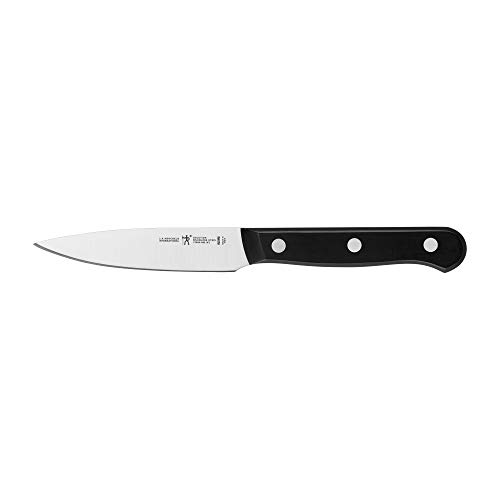
| Henckels Solution 4-Inch Paring Knife | Cooks who like a longer blade | 4-inch blade, dishwasher safe, comfortable grip |
| VITUER 4-Piece Paring Set with Covers | Drawer storage and gifting | Four 4-inch knives with four covers |
| Huusk 3.5-Inch Paring Knife | Peeling and coring with a balanced feel | Japanese stainless steel, ivory white grip |
| Victorinox Swiss Classic 3.25-Inch | Straight-edge precision work | Spear point, non-slip handle, 3.25-inch blade |
| imarku 3.5-Inch Paring Knife | Small hands, fruit prep | Japanese high carbon stainless steel, pakkawood handle |
How to Choose
Pick a blade length that matches your hand
Most paring knives run between 3 and 4 inches. A 3 to 3.5-inch blade gives the best control for peeling in the hand and for delicate work like trimming mushrooms or hulling berries. A 4-inch blade covers more ground on the board, useful for slicing a lemon or segmenting an orange. If you have larger hands, lean longer; if you do most of your work held in your palm, stay at 3.5 inches or shorter.
Choose the tip and edge style deliberately
A spear point offers a straight edge and a strong tip, favored by many professionals for precision cuts. A sheepsfoot or rounded tip is safer but less versatile. Straight edges glide cleanly through produce; serrated paring knives struggle with soft fruit unless the skin is tough. For the occasional tomato, a sharp straight edge still beats a serrated one on a small blade.
Look at handle grip and construction
Triple rivet handles are a sign of durable construction, while non-slip polymer suits wet hands. Pakkawood looks good and resists moisture better than natural wood. Weight balance matters as well: a blade that feels tip-heavy tires the fingers when you peel a bag of potatoes. Prefer a handle you can grip without squeezing hard, because a death grip on a tiny handle is how hand cramps start during a long session of prepping vegetables for a stew or a holiday dinner.
Know where bargain packs cut corners
Multi-packs with covers are handy for drawers and gifts, but the steel quality is often more modest than in a single named model. Plastic covers also tend to scuff over time. If you only keep one paring knife, spending slightly more on a single dependable blade is usually smarter than collecting four lightweight ones that all need sharpening at once.
The 7 Best Options
Cuisinart C77TR-3PR Triple Rivet 3.5-Inch Paring Knife
A straightforward 3.5-inch paring knife from the Triple Rivet Collection, in black. The three rivets in the name point to a handle built to stay attached through years of kitchen use, and the 3.5-inch length sits squarely in the sweet spot for peeling and trimming. It is a no-drama everyday pick.
- Strength: the triple rivet design is named in the title.
- Strength: a 3.5-inch blade balances control and reach.
- Trade-off: the title offers no steel type, so check the maker’s details if that matters.
Skip it if you want a Japanese-style thin edge or a pakkawood handle. Cooks who want matching knives for the rest of the kitchen should also check which Cuisinart series they already own.
Henckels Forged Accent 2-Piece Paring Knife Set
Two paring knives in one package, described as razor-sharp, German engineered, dishwasher safe and comfortable in the grip. The pair appeals to households where more than one person peels vegetables at a time, or where one knife always seems to be in the sink.
- Strength: two knives let you keep one clean while the other is in use.
- Strength: a recognized brand with German engineering stated in the title.
- Trade-off: two small knives cost more than a single basic paring knife.
Skip it if one paring knife is all you will ever use. Buyers who want two different blade lengths should look elsewhere, since the title does not promise that. It also makes less sense for solo cooks, who may never put the second knife to work.
Henckels Solution 4-Inch Paring Knife
A single 4-inch paring knife with the same brand promises: razor-sharp, German engineered, dishwasher safe and a comfortable grip. The longer blade works for slicing garlic, citrus and small cuts on the board, not just in-hand peeling.
- Strength: the 4-inch blade gives extra reach for board work.
- Strength: dishwasher-safe construction adds convenience.
- Trade-off: a longer blade is less nimble for tight in-hand peeling.
Skip it if you mostly peel in your palm or have small hands. A 3.25 to 3.5-inch blade would feel more agile for that work.
VITUER 4-Piece Paring Knife Set with Covers
Four 4-inch German stainless steel paring knives, each with its own cover. The pack is built for people who want spares in the drawer, a gift for a new household, or knives to keep in a lunch bag or picnic basket without nicking anything else.
- Strength: covers protect the edges and your fingers.
- Strength: four knives mean one is always available.
- Trade-off: multi-packs often trade premium steel for quantity.
Skip it if you want a single premium blade or you dislike storing plastic covers. Cooks who sharpen by hand may also not want four edges to maintain.
Huusk 3.5-Inch Paring Knife with Ivory White Grip
A 3.5-inch blade in Japanese stainless steel, with an ivory white grip and a description that stresses balance and ergonomic design. The title mentions peeling and coring, the two jobs a good paring knife does constantly.
- Strength: Japanese stainless steel and a balanced feel are highlighted.
- Strength: the 3.5-inch length suits both in-hand and board work.
- Trade-off: a light ivory grip may show stains over time.
Skip it if you want a darker handle that hides wear or a brand with a long professional track record. People who peel quickly and often may also prefer a handle with an obvious non-slip texture, which the title does not describe.
Victorinox Swiss Classic 3.25-Inch Paring Knife
A compact 3.25-inch paring knife with a straight edge and spear point, plus a black ergonomic non-slip handle. The title also references NSF, which signals suitability for professional kitchens. It is a precision tool for small, careful cuts.
- Strength: a spear point and straight edge are ideal for precise trimming.
- Strength: the non-slip handle helps with wet hands.
- Trade-off: the shorter 3.25-inch blade offers less board reach.
Skip it if you prefer a longer blade for slicing or want a decorative handle. Cooks who like a warm, wooden-style grip will find the plain black polymer handle a little clinical.
imarku 3.5-Inch Paring Knife
Japanese high carbon stainless steel in a 3.5-inch fruit and vegetable knife, with an ergonomic pakkawood handle. It suits home cooks who prep a lot of produce and like a handle that looks warm and resists moisture.
- Strength: high carbon stainless steel is named in the title.
- Strength: pakkawood handle adds style and moisture resistance.
- Trade-off: it asks for more careful hand washing than dishwasher-safe models.
Skip it if you want to run every dish through the dishwasher or prefer a set of several knives. Households that tend to leave knives soaking in the sink should choose a polymer-handled model instead.
Which One Fits Your Situation
You peel a lot in the palm of your hand
The Victorinox Swiss Classic 3.25-Inch and the Cuisinart 3.5-Inch both stay small and nimble. The Victorinox adds a non-slip handle that helps if your hands are often wet.
You want a spare or two in the drawer
The VITUER 4-Piece Set with covers provides spares at an entry tier, while the Henckels 2-Piece Set suits a household that prefers a recognized brand in a smaller bundle.
You work on the cutting board as much as in hand
The Henckels Solution 4-Inch gives more blade length for slicing garlic, citrus and shallots without switching to a larger knife. It also pairs well with a cutting board routine where you trim and slice in the same motion.
You like Japanese styling and warm handles
The imarku 3.5-Inch pakkawood model and the Huusk 3.5-Inch model both lean toward Japanese-style steel and balanced handling.
Common Mistakes
- Buying a long blade for in-hand peeling, then fighting it on every potato.
- Using a paring knife as a pry bar or can opener.
- Choosing a serrated paring knife for soft fruit that needs a clean, straight cut.
- Storing loose knives in a drawer without covers, which damages the edge.
- Forgetting to sharpen small knives because they seem too small to matter, even though a dull blade slips more easily on slick skins.
Specs and Terms Explained
Stamped versus forged
A stamped blade is cut out of rolled sheet steel, while a forged blade is shaped from a heated bar. Forged knives tend to be thicker at the spine and often carry a bolster, so they feel weightier. For a knife this small, extra weight is rarely an advantage, which is why a well-made stamped paring knife can be a perfectly sensible choice. Look for the manufacturing method named in the listing instead of relying on words like premium.
Bolster
The bolster is the thick collar where blade meets handle. It adds balance and keeps fingers from sliding forward, but a full bolster also makes the heel of the edge awkward to sharpen. If you plan to sharpen at home, a half bolster or a bolster-free design is easier to maintain.
Tang
The tang is the part of the steel that continues into the handle. A full tang runs the whole length and is usually held in by rivets, which suits a knife you will lean on while peeling. A partial tang is common on lightweight, inexpensive knives and is fine for light work, but it is the first place a worn handle starts to loosen.
Hardness
Hardness is measured on the Rockwell scale. Harder steel holds an edge longer but can chip if you twist it in a hard fruit pit, while softer steel bends and touches up quickly. Many listings omit the figure, so absence is not a defect; it simply means the steel name and the maker’s reputation have to do the talking.
Decision Table
| If you… | Choose… |
|---|---|
| Want a short, light blade for peeling in the hand | Victorinox Swiss Classic 3.25-Inch Paring Knife |
| Prefer a riveted handle and a single dependable knife | Cuisinart C77TR-3PR Triple Rivet 3.5-Inch Paring Knife |
| Need slightly more blade for slicing small produce on a board | Henckels Solution 4-Inch Paring Knife |
| Want a matched pair so one is always clean | Henckels Forged Accent 2-Piece Paring Knife Set |
| Toss knives into a drawer or a picnic bag | VITUER 4-Piece Paring Knife Set with Covers |
| Like the standard 3.5-inch length with a plain handle | imarku 3.5-Inch Paring Knife |
| Care about handle color and appearance on the counter | Huusk 3.5-Inch Paring Knife with Ivory White Grip |
Care and Storage Tips
- Wash by hand and dry right away. Dishwasher detergent and the knocking of other utensils dull small edges faster than any amount of cutting.
- Cut on wood or plastic boards. Glass, stone and ceramic plates blunt a thin edge within a few uses.
- Keep the tip protected. Covers, a sheath or a slotted block stop the point from snapping or curling in a crowded drawer.
- Do not use it to pry open packaging or twist out fruit pits; the tip is the thinnest part of the blade.
- Touch up the edge on a fine stone or a pull-through sharpener made for small blades, and stop as soon as the knife bites into a tomato skin again.
Who Should Skip a Paring Knife Upgrade
If most of your peeling is large squash, potatoes and carrots, a swivel peeler is quicker and safer than any knife. And if you already own a sharp 3-inch knife that you reach for daily, a new one only helps if the old handle is uncomfortable or the steel will no longer hold an edge.
Related guides
- How To Clean Copper Cookware Without Damaging Tin Lining
- How To Season A Carbon Steel Wok Step By Step
- Carbon Steel Woks For Gas Stoves 14 Inch
Frequently Asked Questions
What is a paring knife used for?
It handles small, detailed work: peeling, trimming, coring, hulling and slicing small fruit or vegetables. Its short blade gives you precision a chef’s knife cannot match, particularly when you hold the produce in your other hand.
How long should a paring knife be?
Between 3 and 4 inches suits most cooks. Shorter blades give more control in hand, while longer blades work better on the board.
Is a spear point better than a rounded tip?
A spear point offers a stronger, more precise tip for trimming and scoring. A rounded tip is gentler but less versatile for detail work.
Should I buy a set or a single paring knife?
A single dependable model is enough for many cooks. A set makes sense if you share the kitchen or want covered spares for a drawer or a gift. Just remember that more knives means more edges to keep sharp.
Write Your Review
No reviews yet. Be the first to share your experience!