

Key takeaways
- When people search for the best knives for chefs, they rarely mean one blade. They mean the tool a working cook leans on for hours: an 8-inch chef's.
When people search for the best knives for chefs, they rarely mean one blade. They mean the tool a working cook leans on for hours: an 8-inch chef’s knife that chops, slices and dices without drama. Professional kitchens tend to favor plain, durable handles, simple maintenance and edges that come back quickly on a stone or honing steel. That priority list differs from a home buyer shopping for looks, and it changes how you should read a product listing. Words like “professional” and “gift” appear in many titles, yet they say little about balance, grind or how a handle behaves after a double shift. Focus on length, steel, handle surface and construction instead.
This guide serves culinary students, line cooks buying their first personal knife, and serious home cooks who want a workhorse. It covers six single chef’s knives and one nine-piece roll-bag set, all judged from the specs in each product title: length, steel, handle type and any stated care notes. Nothing here depends on claims beyond those titles. Treat it as a 2026 shortlist, then think about handle feel and how often you plan to sharpen before you commit.
Quick Picks
Our top picks



As an Amazon Associate we earn from qualifying purchases at no extra cost to you.
| Product | Best for | Key spec from the title |
|---|---|---|
| Victorinox Fibrox Pro 8-Inch Chef’s Knife | Culinary students, busy prep stations | Non-slip TPE handle, dishwasher safe |
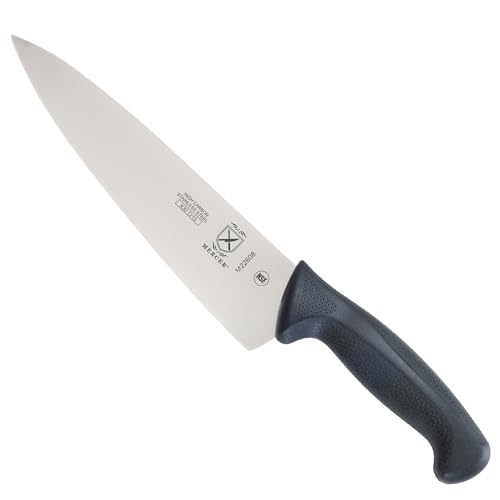
| Mercer Culinary Millennia M22608 8-Inch | Budget-minded line cooks | Black handle, 8-inch chef’s knife |
| Basics Classic 8-Inch Chef’s Knife | Home cooks wanting full tang | Full tang, high carbon stainless, three rivets |
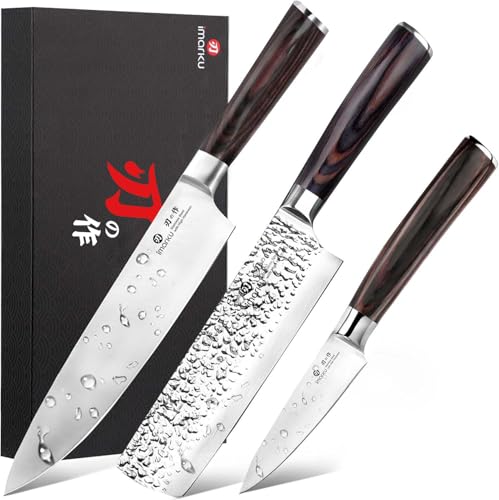
| imarku Japanese 8-Inch Chef Knife | Gift buyers, Japanese-style fans | HC steel, 8 inch |
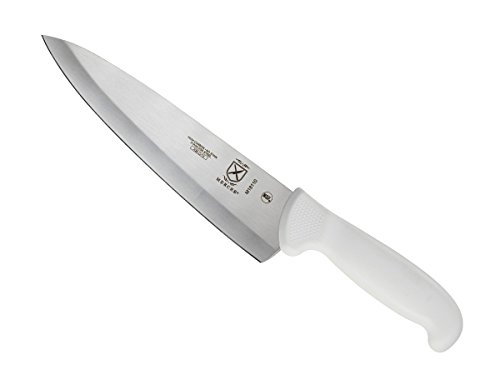
| Mercer Culinary Ultimate White 8-Inch | Kitchens that like white handles | 8-inch chef’s knife, white handle |
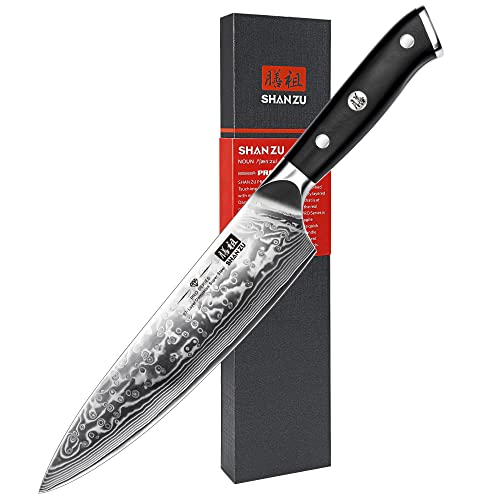
| SHAN ZU 8-Inch Damascus Chef Knife | Buyers who want a patterned blade | Japanese steel, Damascus, high carbon |
| Dfito 9-Piece Set with Roll Bag | Culinary students carrying tools | Roll bag, sharpener, high carbon stainless |
How to Choose
Start with length and weight
An 8-inch blade is the professional default because it handles large vegetables and trimming without feeling unwieldy. Cooks with smaller hands sometimes prefer 6 to 7 inches, while those breaking down big proteins may go to 10. Weight matters as much as length: heavier German-style knives let gravity help, while lighter Japanese-style knives reduce fatigue over a long prep shift. If you can, think about your grip: a pinch grip on the blade rewards a balanced knife, while a handle-heavy grip favors weight toward the back. Anyone buying online without holding the knife should favor the standard 8-inch size, since it is the easiest length to adjust to.
Judge the steel and the edge type
High carbon stainless steel balances sharpness and rust resistance, which suits a kitchen where knives are washed constantly. Softer steels sharpen easily but need honing often; harder steels hold an edge longer but can chip if misused. Damascus patterning is mostly cosmetic and indicates layered steel, so judge the core steel named in the title rather than the surface pattern.
Handle design beats decoration
For long shifts, a non-slip handle is worth more than a pretty one. Textured polymer handles grip well when hands are wet or greasy. Wood and resin handles look better but ask for more care. Check rivets or full tang construction if durability matters, since a loose handle is a safety problem in a busy kitchen.
Know where cheaper knives cut corners
Low-priced chef’s knives often skimp on edge geometry, handle fit and the consistency of the grind. A flat or uneven spine can cause finger discomfort on long prep days. Do not pay extra for gift boxes and engraving if the knife will see daily work, and ignore marketing copy about gifts for family members when your concern is performance. A better use of the same money is a honing steel or a whetstone, which keep any decent blade working like a premium one.
The 7 Best Options
Victorinox Fibrox Pro 8-Inch Chef’s Knife
A staple in professional and culinary-school kits, this listing highlights an ergonomic TPE non-slip handle for chopping, slicing and dicing, and a dishwasher-safe finish. It is built for repetition, and its plain design favors function over display.
- Strength: the non-slip handle suits wet, busy stations.
- Strength: an 8-inch length covers most prep tasks.
- Trade-off: the handle looks utilitarian next to wood or resin options.
Skip it if you want a decorative blade or a patterned finish for display. Cooks who prefer a thin Japanese-style edge may also look elsewhere. Because the listing stresses chopping, slicing and dicing, it is best understood as an all-rounder, not a specialist tool for fine slicing or boning.
Mercer Culinary Millennia M22608 8-Inch Chef’s Knife
The model number and a black handle identify this straightforward 8-inch chef’s knife. The title offers few frills, which is part of the appeal: a no-nonsense workhorse for a student or line cook who wants a reliable cutting tool and does not need extras.
- Strength: a simple, focused design without gimmicks.
- Strength: it fits the standard 8-inch professional size.
- Trade-off: the title lists no steel type or dishwasher guidance, so check care instructions.
Skip it if you want a premium gift presentation or named-steel details on the listing page. Shoppers who like to compare steel grades before buying will find the listing too sparse to decide from.
Basics Classic 8-Inch Full Tang Chef’s Knife
This listing names high carbon stainless steel, full tang construction and three rivets in a silver finish. It suits a home cook who wants verifiable build details at an entry tier, along with a multipurpose blade for everyday chopping and slicing.
- Strength: full tang and three rivets are stated plainly.
- Strength: the 8-inch size handles most tasks.
- Trade-off: a classic look with a metal-toned finish is less distinctive than some alternatives.
Skip it if you need a non-slip polymer handle for a wet, fast station or want a Japanese-style thin grind. Cooks who value a lighter feel during long prep sessions may prefer one of the Japanese-style listings further down.
imarku Japanese 8-Inch Chef Knife
Presented as a Japanese-style 8-inch chef knife in HC steel, this one is pitched partly as a gift. It suits someone who wants a sharp-looking blade for home use, and a person shopping for a parent or friend who enjoys cooking.
- Strength: Japanese-style design aimed at crisp slicing.
- Strength: gift-oriented packaging makes presentation easy.
- Trade-off: the gift emphasis in the title says little about professional durability.
Skip it if you need a blade for heavy commercial use or a handle with a documented non-slip surface. Professionals who spend eight hours at the board will want proof of durability that a gift-focused listing does not supply.
Mercer Culinary Ultimate White 8-Inch Chef’s Knife
Another 8-inch chef’s knife from the same maker, distinguished by its white handle. White handles help in kitchens that follow color-coding for food safety, and they make it easy to see when a knife needs cleaning.
- Strength: the white handle makes cleanliness obvious at a glance.
- Strength: standard 8-inch size fits any prep routine.
- Trade-off: the title gives few spec details beyond length and color.
Skip it if you dislike light handles that can show stains, or you want an ornate blade. Cooks who need detailed steel information in the listing before buying should consult the manufacturer’s page for the missing facts.
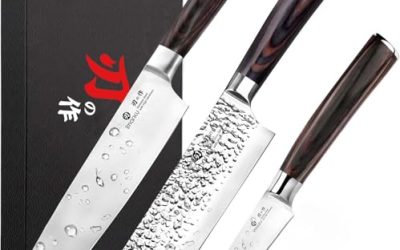
SHAN ZU 8-Inch Damascus Chef Knife
The title pairs Japanese steel and a Damascus pattern with an 8-inch high carbon profile. It appeals to buyers who want a visually striking blade for the home kitchen, and to enthusiasts who enjoy the look of layered steel.
- Strength: the Damascus pattern gives it a distinctive appearance.
- Strength: Japanese steel and a high carbon profile are named upfront.
- Trade-off: patterned blades often cost more attention to dry and care for.
Skip it if you want the plainest, most forgiving workhorse or a dishwasher-friendly tool. Patterned blades reward cooks who dry and store them carefully, and they punish those who leave them wet in a sink.
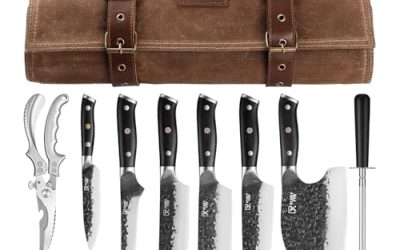
Dfito 9-Piece Chef Knife Set with Roll Bag
The only set here, this nine-piece option includes a roll bag, a sharpener and blue resin handles in high carbon stainless steel. A roll bag is practical for culinary students and catering cooks who travel between kitchens.
- Strength: the roll bag makes the kit portable.
- Strength: the included sharpener supports upkeep.
- Trade-off: a nine-piece set spreads quality across more tools than a single chef’s knife.
Skip it if you already own a favorite chef’s knife and only want to upgrade that one blade. Experienced cooks with strong preferences on blade shape usually do better buying single knives one at a time.
Which One Fits Your Situation
You are starting culinary school
The Victorinox Fibrox Pro 8-Inch is a sensible first knife with a grip suited to wet hands, and the Dfito 9-Piece Set gives you a roll bag for carrying everything to class.
You want a no-frills station knife
The Mercer Culinary Millennia M22608 keeps things simple. Choose the Ultimate White version if a visible handle color helps your kitchen’s hygiene routine. Either way you get the standard 8-inch size that fits pro-style prep without a learning curve.
You want something striking for home
The SHAN ZU Damascus knife delivers a patterned blade, while the imarku Japanese 8-Inch leans toward a gift-friendly package.
You like verifiable build details
The Basics Classic 8-Inch states high carbon stainless steel, full tang and three rivets right in the title, so you know what you are getting before the box arrives. It is a fair pick for a first serious chef’s knife at home.
Common Mistakes
- Choosing a decorative handle for a fast, wet prep station.
- Believing a Damascus pattern automatically means a better blade.
- Buying a set when one great chef’s knife would do more work, and then leaving most of the set in its bag.
- Skipping honing and then blaming the steel for a dull edge.
- Washing every blade in the dishwasher without checking the care guidance.
Specs and Terms Explained
Western versus Japanese edge
Western chef’s knives have a curved belly for rocking and a sturdy blade for heavy work. Japanese-style knives are slimmer and often straighter, favouring push cuts and precise slicing. Neither is superior; choose the motion you actually use.
Damascus pattern
A Damascus pattern is the wavy line on the blade. On many modern kitchen knives it comes from layered steel, but it can also be etched on the surface for looks. The pattern by itself says little about sharpness or durability.
Commercial kitchen certification
Some professional-grade knives carry marks showing that the materials and design suit commercial food service, such as NSF. Look for that mark in the listing if you work in a restaurant or a school kitchen.
Roll bag
A roll bag holds several knives in separate pockets and ties shut. It protects edges during transport and suits cooks who travel between kitchens or classrooms.
Which One Should You Buy?
| If you… | Choose… |
|---|---|
| Want a classic working knife that is easy to maintain | Victorinox Fibrox Pro 8-Inch Chef’s Knife |
| Need a plain, durable station knife | Mercer Culinary Millennia M22608 8-Inch Chef’s Knife |
| Want a full tang design in a low-fuss form | Basics Classic 8-Inch Full Tang Chef’s Knife |
| Prefer a Japanese-style slicing feel | imarku Japanese 8-Inch Chef Knife |
| Want a white handle that makes dirt easy to spot | Mercer Culinary Ultimate White 8-Inch Chef’s Knife |
| Want a patterned blade as a showpiece | SHAN ZU 8-Inch Damascus Chef Knife |
| Need extra knives and a carrying case | Dfito 9-Piece Chef Knife Set with Roll Bag |
Setup and Care Tips
- Use a pinch grip: hold the blade where it meets the handle with thumb and index finger, so the knife stays steady.
- Work on a large wooden or soft plastic board with a damp cloth underneath so it cannot slip.
- Hone before each long shift, and sharpen on a stone when honing no longer helps.
- Wipe the blade between tasks, because acidic and salty foods leave marks.
- Dry and store the knife separately; a tossed-in drawer can chip the edge.
Who Should Skip These
- Home cooks who cut mostly soft vegetables and cooked meat; a simpler knife does the same job.
- Anyone who loses track of small items, because cases and roll bags are easy to misplace.
- People who put everything in the dishwasher, since long cycles harm handles and edges alike.
- Buyers who want a complete set; most options here are a chef knife or a small kit, so a bread knife and a paring knife may still be needed.
Related guides
- How To Clean Copper Cookware Without Damaging Tin Lining
- How To Season A Carbon Steel Wok Step By Step
- Carbon Steel Woks For Gas Stoves 14 Inch
Frequently Asked Questions
Is 8 inches the right chef’s knife size?
It is the most common professional length because it balances reach and control. Smaller hands may prefer 6 to 7 inches.
Do chefs prefer German or Japanese knives?
Both are common. German-style knives are sturdier for heavy chopping, while Japanese-style knives are lighter and slice more precisely. Many cooks end up owning one of each for different jobs.
What does a non-slip handle do?
Textured polymer keeps your grip secure when hands are wet or oily, which reduces slips in a busy kitchen. It also tolerates repeated washing better than many natural materials, which is why it shows up so often in professional settings.
Do I need a sharpener?
Every knife needs maintenance. A honing steel handles daily touch-ups, and a stone or sharpener restores the edge periodically. Sets that include a sharpener, like the Dfito listing, save you a separate purchase.
Write Your Review
No reviews yet. Be the first to share your experience!