

The best popover pan for light and airy popovers is a six-cup pan with deep, widely spaced wells, a pale metal interior, and enough oven tolerance for temperatures around 450°F (232°C); for most home bakers, a heavy aluminized-steel pan offers the best balance of lift, even browning, and durability.
A good popover pan is not simply a muffin pan with larger holes. Popovers need room to expand upward, airflow between the cups, and a surface that releases delicate shells without encouraging excessive browning. The choice usually comes down to whether you value maximum rise, easy release, or long-term resistance to warping and coating wear.
Our top picks
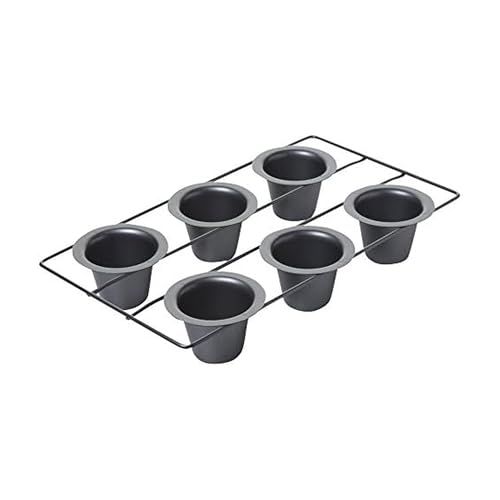 Chicago Metallic 6 Cup Popover Pan
- Heavy-weight aluminized steel construction ensures superior heat distribution
- Perfect for traditional popovers, Yorkshire puddings, and standard…
- Silicone-based non-stick surface ensures easy food release and…
 Chicago Metallic 26121 Professional 12-Cup Non-Stick Mini-Popover
- Each suspended cup measures 2-1/4 by 2 inches…
- Separated cups are linked by crossbars that maximize…
- Built from the same durable metal used in…
 EVODAE Popover Pans Set of 2
- QUALITY Popover Pans, PFOA-PTFE FREE, made from strong…
- SIZE AND SHAPE FOR PERFECT POPOVERS The deep…
- QUANTITY Sold AS A SET OF TWO Popover…
| Product | Key specs | |
|---|---|---|
| Chicago Metallic 6 Cup Popover Pan | Heavy-weight aluminized steel construction ensures superior heat distribution Perfect for traditional popovers, Yorkshire puddings, and standard… Silicone-based non-stick surface ensures easy food release and… | Check price |
| Chicago Metallic 26121 Professional 12-Cup Non-Stick Mini-Popover | Each suspended cup measures 2-1/4 by 2 inches… Separated cups are linked by crossbars that maximize… Built from the same durable metal used in… | Check price |
| EVODAE Popover Pans Set of 2 | QUALITY Popover Pans, PFOA-PTFE FREE, made from strong… SIZE AND SHAPE FOR PERFECT POPOVERS The deep… QUANTITY Sold AS A SET OF TWO Popover… | Check price |
 Epica Bellemain Popover Pan Epica Bellemain Popover Pan | Professional-grade popover pan: This pan is specifically designed… Superior non-stick coating: The high-quality non-stick surface ensures… Excellent rise and fluffy texture: With this popover… | Check price |
As an Amazon Associate we earn from qualifying purchases at no extra cost to you.
Quick comparison of the leading pan types
| Pan type or example | Typical specifications | Best feature | Main compromise | Typical market range |
|---|---|---|---|---|
| Heavy aluminized-steel six-cup pan, such as USA Pan’s popover design | 6 cups; wells about 3.5 to 4 inches deep; roughly 1.5 to 2.5 lb; 450°F or higher | Even heat and strong structure | Coating requires careful cleaning | $25–$45 |
| Cast-aluminum six-cup pan, such as Nordic Ware’s popover pan | 6 cups; deep wells often near 3.5 inches; about 1.5 to 2 lb; commonly rated around 400°F | Excellent heat response and tall shaping | Hand washing is usually recommended | $35–$55 |
| Standard nonstick six-cup popover pan | 6 cups; approximately 3 to 3.5 inches deep; about 1 to 2 lb; commonly 400–450°F | Easy release at a moderate price | Thin metal may brown unevenly or warp | $15–$30 |
| Commercial-style aluminized-steel pan | 6 cups; 3.5 to 4 inches deep; often 2 lb or more; commonly 450°F or higher | Durability and resistance to flexing | May need greasing despite a finish | $25–$50 |
Dimensions and temperature limits vary by production run, so check the manufacturer’s current specification before buying. The useful comparisons are the relative ones: deep cups, generous spacing, rigid construction, and a finish that tolerates frequent high-heat baking.
What produces tall, evenly baked popovers?
Cup depth
Look for wells at least 3 inches deep, with about 3.5 to 4 inches preferable for dramatic, hollow centers. Shallow wells make the batter spread outward before steam has time to inflate the structure. They can still produce pleasant popovers, but they tend to be shorter and more muffin-like.
Capacity matters too. A deep cup holding approximately 5 to 7 fluid ounces gives batter enough vertical room without requiring an oversized recipe. Fill each well only about one-third to one-half full. For a six-cup pan, a typical batter quantity of 2.5 to 3 cups is usually easier to divide accurately than a recipe designed for a 12-cup muffin tin.
Spacing and airflow
Separate cups are valuable because they allow hot air to circulate around each popover. A pan with narrow walls between cups may be compact, but neighboring popovers can block one another as they expand. Look for at least 0.5 inch of visible metal between wells and enough room to grip the pan with oven mitts.
Spacing also reduces uneven browning. The cups nearest the oven wall often receive more direct heat, so rotate the pan only if the recipe permits it. Avoid placing a large baking sheet directly above the pan, where it can restrict upward expansion and change the oven’s heat pattern.
Material and color
Aluminized steel combines a steel core with an aluminum surface or aluminum-silicon coating. It is generally rigid, heats steadily, and resists the twisting that can occur with thin sheet metal. It is the strongest all-purpose choice for frequent baking.
Cast aluminum transfers heat efficiently and can create well-defined, tall popovers. It is usually thicker than budget stamped steel, but the surface may be more vulnerable to scratches and discoloration. A light silver interior is useful because it browns more gradually than a dark finish, giving the centers time to cook before the exteriors become too dark.
Dark nonstick pans release easily and often cost less, but they absorb more radiant heat. If your popovers regularly become dark before they are fully set, reduce the temperature by about 15–25°F only after checking the pan’s instructions and the recipe. Do not make this adjustment automatically; oven calibration and batter temperature also affect browning.
Best choice by baking situation
| Your situation | Recommended choice | Why |
|---|---|---|
| First popover pan and occasional use | Mid-priced six-cup nonstick or aluminized-steel pan | Enough depth without paying for specialty construction |
| Weekly baking or holiday entertaining | Heavy aluminized steel | More stable, less likely to warp, and better suited to repeated high heat |
| Maximum height and traditional appearance | Deep cast aluminum | Deep, narrow wells encourage vertical expansion |
| Small kitchen or limited storage | One six-cup pan with a rim under 16 by 10 inches | Fits more ovens and stores more easily than two shallow pans |
| Preference for dishwasher cleaning | Uncoated stainless steel, if available, or a dishwasher-approved coated pan | Reduces concern about finish damage, though hand washing is still gentler |
Nonstick performance: helpful, not decisive
Popover batter contains eggs and can adhere firmly where the pan has thin scratches or exposed metal. A good nonstick finish makes unmolding easier, but even coated cups should be brushed lightly with melted butter or neutral oil. Grease the sides all the way to the rim, because the batter climbs during baking.
Do not use metal knives, forks, abrasive powder, or steel wool to loosen stuck popovers. Silicone, nylon, or wooden tools are safer. If a coated pan begins showing bubbling, peeling, or visible base metal, replace it rather than trying to restore the surface.
Uncoated cast aluminum and aluminized steel can work very well when thoroughly greased, but they demand more attention during the first few uses. A thin, even film is better than puddles of oil, which can fry the outside edges and make the popovers greasy.
Oven safety and handling details
Choose a pan rated at least as high as the hottest temperature in your recipe. Many popover recipes begin around 425–450°F, and some use a brief higher-temperature phase. A pan rated only to 400°F may be unsuitable even if it looks heavy enough.
Check four additional details:
- Coating limit: Nonstick finishes can have lower maximum temperatures than the metal beneath them.
- Handles: Upright or extended handles make a deep, hot pan safer to remove from the oven.
- Rim strength: A rolled rim reduces flexing and makes it easier to carry six tall popovers without spilling.
- Broiler use: Most coated pans are not intended for broiling, even when they are oven-safe.
Never put a cold pan straight into a fully heated oven if its instructions warn against thermal shock. More importantly, do not place a hot pan on a wet countertop or rinse it immediately under cold water. Sudden temperature changes can distort thin metal and weaken some finishes.
Cleaning and ownership realities
Hand washing in warm water with a soft sponge is the safest routine for coated and cast-aluminum pans. Soak briefly if residue remains, then dry completely to prevent water spots and oxidation. Dishwasher detergent and prolonged heat can dull aluminum, weaken some nonstick surfaces, and leave a chalky film.
For baked-on batter, cover the affected area with warm, soapy water for 10 to 15 minutes. Use a soft nylon brush around the base of each cup. Avoid filling the entire pan with water for a long soak, since water trapped around seams or beneath a coating can accelerate deterioration.
The parts that usually wear first are the coating, the rim, and the area where the pan rests on an oven rack. Warping is often caused by thin construction, rapid temperature changes, or placing a hot pan on a cold stone surface. A heavier pan costs more initially but may be the better value if used often.
A simple value calculation
Suppose a $40 pan is used twice each month for five years. That is 120 baking sessions, or about 33 cents per use before ingredients. A $20 pan used only 20 times because it releases poorly or warps costs $1 per use. The more often you bake popovers, the more worthwhile rigid construction and a durable finish become.
Bottom line
For the most dependable combination of tall shape, even heat, and long-term use, choose a heavy six-cup aluminized-steel popover pan with wells about 3.5 inches deep, at least half an inch of spacing, and an oven rating of 450°F or higher. Choose a deep cast-aluminum model when height and heat response matter most, or a basic nonstick model when you bake occasionally and want the easiest release for the lowest general market price. Whatever the material, depth, spacing, and careful cleaning will do more for light and airy popovers than a decorative finish or an oversized cup count.








Write Your Review
No reviews yet. Be the first to share your experience!