

The best pan protector set for stacking cookware is a washable felt-and-rubber set with several diameters, a non-slip center, and pieces at least 2–3 mm thick; it protects more reliably than thin felt alone while still letting pans nest closely.
A pan protector sits between cookware during storage, preventing metal edges, rivets, rough bases, and non-stick surfaces from rubbing together. The right set is not simply the one with the most pieces. Diameter, compression, grip, washing method, and the shape of your pans determine whether the protectors stay centered and actually prevent scratches.
Our top picks
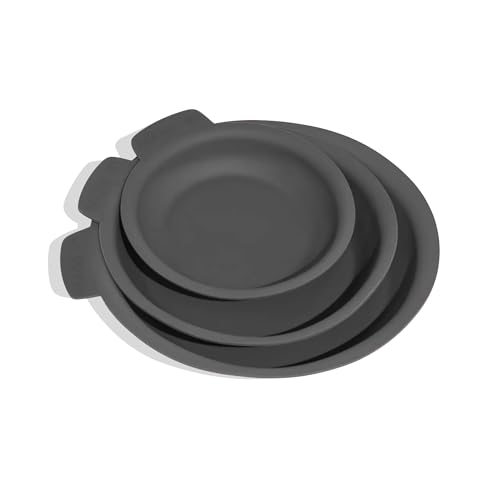 Made In Cookware
- Includes: 8", 10", and 12" Pan Protectors
- Perfect Fit - Specifically designed for Made In…
- Scratch-Free Stacking - Prevents scratches and scuffs by…
 All-Clad Premium Cookware Protectors: Pot and Pan
- Safeguard your investment in high-quality pots and pans…
- Available in multiple sizes to accommodate various cookware…
- Crafted from soft, thick, and flexible polyester blend…
 Pan Protectors for Stacking
- 【Quantity and size】Perfect set of 18 non-woven pan…
- 【quality materials and moisture-proof design】pan protectors for stacking…
- 【Perfect protection】Pan protectors for stacking work for frying…
As an Amazon Associate we earn from qualifying purchases at no extra cost to you.
Best pan protector set by storage situation
| Storage situation | Best protector type | Useful specifications | Why it suits the situation |
|---|---|---|---|
| Everyday non-stick cookware | Quilted felt with a silicone or rubber grip | 2–3 mm thick, 8–12 inch diameters | Soft enough for coated surfaces and stable enough for daily stacking |
| Heavy cast iron or stainless-steel pans | Dense felt, thick silicone, or layered fabric | 3–5 mm thick, heat-resistant to at least 400°F | Handles weight and rougher edges without flattening quickly |
| Small kitchen with nested pans | Thin felt discs with a center grip | 1.5–2.5 mm thick, graduated diameters | Adds protection without wasting valuable cabinet height |
| Occasional or budget use | Basic felt or foam separators | 1–2 mm thick, 8–10 pieces | Low cost and adequate when pans are moved infrequently |
| Wet or frequently handled cookware | Silicone separators | 1–2 mm thick, dishwasher-safe | Resists moisture and is easier to clean than absorbent felt |
Material comparison: felt, silicone, foam, and fabric
Felt and quilted fabric
Felt is the traditional choice because it is soft, inexpensive, and easy to cut into large circular discs. Polyester felt generally dries faster and resists mildew better than wool felt. Quilted versions provide more cushioning and are less likely to bunch when a heavy pan is placed on top.
The main weakness is compression. A thin felt disc can become permanently flattened under cast iron, reducing the gap between pan surfaces. Felt can also hold grease or moisture if it is stored inside a pan before the cookware has fully dried. Choose stitched or quilted edges rather than loosely bonded layers, which may separate after repeated washing.
Silicone
Silicone protectors offer the best washability and moisture resistance. They are suitable for kitchens where pans are stored soon after washing or where cooking residue is a recurring concern. Raised dots, ribs, or a textured surface can stop the protector from sliding.
Silicone is less compressible than felt, so it may protect well against direct contact without providing as much cushioning around a sharp pan rim. Very smooth silicone can also slide on polished stainless steel unless the protector has a textured face. Check that the product is food-contact safe and rated for the temperatures likely to occur during storage; a protector is not automatically a trivet or oven accessory.
Foam and rubberized foam
Foam is lightweight and cushions impacts well, making it useful for fragile enamel or ceramic-coated cookware. However, some inexpensive foam tears at the edges, absorbs odors, or becomes brittle with age. Rubberized surfaces improve grip but may leave residue if exposed to heat or oily storage conditions.
Nonwoven fabric and mesh
Thin nonwoven fabric is compact and affordable, but it provides limited protection against pronounced rivets or rough cast-iron edges. Mesh can improve airflow, although its open structure may not prevent a small metal point from pressing through. These options are best for smooth pans that already fit neatly inside one another.
How to choose the correct diameter and thickness
A protector should be large enough to cover the interior base and lower sidewall of the smaller pan, but not so large that its edge folds upward into the cooking surface. Measure the inside diameter of the pan where the protector will sit, not the outside diameter including the rim.
A practical sizing rule is to choose a protector about 0.5–1 inch smaller than the pan’s inside diameter. For example, a pan with a 10-inch interior typically suits a 9-inch or 9.5-inch disc. A protector that is too small leaves the rim exposed; one that is too large can buckle and create pressure points.
| Pan interior diameter | Recommended protector diameter | Suggested thickness | Typical use |
|---|---|---|---|
| 6–7 inches | 5.5–6.5 inches | 1.5–2 mm | Saucepans, butter warmers, small skillets |
| 8–9 inches | 7.5–8.5 inches | 2–3 mm | Small frying pans and sauté pans |
| 10–11 inches | 9–10.5 inches | 2–3 mm | Most everyday skillets and shallow pans |
| 12–13 inches | 11–12 inches | 3–5 mm | Large skillets, griddles, and heavy cookware |
Thickness affects cabinet capacity. If a set contains six separators that are each 3 mm thick, they add approximately 18 mm, or 0.7 inch, to a stack before accounting for handles and pan rims. A 5 mm protector used between every pan could add nearly 1.2 inches to the same stack. For a crowded cabinet, use thinner pieces for smooth lightweight pans and reserve thicker protectors for heavy cookware.
Grip and nesting performance matter more than piece count
A protector that shifts when the pan is lifted can expose exactly the area it is meant to protect. Look for a textured center, silicone dots, concentric ridges, or a raised lip. A full rubber coating offers strong grip but may make pans harder to separate. A few strategically placed grip zones usually provide a better balance.
For nesting, avoid protectors with thick stitched borders if your pans have tightly curved interiors. The border can sit on the pan’s rim, causing the upper pan to rock. Flat discs or gently tapered shapes usually nest more smoothly. If pan handles prevent a stack from sitting level, no protector can solve the problem; store the pans with handles offset or use a vertical rack.
Decision matrix: which specification should you prioritize?
| Your priority | Prioritize | Compromise to avoid |
|---|---|---|
| Lowest purchase cost | Polyester felt, mixed-size set, stitched edges | Unfinished edges or very thin foam |
| Maximum non-stick protection | Quilted fabric, 2–3 mm thickness, soft surface | Hard plastic discs or exposed rubber ridges |
| Fast cleaning | One-piece silicone, dishwasher-safe construction | Multi-layer fabric with glued seams |
| Frequent cooking and rearranging | Non-slip texture and reinforced edges | Smooth, undersized discs |
| Minimal cabinet space | 1.5–2 mm separators in graduated sizes | Thick quilted pieces between every pan |
Cleaning and maintenance that extend service life
- Dry the cookware first. Moisture trapped between a pan and a felt protector can create odors and encourage corrosion on uncoated metal.
- Wash according to the material. Silicone is commonly dishwasher-safe, while felt and quilted fabric are usually better hand-washed or placed in a mesh laundry bag on a gentle cycle.
- Dry completely before stacking. Lay fabric protectors flat or hang them with airflow on both sides. Do not return damp pieces to a closed cabinet.
- Inspect the contact surface. Remove protectors with embedded grit, hardened oil, torn seams, or exposed reinforcement. A dirty separator can scratch more effectively than a clean pan rim.
- Replace compressed pieces. If a protector stays flattened after washing or no longer covers the pan base, it has reached the end of its useful life.
The parts that usually wear first are the edge stitching, printed grip dots, and the center area beneath the heaviest pan. A reasonable replacement expectation is several years for well-maintained silicone and roughly one to three years for inexpensive felt used under heavy cookware, though frequency, washing, and pan weight make a large difference. General market prices are commonly about $8–$15 for basic felt sets, $12–$25 for quilted or mixed-material sets, and $15–$30 for larger silicone sets.
Common buying and storage mistakes
- Buying one universal diameter for pans ranging from 6 to 12 inches.
- Choosing a protector thinner than 1 mm for rough cast iron or pans with exposed rivets.
- Using a protector as a hot pad immediately after cooking without a suitable heat rating.
- Leaving crumbs or salt between the separator and a coated pan.
- Stacking a heavy pan on a protector that is folded, wrinkled, or partly outside the pan base.
- Assuming “dishwasher-safe” applies to a set with glued fabric layers or printed rubber details.
Final buying recommendation
For most kitchens, choose a set with at least three diameters covering approximately 6–12 inches, 2–3 mm of soft cushioning, stitched or molded edges, and a non-slip center. Pick silicone when washability and moisture resistance matter most; pick quilted polyester felt when protecting non-stick surfaces and maximizing gentle cushioning matter more. If your cookware is heavy cast iron, increase thickness to 3–5 mm and check the protector after several months for compression. The best pan protector set for stacking cookware is the one that matches your pan interiors closely, stays centered during handling, and remains clean and flat throughout its ownership.








Write Your Review
No reviews yet. Be the first to share your experience!