

Key takeaways
- Japanese-style knife sets promise thinner blades, finer edges and a lighter hand than the heavier German tradition.
Japanese-style knife sets promise thinner blades, finer edges and a lighter hand than the heavier German tradition. The phrase “Japanese cooking knives set” also covers a lot of ground in an online listing, from three-piece Damascus kits with a VG10 core to ten-piece sets in 9Cr18MoV steel and magnetic wooden blocks. Some are made in Japan; many are Japanese in style only. Because the title rarely says where a set is made, the useful questions are about steel, blade angle, handle and storage.
This guide is for cooks who want a slicing-friendly set for vegetables, fish and boneless proteins, and for gift buyers drawn to the look of pakkawood and layered steel. It covers seven listings, judged from their titles alone: piece count, steel name, layers, handle material and storage. For 2026 shoppers, the key is to separate real specifications, such as a named steel core, from style words like “ultra sharp” that appear on nearly every listing.
Quick Picks
Our top picks
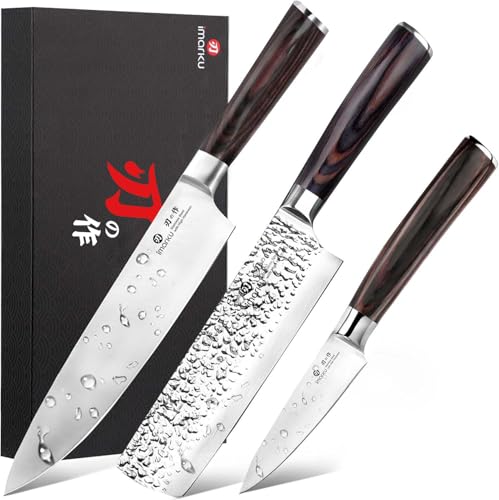
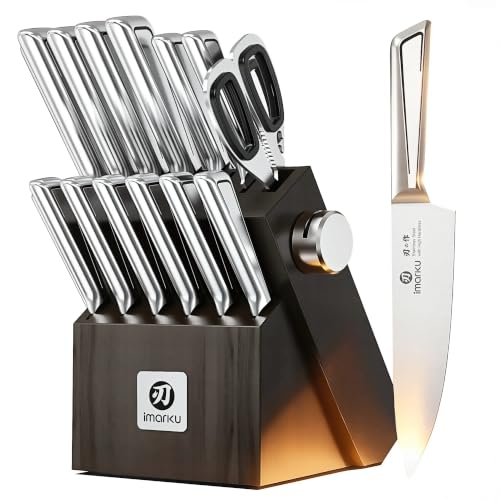
 Japanese Chef Knife Set 3 Pcs
- 【Damascus Knife Set】Atumuryou 3 piece knife set comes…
- 【Japanese VG10 Steel Core】 Featuring a premium Japanese…
- 【Real Damascus Knife】 Atumuryou Japanese knife is forged…

 SYOKAMI 2026 Upgrade Kitchen Knife Set
- The kitchen knife set comes with a foldable…
- SHARPER, SMOOTHER, SUPERIOR: This kitchen knife set is…
- This Japanese kitchen knife set with block includes…


As an Amazon Associate we earn from qualifying purchases at no extra cost to you.
| Product | Best for | Key spec from the title |
|---|---|---|
| imarku 3-Piece Japanese Chef Knife Set | Compact, focused kitchens | Japanese HC stainless steel, pakkawood handle |
| imarku Japanese Set with Block and Sharpener | Full set with built-in sharpening | Gyutou knives, built-in sharpener, 10 to 15 degree edge |
| Japanese Chef Knife Set 3-Piece Damascus | Buyers who want a named steel core | 67-layer Damascus, VG10 core, ocean-blue handle |
| Brewin Chefilosophi 5-Piece Set | Style-conscious cooks | Red pakkawood handle, ergonomic design |
| SYOKAMI 7-Piece Set with Magnetic Block | Cooks who prefer a magnetic display | Foldable magnetic acacia wood block |
| SANMEIHO 10-Piece Japanese Set | Larger kitchens that want named steel | 5 layers, 9Cr18MoV stainless, dishwasher safe |
| HOSHANHO 7-Piece Set with Magnetic Block | Mid-size block set | Magnetic block, high carbon stainless steel |
How to Choose
Read the steel name, not the adjectives
A named steel is something you can verify. VG10 is a well-known stainless steel used in many Japanese-style knives, and 9Cr18MoV is another common stainless option. A Damascus pattern with a hard core steel usually means a hard cutting edge protected by softer outer layers. In contrast, plain wording like “Japanese steel” tells you little, so prefer titles that name the alloy or the layer count.
Understand the edge angle and what it means
Japanese-style knives are commonly sharpened to a narrower angle than Western knives, often in the range of 10 to 15 degrees per side. A narrower angle slices more cleanly through tomatoes, fish and herbs but is less tolerant of bones, frozen food and twisting cuts. If you plan to tackle bones or squash, keep a heavier knife in the drawer too, and treat the Japanese-style blades as slicers.
Choose storage that protects thin edges
Thinner blades chip more easily, so storage matters. A magnetic block holds knives securely but needs to be used carefully so edges do not knock against the magnet. A slotted block or a drawer sleeve is gentler. Whichever you choose, keep a thin blade away from stone or glass cutting boards, and prefer wood or soft plastic.
Handle material and care expectations
Pakkawood, a resin-stabilized wood, is common on Japanese-style sets and resists moisture better than raw wood. Dishwasher-safe claims are convenient, but a keen edge on a thin blade suffers from detergents and tumbling, so hand washing remains the safer habit. Budget sets often cut corners on handle fit and polish; inspect the spine and rivets when the set arrives.
The 7 Best Options
imarku 3-Piece Japanese Chef Knife Set
Three knives in Japanese high carbon stainless steel with an ergonomic pakkawood handle, presented as a professional chef knife set. The compact lineup is attractive to cooks who prefer to own a few blades and keep them sharp, and it works as a thoughtful gift for a new home cook.
- Strength: the named steel and pakkawood handle appear right in the title.
- Strength: three knives are easy to store and maintain.
- Trade-off: no block or bread knife is part of the listing.
Skip it if you want a block or if you regularly cut crusty bread. Cooks with large hands may also prefer to check handle dimensions before committing, since compact Japanese-style handles can feel small in a big palm. For home use with vegetables and boneless proteins, the trio is usually enough.
imarku Japanese Set with Block and Built-In Sharpener
A fuller imarku option that adds a block with a built-in sharpener to precision-forged gyutou knives. The title cites a 10 to 15 degree edge, which fits the thin-blade style many buyers expect from the category. It suits cooks who want storage and sharpening handled in a single purchase.
- Strength: a built-in sharpener simplifies upkeep.
- Strength: gyutou is the Japanese chef knife style, and the edge angle is stated.
- Trade-off: a block takes counter space, and built-in sharpeners are not a substitute for proper stones.
Skip it if you want to keep your counter clear or prefer to sharpen by hand with whetstones. Enthusiasts who enjoy the ritual of a stone will see the built-in tool as a convenience for other family members, not a main sharpening method.
Japanese Chef Knife Set 3-Piece with 67-Layer Damascus
The most spec-forward listing here, naming a 67-layer Damascus blade with a VG10 steel core and an ocean-blue ergonomic handle. For buyers who want to know what the steel is, this title offers more verifiable detail than most others, and it appeals to anyone who appreciates a patterned blade.
- Strength: VG10 core and layer count are named plainly.
- Strength: three knives keep the set focused.
- Trade-off: Damascus blades often need more careful drying and care.
Skip it if you want to run knives through the dishwasher or prefer a plain finish. Buyers who want a block or sharpener included should look elsewhere. Because the blades are layered, a gentle hand-wash and immediate dry is the sensible routine for keeping the pattern clean.
Brewin Chefilosophi 5-Piece Japanese Chef Knife Set
A five-piece Japanese-style set with an elegant red pakkawood handle and an ergonomic design. It is geared toward cooks who like how a knife looks on the board and want a few more blades than a trio provides, without stepping up to a full block.
- Strength: the red pakkawood handle gives the set a distinctive look.
- Strength: five pieces expand the toolkit beyond the basics.
- Trade-off: the title does not name the steel or a storage solution.
Skip it if you need a named steel core or want a block included. Cooks who prefer subdued handles may find the red a little loud, and anyone who wants a clear steel grade to compare against other sets will need to look beyond this listing.
SYOKAMI 7-Piece Set with Foldable Magnetic Acacia Wood Block
Seven pieces of Japanese-style high carbon stainless steel with a foldable magnetic block in acacia wood. The folding block is a novel storage idea that can collapse flatter when not in use, and the set fits a cook who wants display and function together.
- Strength: a magnetic block keeps knives visible and within reach.
- Strength: high carbon stainless steel is named in the title.
- Trade-off: a magnetic block asks for care when placing blades to protect thin edges.
Skip it if you share a kitchen with small children or want a fully enclosed block. A slotted block is a safer pick in those homes. The title also does not name the steel grade, so treat the high carbon stainless wording as a general category rather than a specific alloy.
SANMEIHO 10-Piece Japanese Kitchen Knife Set
This ten-piece set names five layers and 9Cr18MoV high carbon stainless steel, along with dishwasher-safe construction. It targets buyers who want a larger collection with a stated alloy and a claim of professional chef use, at the larger end of this group.
- Strength: the alloy and layer count are stated in the title.
- Strength: ten pieces cover a wider range of tasks.
- Trade-off: dishwasher-safe wording does not mean machine washing is best for thin edges.
Skip it if you want just a few knives or a very light footprint. Count how many of the ten are true knives before buying, because shears, sharpening tools and accessories sometimes make up part of the total. Thin-blade owners who like a light, nimble set should also consider that more pieces rarely means better edges.
HOSHANHO 7-Piece Set with Magnetic Block
Seven pieces of Japanese-style high carbon stainless steel with a magnetic block and ergonomic handles. It sits in the middle of the range: more than a trio, less than a full ten-piece collection, and aimed at cooks who want a tidy block without a huge lineup.
- Strength: magnetic block storage keeps the blades accessible.
- Strength: a seven-piece lineup is varied enough for most weeknight tasks.
- Trade-off: no sharpener or named steel alloy appears in the title.
Skip it if you want verifiable steel details or a bundled sharpener. Buyers deciding between this and the SYOKAMI set are choosing mostly between block styles, since both are seven-piece, magnetic-block, high carbon stainless listings.
Which One Fits Your Situation
You want to know exactly what steel you are getting
The 3-Piece Damascus set with its VG10 core and the SANMEIHO 10-Piece with its 9Cr18MoV alloy are the only listings that name specific steels.
You want storage and sharpening in one box
The imarku Set with Block and Built-In Sharpener bundles both, and the SYOKAMI or HOSHANHO sets offer magnetic block storage if you prefer display.
You are buying a gift
The imarku 3-Piece or the Brewin Chefilosophi 5-Piece pair attractive pakkawood handles with a manageable set size that is easy to wrap and easy to use.
You cook for a crowd
The SANMEIHO 10-Piece gives the broadest lineup, which helps if several people prep at once. With more knives on hand, nobody has to wait for a clean chef knife while a second cook trims vegetables for the same meal.
Common Mistakes
- Assuming Japanese style means made in Japan.
- Using thin blades on bones, frozen food or hard squash.
- Storing thin edges loose in a drawer or banging them against a magnetic strip.
- Trusting vague “Japanese steel” wording over a named alloy.
- Running delicate Damascus blades through the dishwasher.
Specs and Terms Explained
VG10 and 9Cr18MoV
VG10 is a stainless steel from Japan with cobalt and vanadium, used for cores that hold a fine edge. 9Cr18MoV is a Chinese stainless often compared with it; it is capable and sharpens readily, though it is generally regarded as a step down in edge retention. Seeing a steel name in the listing is a good sign, because vague phrases like high-carbon stainless say little about the actual alloy.
Damascus layers
The wavy pattern comes from layers of steel folded or stacked around a core. The layer count is largely cosmetic, since the core steel does the cutting. A higher number does not automatically mean a better knife, so weigh the core steel before the layer count.
Edge angle
Japanese-style knives are commonly ground to a shallower angle per side than German ones, often around 15 degrees compared with roughly 20. A thinner edge slices with less effort but is less forgiving of bone, frozen food and hard squash.
Double-bevel versus single-bevel
Traditional Japanese knives such as a yanagiba are ground on one side only. Western-pattern sets like these are normally double-bevel, which means they suit right- or left-handed cooks and can be sharpened with ordinary stones.
Which One Should You Buy?
| If you… | Choose… |
|---|---|
| Want only the essential three knives | imarku 3-Piece Japanese Chef Knife Set |
| Prefer a Damascus finish in a compact kit | Japanese Chef Knife Set 3-Piece with 67-Layer Damascus |
| Want storage and sharpening together | imarku Japanese Set with Block and Built-In Sharpener |
| Want a mid-size set without a block | Brewin Chefilosophi 5-Piece Japanese Chef Knife Set |
| Like a folding magnetic wooden block | SYOKAMI 7-Piece Set with Foldable Magnetic Acacia Wood Block |
| Want a magnetic block with several knives | HOSHANHO 7-Piece Set with Magnetic Block |
| Want the widest range of knife types | SANMEIHO 10-Piece Japanese Kitchen Knife Set |
Setup and Care Tips
- Wipe the blade dry after each use; never leave a thin edge wet in the sink or in a dish rack.
- Skip the dishwasher entirely. Heat and detergent can discolor handles and roughen the edge.
- On a magnetic block, place the spine against the magnet first and swing the blade down, so the edge never scrapes the surface.
- Use a medium-grit whetstone to restore the edge and a fine one to finish. A pull-through sharpener removes more steel than needed on thin blades.
- Keep these knives for slicing and chopping on a soft board; reach for a sturdier knife when you need to split bone or cut frozen food.
Who Should Skip These
Cooks who prefer a heavy blade that can rock through everything, or who routinely cut through bones, will be happier with a thicker German-style knife. The same goes for anyone who puts everything in the dishwasher.
Related guides
- How To Clean Copper Cookware Without Damaging Tin Lining
- How To Season A Carbon Steel Wok Step By Step
- Carbon Steel Woks For Gas Stoves 14 Inch
Frequently Asked Questions
Are Japanese-style knives better than German-style?
They are different. Japanese-style knives tend to be thinner and sharper, while German-style knives are heavier and more tolerant. Choose by task and care habits.
What is a gyutou?
Gyutou is the Japanese term for a chef’s knife. It resembles a Western chef’s knife but is often thinner and lighter.
Is Damascus steel better?
The pattern comes from layered steel, and the quality depends on the core. A named core such as VG10 is more meaningful than the pattern itself, so read the title for the core steel before you let the look decide.
How should I store thin blades?
Use a slotted block, a sheath or a carefully used magnetic holder, and avoid loose storage in a crowded drawer.
Write Your Review
No reviews yet. Be the first to share your experience!