

Key takeaways
- Learn how to season a carbon steel wok step by step: remove the factory coating, build thin oil layers, fix sticking and rust, and keep the patina going.
To season a carbon steel wok, scrub off the factory coating, dry the metal completely, then heat the wok and wipe on a very thin layer of high smoke point oil. Heat until the oil stops smoking and the metal darkens, and repeat a few times. The result is a thin, hardened layer of polymerized oil that protects the steel and makes it more nonstick with use. This guide walks through the process, the common mistakes and the daily routine that keeps the finish healthy.
What seasoning actually is
Carbon steel is bare iron alloyed with a little carbon, and bare iron reacts with water and oxygen to form rust. Seasoning is the layer that stands between the metal and the air. When a thin film of oil is heated past its smoke point, the fats break down and bond to the surface, forming a hard, dark, slightly glossy coating called a patina.
That coating has two jobs. It reduces sticking, because the surface becomes smoother and less reactive. It also slows rust. A patina is not paint or a manufactured coating, so it can be built, scratched and repaired. This is why wok seasoning is a process rather than a one-off event.
What you need and how to prepare
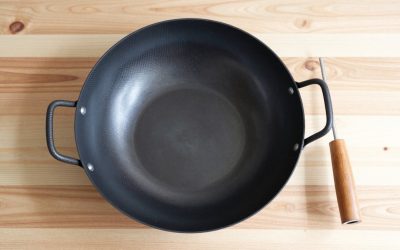
- A carbon steel wok, flat-bottomed for most home electric and induction cooktops, or round-bottomed for gas with a ring
- Dish soap and a scouring pad or a stiff brush for the first wash
- A high smoke point oil such as grapeseed, canola, peanut, avocado or refined vegetable oil
- Paper towels or lint-free cloths, and tongs to hold them
- Good ventilation: open windows, and run the range hood
- Heat-resistant gloves or oven mitts
Check the manufacturer’s directions first. Wooden handles can scorch in an oven or on a hot burner, and some makers specify their own method.
Step-by-step: the stovetop method
- Remove the factory coating. Many new woks arrive with a protective wax or oil. Scrub the inside and outside with hot water, dish soap and a scouring pad until the surface looks bare and water sheets evenly. This is the one time aggressive scrubbing is appropriate.
- Dry the wok fully, then place it on the burner over medium-high heat for a few minutes until every trace of moisture is gone. The steel may start to shift in color.
- Turn on the vent. Add about a teaspoon of oil and use tongs and a paper towel to rub it over the entire interior, then wipe almost all of it off again. The surface should look dry, with just a faint sheen.
- Heat the wok on medium-high, tilting it so the sides get heat as well. The oil will begin to smoke. Keep heating until the smoke fades, usually several minutes, then turn off the burner.
- Let the wok cool slightly, wipe on another very thin film of oil, and repeat steps 3 and 4 for three to five coats in total.
- Finish by cooling the wok completely before cooking.
Alternative: the oven method
An oven gives more even heat and can reach the sides and handle bracket better. Wash and dry the wok as above, wipe on a very thin coat of oil, then bake the wok upside down on a rack with a sheet pan or foil underneath to catch drips. Many guides suggest an oven temperature around 450 to 500 degrees Fahrenheit for about an hour, but not every wok handle is oven safe, so check the manual before you try it. Let the wok cool inside the oven and repeat if you want a deeper finish.
The oven route is slower but forgiving. The stovetop route is faster and lets you watch the surface change color in real time.
Table: how the surface changes
| Stage | What you see | What it means |
|---|---|---|
| Bare steel | Gray, matte, sometimes with factory marks | Needs seasoning |
| Heating | Straw, blue or purple tints appear | Normal heat coloring |
| Early seasoning | Golden to brown, uneven | Layer is forming |
| Developed patina | Dark brown to black, smooth | Ready for regular cooking |
| Problem | Tacky, gummy or flaking | Oil was too thick; strip and re-season |
Worked example: a first week of use
Assume a 14 inch flat-bottomed wok, seasoned on the stovetop with four thin coats of canola oil. Day one: cook a batch of stir-fried vegetables with a moderate amount of oil, remove the food, and wash the wok with hot water and a soft brush. Dry it on the burner for a minute, then wipe in a thin film of oil. Day two: sear sliced onions and meat, which adds more fat and builds the layer faster. Days three to seven: continue with oily dishes before trying anything delicate.
The wok will probably look blotchy at first, with darker areas around the center and lighter edges. That is normal. Avoid long simmers of acidic sauces, such as tomato or vinegar-heavy braises, during the first couple of weeks, because acid can weaken a young patina.
What can go wrong and how to fix it
Sticky or tacky patches are almost always caused by too much oil. Scrub the area with a scouring pad, dry the wok, and apply thinner coats. Flaking patches follow the same logic: scrub off the loose layer and rebuild. Rust spots appear when moisture was left on the steel, and they can be scrubbed off and re-seasoned.
Food that sticks is not a disaster. Preheat the wok properly before adding oil, use enough oil for the food, and avoid moving ingredients too early. Cold food straight from the fridge in a weakly seasoned wok sticks more often than food at room temperature.
Daily care to keep the finish
Wash the wok while it is still warm using hot water and a soft brush. A little mild soap is generally acceptable on an established patina, though many cooks skip it for routine cleanings. Never leave carbon steel soaking and never put it in the dishwasher. After washing, dry the wok on a burner until no moisture remains, then wipe a very thin film of oil on the inside.
Store the wok in a dry place, and place a paper towel inside if you stack other cookware on top.
Safety notes
Seasoning produces smoke, and the metal becomes very hot, so use ventilation and heat-resistant gloves and keep children and pets out of the kitchen. Do not leave a wok unattended on a hot burner. Oil can ignite if overheated, so if a grease fire starts, cover the pan with a lid, turn off the heat and never use water. Handle the wok only with protection until it has fully cooled.
Related guides
- How To Clean Copper Cookware Without Damaging Tin Lining
- Stock Pots For Large Batch Soup 20 Quart
- Carbon Steel Woks For Gas Stoves 14 Inch
Frequently asked questions
What is the best oil for seasoning a carbon steel wok?
Choose an oil with a high smoke point that you are comfortable cooking with, such as grapeseed, canola, peanut, avocado or refined vegetable oil. Some cooks prefer flaxseed, though its coating can flake if applied too thickly. The technique matters more than the oil: use a very thin layer, heat past the smoke point, and repeat several times for an even finish.
Why is my seasoned wok sticky or flaking?
A sticky surface usually means the oil layer was too thick or not heated long enough to polymerize. Flaking is also commonly linked to excess oil. Scrub off the loose areas with a scouring pad, wipe the wok dry, and re-season with extremely thin coats. Wipe oil on, then wipe almost all of it back off before heating, so only a microscopic film remains.
Can I use soap on a seasoned carbon steel wok?
A little mild dish soap is generally fine on a well-established patina, since modern detergents do not strip polymerized oil the way old lye-based soaps could. Avoid long soaking and harsh scouring. Rinse, dry the wok on a burner until no moisture remains, and rub a very thin film of oil over the surface before storing it.
Does the wok have to be completely black before I cook?
No. A fresh seasoning is often golden, brown or blotchy, and it deepens in color with use. What matters is that the surface is dry, smooth and slightly slick rather than sticky or bare. Cook oily foods like stir-fried vegetables and meats first, and the patina builds up naturally over the next several sessions.
How do I remove rust from a carbon steel wok?
Light surface rust can be scrubbed off with a scouring pad or fine steel wool, then rinsed and dried right away. After the rust is gone, re-season the area or the entire wok. If the pan has deep pitting or flaking rust over large areas, consult the manufacturer’s care guidance. Rust prevention comes down to drying thoroughly and keeping an oil film on the surface.

Write Your Review
No reviews yet. Be the first to share your experience!