

Key takeaways
- ❤️ { 𝗣𝗲𝗿𝗳𝗲𝗰𝘁 𝗥𝗲𝘀𝘂𝗹𝘁𝘀 𝗘𝘃𝗲𝗿𝘆 𝗧𝗶𝗺𝗲 }
- 🔥 { 𝗚𝘂𝗮𝗿𝗮𝗻𝘁𝗲𝗲𝗱 𝗘𝘃𝗲𝗻 𝗕𝗮𝗸𝗶𝗻𝗴 𝗥𝗲𝘂𝗹𝘁𝘀 }
- ✅ { 𝗠𝘂𝗹𝘁𝗶 𝗨𝘀𝗲 𝗬𝗼𝗿𝗸𝘀𝗵𝗶𝗿𝗲 𝗣𝘂𝗱𝗱𝗶𝗻𝗴 𝗧𝗿𝗮𝘆 }
The best Yorkshire pudding tin for British baking is usually a heavy-gauge, four-well carbon-steel tin with a durable non-stick coating, straight-sided cups, and an oven rating of at least 240°C—unless you need small individual puddings, in which case a sturdy 12-hole bun tin is more practical.
Our top picks
 Wrenbury Toughened Yorkshire Pudding Pan
- ❤️ { 𝗣𝗲𝗿𝗳𝗲𝗰𝘁 𝗥𝗲𝘀𝘂𝗹𝘁𝘀 𝗘𝘃𝗲𝗿𝘆 𝗧𝗶𝗺𝗲 }
- 🔥 { 𝗚𝘂𝗮𝗿𝗮𝗻𝘁𝗲𝗲𝗱 𝗘𝘃𝗲𝗻 𝗕𝗮𝗸𝗶𝗻𝗴 𝗥𝗲𝘂𝗹𝘁𝘀 }
- ✅ { 𝗠𝘂𝗹𝘁𝗶 𝗨𝘀𝗲 𝗬𝗼𝗿𝗸𝘀𝗵𝗶𝗿𝗲 𝗣𝘂𝗱𝗱𝗶𝗻𝗴 𝗧𝗿𝗮𝘆 }
 Yorkshire Pudding Tray Silicone Non Stick 12
- Premium non stick Yorkshire pudding tray with reinforced…
- Deep 12 cup Yorkshire pudding tin design delivers…
- BPA free silicone Yorkshire pudding trays are dishwasher…
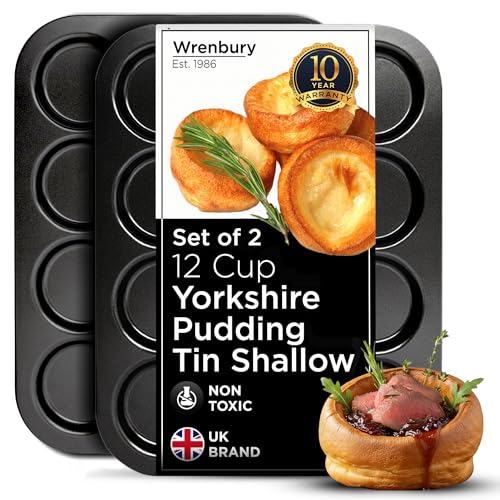 Wrenbury Toughened Yorkshire Pudding Pan Set of
- Perfect Baking Results Every Time
- Even Baking Performance
- Multi-Purpose Baking Tray
As an Amazon Associate we earn from qualifying purchases at no extra cost to you.
Best Yorkshire pudding tin by baking situation
| Situation | Best format | Useful specification | Why it suits the job |
|---|---|---|---|
| Classic Sunday roast for four | Four-well Yorkshire pudding tin | 22–25 cm wide; 0.8–1.0 mm steel | Large wells encourage tall, crisp puddings with a soft centre |
| Family batch or party cooking | 12-hole bun or muffin tin | 6–7 cm wells; 0.6–0.8 mm steel | Produces individual puddings and uses oven space efficiently |
| One or two servings | Two- or four-hole small tin | 8–10 cm wells; under 25 cm wide | Fits smaller ovens and avoids making more batter than needed |
| Frequent high-temperature baking | Uncoated or reinforced carbon steel | At least 0.8 mm thick; rated to 240°C or higher | Better resistance to coating wear and repeated thermal shock |
| Lowest-maintenance option | Heavy non-stick steel | Coating rated to 240°C or above; rolled rim | Releases puddings easily and is quicker to wash by hand |
Four-well versus 12-hole tins
Choose a four-well tin when your priority is the traditional Yorkshire pudding shape: broad, risen edges surrounding a hollow centre. Each well commonly holds about 150–220 ml, depending on its depth and diameter. These larger cups give the batter room to climb and are particularly good with roast beef and gravy.
A 12-hole tin normally makes smaller puddings with wells holding approximately 50–80 ml each. They cook faster, offer more crisp surface area, and are easier to portion for children or buffet meals. The compromise is height: shallow, wide cups tend to produce more compact puddings than a properly sized four-well pan.
Do not judge capacity from the number of holes alone. Two 12-hole tins can have noticeably different well volumes. If the manufacturer provides dimensions, measure the internal diameter and depth rather than relying on labels such as “muffin” or “bun”.
Metal gauge matters more than a shiny finish
Thin steel heats rapidly but can develop hot spots, particularly on the base of the cups. That may leave one edge dark before the centre has finished rising. For reliable results, look for steel around 0.8–1.0 mm thick. A tin around 0.6 mm can still work well, especially for small puddings, but it is more likely to warp if heated empty or cooled abruptly.
Heavy-gauge carbon steel offers a useful balance: it warms quickly enough to preheat the fat but has enough thermal mass to keep the wells hot when cold batter is added. Aluminium heats even faster and is often lighter, but its performance depends more heavily on the pan’s thickness and construction. Silicone is easy to store and releases food well, but it is usually a weaker choice for crisp, deeply browned Yorkshire puddings because it transfers heat less efficiently.
Check the rim and base before buying. A rolled or reinforced rim is less likely to bend, while a visibly flat base sits more securely on an oven shelf. A warped tin can hold fat unevenly, producing one crisp side and one pale side.
Coating durability and oven temperature limits
Non-stick coating makes release easier, but the coating is normally the part that wears first. Repeated heating above its stated limit, metal utensils, abrasive pads, dishwasher detergents, and stacking tins without protection can all shorten its useful life.
- For Yorkshire puddings, choose a coating rated for at least 240°C if possible.
- Confirm whether the rating applies to a conventional oven, fan oven, or both.
- Do not use a coated tin under a grill unless the manufacturer specifically permits it.
- Use wood, silicone, or nylon tools rather than a knife to lift stuck edges.
- Replace a pan when the coating is visibly flaking, bubbling, or exposing extensive bare metal.
Many recipes use a very hot oven: about 220–240°C conventional or 200–220°C fan. The tin therefore needs headroom above the recipe temperature. A pan rated only to 200°C may be unsuitable even if it looks substantial.
How much batter does each size need?
A useful starting point is to fill each well by roughly one-third to one-half, leaving room for the batter to expand. Overfilling reduces the hollow centre and can make the rim spill over the edge.
| Tin type | Approximate capacity per well | Starting batter quantity | Typical baking time |
|---|---|---|---|
| Four large wells | 150–220 ml | 70–100 ml | 25–35 minutes |
| Six medium wells | 90–130 ml | 45–65 ml | 20–28 minutes |
| 12 small wells | 50–80 ml | 25–40 ml | 18–25 minutes |
These are planning figures rather than fixed rules. Batter depth, fat quantity, oven accuracy, and whether the tin starts at room temperature all affect the result. A kitchen scale or jug with graduations makes it easier to divide batter evenly between wells.
Decision matrix: which tin should you buy?
| Your priority | Look for | Avoid |
|---|---|---|
| New to Yorkshire puddings | Four wells, robust non-stick coating, clear temperature rating | Very shallow cups or a flexible silicone-only pan |
| Small kitchen or compact oven | Two- or four-well tin under 25 cm wide | A large 12-hole tin that blocks airflow |
| Frequent weekly use | 0.8–1.0 mm steel, reinforced rim, replaceable storage protection | Very thin stamped metal |
| Strict budget | Plain carbon steel with a simple coating or no coating | Paying for decorative finishes that do not improve heat distribution |
| Dishwasher-dependent household | A model explicitly marked dishwasher-safe | Assuming every non-stick tin tolerates dishwasher cycles |
Cleaning without destroying the pan
Let the tin cool until it is safe to handle, then pour leftover fat into a heatproof container rather than down the sink. Wipe the pan with kitchen paper before washing; this removes most of the greasy residue without forcing detergent to do all the work.
Wash in warm water with a soft sponge and a small amount of washing-up liquid. For baked-on batter, soak the tin for 10–15 minutes and loosen residue with a wooden or silicone scraper. Avoid steel wool, scouring powder, and aggressive scraping. Even when a tin is labelled dishwasher-safe, repeated dishwasher cycles can dull non-stick surfaces and encourage corrosion around exposed edges.
Dry the tin immediately, especially if it is uncoated carbon steel. A very light film of cooking oil can help protect bare steel, but do not store a wet pan inside another pan where moisture is trapped.
Common buying and baking mistakes
- Choosing by hole count alone: Cup diameter and depth determine the finished shape more than the number of wells.
- Ignoring oven width: Measure the external rim, not just the cooking area. Handles and projecting edges may prevent the tin sitting flat.
- Using a low-temperature-rated coating: Yorkshire puddings need a hotter oven than many cakes and biscuits.
- Putting cold batter into cold fat: Preheat the tin and fat until visibly hot, while taking care to avoid splashing.
- Opening the oven early: A sudden drop in temperature can cause partially risen puddings to collapse.
- Overfilling the wells: More batter does not necessarily mean taller puddings; it often means heavier, less crisp results.
Final verdict
For most British households, a four-well carbon-steel tin around 0.8–1.0 mm thick is the best Yorkshire pudding tin for British baking. Select a durable non-stick version rated to at least 240°C if easy release and simple cleaning matter most. Choose a 12-hole steel tin when you need individual portions, faster cooking, or a larger batch. Whichever format you choose, prioritise well dimensions, metal thickness, a flat reinforced base, and a clear oven-temperature limit over decorative finishes or an unusually low price.








Write Your Review
No reviews yet. Be the first to share your experience!