
Our Short List of 3

- Best for: A single do-everything camp knife with a strong warranty behind it.
- 4.5-inch 1095 carbon steel drop point blade with a flat grind
- 55-57 HRC hardness with a 0.188-inch blade thickness
- 9-inch overall length
- 8 ounces

- Best for: Splitting kindling and heavy camp work where blade strength matters most.
- 5.25-inch 1095 Cro-Van steel drop point blade with a saber grind
- 56-58 HRC hardness with a 0.25-inch blade thickness
- 10.5-inch overall length
- 16 ounces, knife only

- Best for: Fine carving and precise control where a shorter blade earns its keep.
- 3.88-inch 1095 carbon steel blade with a 3.38-inch cutting edge
- 0.125-inch blade thickness with a 55-57 HRC hardness
- Drop point blade with a black powder-coat finish
- Linen Micarta handle scales
All 4 Picks at a Glance
| Product | Specs | Action |
|---|---|---|
| ESEE-4P |
| Check price on Amazon |
| KA-BAR Becker BK2 Campanion |
| Check price on Amazon |
| ESEE-3P |
| Check price on Amazon |
 Helle Eggen |
| Check price on Amazon |
Key takeaways
- Compare four full-size bushcraft knives within a modest budget cap — steel, blade length, grind, handle and sheath explained so you can choose well.
A bushcraft knife earns its keep by doing three jobs well: carving wood, splitting kindling, and preparing food at camp. The hard part is finding one blade that handles all three without climbing past a modest budget cap. Set the cap too low and you get thin steel that dulls fast and a sheath that lets go at the wrong moment. Spend past the cap and you pay for polish and prestige that never touches a feather stick. The real decision is where the cap forces a trade, and which trade you can live with on a cold morning in wet woods.
This guide is for bushcrafters building a first serious kit, camp cooks who want one blade for woodwork and food prep, and hikers who want a full-size belt knife instead of a pocket tool. The four knives below were picked from their Amazon listing specifications, comparing steel, blade length, grind, handle, and sheath, so you can match a knife to how you actually work outdoors.
Quick Picks
As an Amazon Associate we earn from qualifying purchases.
| Product | Best for | Key spec from title |
|---|---|---|
| ESEE-4P | Hard camp work with a strong warranty behind it | 4.5-inch 1095 carbon steel blade |
| KA-BAR Becker BK2 Campanion | Splitting kindling and heavy batoning | 5.25-inch 1095 Cro-Van steel blade |
| ESEE-3P | Fine carving and precise control | 3.88-inch 1095 carbon steel blade |
| Helle Eggen | Low-maintenance stainless for wet trips and camp cooking | 3.98-inch triple laminated stainless blade |
How to Choose
Carbon steel or stainless steel, and how much care you will give it
Blade steel sets the daily routine around your knife. Carbon steel, such as the 1095 in both ESEE models and the 1095 Cro-Van in the Becker BK2, takes a keen edge, holds it through long carving sessions, and sharpens easily. The trade is maintenance: carbon steel spots and rusts when left wet in a sheath, so it needs drying and a light oil coat after damp work. Stainless steel, such as the triple laminated steel in the Helle Eggen, shrugs off rain, food juice, and a damp sheath. Camp in wet country or cook nightly, and stainless forgives forgotten maintenance; carve for hours and keep your tools oiled, and carbon rewards the care with an edge that stays keen.
Blade length and thickness for carving versus splitting
Bushcraft work happens close to the hands, so blade length decides which jobs feel natural. A blade near four inches, like the ESEE-3P at 3.88 inches, gives fine control for notches, feather sticks, and food, with fingers close to the edge. A blade past five inches, like the Becker BK2 at 5.25 inches, spans wider rounds for batoning, splitting with fewer strokes, but feels clumsy for delicate carving. Thickness works the same way: a thin blade near an eighth of an inch slices and carves cleanly, while a quarter-inch slab like the BK2 wedges wood apart and survives prying that would snap thinner steel. Match length and thickness to your most common task, not the biggest job you imagine.
Grind and edge geometry, and how the knife sharpens in the field
Grind shapes how a blade bites into wood and how hard it is to sharpen again. A Scandi grind, as on the Helle Eggen, has one wide bevel that rides flat on a stone, making it the easiest grind to sharpen at camp and a strong choice for controlled woodwork. A flat grind, as on the two ESEE models, slices food and cord with less drag, though it asks more skill. A saber grind, as on the Becker BK2, keeps a thick spine behind a narrower bevel, suiting splitting and hard use but cutting with more resistance. A Scandi grind forgives a tired hand at the end of a long day; a flat grind rewards a steady one.
Tang, handle, and sheath for a knife you carry all day
A bushcraft knife rides on your belt for hours, so the parts you touch matter as much as the blade. Full tang, where the blade steel runs through the handle, is the standard for hard use, and both ESEE models and the BK2 use it, so no hidden joint loosens when you baton. The Helle Eggen uses a stick tang set into a curly birch handle, a traditional Scandinavian build, lighter but not meant for heavy prying. Micarta and Ultramid stay grippy in cold and wet hands, while oiled birch feels warm but needs its own care. Check the sheath too: a molded polymer sheath with a firm fit carries differently from leather that softens to the blade over time.
The 4 Best Options
ESEE-4P
- Best for: A single do-everything camp knife with a strong warranty behind it.
- 4.5-inch 1095 carbon steel drop point blade with a flat grind
- 55-57 HRC hardness with a 0.188-inch blade thickness
- 9-inch overall length
- 8 ounces
A single do-everything camp knife with a strong warranty behind it.
The carbon steel blade needs drying and a light coat of oil after wet use, or it can develop rust spots.
The ESEE-4P is the all-rounder in this group, and it suits a bushcrafter who wants one knife for nearly every camp job without thinking twice about it. Its 4.5-inch 1095 carbon steel blade is long enough to baton kindling and short enough to carve with control, while the flat grind slices food and cord cleanly. Gray Micarta handle scales fill the palm and stay secure when hands are wet or cold, and the molded polymer sheath carries on a belt or a pack strap with a clip plate. ESEE backs the knife with a no-questions-asked lifetime warranty, which matters when a tool is meant to be used hard for years.
Watch out for: The carbon steel blade needs drying and a light coat of oil after wet use, or it can develop rust spots.
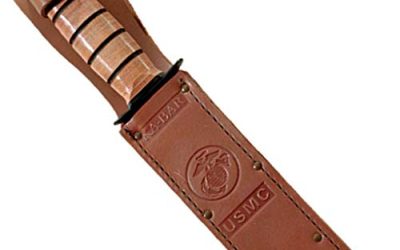
KA-BAR Becker BK2 Campanion
- Best for: Splitting kindling and heavy camp work where blade strength matters most.
- 5.25-inch 1095 Cro-Van steel drop point blade with a saber grind
- 56-58 HRC hardness with a 0.25-inch blade thickness
- 10.5-inch overall length
- 16 ounces, knife only
Splitting kindling and heavy camp work where blade strength matters most.
The weight adds up on a long walk, and the thick blade slices food and carves fine details with more resistance than the thinner knives here.
The Becker BK2 Campanion is the heavyweight of this group, and it suits a bushcrafter who splits a lot of kindling and wants a blade that behaves like a small hatchet. Its quarter-inch slab of 1095 Cro-Van steel is the thickest blade here, and that thickness wedges rounds apart and survives prying that would damage a thinner knife. The 5.25-inch drop point blade and saber grind keep enough edge for camp chores, while the Ultramid handle scales give a secure grip even under work that would tire a lighter blade. At a full pound before the sheath, it is a splitting tool that happens to cut.
Watch out for: The weight adds up on a long walk, and the thick blade slices food and carves fine details with more resistance than the thinner knives here.
ESEE-3P
- Best for: Fine carving and precise control where a shorter blade earns its keep.
- 3.88-inch 1095 carbon steel blade with a 3.38-inch cutting edge
- 0.125-inch blade thickness with a 55-57 HRC hardness
- Drop point blade with a black powder-coat finish
- Linen Micarta handle scales
Fine carving and precise control where a shorter blade earns its keep.
The shorter blade and thinner stock make it the wrong tool for batoning wide rounds, so pair it with a saw or a heavier blade for splitting.
The ESEE-3P is the precision pick in this group, and it suits a bushcrafter who spends more time carving than splitting. Its 3.88-inch 1095 carbon steel blade is the shortest here, which puts your fingers close to the edge for notches, feather sticks, and trap triggers, while the 3.38-inch cutting edge still handles food prep and cord without feeling small. Linen Micarta handle scales give a warm, secure grip, and the molded polymer sheath with its clip plate carries the knife close on a belt or a pack strap. Like the ESEE-4P, it comes from the same American maker and carries the same no-questions-asked lifetime warranty.
Watch out for: The shorter blade and thinner stock make it the wrong tool for batoning wide rounds, so pair it with a saw or a heavier blade for splitting.
Helle Eggen
- Best for: Wet trips and camp cooking where a low-maintenance stainless blade earns its keep.
- 3.98-inch (101 mm) triple laminated stainless steel drop point blade
- Classic Scandi grind with a 3.1 mm blade thickness
- Stick tang construction
- Curly birch handle, 110 mm long
Wet trips and camp cooking where a low-maintenance stainless blade earns its keep.
The stick tang build is not meant for heavy prying or batoning wide rounds, so keep the hard splitting work for a full tang knife.
The Helle Eggen is the stainless choice here, suiting a bushcrafter who camps in wet country or cooks at camp and wants a blade that asks little in return. Its 3.98-inch triple laminated stainless blade holds an edge and resists rust when the knife gets wet cutting food or working in rain, and the classic Scandi grind sharpens easily on a flat stone beside the fire. The curly birch handle feels warm and secure, and the genuine leather sheath shapes itself to the blade over time. Made in Norway with a stick tang build, the Eggen is a traditional Scandinavian outdoor knife that favors control over brute force.
Watch out for: The stick tang build is not meant for heavy prying or batoning wide rounds, so keep the hard splitting work for a full tang knife.
Which One Fits Your Situation
You want one knife for nearly every camp job
Choose the ESEE-4P. Its 4.5-inch blade sits in the middle of this group, long enough to baton kindling and short enough to carve with control, and the flat grind handles food and cord cleanly. The gray Micarta grip stays secure in wet or cold hands, and the molded sheath carries well on a belt or a pack. It is the safest single-knife choice when you do not want to carry two blades.
You split a lot of kindling and want the toughest blade
Pick the KA-BAR Becker BK2 Campanion. Its quarter-inch 1095 Cro-Van blade is the thickest here, and that thickness wedges rounds apart with fewer strokes than any other knife in this group. Accept the full pound of weight as the cost of that strength, and keep a lighter blade or a saw nearby for fine carving, since the BK2 is built for splitting first and slicing second.
You carve wood for hours and want the most control
Choose the ESEE-3P. Its 3.88-inch blade keeps your fingers close to the edge for notches, feather sticks, and fine detail work, while the linen Micarta scales stay comfortable through long sessions. It is the right pick when carving fills most of your camp day and splitting is a smaller part of the job, handled by a saw or a second blade.
You camp in wet country and cook at camp every night
Pick the Helle Eggen. Its triple laminated stainless blade shrugs off rain and food juice with far less maintenance than the carbon steel knives here, and the Scandi grind is easy to bring back to sharp on a flat stone. The curly birch handle and leather sheath suit a slower, more traditional camp routine where the knife works as much in the kitchen as in the woods.
Common Mistakes
- Buying the longest and thickest blade available and then finding it clumsy for the carving that fills most of a camp day.
- Choosing a carbon steel blade for wet-country camping and leaving it damp in the sheath, where rust spots form quickly.
- Expecting a stick tang knife to baton wide rounds or pry like a full tang blade, and then blaming the knife when the handle loosens.
- Picking a knife by blade length alone without checking how the handle fits your hand and how the sheath carries on a belt.
- Skipping the sheath check entirely, then discovering on the trail that the knife rattles, slips out, or digs into your hip on every step.
Frequently Asked Questions
What blade length works best for a bushcraft knife?
A blade between about four and five inches covers nearly all bushcraft work. Near four inches gives fine control for carving notches and feather sticks, while near five inches spans wider rounds for batoning kindling. Shorter blades suit carvers and cooks, longer blades suit splitters, and the middle of that range is the safest choice for a first bushcraft knife.
Is carbon steel or stainless steel better for a bushcraft knife?
Carbon steel holds a keen edge longer and sharpens easily, which carvers value, but it needs drying and a light coat of oil after wet use. Stainless steel resists rust in rain and around food with far less care, though it can take a little more work to bring back to sharp. Your climate and your willingness to maintain the blade should decide.
Can a bushcraft knife handle camp cooking?
Yes, a bushcraft knife with a flat or Scandi grind slices food, trims meat, and cuts vegetables well at camp, and a stainless blade is the easier choice around juice and damp conditions. A thick saber ground blade will still work, but it wedges through food with more resistance. Wash and dry the blade after cooking, especially a carbon steel one.
Do I need a full tang for bushcraft?
Full tang is the safer choice for hard use such as batoning and prying, since the blade steel runs through the whole handle with no hidden joint to fail. A stick tang knife like the Helle Eggen is lighter and comfortable, handles carving and camp cooking well, but is not built for the same heavy splitting work. Match the tang to the hardest job you will ask of it.
More from Amazon
Programs that pair well with the guide above. Offers and eligibility are set by Amazon and may change.
Set up recurring deliveries of everyday items on eligible products. Terms and savings are set by Amazon.
Explore Subscribe & SaveCollect the home and kitchen items you want in one registry that guests can shop from.
Create a wedding registryFree shipping on eligible items, Prime Video and more. Eligible new members can start with a free trial.
Start a Prime free trialAudiobooks and podcasts to listen to on the go. Eligible new members can start with a free trial.
Try Audible freeAs an Amazon Associate we earn from qualifying purchases.
Write Your Review
No reviews yet. Be the first to share your experience!