
Our Short List of 3

- Best for: Campers and hikers who want a repairable, hard-use carbon steel knife.
- Blade length: 6 inches
- Blade steel: 1095 carbon steel
- Blade shape: Drop point
- Handle: Micarta

- Best for: Campers who want a light, low-maintenance classic for general camp and food tasks.
- Blade length: 6 inches
- Blade steel: 420HC stainless steel
- Blade shape: Clip point
- Handle: Black phenolic

- Best for: Wet-weather trips and owners who want stainless performance with minimal upkeep.
- Blade length: 6.3 inches
- Blade steel: Laminated VG10 stainless steel
- Hardness: 59 Rockwell
- Blade shape: Modified drop point
All 4 Picks at a Glance
| Product | Specs | Action |
|---|---|---|
| ESEE-6HM |
| Check price on Amazon |
| Buck 119 Special |
| Check price on Amazon |
| Fallkniven A1 |
| Check price on Amazon |
 Schrade SCHF9 Extreme Survival |
| Check price on Amazon |
Key takeaways
- Five 6-inch survival knives compared on steel, grip, sheath and carry weight, so you can pick the right fixed blade for camp and backcountry kits.
A six-inch blade sits in a useful middle ground for a survival knife. It is long enough to baton small wood, carve a shelter notch, and slice through cord and food with one draw, yet it stays short enough to control during fine work such as feathering tinder or trimming a bandage. Shorter blades force you to work harder on wood, while longer blades add weight and make delicate cuts clumsy, so the six-inch size is the point where most buyers should start their decision.
This guide is for campers building a first emergency kit, backcountry hikers who want one dependable fixed blade, and anyone replacing a worn camp knife with something built for harder use. Every knife below has a blade close to six inches, a full-tang fixed-blade build, and a sheath made for belt or pack carry, and each pick was chosen from its listed steel, handle, sheath, and dimensions on Amazon.
Quick Picks
As an Amazon Associate we earn from qualifying purchases.
| Product | Best for | Key spec from title |
|---|---|---|
| ESEE-6HM | Field repair and hard use in dry country | 6-inch 1095 carbon steel blade |
| Cold Steel SRK | Heavy wood work on a tight kit budget | 6-inch SK-5 carbon steel blade |
| Buck 119 Special | Classic camp carry and food preparation | 6-inch 420HC stainless steel blade |
| Fallkniven A1 | Wet weather and low-maintenance carry | 6.3-inch laminated VG10 blade |
| Schrade SCHF9 | Big chopping jobs at a modest outlay | 6.4-inch 1095 high carbon blade |
How to Choose
Match the steel to your climate and habits
Carbon steel such as 1095 and SK-5 takes a keen edge and sharpens easily on a small stone, which matters when you are far from a workshop. The trade-off is rust: carbon steel needs drying and a light protective coating after wet work, and a blade left damp in its sheath will spot. Stainless steel such as 420HC and laminated VG10 resists corrosion with far less attention, so it suits rainy forests, coastal trips, and owners who store a knife for months between outings. Choose carbon steel when you sharpen often and maintain gear after every trip, and stainless when you want a blade that forgives neglect.
Check the handle before the blade
A survival knife is used with cold, wet, or tired hands, so grip security matters as much as edge geometry. Look for a handle with texture that works when damp, a guard or finger indexing that stops the hand sliding forward, and a shape that fills the palm without forcing an awkward wrist angle. Micarta and Kraton-style rubber handles stay grippy when wet, while smooth phenolic handles feel comfortable for food preparation but can slip during heavy batoning. If possible, compare handle length against your own hand, since a handle that is too short leaves the little finger hanging off the end during hard cuts.
Judge the sheath as part of the knife
A good sheath holds the blade securely, drains water, and lets you draw and re-sheath the knife one-handed. Molded polymer sheaths usually give the most positive retention and the best drainage, while leather sheaths look traditional and ride quietly but absorb moisture and need care of their own. Nylon sheaths often add pockets for a fire starter or sharpener, which is handy, but check that the closure keeps the knife from shifting during a long walk. A sheath that rattles, releases too easily, or traps water will cause more trouble than a slightly duller blade.
Weigh the whole carry, not just the blade
A six-inch blade already adds length and weight over a compact camp knife, and the sheath, fire starter, and belt attachment add more. A knife that weighs around seven ounces disappears on a belt, while a fifteen-ounce knife with a loaded nylon sheath changes how a pack balances and how far you want to walk with it. Think about where the knife will ride: a belt knife needs to clear a pack hip belt, and a pack-stowed knife needs a sheath that protects other gear. Pick the lightest knife that still handles your heaviest expected job, and leave the chopping to a saw when the weight starts to argue back.
The 5 Best Options
ESEE-6HM
- Best for: Campers and hikers who want a repairable, hard-use carbon steel knife.
- Blade length: 6 inches
- Blade steel: 1095 carbon steel
- Blade shape: Drop point
- Handle: Micarta
Campers and hikers who want a repairable, hard-use carbon steel knife.
1095 is not stainless, so dry the blade and protect it after wet use, and confirm whether the listing you buy is the 6HM variant, since the related 6P model is listed with a longer blade.
The ESEE-6HM is the knife to choose when you expect hard use and want a tool you can keep working for years. Its six-inch 1095 blade handles batoning, carving, and shelter work, and the removable Micarta scales mean a damaged handle can be replaced instead of ending the knife’s life. The leather sheath suits belt carry and keeps the profile slim, while the drop-point shape works for both wood and food. It is a straightforward, repairable tool for people who maintain their gear and want a knife that can be serviced rather than replaced.
Watch out for: 1095 is not stainless, so dry the blade and protect it after wet use, and confirm whether the listing you buy is the 6HM variant, since the related 6P model is listed with a longer blade.
Cold Steel SRK
The Cold Steel SRK is built for heavy work at a size that still fits a standard belt sheath. Its six-inch SK-5 blade is thick enough for batoning small wood and splitting kindling, and the textured Kray-Ex handle stays secure when hands are wet or cold. The Secure-Ex sheath locks the knife in place and drains, which suits a knife that will ride on a pack or belt through rain and brush. This is the pick for buyers who want maximum toughness from a simple, proven design and who do not mind maintaining carbon steel.
Specs
- Blade length: 6 inches
- Blade steel: SK-5 carbon steel
- Blade thickness: 5 mm
- Blade shape: Clip point
- Handle: Kray-Ex
- Sheath: Secure-Ex sheath
- Weight: 10.8 oz
Best for: Heavy wood processing and rough camp chores where toughness matters most.
Watch out for: SK-5 needs drying and oiling after wet trips to prevent rust, and do not confuse this full-size SRK with the shorter SRK Compact, which is a different model.
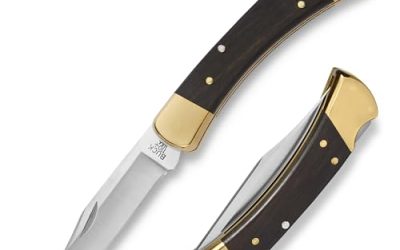
Buck 119 Special
- Best for: Campers who want a light, low-maintenance classic for general camp and food tasks.
- Blade length: 6 inches
- Blade steel: 420HC stainless steel
- Blade shape: Clip point
- Handle: Black phenolic
Campers who want a light, low-maintenance classic for general camp and food tasks.
The slim clip point is not made for heavy batoning or prying, and the listing should be checked live before buying, since one Amazon crawl flagged this model as discontinued by the manufacturer.
The Buck 119 Special is the classic choice in this group, and it earns its place through balance rather than brute force. Its six-inch 420HC clip-point blade is slim enough for food preparation and detail work, yet long enough for camp tasks such as cutting cord, slicing, and light carving. The black phenolic handle and leather sheath keep the whole package light on the belt, and the stainless blade asks for far less maintenance than the carbon steel knives here. It suits campers who want one elegant, easy-care knife that handles ordinary camp work well.
Watch out for: The slim clip point is not made for heavy batoning or prying, and the listing should be checked live before buying, since one Amazon crawl flagged this model as discontinued by the manufacturer.
Fallkniven A1
- Best for: Wet-weather trips and owners who want stainless performance with minimal upkeep.
- Blade length: 6.3 inches
- Blade steel: Laminated VG10 stainless steel
- Hardness: 59 Rockwell
- Blade shape: Modified drop point
Wet-weather trips and owners who want stainless performance with minimal upkeep.
The convex edge needs a strop or careful abrasive work to sharpen correctly, and this is the premium-priced knife in the group, so confirm the sheath version before ordering.
The Fallkniven A1 is the low-maintenance pick for wet climates and long trips. Its 6.3-inch laminated VG10 blade pairs a hard stainless core with tougher outer layers, so it holds an edge well and resists rust in rain, coastal air, and winter conditions. The convex grind cuts efficiently through wood, and the Kraton handle stays comfortable during long carving sessions. The Zytel sheath is light, drains well, and carries in several positions, which makes the A1 easy to live with on a belt or pack over many days outdoors.
Watch out for: The convex edge needs a strop or careful abrasive work to sharpen correctly, and this is the premium-priced knife in the group, so confirm the sheath version before ordering.
Schrade SCHF9 Extreme Survival
- Best for: Campers who need a stout, budget-friendly blade for heavy chopping and wood processing.
- Blade length: 6.4 inches
- Blade steel: 1095 high carbon steel
- Handle: Kraton
- Sheath: Nylon sheath
Campers who need a stout, budget-friendly blade for heavy chopping and wood processing.
At over twelve inches overall it is the longest knife here, so check belt and pack fit, and confirm live availability, since one retailer showed it on backorder.
The Schrade SCHF9 is the heaviest worker in this group, built for chopping and clearing when a lighter knife would struggle. Its 6.4-inch 1095 blade has a broad, stout profile that powers through small branches and thick cord, and the full-tang build gives confidence during batoning. The Kraton handle absorbs shock and stays grippy, while the nylon sheath adds room for extras. It is the right pick when your kit is built around processing wood at camp and you accept extra weight in exchange for cutting authority.
Watch out for: At over twelve inches overall it is the longest knife here, so check belt and pack fit, and confirm live availability, since one retailer showed it on backorder.
Which One Fits Your Situation
First survival knife for general camping
Pick the Buck 119 Special when this is your first fixed blade and your trips are mostly car camping or short hikes. Its stainless blade needs little maintenance, its light weight makes it easy to carry all day, and its slim profile handles food preparation and cord cutting better than the heavier knives here. Move to a carbon steel pick only when you are ready to dry and protect the blade after every trip.
Hard use in dry country
Pick the ESEE-6HM when your trips involve serious wood work and you want a knife that can be repaired in the field. The 1095 blade sharpens easily on a small stone, the removable scales can be swapped if damaged, and the six-inch length gives leverage for batoning without the clumsiness of a longer blade. Keep a light coating on the steel and it will serve for years.
Frequent rain, coast, or winter trips
Pick the Fallkniven A1 when corrosion is your main worry. Laminated VG10 shrugs off wet weather that would spot a carbon blade, the convex edge holds up through repeated camp work, and the Zytel sheath drains instead of holding water. It is the pick for owners who store a knife in a damp kit bag or use it in all seasons.
Maximum chopping from one knife
Pick the Schrade SCHF9 when wood processing is the job and a saw is not in the kit. Its broad 6.4-inch blade and full-tang build give it more chopping authority than the other knives here, and the Kraton handle keeps the grip secure through repeated strikes. Accept the extra length and weight as the cost of that capability, and pair it with a smaller knife for fine work.
Common Mistakes
- Buying a longer blade than the job needs, then leaving the knife at home because it is heavy and awkward to carry.
- Choosing carbon steel for a kit that will sit damp in storage for months, then finding rust on the edge when it is needed.
- Judging a knife by its blade alone and ignoring a sheath that rattles, traps water, or releases too easily.
- Using a survival knife as a pry bar or screwdriver, which can chip the edge or snap a tip that batoning would never damage.
- Skipping a small sharpener in the kit, so a dulled blade stays dull for the whole trip instead of getting a quick touch-up at camp.
Frequently Asked Questions
Is a 6-inch blade too long for a survival knife?
A six-inch blade is not too long for most survival tasks. It gives enough reach for batoning small wood and carving shelter notches, while staying short enough for food preparation and feathering tinder. Shorter blades around four inches feel nimbler for fine work, so the right length depends on whether your kit leans toward wood processing or delicate tasks.
What is the best steel for a 6-inch survival knife?
There is no single best steel, because the choice depends on climate and maintenance habits. Carbon steels such as 1095 and SK-5 sharpen easily and resist chipping, but they need drying and a protective coating after wet use. Stainless steels such as 420HC and laminated VG10 resist rust with far less care, though they can take more effort to sharpen.
Can a survival knife replace an axe or saw?
A survival knife cannot safely replace an axe or saw for major wood processing, and it should not be forced to. A six-inch blade handles small branches, kindling, and shelter notches well, but splitting large logs or felling trees calls for a dedicated tool. Carrying a small folding saw alongside the knife covers the heavy cutting while keeping the knife free for precise work.
How should I store a survival knife between trips?
Clean the blade with mild soap and water, dry it completely, and apply a thin protective coating if the steel is carbon. Store the knife outside a damp leather sheath in a dry place, and check the edge and sheath before each trip. A knife stored wet will develop rust on carbon steel, so a few minutes of care after every outing prevents most storage damage.
More from Amazon
Programs that pair well with the guide above. Offers and eligibility are set by Amazon and may change.
Set up recurring deliveries of everyday items on eligible products. Terms and savings are set by Amazon.
Explore Subscribe & SaveCollect the home and kitchen items you want in one registry that guests can shop from.
Create a wedding registryFree shipping on eligible items, Prime Video and more. Eligible new members can start with a free trial.
Start a Prime free trialAudiobooks and podcasts to listen to on the go. Eligible new members can start with a free trial.
Try Audible freeAs an Amazon Associate we earn from qualifying purchases.
Write Your Review
No reviews yet. Be the first to share your experience!