

The best stovetop fondue pot for cheese fondue is a 1.5–2-quart enameled cast-iron pot if you want steady heat and reliable results, while a ceramic caquelon is the better choice for occasional fondue and easier handling.
Our top picks
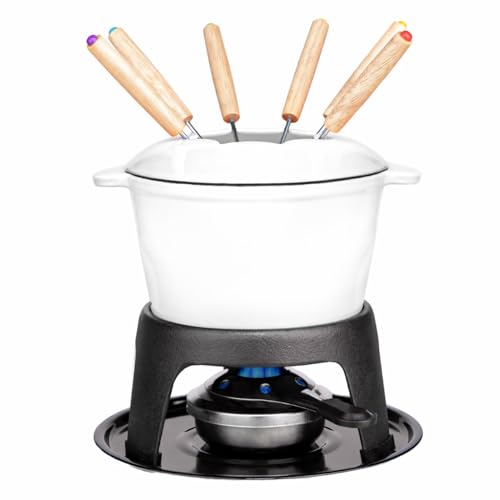 Mabeeze Cast Iron Fondue Pot Set White
- Includes 1.6 Qt enameled cast iron pot, stand,…
- FOR CHEESE, CHOCOLATE & MEAT: Designed for classic…
- Heavy cast iron helps hold steady heat, keeping…
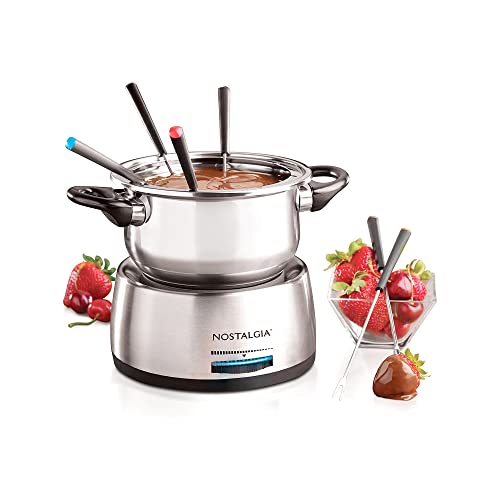 Nostalgia FPS200 6-Cup Stainless Steel Electric Fondue
- Enjoy a wide variety of fondue recipes with…
- This set has everything you need for a…
- Keep fondues at the ideal temperature by adjusting…
 Swissmar Lugano Cast Iron Cheese Fondue Set
- Ultimate Cheese Fondue Experience: This Swissmar Cheese Fondue…
- Durable Cast Iron Construction: The Cast Iron Pot…
- Complete Fondue Set: This fondue set includes a…
| Product | Key specs | |
|---|---|---|
| Mabeeze Cast Iron Fondue Pot Set White | Includes 1.6 Qt enameled cast iron pot, stand,… FOR CHEESE, CHOCOLATE & MEAT: Designed for classic… Heavy cast iron helps hold steady heat, keeping… | Check price |
| Nostalgia FPS200 6-Cup Stainless Steel Electric Fondue | Enjoy a wide variety of fondue recipes with… This set has everything you need for a… Keep fondues at the ideal temperature by adjusting… | Check price |
| Swissmar Lugano Cast Iron Cheese Fondue Set | Ultimate Cheese Fondue Experience: This Swissmar Cheese Fondue… Durable Cast Iron Construction: The Cast Iron Pot… Complete Fondue Set: This fondue set includes a… | Check price |
 Mabeeze Cast Iron Fondue Pot Set Red Mabeeze Cast Iron Fondue Pot Set Red | Includes 1.6 Qt enameled cast iron pot, stand,… FOR CHEESE, CHOCOLATE & MEAT: Designed for classic… Heavy cast iron helps hold steady heat, keeping… | Check price |
As an Amazon Associate we earn from qualifying purchases at no extra cost to you.
Quick recommendation
Choose an enameled cast-iron fondue pot with a flat, induction-compatible base if you make cheese fondue several times a year, serve four to six people, or want to keep the cheese warm for a long meal. Its weight helps prevent temperature swings, and enamel does not react with wine or acidic ingredients.
Choose a ceramic fondue pot for one to four people when low weight, traditional appearance, and simple serving matter more than maximum heat retention. Choose stainless steel only when you prioritize durability and fast heating; it usually requires more careful heat control to prevent scorching.
Stovetop fondue pot comparison
| Pot type | Typical useful capacity | Approximate empty weight | Heat retention | Stovetop compatibility | Cleanup |
|---|---|---|---|---|---|
| Enameled cast iron | 1.5–2.0 qt | 4–7 lb | Excellent; usually 20–35 minutes of stable serving heat | Gas, electric, ceramic; induction only with a magnetic flat base | Good, but heavy; soak rather than scrape |
| Glazed ceramic | 1.0–1.5 qt | 2–4 lb | Good at moderate heat; typically 10–20 minutes | Often burner-only; direct stovetop use depends on the manufacturer | Usually easy by hand; vulnerable to thermal shock |
| Stainless steel | 1.5–2.5 qt | 2–5 lb | Fair to good; changes temperature quickly | Usually gas and electric; induction depends on the base | Very durable, though browned cheese can need soaking |
| Aluminum with nonstick coating | 1.0–2.0 qt | 1–3 lb | Fair; heats quickly | Often compatible with gas and electric; induction requires a magnetic base | Easy initially; coating requires nonabrasive tools |
These capacities are the practical working ranges rather than the brim-full volume. Cheese fondue should generally fill only about half to two-thirds of the pot, leaving room for stirring and dipping without sloshing.
Best choices by situation
| Your situation | Best choice | Why | What to avoid |
|---|---|---|---|
| First fondue set, occasional use | 1.0–1.5 qt ceramic pot with adjustable burner | Affordable, light, and sufficient for two to four people | Large cast iron that takes up storage space |
| Weekly or monthly fondue | 1.5–2.0 qt enameled cast iron | Stable heat and a surface that tolerates repeated cooking | Thin single-wall steel without a diffuser |
| Induction cooktop | Flat magnetic stainless or enameled cast iron | Can heat directly on the cooktop before transferring to the stand | Unverified ceramic or aluminum pots |
| Small kitchen or limited storage | 1.0 qt ceramic pot with a compact burner | Usually lighter and easier to store | Sets with oversized stands and separate accessories |
| Six people or a long dinner | 2.0 qt enameled cast iron | Provides usable capacity and holds heat between dips | Under-1-qt pots, which require frequent refilling |
Material comparison: what matters during cheese fondue
Enameled cast iron: the strongest all-rounder
Cast iron is the most forgiving material because its thermal mass reduces sudden temperature changes. That matters after the cheese has melted: excessive heat can make it stringy, oily, or clumpy, while too little heat can make it thick and difficult to dip. Enamel provides a smooth cooking surface and prevents the iron from contacting wine, lemon juice, or other acidic ingredients.
Products such as the Swissmar Lugano fondue set and cast-iron fondue sets from established cookware makers fit this category, but confirm the exact model’s stovetop and induction instructions before buying. Some cast-iron sets are intended only for heating on a burner, not for direct cooking on a glass cooktop.
The tradeoff is weight. A 5-pound pot becomes awkward when full, so check that the stand has a wide, stable footprint and that the handles remain cool enough to use safely.
Ceramic: traditional and gentle
A glazed ceramic caquelon gives cheese a gradual, gentle heat and looks at home on the dining table. It is a good match for a small group and a low flame. However, ceramic is less tolerant of thermal shock. Do not move a cold ceramic pot directly onto a hot burner, pour cold liquid into a hot empty pot, or place a hot pot on a wet or cold surface.
Many ceramic fondue pots are designed to sit over a burner rather than directly on a stovetop. If the product instructions do not explicitly approve direct stovetop use, melt the ingredients in a saucepan and transfer them to the ceramic pot.
Stainless steel: durable but less forgiving
Stainless steel is difficult to chip and usually handles frequent washing well. It heats faster than cast iron, which is useful when you want to melt cheese efficiently. The downside is that a thin base can create hot spots. Use low heat, stir continuously while melting, and reduce the burner once the mixture is smooth.
A thick, multi-layer base is more important than polished appearance. For induction, look for a clearly stated magnetic base and a flat bottom that sits securely on the cooking zone.
Capacity and burner compatibility
For sizing, allow approximately 250–300 ml of finished fondue per person when bread and vegetables are the main meal. A 1-quart pot holds roughly 950 ml, so its practical serving size is about three people. A 1.5-quart pot holds about 1.4 litres and is comfortable for four people. A 2-quart pot provides about 1.9 litres, enough for five or six people without filling it to the rim.
Burner compatibility is a separate question from pot compatibility. A fondue set may include a gel, alcohol, or candle burner, but that burner is intended to maintain warmth, not rapidly melt a full pot of cheese. Melt the cheese on the stovetop when the pot allows it, then move it to the stand. If using a ceramic pot that cannot go on the stove, use a saucepan first.
Adjustable burners are preferable because cheese fondue usually needs only a low maintenance flame. Candle burners are quiet and simple but offer limited control. Gel or liquid-fuel burners produce more heat, yet require careful placement, cooling, and storage according to the manufacturer’s instructions.
How to set up and maintain cheese fondue
- Check the base. Confirm whether the pot is approved for gas, electric, ceramic, or induction cooking. Never infer induction compatibility from a metal-looking exterior.
- Warm the liquid first. Heat wine or another specified liquid gently. Avoid boiling, which can drive off too much liquid before the cheese is incorporated.
- Add cheese gradually. Add small handfuls while stirring in a consistent figure-eight pattern. This reduces clumps and distributes heat.
- Transfer before the cheese overheats. Once smooth, move the pot to the stand and use the lowest flame that keeps the fondue fluid.
- Soak promptly after serving. Add warm water after the pot has cooled slightly. A 20–30 minute soak usually loosens the cheese more safely than scraping.
- Dry completely. Moisture left around a cast-iron rim, burner, or stand can encourage corrosion or unpleasant odors.
Do not use metal utensils in a nonstick pot, abrasive scouring pads on enamel, or sudden cold water on hot ceramic. Also inspect the burner before every use: blocked openings, damaged fuel cups, or an unstable stand are reasons to replace the burner rather than improvise.
Ownership costs and durability
Basic ceramic or stainless fondue sets commonly fall in the general market range of $30–$70, while heavier enameled cast-iron sets often cost about $60–$150 or more depending on size and included accessories. A simple cost-per-use calculation helps: a $90 pot used six times annually for five years costs about $3 per use before fuel and ingredients. That can make a durable pot worthwhile even if it costs more initially.
The parts most likely to wear are not usually the pot itself. Burner wicks, fuel cups, wooden forks, rubber feet, and nonstick coatings may need replacement or extra care. Cast iron can last for decades if the enamel remains intact, while ceramic can remain serviceable for years if protected from impacts and thermal shock. For frequent use, prioritize a replaceable or widely available burner over a decorative accessory set.
Final verdict
For most households, the best stovetop fondue pot for cheese fondue is a 1.5–2-quart enameled cast-iron model with a flat magnetic base, sturdy stand, and adjustable burner. It offers the best balance of heat retention, temperature control, capacity, and long-term durability. Pick a 1-quart ceramic pot for occasional small gatherings, or a thick-based stainless-steel model when lightweight durability and direct stovetop cooking are your priorities.








Write Your Review
No reviews yet. Be the first to share your experience!