

The best electric hot pot for most households is a 3- to 4-quart model with at least 1,000 watts, a removable nonstick cooking pan, adjustable temperature control, and cool-touch handles; choose a 1- to 2-quart cooker for one person or a 5- to 6-quart model for family meals.
Our top picks
 Elite Gourmet 1.25Qt Noodle Express Electric Hot
- COMPACT, DURABLE, & FAST COOKING: Perfect for personal-sized…
- Not just for noodles! Use it to make…
- Ideal for small kitchens, dorms, apartments, offices, and…
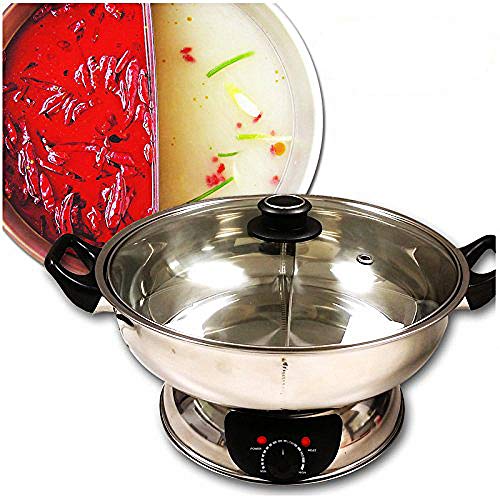 Sonya 5L Electric Dual-Sided Hot pot
- Powerful Performance & Quick Heating: With 1500W of…
- Stable & Safe Design: Features anti-skid feet that…
- Two Flavors, One Pot: Expertly designed internal divider…
 Bear 2L Electric Hot Pot Electric1000W
- 1000 W Cooker: The electric cooker features a…
- 2 L Capacity: The portable pot has a…
- Easy to Clean and Safe: Ramen cooker is…
| Product | Key specs | |
|---|---|---|
| Elite Gourmet 1.25Qt Noodle Express Electric Hot | COMPACT, DURABLE, & FAST COOKING: Perfect for personal-sized… Not just for noodles! Use it to make… Ideal for small kitchens, dorms, apartments, offices, and… | Check price |
| Sonya 5L Electric Dual-Sided Hot pot | Powerful Performance & Quick Heating: With 1500W of… Stable & Safe Design: Features anti-skid feet that… Two Flavors, One Pot: Expertly designed internal divider… | Check price |
| Bear 2L Electric Hot Pot Electric1000W | 1000 W Cooker: The electric cooker features a… 2 L Capacity: The portable pot has a… Easy to Clean and Safe: Ramen cooker is… | Check price |
 Dezin Hot Pot Electric Dezin Hot Pot Electric | Cook & Sauté without stove anytime - In… Easy cleaning & Health cooking - This hot… Big in cooking - The electric cooking pot… | Check price |
As an Amazon Associate we earn from qualifying purchases at no extra cost to you.
Best electric hot pots by cooking situation
| Best for | Recommended size | Useful power range | What to prioritize |
|---|---|---|---|
| One person, dorm room, office | 1–1.5 quarts | 500–800 watts | Small footprint, lid, simple heat control |
| Two people and everyday meals | 2.5–4 quarts | 900–1,300 watts | Removable pan, deep sides, dependable thermostat |
| Family hot pot or shared cooking | 4–6 quarts | 1,200–1,500 watts | Fast recovery, divided sections, sturdy handles |
| Travel or occasional use | 1–2 quarts | 500–900 watts | Low weight, compact storage, protected controls |
Capacity refers to the pan’s total volume, not the amount you should fill it. For boiling noodles, soup, or a communal meal, leave roughly 20% of the pan empty to reduce splashing and allow ingredients to circulate.
Shortlist: compact, mid-size, and family options
Best compact choice: DASH Mini Electric Skillet
The DASH Mini Electric Skillet is a practical choice when cupboard space matters more than serving size. Its roughly 1.2-quart cooking area and 500-watt heater suit oatmeal, eggs, instant noodles, small stir-fries, and soup for one. It is easier to store than a full hot pot, but the shallow cooking surface is less suitable for broth-based communal meals. A compact skillet also tends to recover heat slowly after you add refrigerated ingredients, so cook in small batches.
Best balanced mid-size choice: Zojirushi Gourmet d’Expert Electric Skillet EP-PBC10
The Zojirushi EP-PBC10 is a versatile mid-size option with a 3.2-quart capacity and a 1,350-watt heater. Its deeper pan and temperature control make it more useful than a miniature cooker for hot pot, sukiyaki, simmered dishes, and table cooking. The removable pan is easier to wash than a permanently attached cooking vessel, and the design includes a cooking plate intended for browning as well as simmering.
This is the stronger choice for two to four diners who want one appliance to handle several cooking styles. It is larger and heavier than a travel cooker, however, and its extra capacity is wasted if you usually prepare single portions.
Best family-size direction: 5- to 6-quart electric multi-cooker
For four or more diners, look for a 5- to 6-quart electric multi-cooker or hot pot with about 1,200 to 1,500 watts. This size gives vegetables, sliced meat, tofu, and noodles enough room to move without the broth spilling over the rim. A divided pan is useful when diners want two broths, but the divider reduces usable space in each section and can make cleaning more laborious.
Family-size models need a stable base and substantial side handles. A large pan full of broth can weigh more than 15 pounds, so a lightweight body is not automatically an advantage. If the product has a permanently attached heating element, it should have a clearly protected control and a cleaning instruction that allows wiping rather than immersion.
Electric hot pot comparison: what matters more than the wattage
Heating speed and recovery
Wattage indicates how much electrical power the heater can draw, but it does not guarantee faster cooking. Pan material, thermostat design, lid fit, and the quantity of cold food all affect performance. A 1,300-watt cooker will generally bring broth to a boil faster than a 600-watt compact model, but a crowded pan can still take several minutes to recover after ingredients are added.
For family meals, choose at least 1,200 watts and a lid that fits securely. For a single serving, 500 to 800 watts is usually adequate and may be easier to control for delicate foods.
Depth and usable shape
A deep, round pan is best for broth, dumplings, noodles, and communal dipping. A wider, shallower pan is better for pancakes, grilled meat, and stir-frying because food contacts more of the heated surface. If the product description gives only diameter and not depth, treat that as a warning: capacity alone does not tell you whether ingredients will be submerged or crowded.
For table hot pot, aim for a cooking depth of roughly 3 to 4 inches. More depth reduces splashing, while an excessively deep pan can make it difficult to reach food with chopsticks or a serving spoon.
Nonstick coating
Most electric hot pots use a PTFE-style nonstick coating, ceramic nonstick coating, or an enamelled metal cooking surface. PTFE-style coatings generally release food well and are forgiving for eggs and noodles. Ceramic coatings can feel slick when new but often lose some release performance sooner if repeatedly overheated or scrubbed.
- Use wood, silicone, or plastic utensils rather than metal tools.
- Do not preheat an empty coated pan for a long period.
- Let the pan cool before washing it; thermal shock can damage coatings and warp metal.
- Replace the pan when the coating is extensively peeling or food consistently sticks despite proper care.
“Nonstick” does not mean dishwasher-safe. Confirm whether the removable pan, lid, and accessories may go in the dishwasher; the electrical base should never be immersed.
Controls and temperature range
A simple low-medium-high dial is adequate for soup and noodles, but a numbered thermostat is easier to repeat when simmering or keeping food warm. Look for a genuine simmer setting rather than a single on/off switch. An indicator light is useful, but it does not prove that the food has reached a safe or stable temperature.
For beginners, clearly marked controls are preferable to a touch panel that becomes difficult to operate around steam or splashes. For experienced cooks, independent controls for divided pans can justify a higher price because each broth can be maintained separately.
Decision matrix for choosing the right model
| Your situation | Best fit | Why | Compromise |
|---|---|---|---|
| Limited budget and occasional use | Basic 1–3 quart cooker | Lower purchase cost and simple operation | Slower recovery and fewer controls |
| Small kitchen or dorm room | 1–1.5 quart compact model | Stores easily and uses less counter space | Usually serves one person |
| Frequent cooking for two | 2.5–4 quart removable-pan model | Good balance of capacity, versatility, and cleaning | Heavier to store than a mini cooker |
| Family hot pot gatherings | 5–6 quart, 1,200–1,500-watt model | More room and faster heat recovery | Higher energy use and a larger footprint |
| New to electric cooking | Model with numbered thermostat and lid | Easier to repeat simmering and avoid splashes | May cost more than a switch-controlled model |
How to set up and clean an electric hot pot
- Place the cooker on a dry, level, heat-resistant surface with several inches of clearance around the vents.
- Check that the pan is correctly seated before adding liquid. A misaligned pan can heat unevenly or strain the base.
- Add liquid below the maximum-fill line, leaving extra room if you will add noodles, leafy vegetables, or foaming ingredients.
- Preheat with the lid on when bringing broth to a boil, then reduce the setting once simmering begins.
- Unplug the unit and allow it to cool before removing the pan.
- Wash the pan with warm water and a soft sponge. Wipe the heating base with a damp cloth and dry it completely before storage.
Clean spills around the thermostat promptly. Dried broth, starch, and oil can interfere with the control or create odors the next time the cooker heats. Do not pour cold water into a very hot coated pan, and do not use abrasive powder unless the manufacturer specifically permits it.
Ownership costs and durability
Electric hot pots are usually inexpensive to operate. For example, a 1,200-watt cooker used for 45 minutes consumes 0.9 kilowatt-hours: 1.2 kilowatts multiplied by 0.75 hours. At an electricity rate of $0.20 per kilowatt-hour, that is about $0.18 per cooking session. Actual cost varies with heat cycling and local utility rates.
The cooking surface is usually the first component to show wear, followed by the thermostat, lid handle, and power cord. A removable pan is valuable not only for cleanup but also because it makes the appliance easier to inspect and, in some product lines, replace. Before buying, check whether replacement pans, lids, or temperature probes are available; a low-cost cooker may be poor value if one damaged part makes the whole unit unusable.
Final recommendation
Choose a compact 1- to 1.5-quart hot pot for solo portions and limited storage, a 3- to 4-quart removable-pan model for the best all-purpose balance, and a 5- to 6-quart cooker when several people will eat from it at the table. Prioritize pan depth, heat recovery, a controllable simmer, and cleanability over decorative features. The best electric hot pots are the ones whose capacity matches your normal meals, whose coating you can maintain, and whose controls you will actually use.








Write Your Review
No reviews yet. Be the first to share your experience!