

The best automatic pan stirrer for most home cooks is the StirMATE V: it offers multiple speed settings, a height-adjustable frame, interchangeable stirring arms and enough heat resistance for sauces, gravies and soups without requiring constant attention.
That said, no automatic stirrer is a universal replacement for a wooden spoon. The right choice depends on your pan diameter, cooking temperature, sauce thickness and whether you need occasional assistance or unattended stirring for long simmering.
Our top picks
 StirMATE Automatic Pot Stirrer GEN 3- Variable
- PATENTED HANDS FREE stirring
- straight-sided pots 6-9 in
- HIGH TORQUE geared motor stirs for hours on…
 Uutensil Stirr
- Automatic stirrer with unique and innovative design -…
- Hands-free self-rotating with three speed options - Simply…
- Features removable nylon legs - Heat-resistant up to…
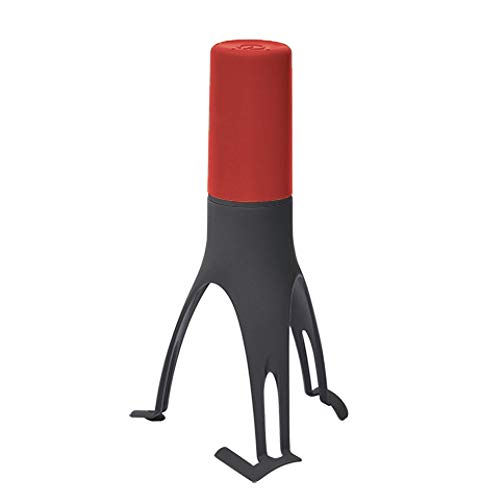 Uutensil Stirr
- Automatic stirrer with unique and innovative design -…
- Hands-free self-rotating with three speed options and LED…
- Features removable nylon legs - Heat-resistant up to…
| Product | Key specs | |
|---|---|---|
| StirMATE Automatic Pot Stirrer GEN 3- Variable | PATENTED HANDS FREE stirring straight-sided pots 6-9 in HIGH TORQUE geared motor stirs for hours on… | Check price |
| Uutensil Stirr | Automatic stirrer with unique and innovative design -… Hands-free self-rotating with three speed options - Simply… Features removable nylon legs - Heat-resistant up to… | Check price |
| Uutensil Stirr | Automatic stirrer with unique and innovative design -… Hands-free self-rotating with three speed options and LED… Features removable nylon legs - Heat-resistant up to… | Check price |
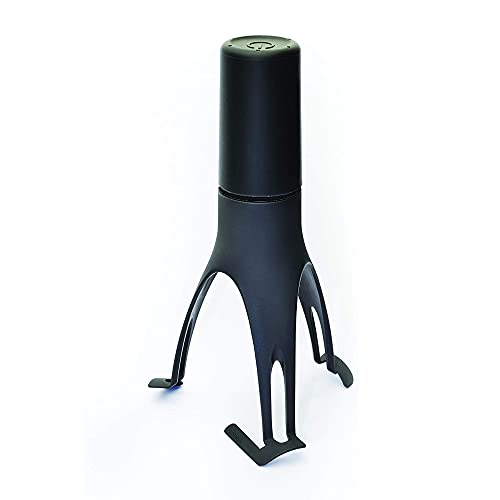 UÜTENSIL Stirr UÜTENSIL Stirr | Automatic stirrer with unique and innovative design -… Hands-free self-rotating with three speed options and LED… Features removable nylon legs - Heat-resistant up to… | Check price |
As an Amazon Associate we earn from qualifying purchases at no extra cost to you.
Best automatic pan stirrer: quick recommendations
- Best overall: StirMATE V, for regular sauce, soup, gravy and porridge cooking.
- Best for occasional use: A compact battery-powered automatic pot stirrer with two or three speeds and a removable silicone paddle.
- Best for wide pans: A height-adjustable model with a rigid bridge or clamp that spans at least 12 inches.
- Best for delicate cookware: A stirrer with a silicone or soft nylon paddle, rounded edges and a low-speed setting.
- Best for thick mixtures: A higher-torque model with a broad paddle, provided the manufacturer allows use with dense foods.
What matters when choosing an automatic pan stirrer
Speed control
A single-speed motor is useful only for forgiving liquids. Soups, custards and tomato sauces benefit from a slow setting that creates steady circulation without splashing. Faster settings are more useful for thin sauces or for preventing ingredients from settling during the first few minutes of cooking.
Look for at least three speed settings. A useful operating range is approximately 10 to 30 revolutions per minute. Very slow stirring is preferable for thick sauces and delicate pans; faster rotation can help distribute heat in a broad saucepan but may move food away from the centre rather than scrape the base.
Pan compatibility
Measure the inside diameter of your most-used saucepan, not the outside rim. Many automatic stirrers work best in pots between 7 and 10 inches wide. A small paddle in a 12-inch sauté pan may leave hot areas untouched, while a large paddle in a narrow saucepan can stall the motor.
Also check the minimum and maximum rim thickness. Clip-on products can be unstable on very thin stainless-steel pans, rolled rims or pans with pouring spouts. A bridge-style design is usually more adaptable, but it takes more cupboard space.
Heat resistance
The motor housing should remain above the steam zone wherever possible. For the stirring arm and paddle, a stated heat rating of at least 200°C is a sensible target for normal stovetop cooking. Do not assume that a heat-resistant paddle makes the motor safe to place over a hot burner.
Never leave an automatic stirrer directly over an uncovered gas flame, and keep the motor away from oven heat. Steam, splashes and condensation are more common causes of failure than ordinary stirring.
Battery life and power
Battery-powered stirrers are convenient because they do not trail a cord across the hob. Their practical runtime depends heavily on speed, food thickness and battery quality. For occasional cooking, two to four hours of cumulative runtime per battery set is usually adequate. Frequent users should consider rechargeable cells or a rechargeable model.
A simple ownership calculation helps. If a pair of batteries costs about $1.50 and lasts three hours, a 30-minute simmer costs roughly $0.25 in batteries. At four 30-minute uses each week, that is approximately $52 per year. Rechargeable batteries can reduce that recurring cost, although they require a compatible charger and eventually need replacement.
Head-to-head comparison
| Stirrer type or example | Typical speeds | Useful pan width | Typical runtime or power | Best suited to | Main limitation |
|---|---|---|---|---|---|
| StirMATE V | 3 settings | Approximately 7–11 inches, depending on arm position | Battery-powered; commonly designed for several hours of intermittent use | Frequent sauce, soup and gravy cooking | More expensive and bulkier than basic stirrers |
| Compact clip-on automatic stirrer | 1–3 settings | Approximately 6–9 inches | About 2–4 hours per battery set is typical | Small households and occasional use | Less stable on wide or unusually shaped pans |
| Bridge-style automatic stirrer | 2–3 settings | Approximately 8–12 inches | Battery or rechargeable, depending on model | Wide sauté pans and stockpots | Needs more storage space and careful positioning |
| Manual weighted stirrer | Not adjustable | Usually 7–10 inches | No battery; typically 20–40 minutes of unattended stirring | Budget buyers and low-temperature simmering | Limited power for thick mixtures |
Specifications vary between revisions and regional versions, so confirm the supplied paddle sizes, battery type, heat rating and cleaning instructions before buying. The numbers above are practical comparison targets rather than a guarantee for every unit sold under a product name.
Decision matrix: which automatic pan stirrer fits your kitchen?
| Your situation | Recommended design | Why | What to avoid |
|---|---|---|---|
| Budget under about $40 and occasional cooking | Basic two- or three-speed clip-on unit | Enough assistance for gravy, soup and thin sauces without paying for extra accessories | Models with only one high speed |
| Cooking sauces several times each week | StirMATE V or similar adjustable multi-speed unit | Better control, replaceable or interchangeable stirring parts and more adaptable positioning | Unbranded units with sealed, non-replaceable paddles |
| Using 10–12-inch sauté pans | Bridge-style model with an arm reaching at least 5 inches from the support | Improves coverage across a wider base | Short paddles designed for narrow saucepans |
| Nonstick or ceramic cookware | Silicone paddle with rounded edges and a low-speed setting | Reduces the chance of scuffing when the paddle contacts the base | Exposed metal edges or rough moulded plastic |
| Small kitchen with limited drawers | Foldable or compact clip-on design | Uses less storage space than a rigid bridge | Large fixed frames and multiple loose arms |
How to set up a pan stirrer without scorching the sauce
- Choose the correct pan. Use a pan whose base is reasonably flat and whose diameter suits the paddle. A very small pan can trap the paddle against the side.
- Attach the stirrer before heating. This lets you check clearance without reaching over hot oil or steam.
- Position the paddle slightly off-centre. A paddle that sweeps around the centre usually circulates food more effectively than one pressed against the wall.
- Start on the lowest speed. Increase speed only if the ingredients are settling or the paddle is not creating visible movement.
- Keep the sauce loose at first. Thick mixtures place more load on the motor. Add liquid early, then reduce the sauce after the main ingredients are evenly distributed.
- Check the base during the first few minutes. An automatic stirrer can miss the area directly under the paddle hub or leave a thin ring around the perimeter.
- Stay nearby when cooking at high heat. The device reduces stirring, not the risk of boiling over, splashing or burning.
Will an automatic stirrer prevent sticking?
It can reduce sticking, but it cannot compensate for excessive heat, insufficient liquid or a pan that is too large. Sticking usually starts when a thick mixture loses moisture at the base. Continuous movement helps distribute heat and interrupts the layer forming on the cooking surface; it does not remove already-burned food.
For a thick cheese sauce or custard, use low heat and a flexible silicone paddle. For tomato sauce, the most effective combination is a heavy-bottomed pan, enough liquid during the early simmer and periodic checks around the edges. For rice, mashed root vegetables and very dense mixtures, a conventional spoon may still be safer because the motor can stall.
Cookware safety and scratching risk
Silicone is generally the safest paddle material for nonstick and ceramic cookware, but inspect the paddle for embedded grit or a split seam. A damaged paddle can expose a harder internal support. Nylon may also be suitable when it is smooth, rounded and explicitly rated for high heat. Avoid metal paddles on coated cookware.
Do not force a stalled motor. Switch it off, move the pan from the heat if necessary, and loosen the mixture manually. Repeated stalls can overheat the motor and wear the gears. A paddle that repeatedly catches on a rivet or pan seam is the wrong shape for that cookware.
Cleaning and durability realities
The paddle is usually the first part to wear. Look for removable paddles that can be replaced rather than an entire appliance. Silicone can soften, discolour or retain strong flavours after prolonged exposure to tomato, curry or caramel. Inspect it every few weeks if you use the stirrer often.
- Remove the paddle immediately after cooking so dried sauce does not harden around the axle.
- Wash food-contact parts according to the manufacturer’s instructions; do not immerse a motor housing.
- Wipe steam and splashes from the housing before storage.
- Keep battery contacts dry and remove batteries during long-term storage.
- Do not run the device empty for extended periods; the load helps the paddle rotate smoothly.
Bottom line
The best automatic pan stirrer is not necessarily the fastest model. Choose a multi-speed unit with a soft, replaceable paddle, a heat-resistant arm, stable pan attachment and enough reach for your cookware. For most kitchens, the StirMATE V is the strongest all-purpose option; a compact clip-on model makes more sense for occasional use, while a bridge-style stirrer is the better fit for wide pans. Whichever design you choose, use it to reduce repetitive stirring—not as permission to leave a hot pan completely unattended.








Write Your Review
No reviews yet. Be the first to share your experience!