

The best aebleskiver pan for Danish pancake balls depends on your cooktop and priorities: choose the Lodge Cast Iron Aebleskiver Pan for induction compatibility and heat retention, or the Nordic Ware Danish Ebelskiver Pan for lighter handling, quicker response, and easier turning.
Our top picks
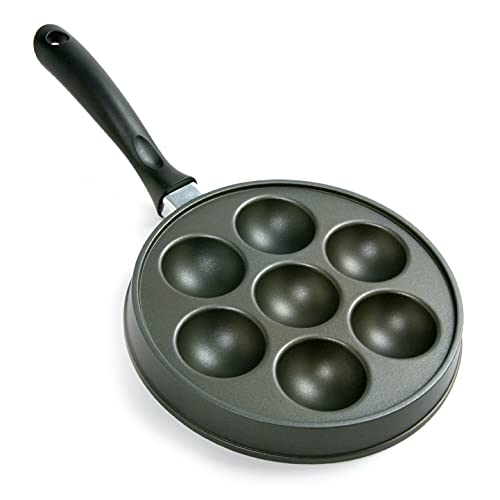 Norpro Nonstick Stuffed Pancake Pan
- Create delicious stuffed Danish aebleskiver (filled pancake balls)…
- Fill with fruit, jam, cream cheese, peanut butter,…
- Durable cast-aluminum construction heats quickly, while the nonstick…
 KUHA Cast Iron Aebleskiver Pan
- KUHA cast iron aebleskiver pan helps you make…
- Built for reliable heat retention, this pre-seasoned cast…
- KUHA aebleskiver pan includes bamboo skewers for easier…
 Commercial CHEF Danish Aebleskiver Pan
- Quality made: Make endless batches of yummy, fluffy…
- Heats evenly: : Impress your friends at dinner…
- Excellent Cooking Surface: This is pre-seasoned and well-oiled…
| Product | Key specs | |
|---|---|---|
| Norpro Nonstick Stuffed Pancake Pan | Create delicious stuffed Danish aebleskiver (filled pancake balls)… Fill with fruit, jam, cream cheese, peanut butter,… Durable cast-aluminum construction heats quickly, while the nonstick… | Check price |
| KUHA Cast Iron Aebleskiver Pan | KUHA cast iron aebleskiver pan helps you make… Built for reliable heat retention, this pre-seasoned cast… KUHA aebleskiver pan includes bamboo skewers for easier… | Check price |
| Commercial CHEF Danish Aebleskiver Pan | Quality made: Make endless batches of yummy, fluffy… Heats evenly: : Impress your friends at dinner… Excellent Cooking Surface: This is pre-seasoned and well-oiled… | Check price |
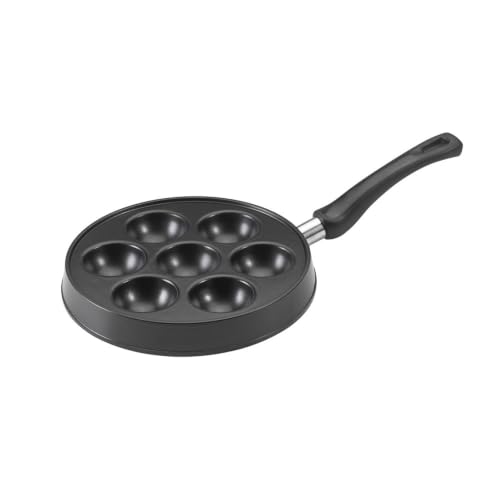 Nordic Ware Danish Ebelskiver Pan Nordic Ware Danish Ebelskiver Pan | Ebelskiver is the original filled pancake, can be… Make a delicious breakfast, lunch, or dinner, depending… Serve with a bowl of soup, stew or… | Check price |
As an Amazon Associate we earn from qualifying purchases at no extra cost to you.
Top picks at a glance
| Pan | Construction | Well count | Best for | Main limitation |
|---|---|---|---|---|
| Lodge Cast Iron Aebleskiver Pan | Pre-seasoned cast iron | 9 | Induction, gas, frequent use, strong browning | Heavy and slower to heat |
| Nordic Ware Danish Ebelskiver Pan | Cast aluminum with nonstick finish | 9 | Beginners, electric stoves, easy release | Usually not induction-compatible |
| Commercial-style cast aluminum pan | Thick cast aluminum | Typically 7 or 9 | Lower weight and fast heat response | Cooktop compatibility varies |
| Small cast-iron 7-well pan | Cast iron | 7 | Small households and compact storage | Fewer pancake balls per batch |
1. Lodge Cast Iron Aebleskiver Pan: best for induction and heat retention
The Lodge pan is the strongest all-purpose choice when you want a pan that works on gas, conventional electric, glass-top electric, and induction cooktops. Its nine wells produce a conventional batch size, while the thick cast iron holds heat when cold batter is added. That matters because aebleskiver batter cools the cooking surface quickly, especially when you fill several wells at once.
Cast iron also gives the most forgiving browning pattern. Once fully heated, it can create a firm golden shell while the centers continue cooking gently. This is useful for traditional batter with buttermilk, yeast, or a filling such as apple, jam, or chocolate.
The trade-off is weight and preheating time. Expect a cast-iron pan of this size to weigh roughly 5 to 7 pounds, compared with about 2 to 4 pounds for a comparable aluminum pan. On a smaller glass cooktop, lift rather than slide it so the heavy base does not scratch the surface.
Choose it if:
- You use induction or want maximum cooktop flexibility.
- You make aebleskiver regularly rather than once a year.
- You prefer traditional seasoning instead of a synthetic nonstick coating.
- You want the pan to retain heat between batches.
2. Nordic Ware Danish Ebelskiver Pan: best lightweight option for beginners
The Nordic Ware Danish Ebelskiver Pan uses cast aluminum and a nonstick cooking surface. It heats more quickly than cast iron, weighs substantially less, and generally releases the partially cooked pancake balls with less effort. For a first pan, those characteristics make it easier to concentrate on timing and turning rather than managing sticking.
Aluminum responds quickly when you lower or raise the burner. That is particularly helpful on electric stoves, which often continue releasing heat after the dial is turned down. The faster response can reduce scorched bottoms, although it also means the pan is less forgiving if the burner is set too high.
Check the current packaging before buying because this style of Nordic Ware pan is generally designed for gas and conventional electric stovetops rather than induction. It should not be assumed that a nonstick aluminum pan will work on an induction hob unless the manufacturer specifically states that it has a magnetic base.
Choose it if:
- You want a lighter pan that is easier to lift and store.
- You are new to turning aebleskiver.
- You cook on gas or standard electric rather than induction.
- You value easy release more than maximum heat retention.
Cast iron versus aluminum: the head-to-head decision
| Feature | Cast iron | Cast aluminum |
|---|---|---|
| Typical preheat time | 8–12 minutes over medium-low heat | 3–6 minutes over medium-low heat |
| Typical weight for 9 wells | 5–7 pounds | 2–4 pounds |
| Heat retention | Excellent | Moderate |
| Heat adjustment response | Slow | Fast |
| Induction | Usually yes, if the base is flat | Only if specifically made with a magnetic base |
| Maintenance | Dry thoroughly and maintain seasoning | Hand-wash and protect the nonstick surface |
| Expected usable life | Decades with care | Nonstick finish may eventually wear |
Neither material automatically makes better aebleskiver. The pan’s thermal behavior must match your burner. Cast iron is easier to keep at a stable temperature once hot; aluminum is easier to correct when your first batch is too dark.
Well size and count matter more than they appear
Most nine-well pans make balls approximately 2 to 2.5 inches across, depending on how full each cavity is and how much the batter rises. A deeper cavity gives you more room to rotate the batter around a filling, while a shallow cavity can produce flatter, more doughnut-like pieces.
Look for wells that are at least about 1.5 inches deep and have rounded sides rather than a sharply flat bottom. Rounded walls help the batter climb as you turn it, which is what creates a sphere instead of a stack of small pancakes.
A seven-well pan can be practical in a small kitchen. Assuming each ball uses about 2 tablespoons of batter, a seven-well pan uses approximately 14 tablespoons per round, or seven-eighths of a cup. A nine-well pan uses about 18 tablespoons, or 1⅛ cups. For a recipe yielding 36 balls, that means roughly six batches with seven wells versus four batches with nine wells. The larger pan saves time, but only if your stovetop has an evenly heated area large enough to support it.








Write Your Review
No reviews yet. Be the first to share your experience!