
Our Short List of 3
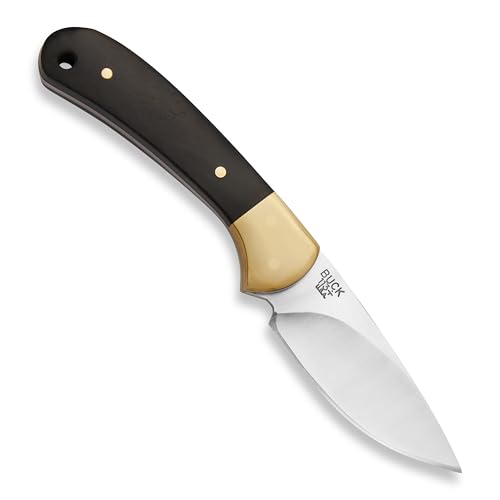
- Best for: Hunters who want one classic, fixed-blade skinner for deer season after season Blade length: 3-1/8 inches Blade style: Drop-point skinner with a wide, curved belly Blade material: 420HC stainless steel Handle: Ebony with brass bolster, per the current listing description Overall length: About 7-1/4 inches Sheath: Leather belt sheath included The Buck 113 Ranger Skinner is the traditional answer in this group, and its shape explains why the pattern has endured. The blade is a compact skinner profile: a narrow, downward-angled tip paired with a wide, curved belly. That combination is built for exactly the stroke skinning calls for — the belly does the sweeping work along the hide while the subdued tip is far less likely to slice through the hide itself when you turn a corner at a leg or work up the neck. At just over three inches, the blade stays easy to track, which matters more on a deer than raw cutting length.
- Best for: Hunters who want one classic, fixed-blade skinner for deer season after season
- Blade length: 3-1/8 inches
- Blade style: Drop-point skinner with a wide, curved belly
- Blade material: 420HC stainless steel

- Best for: Hunters who want a gut hook and a deep-bellied skinner in one modern fixed blade Blade length: 3.9 inches Blade style: Drop-point skinner with integrated gut hook Blade material: D2 tool steel, stonewashed finish Handle: Polypropylene with olive rubber overlay Overall length: 8.65 inches Weight: About 3.2 ounces for the knife, per the listing Sheath: Molded sheath with belt strap included The Deschutes Skinner in its gut-hook form, model 1883GH, is the modern counterpart to the Buck. The blade is longer and deeply bellied, with a full-tang build and a gut hook set into the spine for the opening cut. Where the Buck asks you to open the hide with the main edge, the Kershaw gives you a dedicated hook that lifts and cuts the hide in a controlled draw, and then the same blade turns to long skinning strokes without a tool change. For hunters who process deer where they fall, that two-jobs-one-knife design keeps the kit simple.
- Best for: Hunters who want a gut hook and a deep-bellied skinner in one modern fixed blade
- Blade length: 3.9 inches
- Blade style: Drop-point skinner with integrated gut hook
- Blade material: D2 tool steel, stonewashed finish
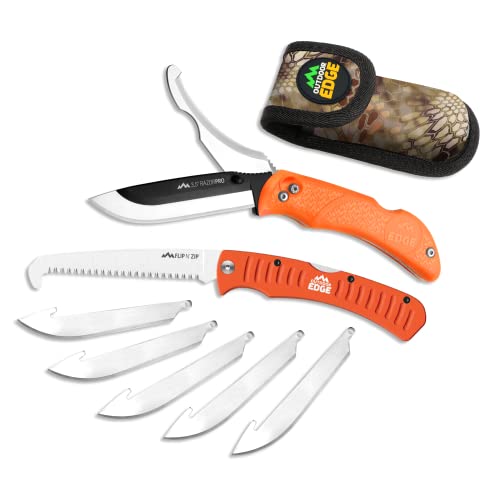
- Best for: Hunters who never want to stop and sharpen while skinning a deer Blade length: 3.5 inches for the replaceable skinning blade; 3.1 inches for the gutting blade Blade style: Replaceable drop-point skinning blade plus a separate gutting blade, with a folding saw in the saw-combo listing Blade material: Japanese 420J2 stainless for the replaceable blades Handle: Rubberized TPR with stainless liners Overall length: 8.0 inches when open, per the listing Includes: Six replacement blades and a nylon sheath, per the listing The RazorPro approaches skinning from the opposite direction: instead of a blade you maintain, it gives you blades you replace. The main blade uses Outdoor Edge’s RazorSafe system, in which a supported, razor-style blade locks into a holder that gives it the backbone of a conventional knife. When the edge fades — and on a gritty hide, every edge eventually fades — you press a button, swap in a fresh blade, and keep working at full sharpness. For hunters who skin several deer in a weekend, or who simply dislike sharpening, that consistency is the whole appeal.
- Best for: Hunters who never want to stop and sharpen while skinning a deer
- Blade length: 3.5 inches for the replaceable skinning blade; 3.1 inches for the gutting blade
- Blade style: Replaceable drop-point skinning blade plus a separate gutting blade, with a folding saw in the saw-combo listing
- Blade material: Japanese 420J2 stainless for the replaceable blades
All 4 Picks at a Glance
| Product | Specs | Action |
|---|---|---|
| 1. Buck 113 Ranger Skinner — The Traditional Fixed Skinner |
| Check price on Amazon |
| 2. Kershaw Deschutes Skinner Gut Hook (1883GH) — Modern D2 Skinner With a Hook |
| Check price on Amazon |
| 3. Outdoor Edge RazorPro — Replaceable Skinning Edge Plus a Gutting Blade |
| Check price on Amazon |
 4. Case Gut Hook Hunting Knife — Lightweight Gut-Hook Skinner |
| Check price on Amazon |
Key takeaways
- Compare the best knife for skinning deer: curved skinners, a gut-hook D2 blade and a replaceable-blade option, with blade, steel and grip notes.
As an Amazon Associate we earn from qualifying purchases.
Skinning a deer is a different job from field dressing one. Once the animal is opened, the knife works in long, shallow strokes between hide and meat, turning at the legs, brisket, and neck, where a careless tip can cut the hide or score the meat. A general drop point can do that work, but a blade shaped for skinning does it with less effort and fewer mistakes. That is the lane this guide stays in.
Every pick below is a dedicated skinning profile: a wide, curved belly, a gut hook, or a replaceable skinning edge built for hide work on deer-sized game. The four options cover a traditional fixed skinner, a modern fixed blade with a gut hook, a replaceable-blade system with a separate gutting blade, and a lightweight gut-hook hunter.
How to Choose a Knife for Skinning Deer
Blade shape matters more than blade length
The defining feature of a skinning knife is the belly. A deep, continuous curve puts more edge in contact with the hide through each stroke, so the blade sweeps rather than saws. Look for a deeply bellied profile and a tip that is turned down or kept subdued. A sharp, narrow point is a liability because it wants to poke through the hide around a leg joint or the neck.
Length is secondary. Most deer skinners sit in the three-to-four-inch range: long enough for full strokes along the back and sides, short enough to control in tight folds. A much longer blade feels clumsy under the hide, while a very short blade forces more strokes and more fatigue.
Gut hook: useful, optional, and personal
A gut hook is a hooked notch ground into the spine. Run under the hide, it opens the initial cut like a zipper while lifting skin away from what lies underneath, reducing the chance of nicking the paunch. Some hunters use a hook on every deer; others open the hide with two fingers guiding a conventional edge. Neither is wrong. If you like a hook, choose one that is part of a genuine skinning profile, as on the Kershaw and Case picks, and remember that a hook needs cleaning and sharpening inside its curve.
Steel: edge retention against easy sharpening
Clean deer hide is not especially abrasive, but field hide carries dirt and grit that dull an edge fast, and a fading knife invites the extra pressure that causes slips. Harder steels such as D2 hold an edge longer but take more time to restore. Steels in the 420HC family give up some edge life for quick touch-ups and strong corrosion resistance. Replaceable-blade systems sidestep the trade: swap the blade instead of sharpening, at the cost of thinner blades that should not be twisted or pried.
Handle grip when wet, cold, and bloody
Skinning is wet work, often with cold or gloved hands in fading light. A handle that feels elegant in a shop can feel treacherous with blood on it. Textured rubber grips, a guard, and a shape that fills the palm matter more than material prestige. You will use at least three grips: a full grip for long pulls, a choked-up grip for close work, and an edge-up grip under the hide. Check that the handle supports all three, and note that a bright color helps when you set the knife down in grass.
Fixed blade, folder, and sheath
Most dedicated skinners are fixed blades: no pivot to pack with fat and hair, no lock to fail, and the whole knife rinses clean. A folding replaceable-blade knife trades that simplicity for a fresh edge on demand. The sheath must retain the knife when you bend and climb and let you draw with gloves on. Leather is quiet and durable but must be dried after wet use; molded and nylon sheaths clean more easily.
The 4 Best Options
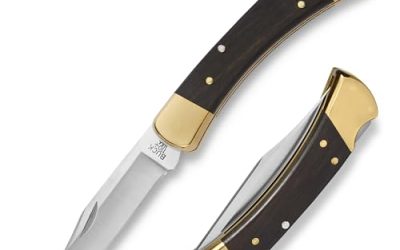
1. Buck 113 Ranger Skinner — The Traditional Fixed Skinner
- Best for: Hunters who want one classic, fixed-blade skinner for deer season after season Blade length: 3-1/8 inches Blade style: Drop-point skinner with a wide, curved belly Blade material: 420HC stainless steel Handle: Ebony with brass bolster, per the current listing description Overall length: About 7-1/4 inches Sheath: Leather belt sheath included The Buck 113 Ranger Skinner is the traditional answer in this group, and its shape explains why the pattern has endured. The blade is a compact skinner profile: a narrow, downward-angled tip paired with a wide, curved belly. That combination is built for exactly the stroke skinning calls for — the belly does the sweeping work along the hide while the subdued tip is far less likely to slice through the hide itself when you turn a corner at a leg or work up the neck. At just over three inches, the blade stays easy to track, which matters more on a deer than raw cutting length.
- Best for: Hunters who want one classic, fixed-blade skinner for deer season after season
- Blade length: 3-1/8 inches
- Blade style: Drop-point skinner with a wide, curved belly
- Blade material: 420HC stainless steel
Hunters who want one classic, fixed-blade skinner for deer season after season Blade length: 3-1/8 inches Blade style: Drop-point skinner with a wide, curved belly Blade material: 420HC stainless steel Handle: Ebony with brass bolster, per the current listing description Overall length: About 7-1/4 inches Sheath: Leather belt sheath included The Buck 113 Ranger Skinner is the traditional answer in this group, and its shape explains why the pattern has endured. The blade is a compact skinner profile: a narrow, downward-angled tip paired with a wide, curved belly. That combination is built for exactly the stroke skinning calls for — the belly does the sweeping work along the hide while the subdued tip is far less likely to slice through the hide itself when you turn a corner at a leg or work up the neck. At just over three inches, the blade stays easy to track, which matters more on a deer than raw cutting length.
The compact blade that makes the 113 so controllable also means more strokes on a large buck than a longer skinner would need, and the smooth handle demands a deliberate grip when wet.
The Buck 113 Ranger Skinner is the traditional answer in this group, and its shape explains why the pattern has endured. The blade is a compact skinner profile: a narrow, downward-angled tip paired with a wide, curved belly. That combination is built for exactly the stroke skinning calls for — the belly does the sweeping work along the hide while the subdued tip is far less likely to slice through the hide itself when you turn a corner at a leg or work up the neck. At just over three inches, the blade stays easy to track, which matters more on a deer than raw cutting length.
The 420HC stainless steel is a sensible match: well heat-treated, it balances edge retention, toughness, and corrosion resistance, and it sharpens readily on ordinary stones at the tailgate between animals. Full-tang construction removes the weak point a partial tang would introduce under twisting loads around joints.
The handle is the traditional side of the bargain. Ebony-and-brass styling is handsome and ergonomic, but smooth wood is not the grippiest surface with wet, bloody hands. Hunters who skin with gloves or prefer a classic handle will accept that trade; others may lean toward the Kershaw. Confirm handle material on the live listing, because this model has been sold in more than one configuration.
Watch out for: The compact blade that makes the 113 so controllable also means more strokes on a large buck than a longer skinner would need, and the smooth handle demands a deliberate grip when wet.
2. Kershaw Deschutes Skinner Gut Hook (1883GH) — Modern D2 Skinner With a Hook
- Best for: Hunters who want a gut hook and a deep-bellied skinner in one modern fixed blade Blade length: 3.9 inches Blade style: Drop-point skinner with integrated gut hook Blade material: D2 tool steel, stonewashed finish Handle: Polypropylene with olive rubber overlay Overall length: 8.65 inches Weight: About 3.2 ounces for the knife, per the listing Sheath: Molded sheath with belt strap included The Deschutes Skinner in its gut-hook form, model 1883GH, is the modern counterpart to the Buck. The blade is longer and deeply bellied, with a full-tang build and a gut hook set into the spine for the opening cut. Where the Buck asks you to open the hide with the main edge, the Kershaw gives you a dedicated hook that lifts and cuts the hide in a controlled draw, and then the same blade turns to long skinning strokes without a tool change. For hunters who process deer where they fall, that two-jobs-one-knife design keeps the kit simple.
- Best for: Hunters who want a gut hook and a deep-bellied skinner in one modern fixed blade
- Blade length: 3.9 inches
- Blade style: Drop-point skinner with integrated gut hook
- Blade material: D2 tool steel, stonewashed finish
Hunters who want a gut hook and a deep-bellied skinner in one modern fixed blade Blade length: 3.9 inches Blade style: Drop-point skinner with integrated gut hook Blade material: D2 tool steel, stonewashed finish Handle: Polypropylene with olive rubber overlay Overall length: 8.65 inches Weight: About 3.2 ounces for the knife, per the listing Sheath: Molded sheath with belt strap included The Deschutes Skinner in its gut-hook form, model 1883GH, is the modern counterpart to the Buck. The blade is longer and deeply bellied, with a full-tang build and a gut hook set into the spine for the opening cut. Where the Buck asks you to open the hide with the main edge, the Kershaw gives you a dedicated hook that lifts and cuts the hide in a controlled draw, and then the same blade turns to long skinning strokes without a tool change. For hunters who process deer where they fall, that two-jobs-one-knife design keeps the kit simple.
D2 will stain if it is stored damp, and the gut hook needs its own small file or rod to maintain, since a flat stone cannot reach inside the curve.
The Deschutes Skinner in its gut-hook form, model 1883GH, is the modern counterpart to the Buck. The blade is longer and deeply bellied, with a full-tang build and a gut hook set into the spine for the opening cut. Where the Buck asks you to open the hide with the main edge, the Kershaw gives you a dedicated hook that lifts and cuts the hide in a controlled draw, and then the same blade turns to long skinning strokes without a tool change. For hunters who process deer where they fall, that two-jobs-one-knife design keeps the kit simple.
D2 is the steel story here: a high-carbon tool steel that holds an edge through abrasive, gritty hide, with a stonewashed finish that hides scratches. The trade is maintenance — D2 is only semi-stainless, so clean and dry it after use, and expect to sharpen less often than with softer stainless.
The handle is clearly designed for skinning conditions: a polypropylene core with an olive rubber overlay, a thumb ramp, and a finger choil for choking up around legs and the head. The molded sheath adds webbing slots, a drainage hole, and a removable belt strap. Kershaw also sells a plain Deschutes Skinner without the hook under a different model number, so confirm the listing is the 1883GH version if the hook is why you are buying it.
Watch out for: D2 will stain if it is stored damp, and the gut hook needs its own small file or rod to maintain, since a flat stone cannot reach inside the curve.
3. Outdoor Edge RazorPro — Replaceable Skinning Edge Plus a Gutting Blade
- Best for: Hunters who never want to stop and sharpen while skinning a deer Blade length: 3.5 inches for the replaceable skinning blade; 3.1 inches for the gutting blade Blade style: Replaceable drop-point skinning blade plus a separate gutting blade, with a folding saw in the saw-combo listing Blade material: Japanese 420J2 stainless for the replaceable blades Handle: Rubberized TPR with stainless liners Overall length: 8.0 inches when open, per the listing Includes: Six replacement blades and a nylon sheath, per the listing The RazorPro approaches skinning from the opposite direction: instead of a blade you maintain, it gives you blades you replace. The main blade uses Outdoor Edge’s RazorSafe system, in which a supported, razor-style blade locks into a holder that gives it the backbone of a conventional knife. When the edge fades — and on a gritty hide, every edge eventually fades — you press a button, swap in a fresh blade, and keep working at full sharpness. For hunters who skin several deer in a weekend, or who simply dislike sharpening, that consistency is the whole appeal.
- Best for: Hunters who never want to stop and sharpen while skinning a deer
- Blade length: 3.5 inches for the replaceable skinning blade; 3.1 inches for the gutting blade
- Blade style: Replaceable drop-point skinning blade plus a separate gutting blade, with a folding saw in the saw-combo listing
- Blade material: Japanese 420J2 stainless for the replaceable blades
Hunters who never want to stop and sharpen while skinning a deer Blade length: 3.5 inches for the replaceable skinning blade; 3.1 inches for the gutting blade Blade style: Replaceable drop-point skinning blade plus a separate gutting blade, with a folding saw in the saw-combo listing Blade material: Japanese 420J2 stainless for the replaceable blades Handle: Rubberized TPR with stainless liners Overall length: 8.0 inches when open, per the listing Includes: Six replacement blades and a nylon sheath, per the listing The RazorPro approaches skinning from the opposite direction: instead of a blade you maintain, it gives you blades you replace. The main blade uses Outdoor Edge’s RazorSafe system, in which a supported, razor-style blade locks into a holder that gives it the backbone of a conventional knife. When the edge fades — and on a gritty hide, every edge eventually fades — you press a button, swap in a fresh blade, and keep working at full sharpness. For hunters who skin several deer in a weekend, or who simply dislike sharpening, that consistency is the whole appeal.
You are buying into a blade system, so confirm that replacement blades for this model are available when you order, and do not treat the thin replaceable edge as a general camp knife.
The RazorPro approaches skinning from the opposite direction: instead of a blade you maintain, it gives you blades you replace. The main blade uses Outdoor Edge’s RazorSafe system, in which a supported, razor-style blade locks into a holder that gives it the backbone of a conventional knife. When the edge fades — and on a gritty hide, every edge eventually fades — you press a button, swap in a fresh blade, and keep working at full sharpness. For hunters who skin several deer in a weekend, or who simply dislike sharpening, that consistency is the whole appeal.
The second blade is what makes this pick fit a deer guide: a dedicated gutting blade shaped to open game in a zipper-like draw without piercing what lies underneath. So the usual sequence — open with the gutting blade, then skin with the main edge — happens with one folding tool. The listing for this ASIN is the saw-combo configuration; confirm exact contents on the live listing, because RazorPro packages differ.
The limits are familiar for replaceable systems. The blades are thin and made for slicing, not twisting out of a joint or prying. Blade changes demand care and practice — learn at home, not beside a deer in the dark — and you must carry spares and dispose of used blades safely. The pivot area also deserves attention when you clean the tool.
Watch out for: You are buying into a blade system, so confirm that replacement blades for this model are available when you order, and do not treat the thin replaceable edge as a general camp knife.
4. Case Gut Hook Hunting Knife — Lightweight Gut-Hook Skinner
- Best for: Hunters who walk a long way in and want a light, simple gut-hook skinner Blade length: 4 inches Blade style: Fixed blade with gut hook Blade material: Tru-Sharp surgical stainless steel Overall length: About 8 inches Weight: About 4.8 ounces, per secondary listings The Case gut hook knife is the lightest, simplest option in this guide: a fixed blade of about four inches with a gut hook, in Case’s Tru-Sharp surgical stainless steel. That steel is a high-carbon stainless formulation intended to hold an edge while resisting the corrosion that wet field work guarantees, and it sharpens without exotic equipment. The four-inch blade gives you a full skinning stroke for the broad work along the back and sides, while the hook handles the opening cut in the controlled, lifting manner that keeps the point of the main edge away from the paunch.
- Best for: Hunters who walk a long way in and want a light, simple gut-hook skinner
- Blade length: 4 inches
- Blade style: Fixed blade with gut hook
- Blade material: Tru-Sharp surgical stainless steel
Hunters who walk a long way in and want a light, simple gut-hook skinner Blade length: 4 inches Blade style: Fixed blade with gut hook Blade material: Tru-Sharp surgical stainless steel Overall length: About 8 inches Weight: About 4.8 ounces, per secondary listings The Case gut hook knife is the lightest, simplest option in this guide: a fixed blade of about four inches with a gut hook, in Case’s Tru-Sharp surgical stainless steel. That steel is a high-carbon stainless formulation intended to hold an edge while resisting the corrosion that wet field work guarantees, and it sharpens without exotic equipment. The four-inch blade gives you a full skinning stroke for the broad work along the back and sides, while the hook handles the opening cut in the controlled, lifting manner that keeps the point of the main edge away from the paunch.
The thin, light blade that makes this knife easy to carry is not the choice for prying at joints or heavy boning, and older listings and reviews may show handle variants that differ from the current one.
The Case gut hook knife is the lightest, simplest option in this guide: a fixed blade of about four inches with a gut hook, in Case’s Tru-Sharp surgical stainless steel. That steel is a high-carbon stainless formulation intended to hold an edge while resisting the corrosion that wet field work guarantees, and it sharpens without exotic equipment. The four-inch blade gives you a full skinning stroke for the broad work along the back and sides, while the hook handles the opening cut in the controlled, lifting manner that keeps the point of the main edge away from the paunch.
Weight is why this knife makes the list. At under five ounces in secondary listings, it disappears on a belt or in a pack — a real advantage for hunters who hike in or hunt public land — and a light knife fatigues the hand less over a long job.
The compromise is a relatively thin blade, noted in secondary sources. That is a skinning asset until the work turns to heavier deboning or joint work, where a stouter fixed blade is better. Treat this as a dedicated skinner, not the only blade for breaking down a deer. Handle and sheath configurations vary by production run, so confirm them on the live listing.
Watch out for: The thin, light blade that makes this knife easy to carry is not the choice for prying at joints or heavy boning, and older listings and reviews may show handle variants that differ from the current one.
Which One Fits Your Situation
If you want one traditional knife that will skin deer for decades and sharpen easily, choose the Buck 113 Ranger Skinner. Its compact, deeply bellied blade is the purest skinning profile here, and its only real demand is a careful grip with wet hands.
If you want the opening cut and the skinning cut in one modern fixed blade, and you are willing to dry your knife after use, choose the Kershaw Deschutes Skinner Gut Hook. The D2 edge, rubber-overlay grip, and molded sheath are the most field-specific package in this group.
If your priority is a fresh edge on demand, especially across several animals, choose the Outdoor Edge RazorPro. Accept the discipline the system requires: carry spares, change blades carefully, and never pry with a replaceable blade.
If you cover ground on foot and count ounces, choose the Case Gut Hook Hunting Knife. It covers the gutting and skinning steps in the lightest package here, and pairs sensibly with a stouter boning or general knife back at camp or at home.
A note on scope: skinning is one stage. Caping, boning, and breaking joints each reward their own blade shapes, so many hunters add a small caping or boning knife after the hide is off rather than asking one blade to be best at everything.
Common Mistakes When Skinning Deer
The most common mistake is using too much point and not enough belly. Skinning cuts should ride the curve of the blade; digging with the tip cuts hide and scores meat. Slow down at the legs and neck, and reposition rather than reaching around a corner.
The second mistake is forcing a dull edge. Extra pressure turns a controlled stroke into a slip, so touch up a conventional edge as soon as it stops biting, or swap a replaceable blade. The third mistake is neglecting the knife afterward: blood left on a blade, especially semi-stainless D2, will mark it in storage. Wash, dry, and dry the sheath separately.
Finally, a gut hook is not a shortcut around technique. It makes the opening cut more forgiving, but it still needs a shallow, controlled draw, and it does none of the skinning itself.
Frequently Asked Questions
What blade shape is best for skinning deer?
A deeply bellied, upswept or drop-point skinner profile is best for the main work. The curve keeps more edge working through long strokes, and a subdued, downward-angled tip reduces accidental cuts through the hide. All four picks above use a version of that profile; the Buck 113 is the most traditional example.
Do I need a gut hook to skin a deer?
No. A gut hook helps with the opening cut by lifting and cutting the hide in a controlled draw, and many hunters prefer it, but deer can be opened and skinned cleanly with a conventional edge and a two-finger guide. Choose a hook if you value that opening step, as on the Kershaw and Case picks, and skip it if you prefer a simpler blade to clean and sharpen.
How long should a deer skinning knife be?
A blade of roughly three to four inches suits most deer skinning. It is long enough for full strokes on the back and sides and short enough to control around legs, joints, and the neck. Much longer blades are harder to track under the hide; much shorter blades are better reserved for caping detail work.
Fixed blade or replaceable blade for skinning?
Both work, and the choice is about maintenance style. A fixed blade, like the Buck or Kershaw here, is stronger, simpler to clean, and sharpens for years of use. A replaceable system, like the Outdoor Edge RazorPro, is always at full sharpness with a blade swap, but its thin blades must not be twisted or pried and you must carry spares. Many hunters own one of each and choose by the hunt.
How do I keep a skinning knife sharp through a whole deer?
Start with a properly sharp edge, strop or touch up at the first sign of fading rather than after the blade is dull, and keep grit off the hide where you can. With a replaceable-blade knife, swap blades as soon as the edge drags. No steel or system makes technique irrelevant: long strokes on the belly of the blade wear the edge more evenly and need less force than short sawing cuts.
Disclosure
Disclosure: This article contains affiliate links. If you buy through those links, a commission may be earned at no additional cost to you. Product information was taken from the listings and manufacturer details available at the time of writing, and specifications should be confirmed on the live listing before purchase.
More from Amazon
Programs that pair well with the guide above. Offers and eligibility are set by Amazon and may change.
Set up recurring deliveries of everyday items on eligible products. Terms and savings are set by Amazon.
Explore Subscribe & SaveCollect the home and kitchen items you want in one registry that guests can shop from.
Create a wedding registryFree shipping on eligible items, Prime Video and more. Eligible new members can start with a free trial.
Start a Prime free trialAudiobooks and podcasts to listen to on the go. Eligible new members can start with a free trial.
Try Audible freeAs an Amazon Associate we earn from qualifying purchases.
Write Your Review
No reviews yet. Be the first to share your experience!